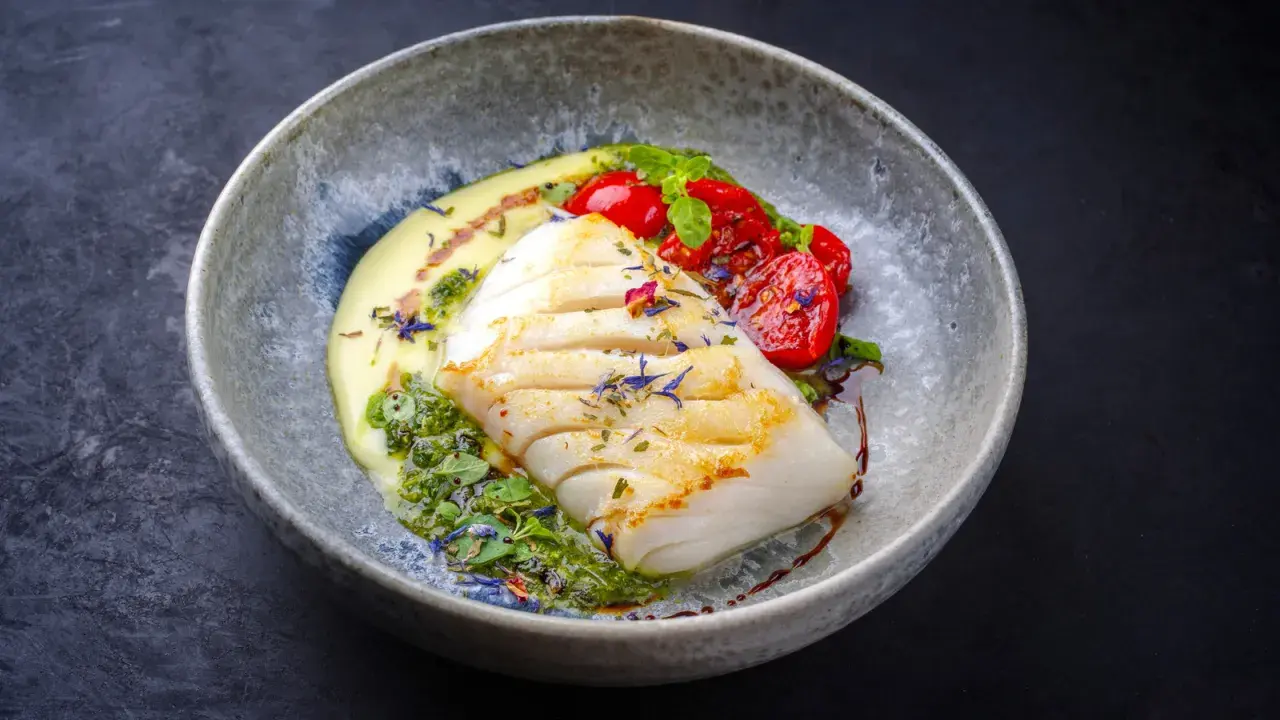
Gentle poaching is one of the most useful ways to cook seafood because it keeps the flesh moist, carries flavour into the broth, and asks for very little beyond good timing. In this guide I cover practical poached fish recipes, the fish that work best in the UK, how to build a broth that actually tastes like something, and a few versions I keep coming back to when I want clean, elegant food without fuss.
The essentials at a glance
- Poaching cooks fish in liquid that is barely simmering, so the flesh stays tender instead of tightening up.
- In the UK, haddock, hake, trout, salmon, and halibut are reliable choices for this method.
- Aromatics matter as much as the fish itself: stock, wine, milk, leeks, herbs, citrus, tomato, and peppers all work.
- Most fillets are ready in about 5-10 minutes, depending on thickness, so overcooking is the main risk.
- The poaching liquid should taste good enough to become the sauce at the table.
- For sustainability, I check the current seafood guide before treating cod or any other familiar fish as a default buy.
Why poaching gives fish such a clean result
Poaching works because the cooking medium never gets aggressive. I keep the liquid just below a simmer, which means the outside of the fish does not seize up before the centre has time to set. That is why the technique suits flaky white fish, salmon, trout, and other seafood that turns dry quickly if you push the heat.
The result is different from steaming, because the liquid itself seasons the fish, and different from baking, because the broth can be turned into a sauce at the end. I use it when I want a dinner that feels light but not bland, and when I want the fish to taste like itself rather than like whatever sauce is sitting on top. Once that is clear, choosing the fish and the liquid becomes much easier.

How to choose the right fish and poaching liquid
In the UK, I usually look first at hake, haddock, trout, salmon, or pollock. Hake is especially handy when I want a Basque feel, because its texture takes gentle poaching well and it does not collapse under a tomato or pepper base. I also keep an eye on the current Marine Conservation Society guide when I am buying cod or any familiar species that may vary by fishery.
| Fish | Texture | Best poaching liquid | Typical time |
|---|---|---|---|
| Haddock | Mild, flaky, and forgiving | Milk, leek, bay, parsley | 6-8 minutes |
| Hake | Firm enough for a richer broth | Wine, tomato, fennel, pepper | 6-8 minutes |
| Salmon | Richer and more generous on the plate | Citrus, dill, white wine | 5-7 minutes |
| Trout | Delicate and quick-cooking | Butter, herbs, lemon | 4-6 minutes |
| Halibut | Meaty and elegant | Stock, leeks, capers, herbs | 8-10 minutes |
Stock plus wine gives a balanced, restaurant-style broth. Milk makes a softer, very British result, especially with haddock. Tomato, pepper, and onion create a fuller Basque or Mediterranean profile. Water with aromatics is the cleanest base when the fish itself is excellent. With the right pairings settled, the next job is keeping the heat gentle enough to protect the flesh.
The method I use for reliably tender fish
The simplest rule is also the one people ignore: do not boil the fish. I start by choosing a pan that lets the fillets sit in a single layer, then I add just enough liquid to cover them for full poaching or come halfway up the sides for shallow poaching. If I want a slightly more luxurious result, I use shallow poaching, or à la nage, where the fish sits in a shallow bath and the liquid becomes the sauce.
- Start with 500 ml stock, or half stock and half dry white wine, then add shallot, bay, citrus peel, herbs, or sliced leek.
- Heat the liquid until it is at a bare simmer, roughly 70-80°C. If you do not use a thermometer, tiny bubbles at the edge are the cue; a rolling boil is too much.
- Season the fish lightly, then slide it in gently. If the fillets are uneven, tuck the thinner tail ends under so they cook at the same pace.
- Cover the pan with a lid or a parchment cartouche. A cartouche is just a paper lid that traps a little steam without weighing the fish down.
- Cook most fillets for 5-10 minutes, depending on thickness. A 150-180 g fillet usually needs 6-8 minutes, while a thicker piece can take a minute or two longer.
- Lift the fish out, let it rest for a minute, then finish the liquid with butter, olive oil, lemon, herbs, or a spoonful of crème fraîche if the broth needs rounding off.
That method is flexible enough to carry most of the recipes below, which is exactly why I rely on it.

Three recipes that show the range of poached fish dishes
These three versions show how far poaching can go without changing the core method. The first is bright and very simple, the second leans into Basque-style pepper and tomato flavours, and the third uses milk for a softer, more traditional British result. I keep the portions small and the seasoning direct, because poached fish punishes clutter.
Lemon, dill and white wine haddock
For 2 haddock fillets, I use 150 ml dry white wine, 150 ml fish stock, 1 small shallot, 1 bay leaf, a few dill sprigs, lemon zest, and 1 tbsp butter. I soften the shallot in a little oil, add the wine, stock, and bay, then bring it to a gentle simmer. The fish goes in for 6-8 minutes, just until it flakes cleanly; I finish with butter, dill, and lemon zest.This is the version I make when I want a clean flavour that still feels complete. The broth is light enough for a Tuesday but polished enough to serve with potatoes and greens.
Basque-style hake with peppers and tomato
For 2 hake fillets, I sweat 1 onion, 1 red pepper, 1 yellow pepper, and 2 garlic cloves in olive oil until soft, then add 1 tsp sweet paprika, 200 g chopped tomatoes, 150 ml dry white wine or txakoli, the lightly sparkling Basque white wine, and 100 ml stock. A pinch of piment d'Espelette, the mild Basque chilli, is optional, but it adds a gentle warmth that fits the dish well. Once the sauce is bubbling quietly, I nestle in the fish and poach it for about 7 minutes, spooning the broth over the top.I like this one because it has the feel of a fuller meal without losing the delicacy that makes poached fish worth cooking. If I want to push it further into a Basque direction, I serve it with boiled potatoes, aioli, and parsley on top.
Read Also: Perfect Grilled Salmon Skewers - Master the Basque Way
Milk-poached haddock with leeks and mustard
I place 2 haddock fillets in a shallow pan with 250 ml milk, 250 ml water, 1 sliced leek, 1 bay leaf, and a few peppercorns. After 5 minutes at a bare simmer, I add the fish and poach it for another 6-7 minutes. When it is done, I lift the fish onto warm plates, whisk 1 tsp Dijon mustard and a knob of butter into the liquid, and spoon the sauce over the top.
This is the most comforting of the three, and it is also the easiest one to scale up for a family supper. The milk softens the flavour, while the mustard keeps it from tasting flat.
The mistakes that ruin poached fish
The common failures are boring, but they matter. Every bad poached fish dish I have had came down to one of five problems: heat that was too hard, liquid that was too thin, seasoning that was too timid, or timing that was judged by the clock instead of the fish.
| Mistake | What it does | What I do instead |
|---|---|---|
| Rolling boil | It tightens the flesh and can make the edges split. | I keep the liquid at a bare simmer, around 70-80°C. |
| Too much liquid | The fish drifts, breaks, and loses some of its flavour to dilution. | I use just enough to cover, or halfway up for shallow poaching. |
| Under-seasoned broth | The fish tastes clean but dull. | I season the liquid as carefully as I would a soup base. |
| Cooking by time alone | Thin fillets overcook while thicker ones stay raw. | I check early and use thickness, not just the clock, to judge doneness. |
| Skipping the rest | The fish can feel fragile and the juices run out too fast. | I let it sit for a minute in the liquid or on the plate before serving. |
When fish is ready, the flesh turns opaque and separates into moist flakes with the lightest pressure. If it is still glassy in the centre, it needs another minute; if it starts looking chalky, I know I have gone too far. That is why poaching rewards attention more than precision gadgets, and why it usually tastes better when you stay close to the pan. From there, the only job left is deciding what to serve alongside it and how to make the broth work harder.
What to serve with it and how to use the broth well
The nicest thing about poached fish is that it does not demand much on the plate, but it does ask for a side that can catch the liquid. In a British kitchen, I usually think in terms of potatoes, greens, and bread; in a Basque-leaning meal, I add peppers, aioli, and a sharper herb note.
| Side | Why it works |
|---|---|
| Butter new potatoes | They soak up the broth and give the plate some weight. |
| Samphire, green beans, or tenderstem broccoli | They add crunch and salt without competing with the fish. |
| Boiled rice or pearl barley | They turn the poaching liquid into a fuller meal. |
| Crusty bread or toast | Useful when the broth is too good to leave behind. |
| Piperade or softly stewed peppers | They push the plate towards a Basque profile and make hake especially good. |
When I have a little broth left, I reduce it for a minute or two and finish it with butter or olive oil. In restaurant language that is called mounting the sauce, which simply means whisking in fat at the end so the liquid turns glossy and more rounded. A spoon of aioli, parsley oil, or a squeeze of lemon can do the same job if you want something lighter. That leaves one more practical question: what should you buy first if you want this to become a habit rather than a one-off?
The first basket I would buy for a week of fish dinners
Right now, I would start with hake or haddock, one lemon, one leek, parsley, butter, and a bottle of dry white wine. A good fishmonger can usually tell you which fillet is freshest and which species is worth avoiding that day, and that advice is often more useful than any complicated recipe. I also check the current Marine Conservation Society guidance when cod is involved, because sustainability is not something I want to guess at.
- 2 fillets of hake or haddock, about 150-180 g each
- 1 lemon and 1 bunch of dill or parsley
- 1 leek or 2 shallots
- 1 bottle of dry white wine or a small carton of fish stock
- Butter, olive oil, bay leaves, and peppercorns
With that basket, I can cook a plain weeknight supper, a peppery Basque-style pan, or a milk-poached version without buying anything extra. I also like poached fish cold the next day in a salad or flaked over warm potatoes, because the texture stays clean if you handle it gently from the start. Once the heat stays quiet and the liquid has real flavour, I find poached fish becomes forgiving rather than fussy. That is why I keep coming back to it: it is simple enough for a Tuesday, refined enough for a dinner plate, and flexible enough to carry both a plain herb broth and a Basque-style pepper sauce without changing the core method.
