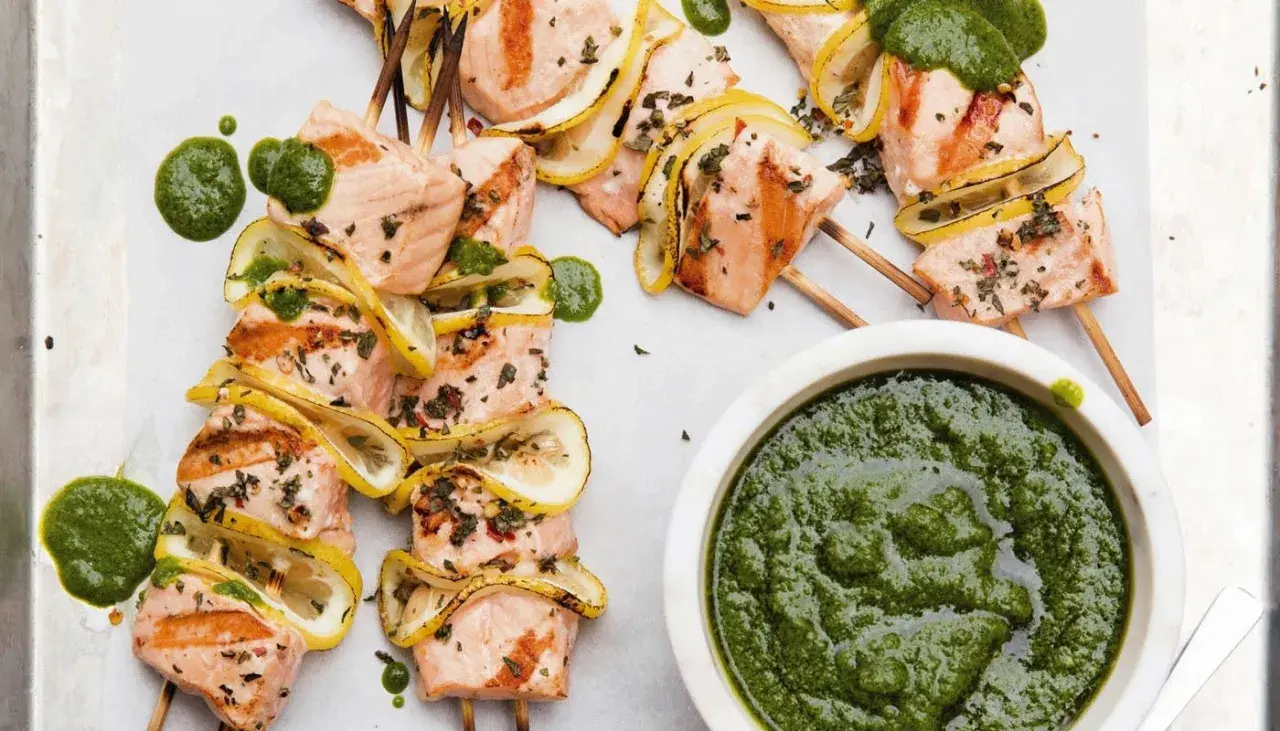
Salmon on skewers works best when the fish stays the focus: clean cuts, a short marinade, and heat that is hot enough to char the outside before the centre dries out. In a Basque-leaning kitchen, that usually means restraint rather than heavy sauce, with olive oil, garlic, herbs, citrus zest, and a little pepper warmth doing most of the work. The notes below cover how to choose the fish, build the skewers properly, grill them without guesswork, and serve them in a way that feels complete.
The essentials before you start grilling
- Use a firm, centre-cut fillet and cut it into 3.5-4 cm cubes so the pieces stay intact on the grill.
- Keep marinades short, usually 15-30 minutes, especially if citrus is involved.
- Cook over direct medium-high heat for about 3-4 minutes per side, then stop as soon as the fish turns opaque and flakes easily.
- Wooden skewers need soaking for 20-30 minutes; metal skewers are easier if you grill often.
- Simple Basque flavours work well here: olive oil, garlic, parsley, lemon zest, and a small hit of piment d'Espelette.
- Keep the plate balanced with grilled peppers, new potatoes, or a crisp green salad rather than a heavy sauce.
Why skewered salmon works so well over heat
Fish on skewers solves a practical problem: it gives you enough surface contact for colour and smoke without forcing the salmon to sit on the grate long enough to stick or break apart. That is why this method suits barbecues, grill pans, and even a plancha-style setup indoors when the weather is unhelpful.
It also encourages better portion control. Smaller pieces cook more evenly than a whole fillet, and once the salmon is cut into tidy chunks, it takes seasoning in a more even way. I find that the best versions taste lightly charred, still juicy, and obviously fish-forward, which is exactly the direction Basque cooking tends to favour with seafood.
The main risk is overconfidence. Salmon is forgiving, but not endlessly forgiving. If the heat is weak, the fish steams; if the heat is too fierce and the pieces are too small, it turns dry before the outside develops any character. That balance is what the rest of the method is really about.

Choose a firm fillet and the right skewer setup
The best cut is usually a centre-cut salmon fillet with a good thickness and even grain. I avoid the very thin tail end for skewers because it cooks too quickly and can flake off before the rest of the piece is ready. If the skin is still on, remove it first; skin-on pieces are better suited to a grill rack than to threading.
| Choice | Best for | Why it helps |
|---|---|---|
| Centre-cut salmon | Most barbecues | Thick, even pieces stay intact and cook at the same speed. |
| Wooden skewers | Occasional grilling | Cheap and easy, but soak them for 20-30 minutes so they do not scorch. |
| Metal skewers | Regular use | They do not need soaking and make turning cleaner and faster. |
For the fish itself, I like cubes around 3.5-4 cm wide. Smaller than that and they are awkward to thread; much larger and the outside can overcolour before the centre is set. If you want to add vegetables, choose quick-cooking pieces such as spring onions, peppers, or courgette ribbons. Hard vegetables like potato need a separate treatment and will not keep pace with the salmon.
Build a Basque-leaning seasoning that respects the fish
Salmon has enough natural richness to carry strong flavours, but it does not need a heavy marinade. For me, the Basque direction works because it stays bright and clean. Think olive oil, garlic, chopped parsley, lemon zest, a little sea salt, and a pinch of piment d'Espelette for warmth rather than heat.
That style also fits the fish's texture better than a long acidic soak. Citrus juice, vinegar, or yoghurt-based marinades can be useful, but if they sit too long they start to soften the flesh in a way that makes threading and grilling harder. Fifteen to thirty minutes is usually enough for flavour. I rarely go beyond an hour.
| Seasoning style | What to use | Why it works |
|---|---|---|
| Basque-leaning | Olive oil, garlic, parsley, lemon zest, piment d'Espelette | Clean, vivid, and close to the fish rather than masking it. |
| Citrus-herb | Lemon zest, dill, chives, black pepper | Light and fresh, especially if you are serving the skewers with salad. |
| Smoky barbecue | Smoked paprika, olive oil, a little honey, garlic | Good when the grill is giving you deep charcoal flavour already. |
Grill it fast, hot, and with just one turn
Preheat the barbecue or grill pan to medium-high, then oil the grates lightly so the fish releases cleanly. Thread the salmon pieces with a little space between them rather than packing them tight; that small gap helps the heat move around each cube and gives you a better edge of colour.
- Heat the grill until it is properly hot, not just warm.
- Oil the grate or pan before the salmon goes on.
- Place the skewers on direct heat and leave them alone for the first few minutes.
- Turn once, after about 3-4 minutes, then cook the second side for another 3-4 minutes.
- Take them off as soon as the flesh turns opaque and flakes with gentle pressure.
If you are using a very hot charcoal fire, move the skewers to a cooler patch after the first sear. That gives you a little more control and reduces the chance of flare-ups licking the fish. On a grill pan, the timing is similar, though the browning can happen a touch faster because the contact is more direct.
I prefer to stop just before the fish looks overdone, then let residual heat finish the job for a minute or so. That last minute matters more than most people think. It is often the difference between moist and merely cooked.
Serve it with sides that keep the plate balanced
Because the fish is rich, the rest of the plate should feel sharp, green, and fairly simple. I like to think of the side dishes as a counterweight rather than an afterthought. That is also where a Basque influence feels most natural: peppers, herbs, good oil, and clean acidity.
- Grilled peppers or padron-style peppers with flaky salt.
- New potatoes tossed with olive oil, parsley, and a little lemon juice.
- A tomato and cucumber salad with sherry vinegar or another bright dressing.
- Aioli or a parsley-garlic oil, served in a small amount rather than drowned over the top.
- A dry white wine such as txakoli if you can find it, or another crisp white from the UK market.
I would keep heavier sauces off the table unless you are serving a crowd that wants a more casual barbecue feel. The fish already has enough richness, and the clean flavours around it make the salmon taste better, not more plain.
A few details that make the next batch better
The most common mistake is overmarinating. Salmon does not need an overnight bath, and citrus-heavy mixtures can turn the surface soft before the grill even starts. The second mistake is cutting the fish too small, which makes turning messy and increases the chance of drying out the edges before the centre is ready.
Another easy misstep is turning the skewers too often. Let the first side set properly, then turn once. If the fish sticks, it usually needs another minute or two, not force. And if you are adding vegetables, remember that they should support the dish, not drag the cooking time out so long that the fish suffers.
For a more distinctly Basque finish, I often brush the cooked fish with a little parsley-garlic oil and add a pinch of piment d'Espelette just before serving. It is a small move, but it makes the dish taste finished rather than merely grilled, and that is usually the difference between a good seafood supper and one people remember.
