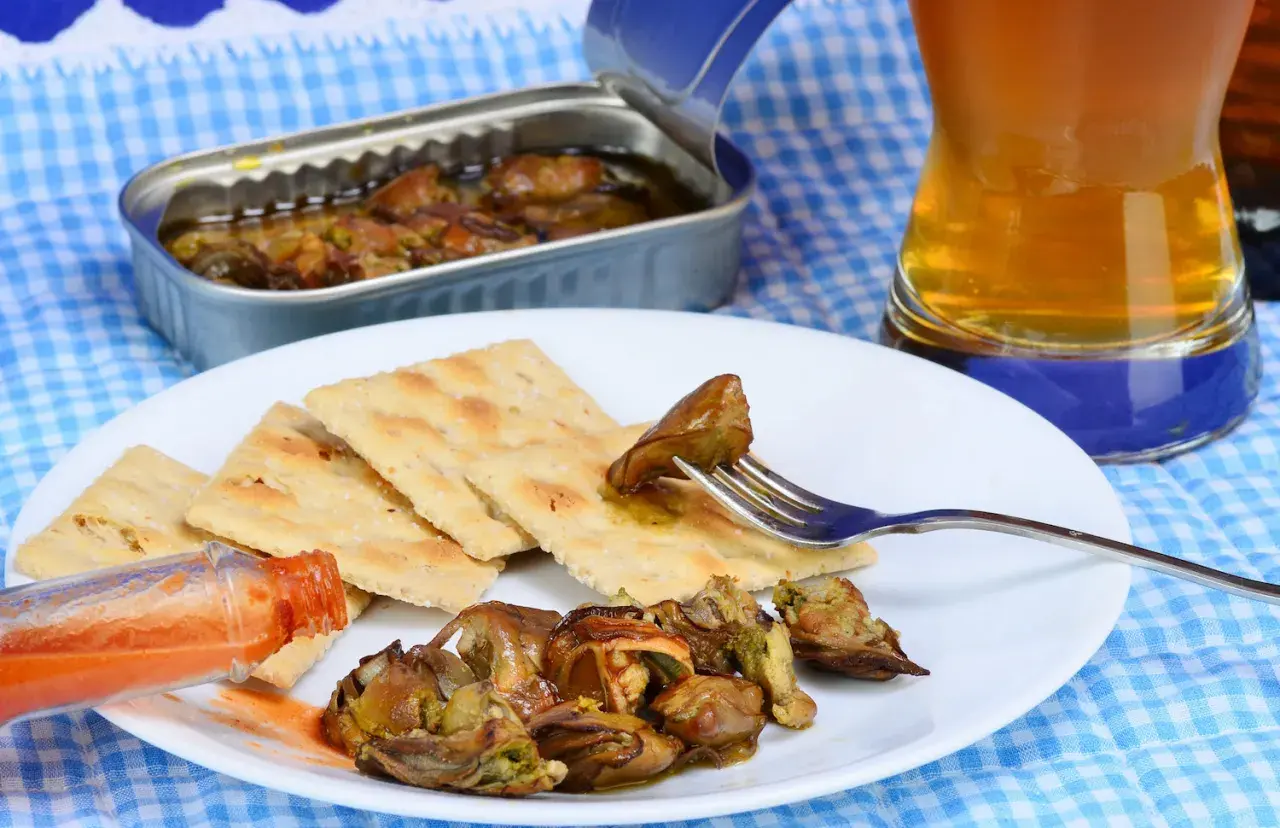
Smoked oysters are one of those ingredients that look modest until you cook with them: salty, silky, deeply savoury, and far more versatile than most people expect. In these smoked oyster recipes, I focus on the versions that actually earn their place at the table - quick pate, warm potato salad, pasta, and a Basque-leaning pintxo style that keeps the smoke in balance with acid, herbs, and good bread. I’ll also show when canned oysters are the right choice, when to smoke your own, and how to stop the flavour from turning heavy.
Here is the practical shape of the dishes below
- Smoked oysters act like a seasoned pantry ingredient rather than a neutral seafood base.
- Acid, herbs, and crunch matter as much as cream or butter.
- A small tin usually stretches further than expected: enough for toast for 2, a starter for 4, or a pasta for 2-3.
- Canned oysters are the quickest option; home-smoked oysters are better when you want a firmer, fresher bite.
- The most reliable pairings are lemon, sherry vinegar, parsley, capers, potatoes, peppers, and toasted bread.
What smoked oysters actually bring to a dish
When I cook with smoked oysters, I treat them as a shortcut to depth, not as a seafood you need to dress up. The smoking gives them a briny, almost mineral richness that sits somewhere between anchovy, bacon, and shellfish, which means a little goes a long way. If a recipe asks them to play the lead role, it usually has to support them with brightness and texture; otherwise the smoke feels blunt instead of complex.
The biggest difference between fresh and canned versions is texture. Canned oysters are softer and more intensely seasoned, so they work best folded into spreads, sauces, and hot dishes. Freshly smoked oysters can be left a little plumper and cleaner tasting, which makes them better if you want a more obvious seafood bite on toast or in a composed starter. Either way, I avoid burying them under too much dairy or too many competing smoked ingredients.
That balance is what makes the rest of the recipe choices matter, especially the flavours you bring alongside them.
The flavour pairings that make them shine
Most smoked oyster dishes fail for one of two reasons: they are too rich, or they are too timid. I usually solve that with a simple flavour map that keeps one creamy element, one sharp element, one green element, and one crisp element in play.
| Partner | Why it works | Best use |
|---|---|---|
| Lemon or sherry vinegar | Cut through the smoke and reset the palate | Pasta, salads, pate, canapes |
| Parsley, dill, chives | Keep the dish fresh and stop it feeling ponderous | Toast, potato salad, dips |
| Potatoes | Soak up the oil and soften the saline edge | Warm salads, fish pie, baked potatoes |
| Roasted peppers or piquillo peppers | Add sweetness and a Basque-style savoury note | Toast, pintxos, antipasti-style plates |
| Capers or pickled onions | Bring punch without adding extra weight | Spreads, salads, small plates |
| Crisp bread or crackers | Give the mouthfeel that smoked oysters do not have on their own | Canapes, pate, quick lunches |
I also keep the heat modest. Chilli can be excellent, but it should sharpen the smoke rather than fight it. A pinch of chilli flakes or a little piment d'Espelette is usually enough; if you go much further, the oysters start to disappear. With that formula in mind, the recipes below stay simple and read cleanly on the plate.

Three dishes I keep making with smoked oysters
I prefer recipes that let the oysters stay recognisable. These three are the ones I return to because they solve different problems: one for a quick starter, one for lunch, and one for a proper meal.
Smoked oyster pate on toast
This is the fastest way to get from tin to table. I mix the oysters with 100 g soft cream cheese, 1 teaspoon Dijon mustard, 1 teaspoon lemon juice, 1 teaspoon finely grated lemon zest, 1 tablespoon chopped chives, and plenty of black pepper. If the oysters are packed in oil, I drain them lightly rather than aggressively so the mixture still feels plush.
- Finely chop or lightly crush the oysters with a fork.
- Stir them into the cream cheese, mustard, lemon, chives, and pepper.
- Chill for 10-15 minutes if you want a firmer spread.
- Serve on toasted sourdough, rye, or seeded crackers, with a few capers or thinly sliced radish on top.
This works because the dairy rounds out the smoke, while the lemon and mustard keep the spread from tasting flat. I like it as a pintxo-style nibble with a dry white wine or cider.
Warm potato salad with herbs and vinegar
For a slightly heartier dish, I make the oysters part of a warm salad rather than a creamy one. Boil 600 g waxy potatoes until just tender, then toss them with 2 tablespoons olive oil, 1 tablespoon sherry vinegar, 1 small finely chopped shallot, 1 tablespoon capers, and a handful of parsley or dill. Fold in 1 tin of smoked oysters at the end so they stay intact.
- Cook the potatoes in salted water, then drain and steam dry for 2 minutes.
- Whisk the olive oil, vinegar, shallot, capers, and herbs together.
- Toss the warm potatoes in the dressing.
- Gently fold through the oysters and finish with black pepper and lemon zest.
I reach for this version when I want the smoke to feel rounded rather than dominant. The potatoes absorb the oil and seasoning, which gives the oysters a better stage than a cold bowl of leaves would.
Read Also: Pulpo a Feira - Master Galician Octopus at Home
Linguine with garlic, lemon, and parsley
If I want dinner on the table quickly, this is the most reliable route. Cook 200 g linguine, then warm 2 sliced garlic cloves in 2 tablespoons olive oil or butter with a pinch of chilli flakes. Add 2 tins of smoked oysters, a splash of pasta water, the juice and zest of 1 lemon, and a generous handful of parsley. Toss the pasta through the sauce and serve immediately.
- Cook the pasta in well-salted water until al dente.
- Soften the garlic gently in oil or butter; do not brown it.
- Stir in the oysters just long enough to warm them through.
- Use pasta water to loosen the sauce, then finish with lemon and parsley.
The point here is restraint. The oysters already bring salt and body, so the sauce only needs enough fat and acid to carry them. If you want a more Basque note, add a few strips of roasted red pepper at the end.
When to buy canned oysters and when to smoke them yourself
For everyday cooking, I almost always reach for canned oysters. They are consistent, already cooked, and easy to fold into spreads or hot dishes without planning ahead. Home-smoking makes sense when you want a firmer texture, a cleaner aroma, or a centrepiece for a starter rather than a pantry shortcut.
| Option | Best for | Time commitment | What to expect |
|---|---|---|---|
| Canned smoked oysters | Toast, pate, pasta, salads, quick snacks | 5-15 minutes | Soft, rich, intensely seasoned, ready straight from the tin |
| Home-smoked oysters | Composed starters, elegant canapes, seafood platters | 30-60 minutes active time plus smoking | Plumper texture, fresher seafood note, smoke that feels less canned |
If you do smoke them yourself, keep the heat low and stop as soon as they turn opaque and lightly firm. In practice, that usually means a short smoke rather than a long one; oysters dry out and toughen quickly, so I would rather undershoot than overdo it. That rule matters even more if you plan to serve them simply, because there is nowhere for a leathery texture to hide.
The mistakes that flatten the flavour
Smoked oysters are forgiving, but they are not subtle. Once you know where they go wrong, it becomes much easier to cook them well.
| Mistake | What happens | Better approach |
|---|---|---|
| Using too much cream | The dish turns heavy and the smoke loses definition | Use just enough dairy to bind, then add lemon or vinegar |
| Adding another smoked ingredient | The flavour gets muddy and one-note | Balance with fresh herbs, pickles, or peppers |
| Overcooking them | The oysters become rubbery and lose their sheen | Warm gently, then take the pan off the heat |
| Skipping acidity | Everything tastes flat and salty | Finish with lemon, capers, or sherry vinegar |
| Using bread that is too soft | The texture disappears under the spread | Toast the bread well so it stays crisp |
The quiet rule I follow is simple: if the dish feels rich enough to be served with a fork, it needs something sharp. If it feels too sharp, it probably needs either potato or bread. That is the sort of balance that keeps smoked oysters interesting rather than merely intense.
A Basque-leaning way to serve them at home
Because this site leans towards Basque cooking, I would serve smoked oysters as a pintxo rather than as a heavy starter. Toast a piece of country bread, add a thin swipe of aioli or whipped salted butter, then top it with roasted piquillo peppers, two or three oysters, chopped parsley, and a few drops of sherry vinegar. A little piment d'Espelette gives it lift without masking the shellfish.
That combination works for a practical reason: the peppers bring sweetness, the vinegar brings cut, and the bread gives structure. You get a small plate that tastes deliberate, not improvised. In the UK, it is just as good with sourdough as with a baguette, and it sits comfortably beside olives, a green salad, or a glass of dry white wine.
When I want the dish to feel more substantial, I add thinly sliced boiled egg or a few shards of fennel on top. That makes the pintxo read more like a small lunch course, which is often exactly the point with seafood this savoury.
The first version I would make again tonight
If I had one tin in the cupboard and ten minutes to cook, I would make the pate first. It is the most efficient route to a balanced smoked oyster dish, and it tells you quickly whether the oysters are mild, punchy, or especially oily. After that, the same tin can still be stretched into pasta, a potato salad, or a couple of clean, Basque-leaning toasts.
That is why I keep coming back to these oyster recipes: they are fast, but they do not taste rushed. Keep one element crisp, one element sharp, and one element fresh, and the smoke will feel like an advantage instead of a burden.
