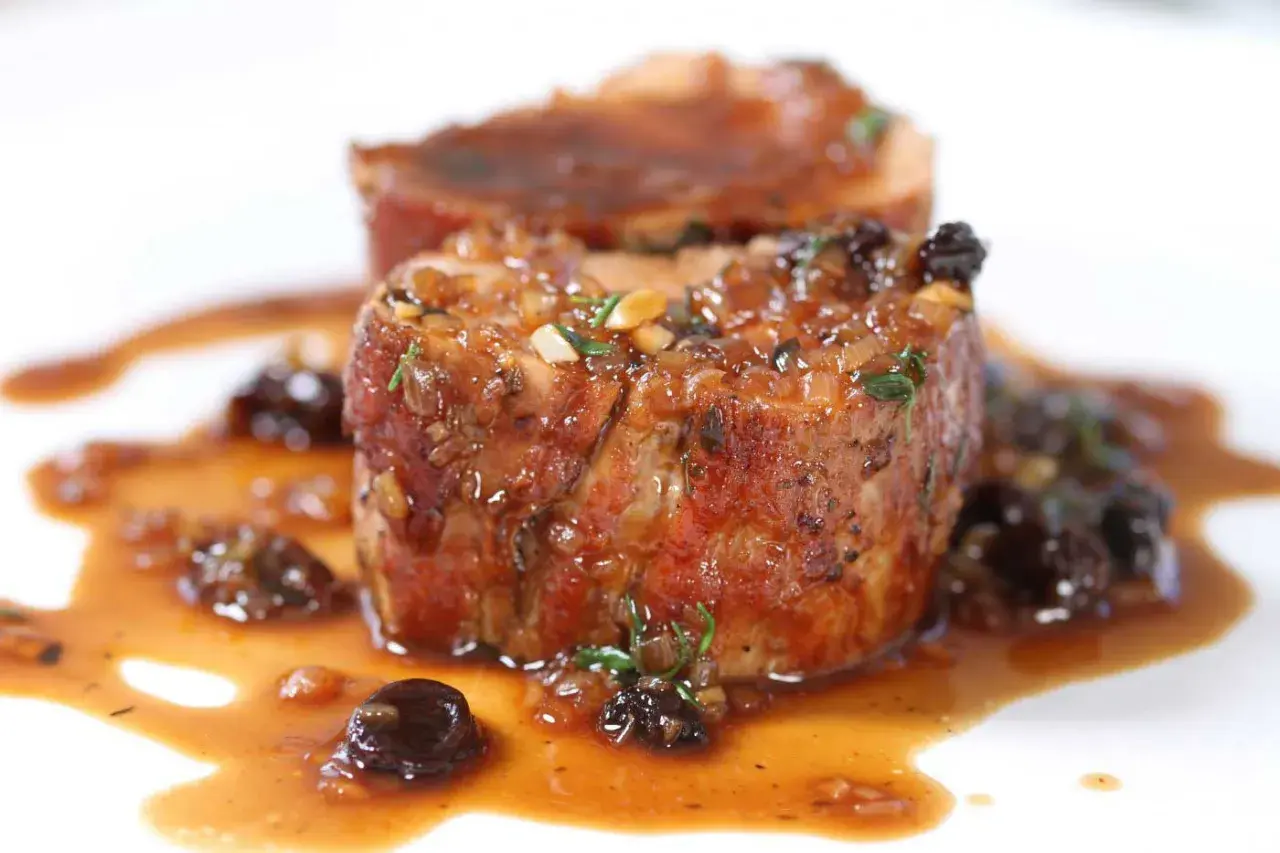
Iberico pork shoulder rewards slow cooking: the marbling keeps it generous, the collagen turns silky, and the flavour can carry a bold but simple sauce. This Iberico pork shoulder recipe leans into that richness with a Basque-style mix of cider, onions, garlic, bay and smoked paprika, so the meat tastes layered rather than heavy. I’ll also show where to stop cooking depending on whether you want neat slices or pull-apart meat, because that decision changes the whole dish.
The key points before you start cooking
- Cook shoulder gently. Iberico gives you more flavour and fat, but the shoulder still needs low, steady heat to soften the connective tissue.
- Choose the finish first. Stop earlier for sliceable roast, or keep going for meat that shreds cleanly with a fork.
- Keep the flavour base focused. Onion, garlic, cider, bay, thyme and smoked paprika suit the cut without overwhelming it.
- Use a thermometer. Colour alone is not a reliable guide on a rich pork shoulder.
- Balance the richness. Serve it with something sharp, green or starchy so the plate feels complete.
Why Iberico shoulder deserves a gentler approach
The shoulder is not the cut to rush. Even when the meat is Iberico, with its richer marbling and deeper flavour than standard pork, the shoulder still carries enough connective tissue to benefit from long, moist heat. Cook it hard and fast and you get the wrong kind of drama; cook it patiently and the fat, collagen and juices turn into a glossy sauce that tastes far more considered.
I usually think of this cut in two modes. If I want neat slices, I stop earlier and carve it after a proper rest. If I want spoon-tender meat for serving with potatoes, beans or bread, I keep going until the fibres give way without resistance. That choice matters more than almost anything else in the whole dish, so I make it before I season the pan. Once that is clear, the ingredient list can stay tight and purposeful.
The flavour base that suits the meat best
I keep the seasoning focused: onion, garlic, peppers, bay, thyme, smoked paprika and a sharp splash of cider vinegar. That gives the pork a Basque-leaning profile without burying the meat under sweetness or heavy spice. Iberico already brings its own depth, so I want a sauce that frames it rather than competes with it.
Ingredients
| Ingredient | Amount |
|---|---|
| Iberico pork shoulder, bone-in if possible | 1.8-2.2 kg |
| Fine sea salt | 2 tsp |
| Black pepper | 1 tsp |
| Olive oil | 2 tbsp |
| Large onions, sliced | 2 |
| Red pepper, sliced | 1 |
| Green pepper, sliced | 1 |
| Garlic cloves, crushed | 5 |
| Smoked paprika | 2 tsp |
| Sweet paprika | 1 tsp |
| Bay leaves | 2 |
| Fresh thyme | 2 sprigs |
| Dry cider | 250 ml |
| Dry white wine or extra stock | 150 ml |
| Chicken stock | 200 ml |
| Sherry vinegar or cider vinegar | 1 tbsp |
| Tomato purée | 1 tbsp, optional |
| Piment d'Espelette or a pinch of chilli | optional |
If you want a slightly more traditional Basque edge, a little piment d'Espelette works well, but I would keep it subtle. The pork should still taste like pork first, not like a spice rub with meat underneath it. Once the flavour base is set, the cooking method becomes straightforward.

How I cook it in the oven
This is my default method for a shoulder in the 2 kg range. It gives enough browning for flavour, then enough covered time for the collagen to relax and the sauce to pick up body from the meat itself. I prefer the oven to a slow cooker here because I get better colour and more control over the sauce at the end.
Time: 25 minutes prep, 3.5-4.5 hours cooking, 20-30 minutes resting.
Read Also: Cochinillo - The Spanish Roast Pig You Need to Master
Method
- Heat the oven to 160°C conventional or 140°C fan, Gas 3.
- Pat the pork dry and season it well with salt and black pepper. If you have time, salt it 1-2 hours ahead and leave it uncovered in the fridge so the surface dries out a little.
- Heat the olive oil in a heavy casserole or Dutch oven over a medium-high heat. Brown the pork on all sides, about 4-5 minutes per side. Do this properly; pale meat gives you a pale sauce.
- Remove the pork and lower the heat. Add the onions, peppers and a pinch of salt. Cook for 8-10 minutes until softened and lightly golden.
- Stir in the garlic, smoked paprika, sweet paprika and tomato purée, if using, for 30 seconds. Pour in the cider and white wine, scraping up any browned bits from the base of the pan.
- Add the stock, bay leaves, thyme and vinegar. Return the pork to the pot. The liquid should come about one-third of the way up the meat, not cover it.
- Cover and braise in the oven for 3 hours, then turn the pork and cook for another 30-60 minutes. If the shoulder is smaller, start checking earlier; if it is thicker, it may need closer to 4.5 hours.
- Uncover for the last 30-40 minutes if you want a deeper colour and a slightly thicker sauce.
- Check the texture with a probe or skewer. For a sliceable roast, I look for tenderness around 84-88°C. For meat that pulls apart cleanly, I keep going until it reaches about 92-96°C and feels nearly effortless to probe.
- Rest the pork for 20-30 minutes before carving or shredding. If the sauce needs tightening, lift the meat out and reduce the liquid on the hob for 10-15 minutes.
The main thing to remember is that tenderness is the finish line here, not the clock. If the shoulder is still stubborn, it is not done, even if it has already been in the oven for hours. That brings us to the part most home cooks get wrong: reading doneness.
When the shoulder is done
A thermometer is useful, but on a shoulder cut I read it alongside feel. You want the probe to slide in with very little resistance and the meat to relax when you press it. Colour is less helpful than people think, because richly marbled pork can stay a little rosy even when it is properly cooked.
| Finish you want | Target internal temperature | What it should feel like | Best use |
|---|---|---|---|
| Sliceable roast | 84-88°C | Tender but still holds its shape | Plated dinner, sandwiches with neat slices |
| Pull-apart shoulder | 92-96°C | Probe slides in almost effortlessly | Shredded pork, baps, bowls, croquettes, stew |
| Too early to stop | Below 82°C | Still feels tight in the centre | Keep cooking |
For this cut, I would rather wait an extra 20 minutes than carve too soon and end up with meat that looks done but eats firm. Shoulder rewards patience in a way loin never will. Once you know where to stop, choosing the right sides becomes much easier.
What I serve with it
This dish needs contrast. The pork is rich, so I like sides that bring starch, acidity or a clean green note. If I keep the plate too soft and too sweet, the whole meal can feel flat by the last few bites.
- Crushed new potatoes or mash, which catch the sauce without making the plate heavy.
- White beans with parsley, garlic and olive oil, a very natural fit for a Basque-inspired table.
- Roasted green beans or tenderstem broccoli with lemon, which keep the richness in check.
- A simple fennel and apple salad with vinegar dressing, especially if you are serving the pork as a roast rather than shredded meat.
- Good bread, because the sauce here is worth chasing around the plate.
I also like pickled onions or a few sliced gherkins on the side if I am serving leftovers or making sandwiches. That little sharp edge wakes the dish up, which is exactly what rich pork needs. The same logic helps when you are trying to avoid the most common mistakes.
The mistakes that matter most
People rarely ruin a shoulder cut through one dramatic error. More often, they make three small mistakes that add up: weak browning, too much liquid, and stopping too early. Iberico is forgiving, but it still needs the basics done well.
- Skipping the sear. Browning is not decorative. It gives the sauce depth and keeps the dish from tasting boiled.
- Drowning the meat. Shoulder should braise, not stew under litres of liquid. Too much stock blunts the flavour.
- Over-sweetening the sauce. Iberico already has roundness and natural richness, so I avoid heavy honey or sugar.
- Cutting it straight away. The rest period matters. If you skip it, the juices run out and the texture feels looser than it should.
- Checking only the colour. I want tenderness, not just a browned outside. The centre decides whether the dish works.
When I am being strict with myself, I find the first mistake is the one that causes the rest. If the meat is properly browned and braised at a steady temperature, you are already most of the way there. That is why I usually make a little more than I need and plan for the leftovers.
Why I always make more than we need
Leftover Iberico shoulder is one of the better problems to have. The flavour deepens overnight, the sauce thickens naturally in the fridge, and the meat becomes even easier to shred or slice. I chill it as quickly as possible, portion it with some of the sauce, and use it within 3 days or freeze it for up to 3 months.
The best second-day uses are simple: warm it through with a spoonful of stock, pile it into crusty bread with pickled onions, fold it into beans, or turn it into pintxo-style toast with roasted peppers. If I have a larger amount left, I shred it and use it in croquettes, which is about as good a use for rich pork as I can think of.
The small details I would keep every time
If I were cooking this again, I would keep three things exactly the same: salt the shoulder early, brown it well, and let the sauce reduce before serving. Those are the steps that make the dish taste deliberate rather than merely cooked. Everything else, from the peppers to the herbs, can move a little depending on what is in the kitchen.
I would also serve it with something sharp or green every time. That keeps the richness lively and stops the plate from feeling one-dimensional. In practice, that is the difference between a decent pork dinner and a dish people remember the next day.
