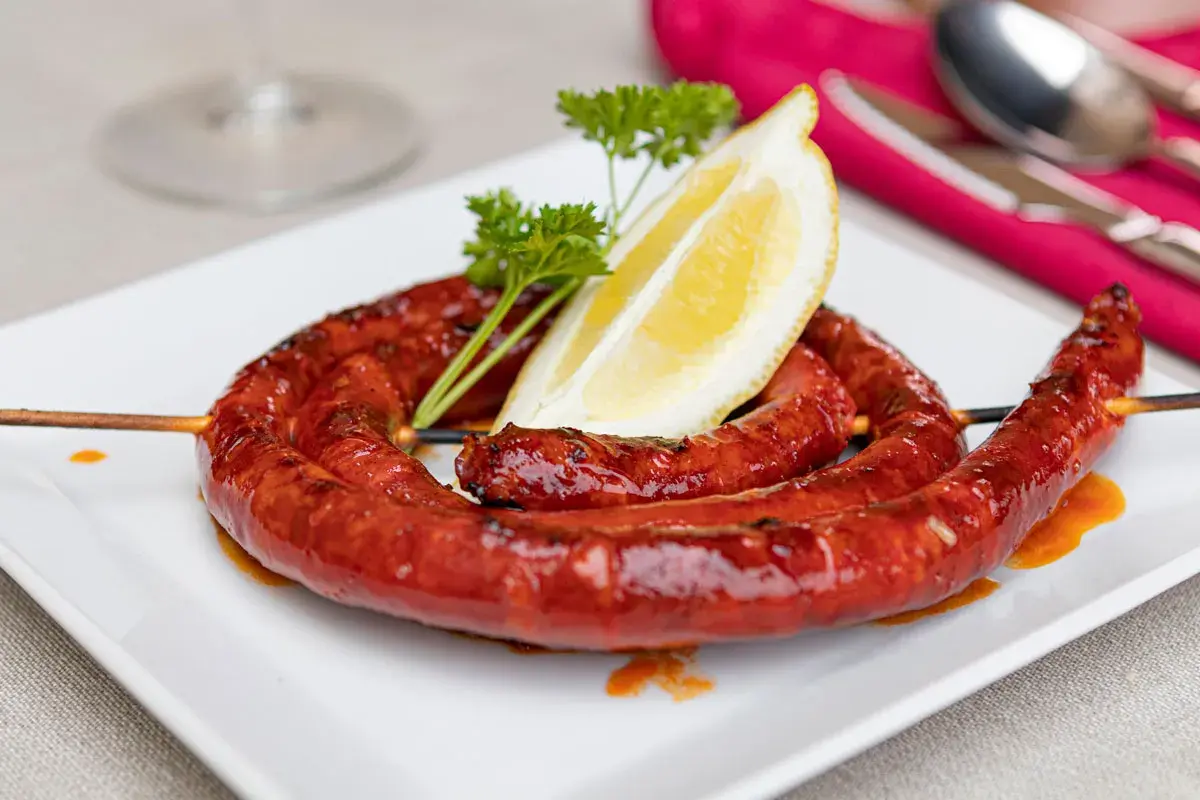
The practical points that matter before you start
- Chistorra is a thin, paprika-led sausage that cooks quickly and should stay juicy, not heavy.
- A 70/30 meat-to-fat balance is the easiest way to get the right texture at home.
- Sheep casings give the best snap, but you can still make a good version as loose sausage meat if needed.
- Cook it through gently; high heat bursts the casing and dries the filling before the centre is ready.
- Simple pairings work best - eggs, potatoes, crusty bread, beans, and dry cider or wine.
What makes chistorra different from other sausages
Chistorra sits somewhere between a fresh sausage and a lightly cured one, which is why it has such a distinct personality. It is usually thinner than standard chorizo, more garlicky than many everyday sausages, and built around paprika rather than herbs or filler. That lean shape matters: it cooks fast, browns easily, and works brilliantly as a tapa, a breakfast sausage, or a quick skillet supper.
When I think about the flavour profile, I think of three things working together: pork richness, paprika warmth, and garlic bite. If one of those disappears, the sausage starts to feel generic. That is also why I keep the seasoning simple rather than pushing it toward cumin, fennel, or too much chilli. Those flavours can be nice, but they pull the dish away from its Basque roots.
| Type | Texture | Flavour | Best use |
|---|---|---|---|
| Chistorra | Thin, juicy, fast-cooking | Garlic, paprika, pork | Tapas, eggs, bread, quick pan cooking |
| Chorizo | Usually thicker and often firmer | Often smokier, sometimes more cured | Stews, sandwiches, sliced serving |
| British sausage | Varies widely, often softer and plumper | Herby or peppery rather than paprika-led | Breakfast, bangers and mash, sausage rolls |
That comparison is useful because it stops the wrong expectations early. If you treat chistorra like a thick British sausage, you usually overcook it. If you treat it like a cured salami, you miss its freshest, most attractive side. The next step is getting the mix right, because the ingredients do most of the work.
The ingredient balance I use for a reliable home version
For a home kitchen, I prefer a fresh sausage-style version because it is practical, repeatable, and easy to cook safely. If you want a fully cured product, that belongs in a tested charcuterie workflow with proper curing control; I am not trying to improvise that here. For most readers, a fresh version gives the same paprika-forward satisfaction without unnecessary risk.
| Ingredient | Amount for 1 kg mix | Why it matters |
|---|---|---|
| Pork shoulder | 700 g | Provides the main meat flavour and structure. |
| Pork belly or back fat | 300 g | Keeps the sausage juicy and prevents a dry crumbly bite. |
| Fine salt | 22 g | Seasoning and basic curing support for flavour balance. |
| Sweet smoked paprika | 18 g | Gives the colour and the main chistorra character. |
| Hot paprika | 2 to 4 g | Adds a little edge without making the sausage aggressively spicy. |
| Garlic | 4 cloves, finely grated | Brings the sharp, savoury note the sausage needs. |
| Black pepper | 1 tsp | Rounds out the paprika and keeps the flavour from feeling flat. |
| Ice-cold dry white wine or water | 50 ml | Helps the mix bind and stay tender. |
| Sheep casings | Enough for 1 kg filling | Creates the thin, traditional shape and the best snap. |
If your pork is already minced, check the fat content first. I like a mixture that lands near 20 to 30 percent fat; anything much leaner tends to cook up dry, especially if you pan-fry it. In the UK, good pork shoulder from a butcher is usually a safer base than supermarket mince that has been trimmed too far.
My step-by-step method for mixing and stuffing
This is the part where technique matters more than drama. Chistorra does not need a long marinade or a complicated spice cabinet. It needs even seasoning, cold ingredients, and enough mixing to make the proteins bind without turning the sausage pastey.
- Chill the meat, fat, bowl, and any grinder or stuffing attachment for 20 to 30 minutes.
- Mix the salt, paprika, garlic, pepper, and cold wine or water together first.
- Add the pork shoulder and fat, then mix just until the mass turns sticky and evenly red.
- Rest the mixture in the fridge for 30 to 60 minutes so the seasoning settles.
- Soak and rinse the sheep casings, then stuff the mix gently to avoid air pockets.
- Twist into short links of about 10 to 12 cm, then prick any visible trapped air with a clean pin.
- Chill again for at least 30 minutes before cooking, or overnight if you want a slightly firmer texture.
I like the mixture to feel tacky when I pull it apart with my fingers. That tackiness tells me the proteins have started to bind, which helps the sausage hold together in the pan. If the mix looks loose and wet, it usually needs a little more mixing and a little more time in the fridge.
For readers who do not have a stuffer, I would not stop the recipe there. Shape the mix into small sausage logs or short patties and cook them in a pan. You lose the traditional casing snap, but the flavour still lands correctly, and the result is often easier to manage on a weeknight.

How I cook it so it stays juicy
Because chistorra is thin, I keep the heat moderate. High heat is the fastest way to split the casing and dry the filling, especially if the links are narrow. I aim for controlled browning first, then a gentle finish until the centre is properly hot.
The Food Standards Agency advises cooking sausages and other minced meats all the way through; a clean thermometer reading of 70°C for 2 minutes in the middle is a solid target. If you do not use a thermometer, the sausage should be steaming hot throughout, with no cool or pink centre left when you cut into the thickest part.| Method | Heat | Time | What to watch for |
|---|---|---|---|
| Pan-fry | Medium | 8 to 10 minutes | Turn often and lower the heat if the casing darkens too quickly. |
| Grill or broil | Medium-high | 10 to 12 minutes | Keep the sausage close enough to brown, but not so close that it chars before cooking through. |
| Oven | 200°C, or 180°C fan | 12 to 15 minutes | Best for a hands-off finish when you are cooking a larger batch. |
| Air fryer | 180°C | 8 to 10 minutes | Convenient, but less traditional; shake or turn halfway through. |
My own rule is simple: if the sausages are browning faster than they are cooking, the heat is too high. If they are still pale after several minutes, I give them a little more time rather than cranking the burner up. That slower finish is what keeps the interior soft and the paprika flavour clean instead of burnt.
How I serve it in a Basque-style meal
Chistorra works because it does not need much around it. I like to serve it in a way that leaves room for the sausage to lead, with a few supporting ingredients that add contrast rather than competition. Think salt, bread, potatoes, eggs, and something sharp or dry on the side.
| Serving style | Why it works | Good UK-friendly companion |
|---|---|---|
| With fried eggs and potatoes | The runny yolk softens the paprika and brings the dish together. | Thin-cut chips or buttery sautéed potatoes |
| On crusty bread | Turns the sausage into a proper tapa or lunch. | Sourdough, baguette, or a good bloomers loaf |
| With peppers and onions | Adds sweetness and moisture without hiding the sausage. | Roasted red peppers, charred onions |
| With beans or greens | Balances the fat and makes the plate feel more complete. | Cannellini beans, Savoy cabbage, or kale |
| With a dry drink | Clears the palate between bites. | Dry cider, crisp white wine, or a light lager |
When I want the plate to feel especially Basque, I keep the garnish restrained. A little olive oil, a bit of roasted pepper, and a piece of good bread are usually enough. The sausage should taste like the centre of the dish, not an accessory to it.
The mistakes that flatten the flavour
Most bad versions of chistorra fail for the same predictable reasons. None of them are subtle, and all of them are easy to avoid once you know what to watch for. I would rather point them out plainly than pretend they are small details.
- Using pork that is too lean - the sausage turns dry and loses its soft, lively bite.
- Adding too many spices - fennel, cumin, and heavy chilli can crowd out the paprika and garlic.
- Cooking on very high heat - the outside burns before the centre is ready.
- Skipping the chill time - the mix feels loose, stuffs badly, and cooks unevenly.
- Packing the pan too tightly - the sausages steam instead of browning.
- Ignoring casing quality - weak or badly rinsed casings burst and ruin the texture.
The one mistake I see most often is overcomplication. People reach for more seasoning when what the sausage actually needs is better pork, cleaner paprika, and a calmer cook. If you get those three things right, the result already tastes far closer to the Basque original than most home versions do.
What I would do for a first batch in a UK kitchen
If I were making this at home for the first time, I would keep the batch small and the process simple. I would buy good pork shoulder, add enough belly to keep the mix supple, use sweet smoked paprika as the main seasoning, and resist the urge to turn it into a spice blend. That approach is the most reliable way to get a result that feels authentic without becoming fussy.
For a first attempt, I would also think about the finish before I think about the stuffing. If you do not have casings, shape the mix into short logs and fry them gently. If you do have casings, chill the links before cooking and finish them over medium heat. Either way, the goal is the same: a thin sausage that tastes vivid, cooks quickly, and lands on the plate with a clean paprika aroma rather than a greasy one.
