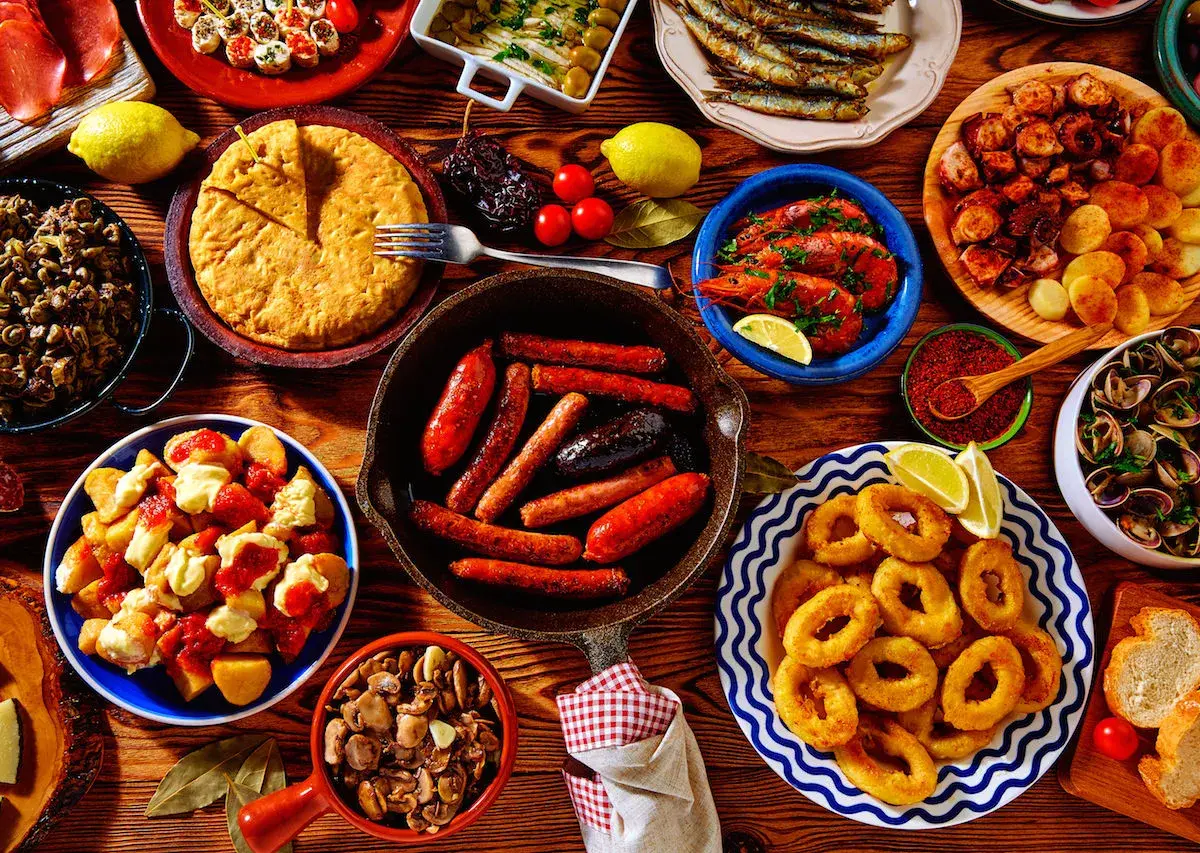
Tapas are one of the easiest ways to understand Spanish dining: small savoury dishes, shared at the table, with more emphasis on variety than on a single main course. If you want the short answer to what are tapas, they are flexible plates that can work as snacks, starters, or a whole meal depending on how you order them. This guide also explains pintxos, the Basque version of the idea, and shows how to order, pair, and eat both without guessing your way through the menu.
The essentials at a glance
- Tapas are a style of eating, not one fixed recipe.
- Pintxos are the Basque cousin: smaller, more bar-led, and often served on bread or a skewer.
- The best first order usually mixes hot and cold dishes, with enough variety to avoid a heavy table.
- In UK restaurants, tapas are usually priced per dish and served as sharing plates, not free bar snacks.
- The format works best when you think in terms of balance: salty, crisp, creamy, fresh, and something warm.
Tapas are small savoury plates built for sharing
I usually describe tapas as a dining format rather than a single category of food. You might get olives, almonds, croquetas, prawns, potatoes, or a slice of tortilla, but the point is the same: several small savoury dishes that invite sharing. That means a tapa can be a snack with a drink, a starter before a bigger meal, or the whole meal itself if the table is ordered well.
In practical terms, the format works because each plate does one job well and leaves room for another flavour on the next bite. One dish might be fried and rich, another sharp and briny, another soft and comforting. That contrast is the whole appeal. Once that is clear, the social side of the tradition makes much more sense.
Why tapas became a social way to eat
Tapas make sense in the same way a good conversation does: they are meant to unfold in stages. The custom grew around bars, movement, and conversation, and people still talk about ir de tapas or tapeo, meaning a night of moving from one place to another and tasting a little here and a little there. It is less about sitting still and more about pacing the evening.
That is why tapas rarely feel formal. They are meant to slow the meal down without making it heavy. Historically, there are several origin stories, but the modern habit is more important than the legend: a drink, a few bites, and time to stay or move on. In the Basque Country, this same instinct became even more bar-centred and more precise in its portions, which is where pintxos step in.

How pintxos differ from tapas
Pintxos are the Basque expression of the same small-plates tradition, but they have a sharper identity. They are often bite-sized, frequently served on bread, and many are held together with a skewer or toothpick. That said, the rule is not absolute. Modern pintxos can be hot, cold, simple, or elaborate, and the best bars in the Basque Country treat them as miniature cooking rather than bar decoration.
| Feature | Tapas | Pintxos |
|---|---|---|
| Region | Broadly Spanish | Strongly associated with the Basque Country |
| Typical format | Small shared plates or snacks | Compact bar bites, often on bread or a skewer |
| How they are served | Ordered from a menu and shared at the table | Often displayed on the bar or picked from a counter |
| How you pay | Usually per dish | Often per piece or counted at the end |
| What to expect | More flexible in size and style | More bar-focused and usually more bite-sized |
In other words, tapas describe the broader idea, while pintxos describe a more specific Basque expression of it. Not every bar keeps the distinction rigid, and that is fine. Modern menus often blur the line, but the serving style still tells you a lot about what to expect. Once you can tell the styles apart, choosing the right dishes becomes much easier.
The dishes you are most likely to see first
If you are new to the style, the smartest move is to start with dishes that show range without being fussy. These are the plates I would reach for first because they explain the tradition quickly and honestly.
- Patatas bravas - fried potatoes with a spicy sauce, useful because they show how tapas can be simple, hearty, and still interesting.
- Tortilla española - a Spanish omelette with potatoes and onion; it is soft, filling, and often the most reassuring dish on the table.
- Croquetas - crisp outside, creamy inside, and one of the best tests of a kitchen’s frying discipline.
- Pan con tomate - bread rubbed with tomato and olive oil; it looks plain, but it tells you a lot about the quality of the ingredients.
- Gilda - a classic Basque pintxo of olive, anchovy, and pickled pepper; it is small, salty, and very direct.
- Gambas al ajillo - garlic prawns served hot, which is why they are so often a favourite when people want something fragrant and lively.
These dishes teach you how the style works: a bit of fat, a bit of acidity, some salt, something crisp, and something soft. That is the combination I look for first, because it tells you whether a menu is genuinely well put together or just dressed up as Spanish food.
How to order the right amount
For two people, I usually start with three to four dishes if we want a light meal and five to six if we want dinner. The safest mix is one cold plate, one hot plate, one vegetable or bread-based dish, and one protein or seafood dish. If the menu looks especially rich, fewer dishes are better; tapas should feel varied, not exhausting.
- Order one or two cold bites first, such as olives, anchovies, or a Gilda.
- Add one warm crowd-pleaser, such as croquetas or patatas bravas.
- Bring in one fresher plate, such as peppers, tomato toast, or a simple salad.
- Finish with one more substantial dish only if the table still needs it.
In the UK, I would also ask whether the kitchen treats the plates as true sharing portions or as starters disguised as tapas. That one question prevents most disappointment and makes the bill easier to predict. From there, drinks and pacing matter more than perfection.
What to drink and how the table usually flows
With drinks, I think balance matters more than rules. A dry sherry, vermouth, crisp white wine, cider, or a simple lager all work depending on the dishes. For Basque pintxos, txakoli - a lightly sparkling, high-acid white wine - is classic because it cuts through oil, salt, and fried batter. If you are in a UK tapas bar, a dry white or fino-style sherry usually gives you the closest fit without being fussy.
The rhythm matters too. In a traditional bar setting, especially with pintxos, people often stand, order in rounds, and move on when they are ready. In a restaurant, the pace is slower and more seated, but the logic is the same: keep the table moving, do not over-order at once, and let the food arrive in waves. Many pintxos are designed to be eaten with your fingers or a toothpick, so you do not need to turn the meal into a formal knife-and-fork exercise.
That is the part people often miss. Tapas are not just about the food on the plate; they are about the shape of the evening. Once the pacing feels natural, the meal stops feeling like a sequence of separate dishes and starts feeling like an experience.
A balanced first order that makes the format click
If I were building a first-timer’s table, I would aim for contrast rather than volume. The easiest route is to mix one or two Basque-style bites with a few broader Spanish favourites so the table feels complete without becoming heavy.
- Start with olives or a Gilda for salt and acidity.
- Add tortilla española for something soft and comforting.
- Include croquetas or patatas bravas for contrast in texture.
- Bring in padrón peppers or pan con tomate for freshness.
- Finish with gambas al ajillo or jamón for a stronger savoury note.
That mix gives you salt, heat, creaminess, acidity, and something fresh. It also reflects why tapas and pintxos endure: the pleasure comes from pacing and contrast, not from chasing the biggest plate. Once you have that balance, the whole style feels intuitive rather than unfamiliar.
