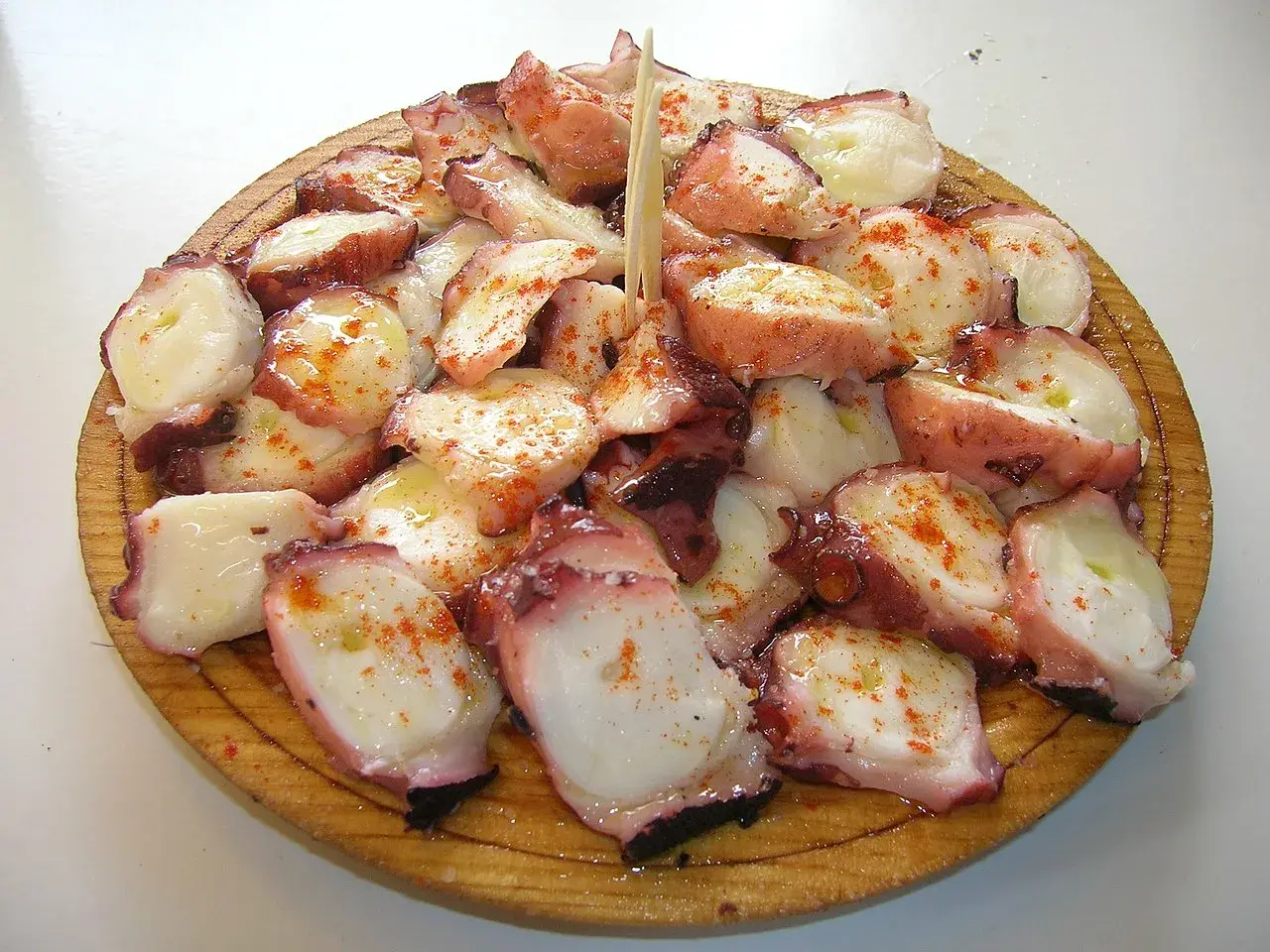
The essentials behind a good Galician octopus plate
- The dish is built on a short list of ingredients, so quality matters more than quantity.
- Texture is the real test: the octopus should be tender, never squeaky or tough.
- Frozen octopus is often the most practical choice at home because freezing helps tenderise the flesh.
- Waxy potatoes, coarse salt, olive oil, and smoked paprika do most of the flavour work.
- The best version is usually served warm, simply dressed, and without unnecessary extras.
Why this dish still feels so direct and honest
The name points back to fairground stalls and village festivals, where the dish was served as rustic food rather than restaurant showmanship. That history matters, because it explains why the recipe is so stripped down: octopus, potatoes, salt, oil, and paprika are enough when the cooking is right.
I like dishes like this because they expose weak technique immediately. If the octopus is undercooked, it is stubborn; if it is overcooked, it turns dry and woolly; if the seasoning is heavy-handed, the whole plate loses its balance. The point is not complexity. The point is control.
That simplicity is exactly why the ingredient list deserves so much attention, which is where I look next.
The ingredient choices that matter most
For a home batch that serves 2 to 4 people as a starter, I usually think in these terms: about 1 kg of octopus, 500 to 600 g of potatoes, 3 to 4 tablespoons of good olive oil, 1 to 2 teaspoons of smoked paprika, and coarse salt to finish. Those amounts are flexible, but they give you a realistic plate without drowning the seafood in garnish.
| Ingredient | What I look for | Why it matters |
|---|---|---|
| Octopus | Frozen or previously frozen, cleaned, medium size | Freezing helps tenderness and gives you a more predictable result |
| Potatoes | Waxy potatoes | They hold their shape and soak up the oil and paprika instead of collapsing |
| Paprika | Sweet smoked paprika, with hot paprika only if you want heat | It gives the dish its colour, smoke, and signature finish |
| Olive oil | Good extra-virgin olive oil | It is not decoration; it is part of the sauce |
| Salt | Coarse sea salt | It adds the final contrast and keeps the flavour from feeling flat |
In the UK, I would rather buy a well-handled frozen octopus from a specialist fishmonger than gamble on a weak fresh one that has not been stored well. If you do start with fresh octopus, freeze it first for at least 24 hours and thaw it slowly in the fridge overnight before cooking. Once the ingredients are right, the technique is mostly about patience and heat control.

How I cook it at home without guessing
- Thaw and rinse the octopus. If it is frozen, let it thaw in the fridge overnight. Rinse it well, including the head cavity if it is whole.
- Bring the pot to a gentle simmer. I use a large pot of water with enough salt to season the octopus lightly, not aggressively. A bay leaf or onion can go in, but I would not let extra aromatics take over.
- Dip the tentacles a few times first. The old trick of lowering and lifting the octopus briefly helps the tentacles curl neatly. It is not magic, but it does help with presentation.
- Cook slowly, not violently. For a medium octopus, I start checking around 35 to 40 minutes; a larger one can need 60 to 90 minutes. The exact time matters less than the fork test. A knife or skewer should slide into the thickest part without resistance.
- Let it rest in the cooking liquid. Ten to 15 minutes makes a real difference. This is where the texture settles instead of tightening up as soon as you lift it out.
- Cook the potatoes. I either simmer them separately in salted water or, if I want a deeper flavour, in some of the octopus cooking liquid. Waxy potatoes are the safer choice because they stay neat on the plate.
- Slice and finish. Cut the tentacles into thick pieces with a knife or kitchen scissors, lay them over the potatoes, add coarse salt, dust with smoked paprika, and finish with olive oil just before serving.
If you keep the heat gentle and stop only when the flesh is properly tender, the rest of the dish becomes almost effortless. That is the part most home cooks miss, and it leads straight into the mistakes that usually ruin the result.
The mistakes that make the octopus tough or dull
When this dish fails, it usually fails for one of a few reasons. The good news is that all of them are easy to avoid once you know what to watch for.
| Mistake | Why it hurts the dish | Better move |
|---|---|---|
| Boiling hard instead of simmering | A rolling boil tightens the flesh and makes texture less even | Keep the liquid at a steady, gentle simmer |
| Using the clock as the only guide | Octopus size varies too much for one fixed time to work every time | Check tenderness with a knife or skewer |
| Seasoning too heavily too early | The dish should taste of seafood first, not paprika paste | Season mainly at the end |
| Using floury potatoes | They break down and turn the plate muddy | Choose waxy potatoes that hold their shape |
| Serving it lukewarm and waiting too long to finish | The oil dulls and the paprika can taste dusty | Slice and season just before the plate hits the table |
| Thinking fresh is always better | In practice, poorly handled fresh octopus can be more stubborn than frozen | Use the best-handled octopus you can get, not the most romantic label |
I would also be careful not to overcomplicate the plate with lemon, garlic, herbs, or extra sauces unless I had a very specific reason. There are versions that go in that direction, but the classic Galician style is built on restraint, and every extra flavour needs to earn its place. That clean structure is what makes the dish work so well beside other seafood-focused cooking.
How I serve it in a British kitchen
I would serve this as a shared starter, not as a crowded main course. A warm ceramic platter works well, but a wooden board still feels right if you want a more traditional look. The old village-style presentation is rustic, not precious, and that is part of the charm.
For the rest of the table, I would keep things simple: crusty bread, a green salad with a sharp dressing, and a dry white with enough acidity to reset the palate. If you want a slightly more Iberian mood, a crisp cider also works. I would avoid creamy sides and heavy sauces, because they flatten the very thing the dish is trying to show off.
This is also a dish that sits comfortably in a seafood menu built around clarity rather than noise. That makes it a natural fit for a meal where the cooking is meant to feel calm, direct, and just a little old-world. If you cook it that way, the plate reads as deliberate instead of plain.
What I keep in mind when I make it again
If I were making this for guests, I would cook the octopus a little ahead of time, let it cool in the cooking liquid, and then rewarm it gently before slicing. That gives you more control, especially if the rest of the meal is still moving. The potatoes can be held warm for a short time, but the oil and paprika should always go on at the last minute.
The other detail I never skip is tasting the final plate before it goes out. Sometimes it needs a little more salt, sometimes a touch more oil, and sometimes nothing at all. That final check is small, but it separates a competent version from one that feels genuinely finished.
If you remember only one rule, make the texture your priority and let the seasoning stay elegant and brief. That is the difference between octopus that merely looks traditional and octopus that actually eats like the Galician classic it is.
