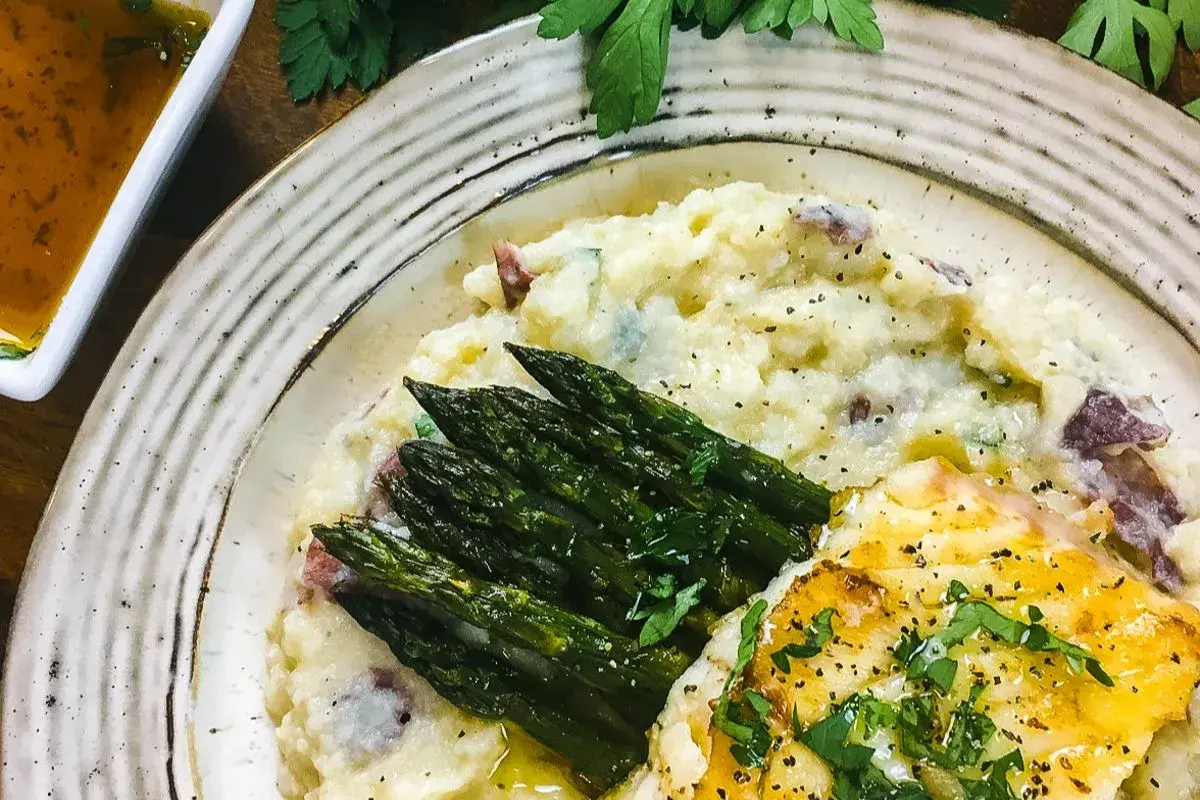
A good grouper recipe does not need much fuss: firm fillets, a hot pan, and a sauce with enough acidity to keep the fish lively. I like to tilt it toward Basque flavours - peppers, garlic, tomato, olive oil, and a clean finish of lemon or vinegar - because they complement the fish instead of hiding it. In this guide, I show the method I trust, how to judge doneness, what to serve alongside it, and what to cook instead if grouper is unavailable in the UK.
What matters most when cooking grouper at home
- Use firm, even fillets and keep the cooking time short so the flesh stays juicy.
- Basque-style peppers, tomato, garlic, and olive oil suit the fish better than heavy sauces.
- For a reliable finish, use a hot pan and cook only until the centre turns opaque and flakes cleanly.
- In the UK, I use the Food Standards Agency benchmark of 70°C for 2 minutes as the conservative safety check.
- Jersey Royals, samphire, green beans, or a simple salad make the cleanest side dishes.
Why this fish deserves a fast, high-heat approach
Grouper is one of those fish that looks sturdy enough to take a beating, but it actually rewards restraint. The flesh is firm and mildly sweet, which means it can hold its shape in a pan, yet it still dries out if you treat it like a stew fish and leave it cooking too long. I almost never reach for slow braising here; I want a brief sear, enough seasoning to wake it up, and a sauce that gives the plate lift.
That is why pan-searing, grilling, or a short oven finish usually works best. The fish gets flavour from contact with heat, not from long exposure to liquid. Once you understand that, the rest becomes straightforward, and the Basque-style sauce makes even more sense.

The Basque-leaning flavour profile that suits it best
When I want the dish to feel rooted in Basque cooking, I build around a simple pepper sauce rather than a creamy one. Piperade-style ingredients - onion, peppers, tomato, garlic, olive oil, and a little smoked paprika - give the fish sweetness, acidity, and a soft savoury depth that fits seafood beautifully. This style matters because grouper has enough presence to stand up to strong flavours, but not so much fat that it needs a rich sauce.
If you prefer a cleaner finish, lemon and capers work well too, but I think the Basque version is more interesting on the table. It feels generous without being heavy, and it pairs naturally with bread or potatoes. The point is not to mask the fish; it is to frame it.
| Style | What it gives the plate | When I use it |
|---|---|---|
| Lemon and capers | Sharp brightness and a quick finish | When I want the fish to stay front and centre |
| Piperade | Sweet peppers, tomato, and gentle warmth | When I want a more Basque feel |
| Garlic, olive oil, and white wine | Clean savoury depth | When the fillets are excellent and I want to keep things spare |
From here, the most useful thing is a version you can actually cook on a weeknight without thinking too hard.
The version I cook most often
I build this as a 30-minute dinner for 2. The sauce starts first, the fish goes in last, and everything lands on the table while the fillets are still glossy. If you keep the ingredients balanced and the pan hot, the dish feels restaurant-level without becoming complicated.
| Ingredient | Amount | Why it matters |
|---|---|---|
| Grouper fillets | 2 fillets, about 170 to 200 g each | Gives you enough thickness for a good sear without overcooking |
| Fine sea salt | 1 tsp, plus more to taste | Brings out the fish and the vegetables |
| Black pepper | 1/2 tsp | Gives the fish a light bite |
| Olive oil | 2 tbsp | Helps build colour and carries the Basque flavours |
| Butter | 1 tbsp | Adds a rounder finish at the end |
| Onion | 1 small, thinly sliced | Forms the base of the pepper sauce |
| Red pepper | 1, sliced | Adds sweetness and colour |
| Yellow pepper | 1, sliced | Gives the sauce more depth and a softer flavour |
| Garlic | 2 cloves, finely chopped | Sharpens the sauce without overpowering the fish |
| Smoked paprika | 1 tsp | Creates the Basque-style warmth |
| Chopped tomatoes | 150 g | Brings acidity and keeps the sauce loose |
| Dry white wine | 75 ml | Helps the sauce reduce into something brighter |
| Lemon juice or sherry vinegar | 1 to 2 tsp | Finishes the sauce so it does not taste flat |
| Parsley | 1 tbsp, chopped | Freshens the final plate |
- Pat the fillets dry with kitchen paper, then season both sides with salt and black pepper. I like to leave them for 10 minutes while I start the sauce.
- Warm the olive oil in a wide pan over medium heat. Add the onion and peppers and cook for 8 to 10 minutes until softened and sweet, not browned.
- Stir in the garlic and smoked paprika for 30 seconds, then add the tomatoes and white wine. Simmer for 5 to 7 minutes until the sauce looks slightly glossy and reduced.
- Push the sauce to one side of the pan or transfer it to a plate. Increase the heat, add the butter, and sear the fillets for about 2 to 3 minutes on the first side, depending on thickness.
- Turn the fish carefully and cook for another 1 to 2 minutes. Spoon a little sauce over the top, finish with lemon juice or vinegar, and scatter parsley over everything.
If the fillets are unusually thick, I sometimes give them 2 to 4 minutes in a 200°C fan oven after the sear. That keeps the outside attractive without forcing the centre to overcook in the pan.
How to judge doneness without guessing
This is the point where most home cooks either undercook fish out of caution or overcook it because they are waiting for a dramatic sign. Grouper is easier than that. I look for three things: the flesh turns opaque, it separates into clean flakes with light pressure, and the centre no longer looks glossy and translucent. For a conservative UK benchmark, I follow the Food Standards Agency guidance and aim for 70°C in the centre for 2 minutes.
| Method | Typical heat | Approximate time | Best use |
|---|---|---|---|
| Pan-seared | Medium-high | 2 to 3 minutes on the first side, 1 to 2 on the second | When you want the strongest crust |
| Oven-baked | 200°C fan | 8 to 12 minutes | When the fillets are thick or you are cooking several portions |
| Grilled | High heat | 3 to 4 minutes per side | When you want a little smoke and char |
| Poached in sauce | Gentle simmer | 5 to 7 minutes | When you want the softest texture and do not need browning |
I also trust one practical rule: if the fish needs heavy poking to decide whether it is done, it is probably already past the sweet spot. The moment it flakes easily and still looks moist, pull it from the heat and let carryover cooking do the rest.
What to serve with it on a British table
In the UK, I would keep the sides seasonal and clean. Jersey Royals are excellent because they echo the simple, vegetable-led style of Basque coastal cooking without stealing attention from the fish. Samphire, green beans, buttered leeks, or a crisp salad with fennel all work well too. If you want something warmer and more substantial, crushed potatoes or a little bread for the sauce are the safest choices.
- Jersey Royals with butter and parsley for a classic early-summer plate.
- Samphire or green beans when you want a briny, bright contrast.
- Crushed potatoes if you want the sauce to soak in.
- Charred fennel for a faint anise note that suits the peppers.
- A peppery salad when you want the meal to stay light.
For drinks, I would go with a dry white wine, a crisp English sparkling wine, or even a dry cider if the rest of the meal is kept simple. That keeps the seafood fresh and the plate feeling relaxed rather than formal.
When I would swap to another fish
If grouper is difficult to source, I would not force the recipe and hope for the best. I would switch to another firm white fish that behaves in a similar way. In the UK, sea bass is my first choice because it stays elegant in the pan, followed by hake or cod loin if I want something more widely available. Halibut is excellent too, but I treat it as a more premium option.
| Swap | Texture | How I would cook it |
|---|---|---|
| Sea bass | Firm and clean, close to grouper in the pan | Use the same method and timing, then check early |
| Hake | Flakier and a little softer | Cook gently and reduce the pan time by about 1 minute |
| Cod loin | Thick, mild, and very familiar | Best with a short pan sear or a quick oven finish |
| Halibut | Very firm and meaty | Excellent for searing, but keep a close eye on the centre |
If you use a fish that is thinner or more delicate than grouper, I would loosen the sauce slightly and shorten the final cook. That small adjustment matters more than any extra seasoning you might be tempted to add.
The small adjustments that make this plate worth repeating
The difference between a decent fish dinner and one you want to make again usually comes down to a few unglamorous habits. I dry the fillets properly, heat the pan fully before the fish goes in, and avoid crowding the pan so the surface can sear instead of steam. I also season the sauce at the end, not at the beginning, because peppers and tomatoes reduce differently depending on how much salt is already in the pan.- Choose fillets of similar thickness so they finish together.
- Dry the fish well before cooking so the surface browns properly.
- Use enough heat to sear, but not so much that the butter burns instantly.
- Finish with lemon juice or vinegar after cooking so the sauce stays bright.
- Serve immediately, while the fish is still glossy and the vegetables are soft but not collapsing.
That is the version I keep coming back to: simple seafood, clear flavour, and enough Basque character to feel intentional without becoming fussy. If you keep the cooking brief and let the peppers, tomato, and olive oil do their work, the fish will take care of the rest.
