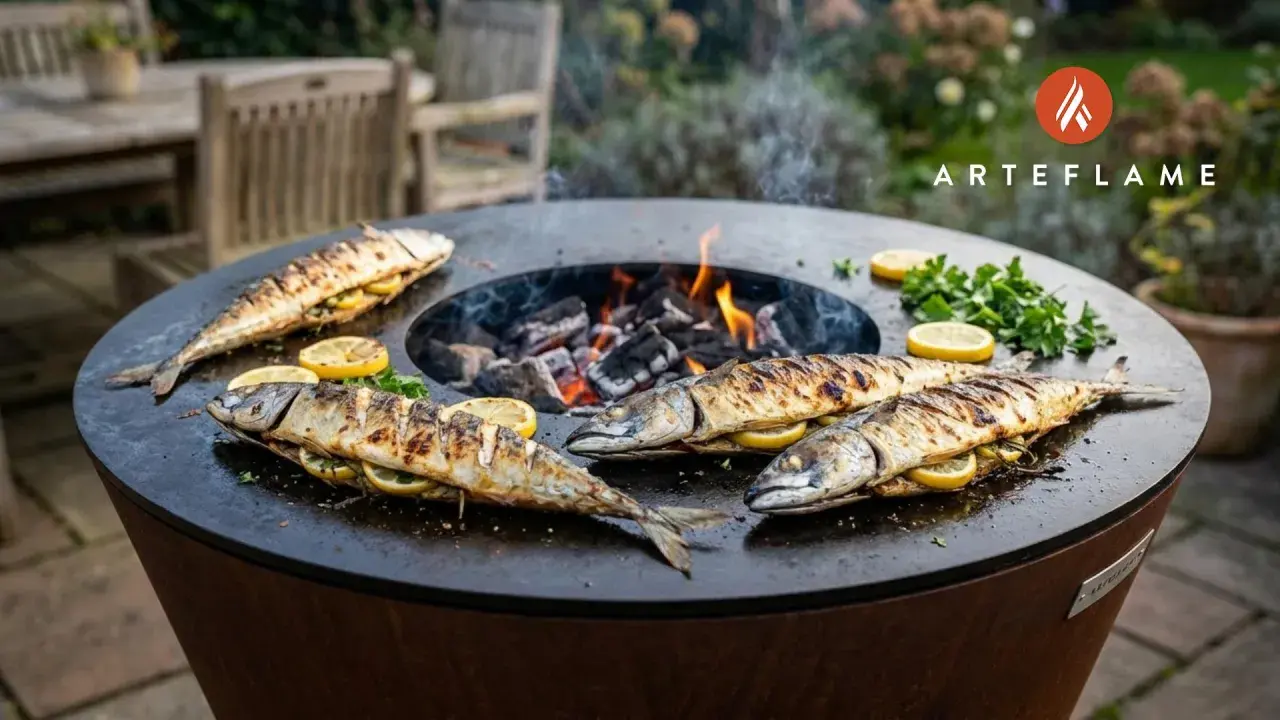
A good grilled fish dinner looks simple, but the result depends on a few disciplined choices: the right species, a properly heated grill, and a short, confident cook. In this guide I focus on the techniques that keep the flesh intact, the flavour bright, and the surface just charred enough, with a Basque-leaning approach that fits a British barbecue as well as a quiet kitchen supper.
The quickest route to fish that stays moist, smoky, and well seasoned
- Choose firm or oily fish first if you want the least risk of sticking and tearing.
- Preheat the grill properly; a hot grate gives you colour before the flesh dries out.
- Use skin, a basket, or a two-zone fire as insurance for delicate fillets and thicker cuts.
- Season simply with salt, olive oil, citrus, herbs, and a little chilli rather than heavy marinades.
- Cook to texture, not the clock alone; fish should flake with gentle resistance, not collapse.
Choose fish that stays firm over heat
I start with texture, not flavour, because texture decides whether dinner feels polished or messy. Firm, skin-on fillets and naturally oily fish are the easiest place to begin; lean, delicate fish can still work, but they need more care, a lighter hand with seasoning, or a basket to protect them.
| Fish | Why it works on the grill | How I handle it |
|---|---|---|
| Sea bass and sea bream | Firm flesh, good skin, mild flavour | Medium-high direct heat, skin side down first |
| Mackerel and sardines | Oily, forgiving, quick to cook | Hot fire, short cook time, citrus after cooking |
| Salmon and trout | Fat helps keep the centre moist | Medium heat and an early pull from the grill |
| Hake, cod, and haddock | Lean but versatile if handled gently | Use skin-on pieces, a basket, or a foil finish if needed |
| Monkfish, tuna, and swordfish | Steak-like texture that tolerates stronger heat | Brief sear, then a short finish on a cooler zone |
| Whole small fish | Bones and skin protect moisture | Ideal when you want the cleanest flavour and the least fuss |
If I want the least stress and the best payoff, I usually choose mackerel, sea bass, trout, or a small whole fish. Bones and skin buy you time, which is exactly what you need when cooking over heat. Once the fish is chosen, the grill itself becomes the next variable.
Set up the grill so the flesh releases cleanly
For gas, I preheat the grill for 10 to 15 minutes with the lid down. For charcoal, I wait until the coals are ashed over and glowing rather than smoking fiercely. I clean the grate while it is hot, then oil the fish lightly instead of drowning the bars in oil. Too much oil on the grate feeds flare-ups and makes the fish harder to turn.
| Method | Best for | Why I use it |
|---|---|---|
| Direct grate | Skin-on fillets, small whole fish, oily species | Best char and the cleanest flavour when the fish is sturdy enough |
| Grill basket | Delicate fillets, thin fish, pieces that break easily | Makes turning safer and reduces the chance of tearing |
| Foil parcel | Very lean fish, aromatics, quick midweek cooking | Most forgiving, though you lose some smoke and crust |
| Two-zone fire | Thicker fillets, steaks, and larger whole fish | Lets me sear first and finish gently without burning the outside |
The goal is a clean release, not a heroic flip, and that usually means leaving the fish alone until the crust forms. You are looking for browning, not burning; that browning comes from the Maillard reaction, the savoury crust created when heat works on the surface proteins and natural sugars. With the grate ready, the finish can stay bright and coastal instead of heavy.

Build a Basque-style finish that stays bright
I like Basque seasoning because it respects the fish. Olive oil, garlic, parsley, lemon, and a little white wine vinegar are enough for most species, and a pinch of piment d'Espelette gives warmth without turning the plate dull or overworked. The idea is not to cover the seafood; it is to sharpen it.
A sauce I actually use
Mix 3 tbsp olive oil, 1 tbsp white wine vinegar, 1 tbsp lemon juice, 1 small grated garlic clove, 1 tbsp chopped parsley, and a pinch of salt. If you want a little heat, add a few chilli flakes. Spoon it over the fish after it comes off the grill, or serve it beside the plate so the smoke stays crisp and distinct.
Read Also: Squid Ink Rice - Master This Dramatic Seafood Dish
What I put beside it
New potatoes, blistered peppers, green beans, or a simple tomato and onion salad all make sense here. If txakoli is available, its bright acidity fits beautifully; if not, any dry, mineral white wine does a similar job. Once the flavour is settled, the only thing left is getting the timing right.
Cook each cut to the right point
Thickness matters more than species. I use the table below as a working guide, then I watch the flesh rather than the clock. A very hot charcoal fire will run faster than a mild gas barbecue, so treat these times as ranges, not promises.
| Cut | Typical size | Approximate time | What tells me it is ready |
|---|---|---|---|
| Thin fillets | 1 to 2 cm thick | 3 to 5 minutes total | Edges turn opaque and the fish lifts cleanly |
| Medium fillets | 2 to 3 cm thick | 5 to 8 minutes total | The centre is just losing translucency |
| Fish steaks | About 2.5 to 3 cm thick | 2 to 4 minutes per side | The surface is seared but the middle still looks moist |
| Small whole fish | 300 to 500 g | 8 to 12 minutes total | The flesh near the backbone no longer looks glassy |
| Larger whole fish | 600 g to 1 kg | 15 to 20 minutes total | The thickest part is opaque and the skin has crisped without burning |
My own rule is to pull fish a touch early rather than wait for it to look completely dry. Carryover heat, the residual heat that keeps cooking the flesh after it leaves the grill, does the final bit of work for you. The last thing that changes the result is avoiding the habits that dry the fish out.
Avoid the mistakes that turn a good catch into dry dinner
- Putting damp fish on a lukewarm grate is the fastest way to make it stick. Pat it dry and heat the grill properly.
- Moving it too soon tears the skin and the flesh. If it resists, leave it for another minute.
- Treating every fish the same is a bad habit. Oily mackerel is not the same as lean cod, and whole fish behave differently again.
- Over-marinating delicate fillets softens the surface. Acidic marinades need restraint and short contact times.
- Ignoring flare-ups scorches the outside before the centre catches up. A cooler zone gives you control.
- Cooking until the flesh looks tight and dry usually means the fish has gone past its best point.
If a fillet tears, it usually means the surface had not formed a proper crust yet, so I give it more time before I try to move it next time. With those traps out of the way, the process becomes repeatable rather than temperamental.
A dependable weeknight route from market to table
When I want the cleanest result with the least risk, I buy sea bass, bream, mackerel, or trout, salt it lightly 15 to 20 minutes ahead, dry it again, and cook it over medium-high heat. I finish with olive oil, lemon, parsley, and a touch of garlic, then serve it with potatoes and peppers. For a little more Basque character, I add a pinch of piment d'Espelette; for a sharper profile, I use a little vinegar instead.
That approach works because it keeps the dish focused on the fish rather than the garnish. Keep the fish dry, the heat steady, and the seasoning restrained, and the plate will taste of the sea first and smoke second, which is exactly where I want it.
