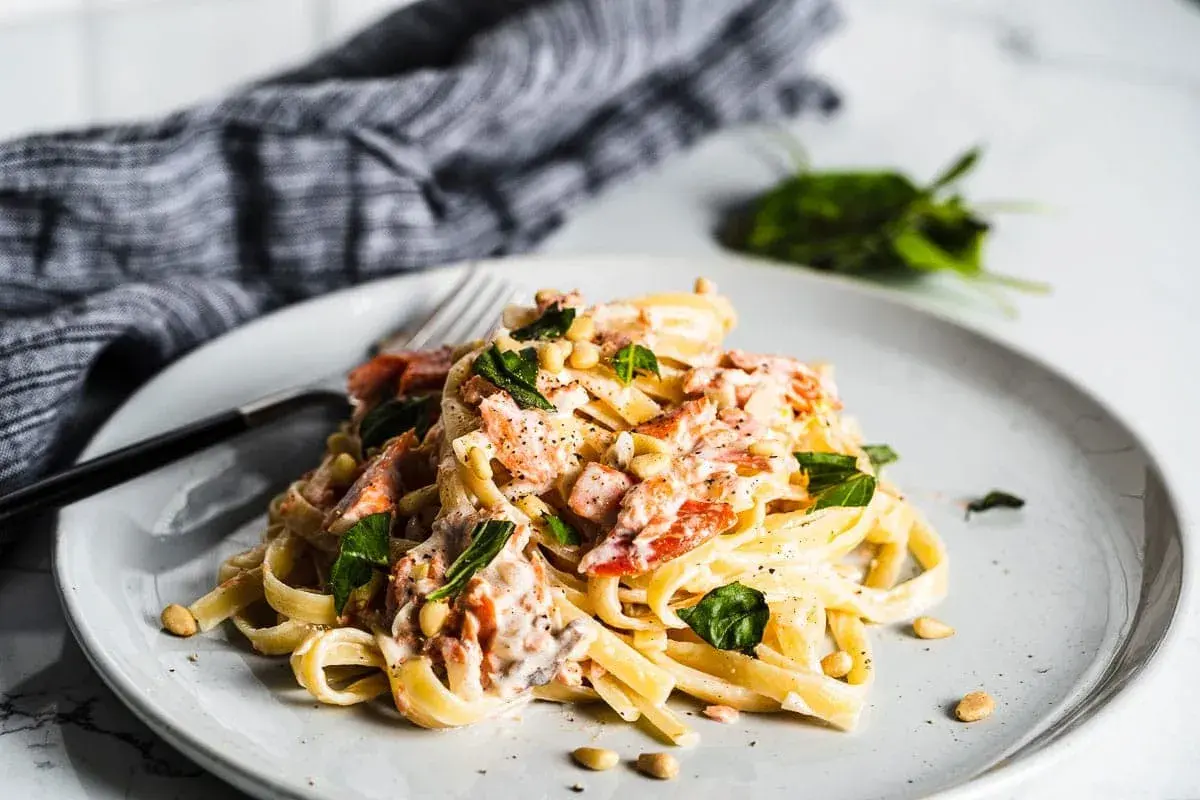
A good smoked salmon pasta should taste bright, silky, and lightly luxurious, not heavy or muddled. In this article I break down the flavour balance, the ingredient choices that actually matter, the method that keeps the fish delicate, and the UK safety details worth knowing before you serve it. I’m also keeping the tone practical and slightly Basque-minded: clean seafood, good olive oil, citrus, and herbs doing the real work.
The quickest route to a balanced, elegant pasta
- Use lemon and herbs to cut through the smoke instead of loading the pan with cream.
- For 2 generous servings, 180-200g dried pasta and 100-120g smoked salmon is a reliable starting point.
- Fold the salmon in at the end so it stays tender and does not turn dry or stringy.
- Hot-smoked salmon gives a firmer, fully cooked result; cold-smoked salmon feels silkier and more delicate.
- In the UK, higher-risk diners should not treat ready-to-eat cold-smoked fish as an automatic safe choice.
Why this dish works so well
I like this kind of pasta because it solves three things at once: it is fast, it feels substantial, and it tastes more layered than the ingredient list suggests. Smoked salmon already brings salt, smoke, and fat, so the pasta only needs a little help from acid, herbs, and a light sauce to feel complete.
The starch from the pasta is doing important work here. It gives the sauce something to cling to, which is why long shapes such as linguine, spaghetti, or tagliatelle usually feel better than very small shapes. If I want a slightly more rustic bowl, I will use short pasta such as fusilli or rigatoni, especially when I want capers, shallot, or pepper to collect in the hollows.
The other reason it works is contrast. Without lemon or another sharp element, the dish can become flat very quickly. With the right amount of acidity, it reads as bright and seafood-forward rather than merely creamy. That balance is the thread I keep pulling through the rest of the recipe, because once you understand it, the rest becomes simple.
The ingredient balance that keeps it from turning heavy
For two generous portions, I usually start with a small, disciplined set of ingredients. You do not need much, but the proportions matter.
| Ingredient | Practical amount | Why it matters |
|---|---|---|
| Dried pasta | 180-200g | Enough structure for two people without burying the fish. |
| Smoked salmon | 100-120g | A standard pack is usually enough if the pasta is the main event. |
| Shallot or mild onion | 1 small | Gives sweetness and depth without overpowering the salmon. |
| Garlic | 1 clove | Useful, but only if it stays gentle and does not dominate. |
| Cream or crème fraîche | 100ml cream or 2 tablespoons crème fraîche | Adds body; keep it light so the dish stays fresh. |
| Lemon | 1 whole | Zest for aroma, juice for lift, and a cleaner finish. |
| Capers | 1 tablespoon | Brings salinity and a sharper edge. |
| Fresh herbs | A small handful | Dill gives the classic profile; parsley keeps it cleaner and brighter. |
If the salmon is especially salty, I go lighter on the capers and do not add much extra salt until the very end. If I want the sauce to feel more polished, I use a spoonful of pasta water to loosen it rather than pouring in more cream. That small adjustment often makes the biggest difference.

How I cook it so the salmon stays tender
The main rule is simple: cook the pasta properly, build the sauce gently, and add the salmon off the heat. Smoked fish is already cured and flavoured, so it does not need aggressive cooking; it needs respect.
- Boil the pasta in well-salted water until it is just shy of done. Reserve about 150ml of the cooking water before draining.
- Warm 1 to 2 tablespoons of olive oil or a small knob of butter in a pan, then soften the shallot for 2 to 3 minutes. Add the garlic for the last 30 seconds only.
- Stir in the cream or crème fraîche, lemon zest, capers, and a splash of reserved pasta water. Keep the heat low so the sauce stays glossy rather than splitting.
- Toss in the pasta and let it finish in the sauce for about 30 to 60 seconds. The starch from the pasta water helps everything come together.
- Turn off the heat, then fold through the salmon in loose ribbons. Finish with lemon juice, black pepper, and herbs.
I never boil the salmon itself. Once it is in the pan, a gentle fold is enough. If I am using hot-smoked salmon, I can add it a little earlier because it is firmer and already fully cooked. If I am using cold-smoked slices, I keep them for the very end so they stay silky rather than dry.
That approach also makes the dish more forgiving. If the sauce looks a touch thin, I reach for another spoonful of pasta water before I touch the cream. If it feels too rich, I fix it with lemon. In seafood cooking, acid usually solves more problems than fat does.
Variations that still make sense
Once the base is right, the dish can move in a few different directions without losing its identity. I would not add every ingredient in the cupboard; I would choose one clear flavour route and commit to it.
| Style | Best for | Flavour profile | My note |
|---|---|---|---|
| Creamy lemon and dill | A classic weeknight dinner | Soft, rounded, and familiar | The safest crowd-pleaser, especially if you want comfort without heaviness. |
| Olive oil, capers, and chilli | A lighter plate | Brighter, sharper, more savoury | This is the version I would take in a Basque-minded direction, because it lets the seafood stay clear and clean. |
| Tomato, garlic, and parsley | A pantry dinner | More robust and less rich | Use a modest amount of tomato so the smoke is still recognisable. |
| Hot-smoked salmon with asparagus | Spring lunches or a sturdier supper | Flakier, warmer, and more cooked | Good when you want a firmer texture and less delicate handling. |
If I want a restrained coastal feel, I lean on olive oil, garlic, parsley, a little lemon zest, and maybe roasted peppers. That direction feels more natural to me than piling on cream, because the salmon remains the lead ingredient instead of becoming one note in a heavy sauce. It is a useful reminder that seafood pasta does not have to be rich to feel complete.
What to serve alongside it
The safest side dishes are the ones that bring freshness, crunch, or a bit of bitterness. I do not want another rich item beside the pasta, because that quickly makes the plate feel tired rather than elegant.
- A peppery salad with cucumber, fennel, or radish.
- Steamed tenderstem broccoli, asparagus, or green beans with a little olive oil.
- Good bread for mopping up the sauce, especially if the pasta is served slightly loose.
- A simple citrus-dressed salad if you want the meal to feel lighter.
For drinks, I would choose a dry white with good acidity. A crisp Basque-style txakoli works beautifully if you have it, but an English Bacchus or a Sauvignon Blanc does the job well too. I would avoid an oaky white, because the smoke in the fish already gives enough depth.
Portion size also matters. For a lighter lunch, I go down to about 75g dried pasta per person and add more vegetables. For dinner, 90 to 100g per person feels right if the pasta is the main dish. That makes the meal feel intentional instead of bloated.
Safety and storage matter more than people think
In the UK, the FSA advises pregnant people and anyone with a weakened immune system to avoid ready-to-eat cold-smoked fish, or to make sure it is thoroughly cooked before eating. That matters because cold-smoked salmon is cured and smoked at a low temperature, but it is not fully cooked in the way many people assume. I treat that as a real boundary, not a footnote.
If I am cooking for a mixed table, I use one of two approaches. I either choose hot-smoked salmon, which is fully cooked and more forgiving, or I heat the cold-smoked fish through properly as part of the dish. What I would not do is serve the fish casually warmed for a higher-risk diner and assume that is enough.
- Keep the salmon chilled until you are ready to cook.
- Respect the use-by date on the pack.
- Do not leave the finished dish sitting out for long.
- If in doubt, use hot-smoked salmon rather than cold-smoked slices.
That approach keeps the meal both safer and simpler to execute. It also pushes the dish toward better habits in general, because seafood tastes best when it is handled cleanly and served at the right moment.
The details I would never skip
- Use lemon in two stages: zest in the pan and juice at the end.
- Salt the pasta water properly, because the fish is only part of the seasoning.
- Keep the sauce slightly looser than you think it should be; pasta absorbs liquid quickly.
- Add the salmon last so its texture stays supple.
- Choose one clear flavour path and do not overload the pan with too many competing extras.
That is the version I trust most: simple, seafood-forward, and polished enough to feel deliberate without asking for much more than a pan, good pasta, and a little restraint.
