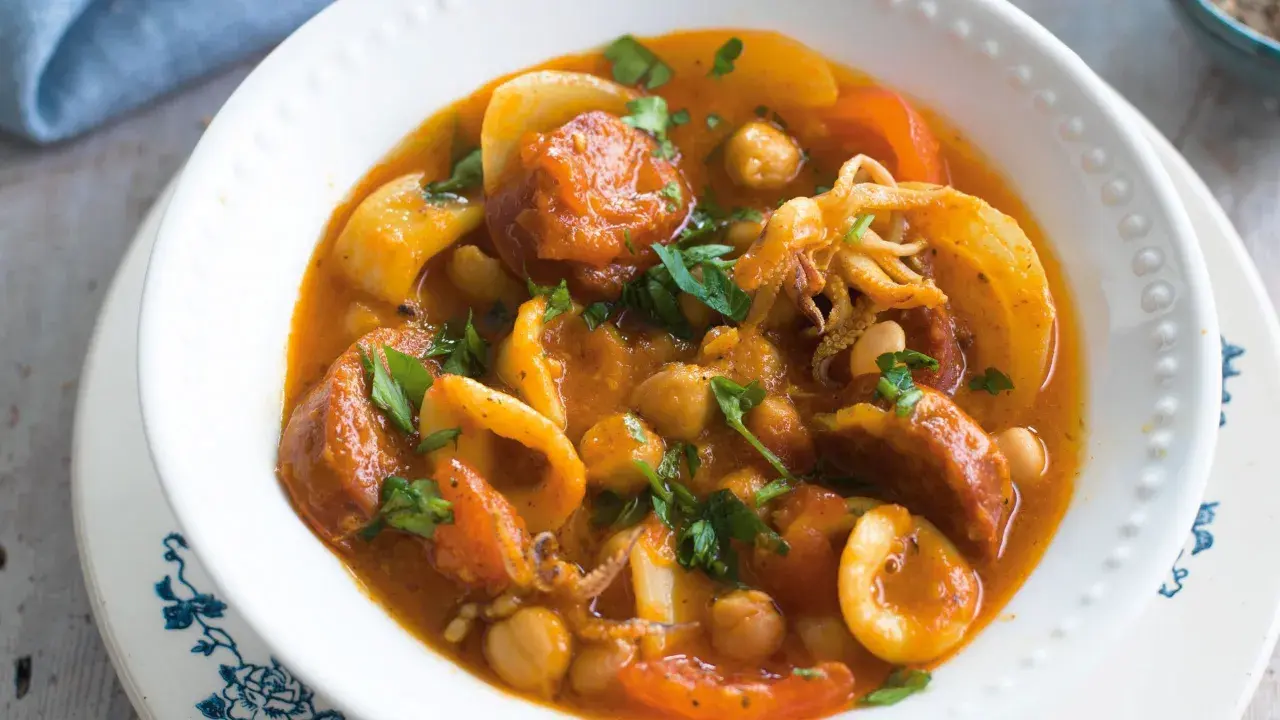
Spanish-style squid works best when the method matches the seafood, not the other way around. A fast sear gives tender rings and a clean, saline finish; a slow braise turns squid into something richer, softer, and built for bread or rice. What I want to give you here is the practical version: the dishes that define the style, the timings that protect texture, and the small choices that make the result feel genuinely Spanish rather than just fried calamari with extra herbs.
Good squid in Spanish cooking is usually simple, fast, and sharply seasoned.
- The best versions are cooked either very quickly or very slowly; the middle window is where squid turns tough.
- Fried rings, grilled squid, ink braises, and stuffed squid are the main Spanish-style preparations worth knowing.
- In the UK, frozen squid is often the most practical buy if you thaw and dry it properly.
- For serving, I prefer lemon, parsley, garlic, potatoes, bread, and a dry white wine or Basque txakoli.
- The dish improves when you keep the seasoning restrained and let the squid taste like squid.
What Spanish-style squid actually means
In Spain, squid is not treated as a single recipe but as a family of dishes built around texture. In one kitchen it is battered and fried for tapas; in another it is grilled on a plancha with olive oil and garlic; elsewhere it is cooked down with onion, tomato, paprika, or ink until the sauce becomes the point. I find that the best versions respect a very simple rule: either cook squid briefly and fiercely, or cook it long enough for collagen to relax again.
That is why the dish feels so versatile across coastal regions. Andalusian bars lean into crisp, bite-sized plates; Basque kitchens often prefer clean flavours, good seafood, and sharper seasoning; home cooks might reach for a braise that can sit beside rice or crusty bread. Once you understand that structure, the classic plates make a lot more sense.

The dishes you are most likely to see on a Spanish menu
When I think about squid in Spanish cooking, I do not think of one single recipe. I think of a few reliable formats, each with its own rhythm, texture, and best use. The table below shows the versions you are most likely to meet in restaurants and at home.| Dish | What it is | Texture | Best for | Typical cooking time |
|---|---|---|---|---|
| Calamares a la romana | Squid rings in a light batter, deep-fried until golden | Crisp outside, tender inside | Tapas, snacks, sandwiches | 2-4 minutes |
| Calamares a la plancha | Squid grilled or seared on a very hot surface with olive oil, garlic, and parsley | Firm, juicy, lightly smoky | Light starters and lunch plates | 3-6 minutes |
| Chipirones en su tinta | Small squid cooked in its ink with onion, garlic, and often wine or tomato | Silky, dark, savoury | Rice, bread, more composed meals | 35-45 minutes |
| Chipirones encebollados | Small squid braised with onions, sometimes with white wine or sherry | Soft and sweet-savory | Weeknight cooking with bread or potatoes | 30-40 minutes |
| Stuffed squid | Squid filled with breadcrumbs, seafood, ham, or the tentacles, then simmered in sauce | Rich and layered | Special occasions | 45-75 minutes |
| Bocadillo de calamares | Fried squid in a crusty sandwich, often with little more than bread and lemon | Crisp, chewy, direct | Casual eating, street-food energy | Same as fried squid |
What I like about these dishes is that none of them tries to hide the squid. The batter, ink, onion, or grill marks all serve the same purpose: they frame the seafood without flattening it. That is the logic to carry into the kitchen if you want the same result at home.
How to cook squid so it stays tender
I treat squid as an ingredient with a narrow sweet spot. It is one of those foods that can feel luxurious when handled well and frustrating when the heat is wrong. The difference is rarely technique in the abstract; it is usually a matter of timing, dryness, and whether the pan is hot enough to do the job quickly.
Quick cooking works best for rings and small bodies
For frying or grilling, dry the squid thoroughly first. Moisture on the surface lowers the pan temperature and encourages steaming, which is the enemy of a good sear. Season lightly, then move it onto very hot oil or a screaming-hot plancha.
- Pat the squid dry with kitchen paper before it hits the pan.
- Salt it just before cooking, not long in advance.
- Use enough heat to get an immediate sizzle.
- Cook rings or small bodies for about 1-3 minutes total, turning once if needed.
- For deep-frying, aim for roughly 180°C so the coating sets before the squid overcooks.
Slow cooking is for braises, ink sauces, and stuffed squid
If you want a softer, richer dish, do not stop halfway. Squid toughens in that awkward middle stage, then becomes tender again after a longer simmer. That is why a braise needs patience: onion, tomato, garlic, white wine, paprika, or ink can do the heavy lifting if you let the liquid stay at a gentle bubble.
- Keep the simmer low rather than boiling hard.
- Plan on at least 30 minutes for a braise.
- For stuffed squid, let the sauce reduce enough to coat the spoon, not so much that it dries out.
- If the squid was briefly seared first, let that colour add flavour before the slow finish takes over.
Once you see the two paths clearly, the rest of the recipe choices start to feel obvious. The next question is where to buy the right squid and how to prep it properly before it ever reaches the pan.
How to buy and prep squid in the UK
For UK cooks, frozen squid is often the most dependable option, especially if you are not buying from a specialist fish counter. It is usually cleaned, easy to portion, and perfectly suitable for frying, grilling, or braising once it is thawed slowly in the fridge and dried well. Fresh squid can be excellent too, but I only choose it when I can trust the turnover and the smell is clean and sea-like rather than sharp.
When you are choosing, think in terms of use. Smaller squid, often sold as baby squid or chipirones, are better for quick cooking and tapas-style plates. Larger tubes are more useful for stuffing, slicing into rings, or simmering in sauce. As a rough guide, 300-400 g is enough for two generous starters, 500-600 g works for four tapas portions, and about 800 g to 1 kg is a better amount if squid is the centre of the meal.
- Look for firm flesh that springs back instead of collapsing.
- A mild sea smell is good; a strong, sour smell is not.
- Thaw frozen squid overnight in the fridge, not on the counter.
- Dry it well before frying or grilling, or it will steam instead of brown.
- If you are stuffing tubes, ask for them cleaned so you do not waste time on prep.
If you are serving the dish in a home kitchen, that prep stage matters as much as the recipe itself. Good squid starts with smart buying, and smart buying makes the last step easier: deciding what to put on the table beside it.
What to serve with it on a Basque-inspired table
Spanish-style squid usually tastes best when the sides are simple and purposeful. I like it with lemon wedges, alioli, charred peppers, boiled potatoes dressed with olive oil, or a crisp salad of tomatoes and onion. For a more complete meal, squid sits naturally with rice, fideuà, or bread that can catch every bit of sauce.
Basque pairings are especially useful because they keep the meal bright rather than heavy. A chilled txakoli cuts through fried squid beautifully; dry cider works just as well if you want something sharper and more rustic. For ink-sauced or onion-braised squid, I would reach for a mineral white wine or even a dry fino-style sherry, because the dish needs lift more than sweetness.
- For fried squid, serve lemon, alioli, and a cold, dry drink.
- For grilled squid, serve olive oil, herbs, and potatoes or salad.
- For ink or tomato braises, serve bread, rice, or a simple saffron rice dish.
- For a fuller seafood meal, build around seafood fideuà or rice with squid and prawns.
- For a Basque note, keep the garnish clean and the acidity high.
That balance is what stops squid from feeling like a bar snack only. With the right sides, it becomes the centre of the meal, and that is where the small mistakes start to matter.
The small decisions that make it restaurant-worthy
The gap between good squid and forgettable squid is usually made of tiny decisions. I have seen people ruin a promising dish by crowding the pan, salting too early, using lukewarm oil, or trying to “fix” rubberiness with more heat when the squid was already past the point of rescue. The better habit is to commit to one cooking style and then protect it all the way through.- Do not overfill the pan; squid needs direct contact with heat.
- Do not move it constantly when searing; let the surface colour first.
- Do not drown it in sauce if the recipe is meant to stay crisp.
- Do finish it with parsley, lemon, and good olive oil when the dish calls for brightness.
- Do rest braised squid for a few minutes so the sauce settles and thickens slightly.
- Do reheat gently, once, because repeated reheating usually makes squid tougher.
If I were cooking this for guests, I would choose a fast grilled or fried version for a starter and a slow onion or ink braise for a shared main. That gives you the full range of Spanish squid cooking without forcing one technique to do another’s job, and it is usually the difference between a dish people eat and a dish people remember.
