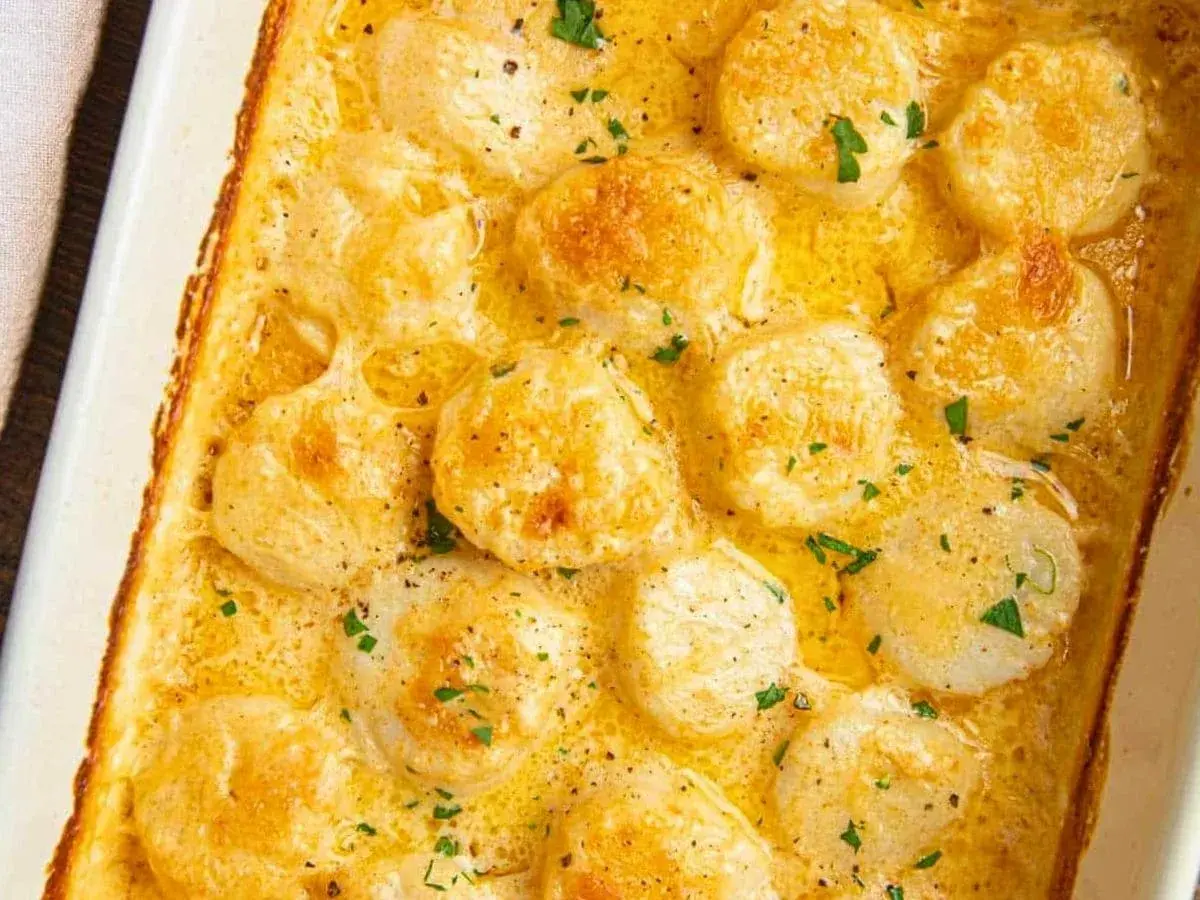
A good scallop gratin is all about restraint: sweet shellfish, a creamy sauce that stays light, and a crisp top that adds texture without stealing the show. In this guide I explain how to choose scallops in the UK, how to build a sauce that does not turn heavy, and how to bake the dish so it feels restaurant-level rather than rushed.
The best results come from simple ingredients handled with care
- Use large king scallops for a classic starter; queen scallops need less oven time and suit smaller portions.
- Keep the sauce looser than you think, because it thickens as it bakes.
- Breadcrumbs should be crisp and lightly seasoned, not bulky or greasy.
- For four starter portions, 12 large scallops, about 150 ml cream, 100 ml white wine, and 50 g crumbs is a practical baseline.
- Most bakes are ready in 8 to 12 minutes in a hot oven; overcooking is the main risk.
- A Basque-leaning finish works well with garlic, parsley, lemon zest, and a small pinch of piment d'Espelette.
Why the dish works when each part stays in balance
Scallops are naturally sweet and delicate, so the sauce has to support them rather than cover them. I usually think of the dish as a three-part equation: a clean shellfish flavour, a savoury cream base, and a breadcrumb crust that gives the bite the scallops themselves cannot provide. If one part gets too loud, the whole thing feels clumsy.
That is why I keep the seasoning precise. A little shallot, a little garlic, a dry white wine, and enough butter to make the sauce silky are usually enough. A heavy layer of cheese or a thick roux-based sauce can work, but it often pushes the dish away from the elegant starter most people want. From here, the next question is practical: which scallops actually give the best result?

Choose scallops that stay sweet and firm
In the UK, I would normally reach for king scallops first. They are large enough to stay juicy through a short bake, and they give the dish a clean, elegant look in shells or shallow ramekins. Queen scallops can be excellent too, but they cook faster and are easier to overdo, so I treat them as a quicker, smaller version of the same idea.
I also pay attention to how the scallops are packed. Dry-packed scallops usually behave better in the oven because they do not shed extra liquid into the sauce. If the scallops are wet-packed, I dry them carefully and keep the seasoning light, because excess moisture is what turns a neat bake into a watery one.
| Option | What it gives you | Best use | My take |
|---|---|---|---|
| King scallops | Large, sweet, firm | Classic starter portions | Best all-round choice for a gratin-style bake |
| Queen scallops | Smaller, softer, more fragile | Quick family-style bake | Cook fast and keep the sauce very light |
| Hand-dived scallops | Clean flavour, good texture | Simple, high-quality finish | Ideal when you want the shellfish to lead |
| Frozen scallops | Convenient, often good value | Off-season cooking | Thaw fully and dry them properly or the sauce gets watery |
If I am making this for guests, I want scallops that need as little correction as possible. Once the seafood is right, the sauce can stay elegant instead of having to work overtime. That leads straight into the part where many home cooks overcomplicate things: the base and the topping.
Build a sauce that coats, not smothers
For four starter portions, my base is simple: 1 small shallot, 1 garlic clove, 100 ml dry white wine, 150 ml double cream or 120 ml cream plus 2 tbsp crème fraîche, 25 g butter, a pinch of salt, white pepper, and a little lemon zest. The crème fraîche helps steady the sauce, which matters if you want to make the dish ahead by a few minutes and bake it at the end. I reduce the wine first, then add the cream, so the finished sauce tastes fresh rather than flat.
The topping should be just as restrained: 50 g fine breadcrumbs, 1 tbsp chopped parsley, 1 tbsp melted butter or olive oil, and a very small pinch of piment d'Espelette if you want a Basque edge. You can add a little grated hard cheese, but I only do that when I want a richer, more obviously gratinated finish. The best version tastes like seafood first and crust second. Once the sauce and crumbs are ready, the next step is the short bake that keeps the scallops tender.
Bake it hot and briefly
I preheat the oven to 220C fan or 240C conventional, because a hot oven gives the top colour quickly before the scallops tighten. The assembly is straightforward: spoon a little sauce into each shell or ramekin, nestle the scallops in a single layer, add a little more sauce, then finish with the breadcrumb mix. If you are using seared scallops, reduce the oven time slightly because they already have colour and some carryover cooking.
- Pat the scallops dry and season lightly.
- Sweat the shallot gently in butter until soft, not browned.
- Reduce the wine by about half before adding the cream.
- Keep the scallops in the sauce only long enough to coat them.
- Bake for 8 to 12 minutes, then finish under the grill for 1 to 2 minutes if the crumbs need more colour.
The finish I look for is simple: opaque flesh, a springy centre, and sauce that is bubbling at the edges but still loose enough to spoon. If you wait until the top is deeply browned, the scallops are usually already past their best. That is why serving style matters too, especially if you want to bring a Basque note to the table.
Bring a Basque note to the table without overwhelming the seafood
Basque cooking often respects the ingredient before anything else, and I think that approach suits shellfish perfectly. A brisk white like txakoli, which is a lightly sparkling Basque wine with bright acidity, cuts through the cream and keeps each bite lively. If you cannot find it, choose another dry, mineral white rather than a buttery one; the dish already has enough richness.
For flavour, I lean on garlic, parsley, lemon zest, and a trace of piment d'Espelette rather than a heavy spice blend. Roasted peppers, a green salad, or simply buttered samphire all work well beside the shellfish. I would avoid mashed potatoes, dense pasta, or anything that makes the plate feel larger than the scallops themselves. The point is to frame the seafood, not compete with it. That said, there are a few common mistakes that can make an otherwise good bake feel dull or muddy.
Avoid the mistakes that make the bake feel heavy
- Do not use a thick sauce that stands up in the pan before baking; it will only tighten further in the oven.
- Do not leave wet scallops sitting in the sauce for long, because they release liquid and dilute the flavour.
- Do not pile on too many breadcrumbs, or the crust becomes dry and stodgy instead of crisp.
- Do not over-salt early; the sauce reduces, so the seasoning concentration changes as it cooks.
- Do not overbake in the hope of colouring the top. A short blast under the grill is safer than leaving the scallops in too long.
When I get this dish wrong, it is usually because I tried to make it richer than it needs to be. Once you accept that scallops are already a premium ingredient, the job becomes clearer: protect their texture, keep the sauce clean, and let the topping provide contrast. That is also why make-ahead planning matters more than many people expect.
Prep ahead the right way and handle leftovers carefully
You can prepare the sauce and breadcrumb topping earlier in the day, which makes service much easier, but I would still assemble the dish as late as possible. Scallops are delicate, and even a short wait in a warm sauce starts to soften their texture. If I am hosting, I keep the components separate, warm the sauce gently, and bake only when the first course is ready to go.
For leftovers, I am cautious. Shellfish does not reward casual reheating, so I chill the dish quickly, refrigerate it promptly, and reheat only once, gently, until piping hot. If the texture has gone rubbery, I would rather stop there than force it into a second meal. That said, there is one final practical point worth keeping in mind before you cook the dish for guests.
The version I would serve for a dinner that feels polished, not fussy
If I were serving this for a small dinner in the UK, I would use large king scallops, a reduced wine-and-cream sauce, a parsley-and-garlic crumb, and a few bright Basque accents rather than a long list of extras. I would plate it with a crisp salad, warm bread, and a dry white that refreshes the palate after each spoonful. The result should feel generous but controlled, which is exactly what makes this kind of seafood starter memorable.
The safest rule is simple: keep the shellfish at the centre, keep the sauce light, and use the topping for texture, not bulk. When those three things line up, you get a dish that is rich without being heavy and elegant without being difficult.
