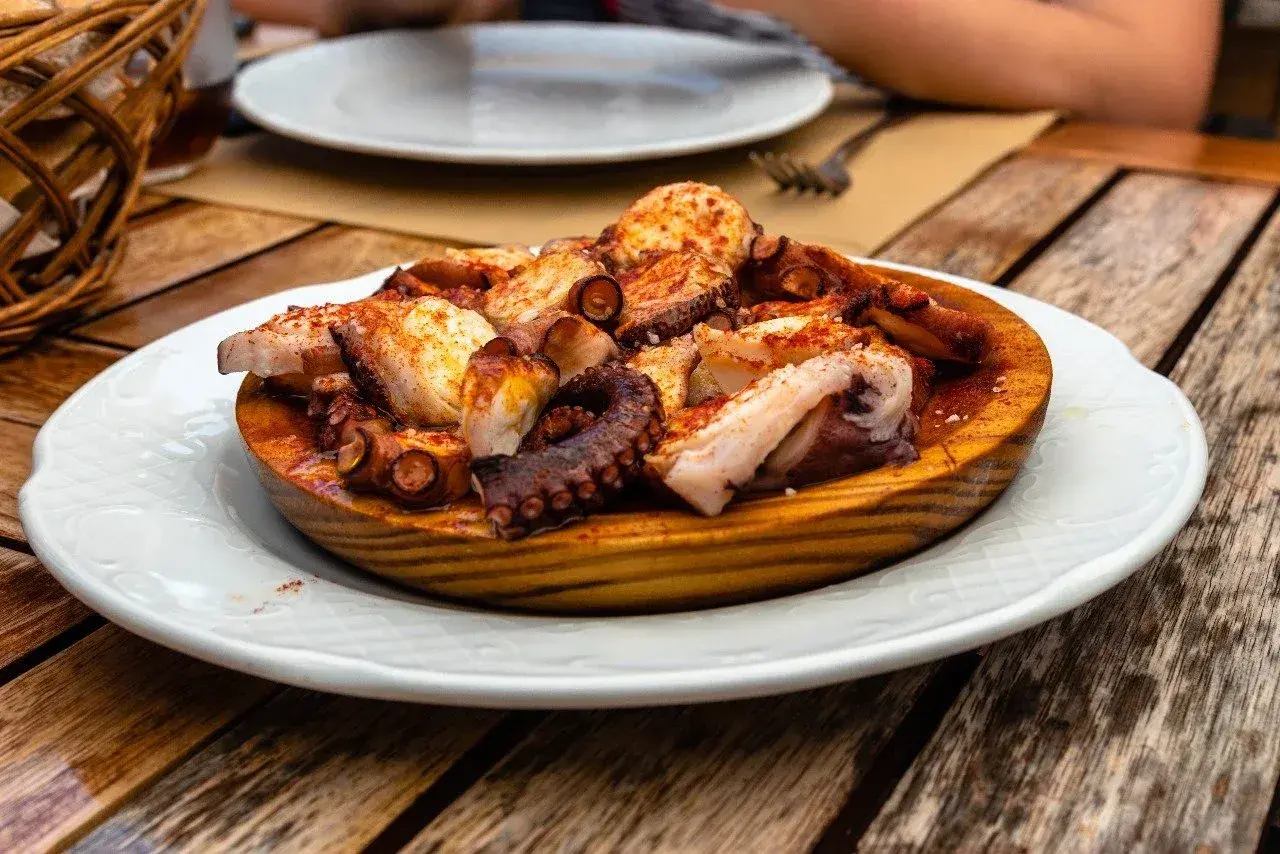
The classic Spanish octopus dish from Galicia looks spare on the plate, but it depends on a few precise choices: the cut of octopus, the cooking method, the seasoning, and the way it is served. Done well, it tastes clean, slightly smoky, and far more elegant than the ingredient list suggests. This guide covers what it is, how I cook it until it stays tender, and how to plate it so it feels at home in a good seafood meal.
The essential formula is simple and worth getting right
- Galician octopus is usually served with olive oil, paprika, and coarse salt on a wooden board.
- Tenderness matters more than elaborate sauce or garnish.
- A gentle simmer is the safest traditional method; a pressure cooker is the fastest practical one.
- Potatoes are common and useful, but they are not the whole story.
- In a UK kitchen, frozen octopus is often the easiest route to consistent results.
What this Galician classic is really about
In Galicia, you will hear this called pulpo a la gallega or pulpo a feira, and the idea is refreshingly direct: octopus, boiled until tender, then dressed with olive oil, salt, and paprika. Spain.info describes the classic plate in exactly that spare way, and that restraint is the point; the seafood should still taste like seafood, not like a sauce hiding it. Tourism of Galicia treats it as festive food as much as restaurant food, which explains the wooden-board presentation and the informal, almost street-stall energy around it.
That matters because people often expect octopus to be either aggressively charred or heavily seasoned, but this dish works by doing less, not more. Once you see it that way, the ingredient list becomes much easier to judge.
The ingredients that do the heavy lifting
I think the biggest mistake home cooks make is treating every ingredient as equally important. They are not. Octopus, olive oil, paprika, and salt are the core; potatoes and aromatics are supporting actors.
| Ingredient | What it contributes | How strict I am about it |
|---|---|---|
| Octopus | The centre of the dish; it needs slow cooking to turn supple | Essential, and size affects timing |
| Extra-virgin olive oil | Rounds the flavour and carries the paprika | Essential, and worth using generously |
| Paprika | Gives colour, warmth, and the dish’s signature finish | Sweet paprika is classic; smoked paprika adds a deeper note |
| Coarse salt | Sharpens the final bite and stops the dish from tasting flat | Essential, but best used at the end |
| Potatoes | Absorb the oil and make the dish more substantial | Common and useful, though not mandatory |
| Onion or bay leaf | Adds a light aromatic background to the cooking water | Optional, especially for a home version |
If I were stripping it back to the essentials for a first attempt, I would keep the octopus, a good extra-virgin olive oil, sweet paprika, coarse salt, and potatoes if I want the dish to feel more complete. With those in place, the real challenge is cooking the octopus so it stays supple, not squeaky.
How to cook octopus until it stays tender
I usually cook it gently rather than chasing a dramatic boil. For a whole octopus around 1.5 to 2kg, expect roughly 45 to 90 minutes on the stovetop depending on size and age; a pressure cooker can cut that to about 15 minutes at high pressure, plus the time it takes to build pressure.
| Method | Typical time | When I use it |
|---|---|---|
| Gentle simmering | 45 to 90 minutes | When I want the most control and the most traditional feel |
| Pressure cooker | About 15 minutes at high pressure, plus pressurising time | When I want speed without giving up tenderness |
| Boil first, then char | 2 to 3 minutes over high heat after cooking | When I want a restaurant-style finish with light browning |
- Clean the octopus well and remove the beak if it has not already been done.
- Bring a large pot of water to a gentle boil with an onion and, if you like, a bay leaf.
- Some cooks dip the octopus in and out of the water three times first so the tentacles curl; I use that trick when I want the traditional look.
- Simmer gently until a knife slides into the thickest part with little resistance.
- Let it rest briefly in the cooking liquid if you plan to slice it later.
- Cut into large, even pieces and finish with olive oil, paprika, and salt.
If you want a little char, I would broil or grill it for 2 to 3 minutes at the end, just enough to deepen the edges without drying the flesh. The moment the texture is right, the rest of the dish becomes much easier to balance.

How I like to serve it at the table
I like this best when it is still warm, sliced thick enough to keep the bite, and finished on a board or a plain plate so the colour does the work. A few pieces of boiled potato are the most traditional companion, because they catch the olive oil and paprika without getting in the way.
- Crusty bread for the oil and paprika.
- Boiled potatoes or waxy potatoes for substance.
- Charred peppers for colour and sweetness.
- A simple green salad if you want something lighter.
- Albariño or txakoli if you want a northern Spanish drink pairing.
On a Basque-inspired table, I would keep the rest of the spread light: a few seafood bites, something acidic, and maybe a cold, dry white. The dish is already expressive, so the rest of the meal should frame it rather than compete with it.
The mistakes that make octopus tough or bland
I see the same failures over and over: people rush the simmer, overdo the garnish, or try to rescue undercooked octopus with a heavy sauce. None of those fixes work for long.
- Boiling too hard, which tightens the flesh and makes it stingy instead of supple.
- Stopping too early, because octopus can go from chewy to tender only after enough collagen has broken down.
- Adding too much paprika or garlic so the dish tastes seasoned but not clearly of the sea.
- Cutting it too thin, which makes the texture feel less interesting on the plate.
- Serving it icy cold straight from the fridge when you actually want a soft warm bite.
The cleanest version is not the blandest one; it is the one where each ingredient has a reason to be there. Once you avoid those mistakes, adapting the dish for a UK kitchen becomes much simpler.
A UK home-cook version that still feels authentic
If I were making this in the UK, I would not chase a mythical fresh octopus at any cost. A well-handled frozen octopus is often the most practical starting point, and in my experience it usually gives you a better shot at tenderness than a mediocre fresh one that has sat around too long.
For portions, I would treat about 1.5 to 2kg as enough for four tapa-sized portions or two to three main-course portions once potatoes are included. If you can only find tentacles, the method still works; just shorten the cooking time and keep testing for tenderness with a knife.
The other adjustment I would make in a British kitchen is to lean on equipment, not guesswork: use a pressure cooker if time is tight, or simmer patiently if you want more control. That is where a home version starts to feel reliable rather than merely ambitious.
What I would keep simple the first time
If you make this once, keep the first version disciplined: octopus, olive oil, paprika, salt, potatoes, and nothing ornamental that distracts from the texture. Once you have that baseline, you can move towards grilled edges, different paprika blends, or a more elaborate seafood spread, but I would learn the plain Galician version first because it teaches the dish properly.
If you want a practical bonus, this is also a good make-ahead dish because it holds for a short time once cooked; I prefer to dress it shortly before serving so the olive oil stays lively and the paprika does not turn dull. That is the real value of this classic: it looks modest, yet it rewards precision more than almost any other seafood plate.
