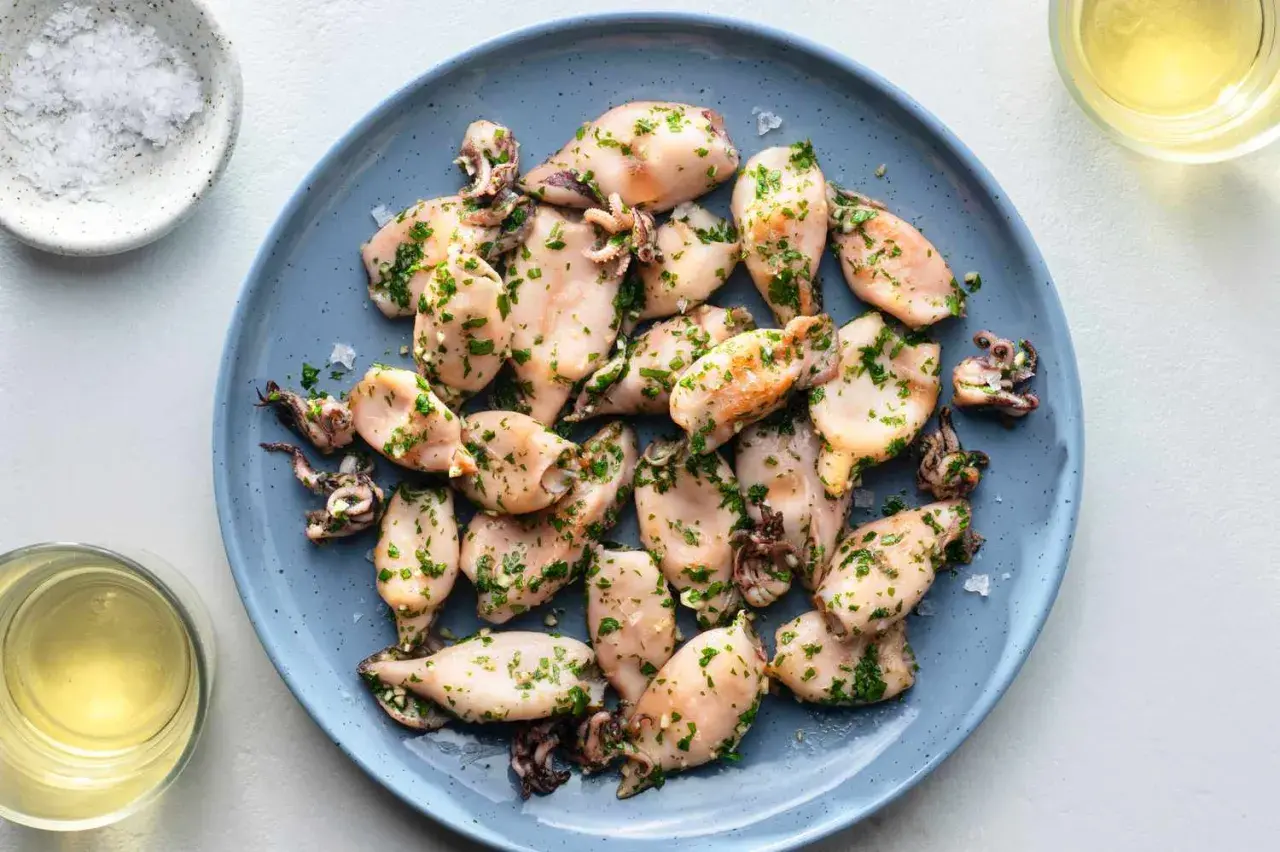
The small decisions that keep squid tender
- Buy cleaned or frozen squid if you want the easiest route, but whole squid gives you more control.
- Cook it either very fast at high heat or slowly in a braise; the middle ground is where it toughens.
- In the UK, it is usually a relatively affordable seafood buy, especially when frozen.
- Basque dishes such as chipirones en su tinta and chipirones a lo pelayo show how good it can be when treated simply.
- Dry the squid thoroughly before grilling or frying, and do not crowd the pan.
What baby squid actually is and why it cooks so fast
Baby squid is simply a small squid, usually sold whole, cleaned, or cut into tubes and tentacles. It belongs to the same family as octopus and cuttlefish, but the flesh is thinner and the cooking window is tighter, so timing matters more than technique. In practice, I think of it as a seafood ingredient that rewards confidence: one hot pan, a little oil, and not much more.
The flavour is mild, slightly sweet, and happy to carry stronger ingredients around it. That is why it works so well with Basque staples such as olive oil, onion, garlic, peppers, parsley, and dry white wine.
BBC Good Food notes that squid is available all year round and freezes well, which makes it a very practical buy rather than a seasonal luxury. Once you understand that, the next question is less about finding it and more about choosing the right form.
How I would buy and prep it in the UK
If I am buying in the UK, I look first at the form, not the label. Cleaned squid saves time, whole squid gives me more control, and frozen squid is often the best-value option because it can be thawed and cooked without much fuss. When I want to think about sustainability, I check the Marine Conservation Society's Good Fish Guide and ask where the squid came from before I decide.
| Form | Best use | What I look for |
|---|---|---|
| Whole fresh baby squid | Grilling, stuffing, ink sauces | Firm flesh, clean smell, and an intact ink sac if I want to use it |
| Cleaned squid | Weeknight cooking | Less prep, fewer bits to trim, and a quicker route to the pan |
| Frozen squid | Frying, braising, pan cooking | Reliable quality if thawed slowly and dried properly before cooking |
| Rings or tubes | Fast frying and salads | Convenient, though a little less characterful than whole squid |
If I buy it whole, I want the flesh firm and the smell clean. If I buy it cleaned, I still pat it dry and trim away anything that feels sloppy or wet, because surface moisture is what ruins a good sear. For home cooking, that dry step matters more than most people realise.
Once it is cleaned and dry, the main decision is not the recipe so much as the heat level.
The cooking methods that protect tenderness
The rule I trust is simple: either cook squid very fast or cook it long enough to soften again. The awkward middle is where it turns rubbery, and baby squid is especially unforgiving if the pan is too cool or the timing drifts.
| Method | Typical timing | What it gives | When I use it |
|---|---|---|---|
| Very hot grill | 1-2 minutes per side | Light char, smoke, and a firm-tender bite | Starters, pintxos, and simple barbecue plates |
| Quick fry | 2-3 minutes | Crisp outside, soft centre | Rings, tentacles, and lightly coated squid |
| Slow braise | 45-60 minutes | Silky texture and deeper flavour | Tomato, onion, wine, or ink sauces |
When I grill squid, I pat it dry, oil it lightly, and put it over the hottest part of the grill. If the heat is right, it starts taking colour within a minute or two, which is exactly what I want. If I am braising, I commit to the slow route and let the sauce do the work; the half-way approach is what usually makes squid chewy.
That is why it likes punchy partners such as chilli, garlic, or chorizo, but not heavy sauces that bury it. The seafood has enough personality to stand on its own if the cooking is clean.

Basque dishes where it feels most at home
- Chipirones a la plancha are the simplest version: squid grilled with olive oil, garlic, and parsley, then finished with lemon. I like this when I want the flavour of the squid itself to stay front and centre.
- Chipirones en su tinta use squid ink for a deep, dark sauce, usually with onion, pepper, tomato, stock, and a dry white wine such as txakoli. The ink is not a stunt; it gives the dish depth, salinity, and a very Basque kind of drama.
- Chipirones a lo pelayo pair baby squid with caramelised onions and green peppers. That sweetness against the sea flavour is a very smart move, and it is the version I recommend to anyone who thinks squid always has to be fried.
Basque cooking rarely hides the ingredient. It lets the squid lead, then uses olive oil, pepper, onion sweetness, and a little acidity to sharpen it. That restraint is what makes the dish feel honest rather than overworked.
If I want the bar-side version, I think in terms of pintxos: a small plate of fried squid, a spoonful of aioli, and bread to catch the juices. It is simple food, but there is nothing simplistic about it.
The mistakes that make squid tough
The biggest mistake is trying to cook baby squid in the middle. If the heat is not high enough for a fast sear, or if you are not braising it long enough to relax the fibres again, it lands in the unpleasant chewy zone. I see this happen most often when people are nervous and keep stirring the pan instead of letting the heat do its job.
- Starting with wet squid turns a sear into steam. I always dry it first.
- Overcrowding the pan drops the temperature and slows browning. I cook in batches.
- Using medium heat for too long is the classic mistake. I either go hard and fast or slow and patient.
- Overstuffing small bodies makes them burst. If I want stuffing, I use larger squid tubes instead.
- Relying on a heavy batter can hide the texture rather than improve it. I prefer a light coating or none at all unless I want a proper fried dish.
Once you stop fighting the ingredient, it becomes much easier to place on the table. The trick is not to make squid behave like chicken or white fish; it has its own rhythm.
Why I keep baby squid on the menu
I keep baby squid in rotation because it is one of the few seafood ingredients that can move cleanly from a quick starter to a sauced main without losing its identity. It is useful when I want something that feels lighter than a big fish dish, but still has enough flavour to stand beside peppers, onions, wine, or ink.
- Choose it for starters, pintxos, and bar snacks when you want something quick and crisp.
- Choose larger squid when you need stuffing space or want thicker rings.
- Choose a braise when you want the sauce to carry the dish.
- Choose a grill when you want the cleanest seafood flavour with the least fuss.
For drinks, I would lean toward txakoli, a dry white wine, or another crisp, saline white rather than anything oaky. For the plate, I like lemon, parsley, garlic, grilled peppers, and crusty bread more than heavy sauces. That balance is the practical truth of Basque-style squid cooking: simple ingredients, tight timing, and enough restraint to let the seafood speak for itself.
