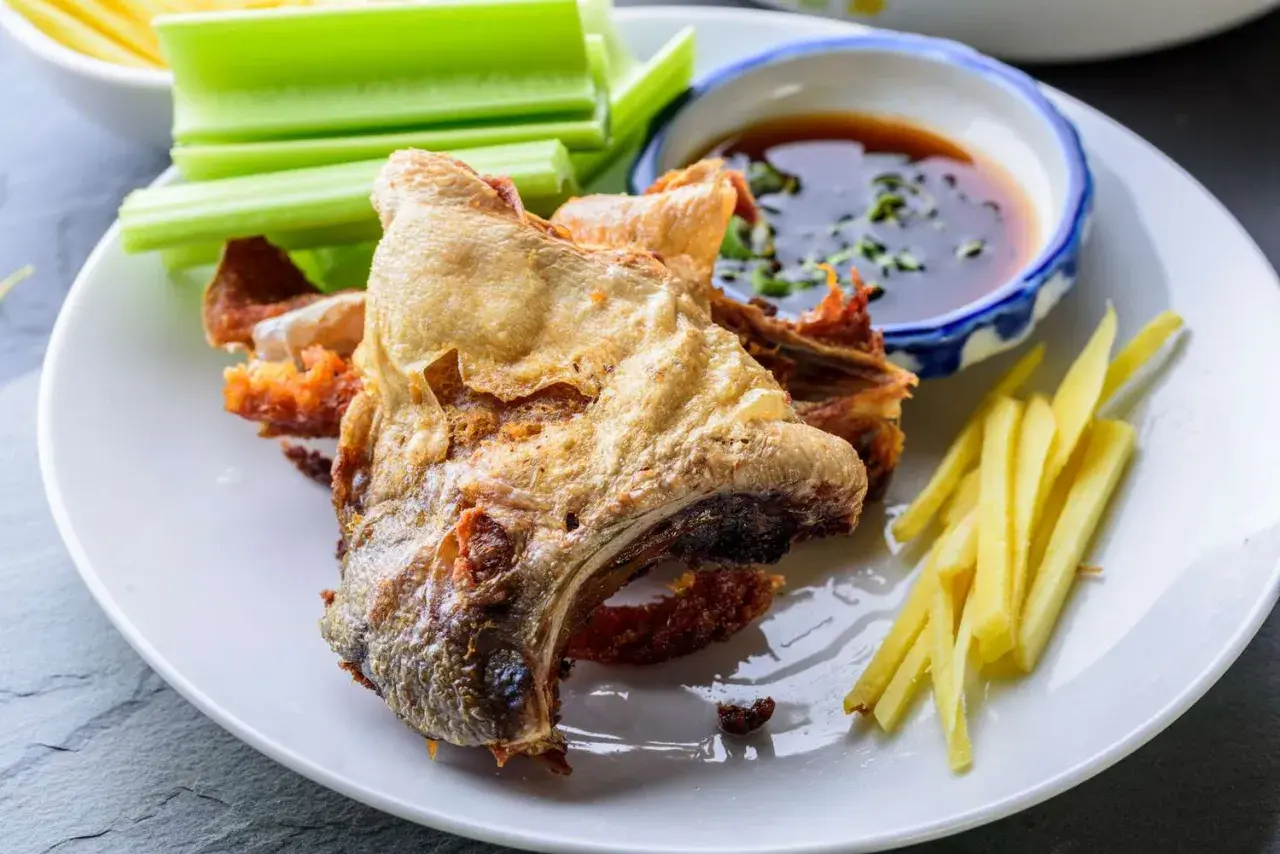
This fish collar recipe is built for a cut that cooks faster, tastes richer, and forgives a little more than a standard fillet. I focus on a Basque-leaning approach with olive oil, garlic, parsley, wine, and a touch of piment d'Espelette, because that combination keeps the fish at the centre of the plate. I also cover how to buy the right collar in the UK, how to cook it without drying it out, and which side dishes make the whole thing feel complete.
A rich cut, a short cook, and a bright finish are what make this dish work
- Fish collars are fattier than fillets, so they stay juicy and take high heat well.
- Ask for collars from larger fish such as salmon, sea bass, sea bream, or halibut at a proper fish counter.
- The cleanest flavour comes from olive oil, garlic, parsley, wine, and a little acidity.
- Cook just until the flesh turns opaque and lifts easily from the bone; overcooking is the main mistake.
- Charred peppers, new potatoes, crusty bread, or a simple piperade-style side all suit the dish.
Why the collar deserves a place on your table
The collar sits behind the gills and around the shoulder of the fish, where the meat is naturally richer and more resilient than the neat little fillet most people buy first. That matters because this cut gives you flavour without demanding delicate handling; I can cook it over stronger heat, let the skin crisp, and still end up with moist flesh. It is also one of the better value parts of a larger fish, especially when you want something substantial without chasing a premium centre-cut steak.
What I like most is the texture. The connective tissue and fat render as the collar cooks, which means the meat becomes succulent instead of stringy. If you treat it like a fragile fillet, you will miss the point; if you treat it like a robust, bone-in cut, it rewards you properly. Once that clicks, the next job is choosing a good one at the counter.
What to ask for at the fish counter
In the UK, the easiest route is a fishmonger who breaks down whole fish in-house. Ask for collars from a larger fish, skin on if possible, and request that the gill membrane and any ragged trim be cleaned up. If the counter does not display them, ask anyway; collars are often available even when they are not laid out front and centre.
| Fish | Flavour | Best use | What I look for |
|---|---|---|---|
| Salmon | Rich, oily, bold | Grill or pan then oven | Easy to source in the UK and very forgiving |
| Sea bass | Clean, slightly sweet | Hot pan with a quick finish | A good choice when you want a lighter plate |
| Sea bream | Delicate but still meaty | Pan-seared or oven-grilled | Needs careful timing, but it takes seasoning well |
| Halibut | Firm and meaty | Oven finish after searing | Best when the collar is thick and evenly cut |
If I have the choice, I lean towards salmon for the most forgiving result and sea bass when I want something a little more restrained. The seasoning can stay spare and sharp either way, which is where the Basque influence comes in.
The seasoning I reach for
I do not want a heavy sauce here. The whole point is to frame the fish, not cover it. Basque cooking often gets this right: good seafood, olive oil, garlic, a little heat, and enough acidity to wake everything up.
Read Also: Spanish Fish - Cook Authentic Dishes at Home
Ingredients for 2 collars
- 2 fish collars, cleaned
- 2 tbsp extra-virgin olive oil
- 3 garlic cloves, thinly sliced
- 1 small shallot, finely chopped
- 60 ml dry white wine
- 1 tbsp sherry vinegar or lemon juice
- 1 tsp piment d'Espelette, or 1/2 tsp smoked paprika with a small pinch of cayenne
- 2 tbsp chopped flat-leaf parsley
- Fine sea salt and black pepper
- Lemon wedges to serve
If you can get txakoli, use it in place of the white wine and keep the vinegar lighter. If not, choose a dry, crisp wine with enough acidity to cut through the richness; I would rather have that than a fancy bottle with too much oak. The cook itself is short, but the order of the steps matters.

How I cook it step by step
- Pat the collars dry very well, then salt both sides lightly and leave them for 15 to 20 minutes. That short rest seasons the flesh and helps the surface brown.
- Heat a heavy pan, grill, or oven grill until properly hot. If the collar is thick or uneven, I prefer a pan plus oven finish because it gives me more control.
- Brush the fish with olive oil and add a little black pepper and piment d'Espelette. Keep the garlic for the sauce so it does not burn.
- Cook skin-side down first if the collar has skin, pressing it gently for the first 20 seconds so it stays in contact with the heat. Leave it alone until the skin crisps and the flesh starts to turn opaque around the edges, usually 3 to 4 minutes.
- Turn once, cook for another 2 to 4 minutes, then check the thickest part. The Food Standards Agency advises cooking fish until the flesh turns opaque and separates easily with a fork; if you use a thermometer, I aim for about 63C at the thickest point.
- Transfer the fish to a warm plate. In the same pan, soften the garlic and shallot for about 30 seconds, add the wine, reduce it by half, then stir in the vinegar, parsley, and a pinch more piment d'Espelette.
- Spoon the hot, glossy sauce over the collars and finish with lemon. Serve immediately while the skin is still crisp and the flesh is still juicy.
That method gives me a clean crust, a bright sauce, and no wasted flavour in the pan. Once the process is clear, the real question becomes which heat source suits the cut best.
Pan, grill, or oven
There is no single best method for every collar. The right choice depends on how fatty the fish is, how thick the piece is, and whether I want smoke, browning, or ease. This is how I think about it in practice.
| Method | Best for | Typical time | Result | My note |
|---|---|---|---|---|
| Hot pan | Smaller collars and leaner fish | 5 to 8 minutes total | Deep browning and strong control | Great on a weeknight, but watch the heat closely |
| Barbecue grill | Fatty collars such as salmon | 4 to 8 minutes total | Smoky edges and crisp skin | Best flavour if you manage the coals or flames well |
| Oven grill | Medium collars when you want less faff | 6 to 10 minutes total | Fast browning with little attention | Keep the tray close to the heat and do not walk away |
| Pan then oven | Thicker collars or uneven cuts | 8 to 12 minutes total | Even cooking and a clean finish | This is my safest option when the collar is bulky |
If I had to choose just one, I would pick pan then oven for consistency and barbecue grill for flavour. Either way, the same rule applies: stop cooking as soon as the flesh is opaque and still moist. Those details are small, but they decide whether the dish tastes merely good or properly memorable.
The details that make it restaurant-worthy
- Dry the surface before cooking; moisture is the enemy of good browning.
- Do not drown the fish in marinade. A short salt rest and a bright finish are enough.
- Use the garlic in the sauce, not as a heavy crust on the fish, so it stays sweet rather than bitter.
- Let the collar rest for 2 minutes before serving; that keeps the juices where they belong.
- Serve it with charred peppers, new potatoes, or a simple piperade-style mix of peppers, tomato, and onion if you want a more obvious Basque accent.
- If you cannot find collars, ask your fishmonger for a large fish split through the head and shoulders, then adapt the same seasoning to the closest bone-in section.
I like this cut because it rewards restraint: a little salt, a little fire, a bright Basque-style finish, and just enough attention to pull it off at the right moment. If you can get the collar from a good fish counter, cook it the same day and treat it gently from the first sizzle to the final spoonful of sauce.
