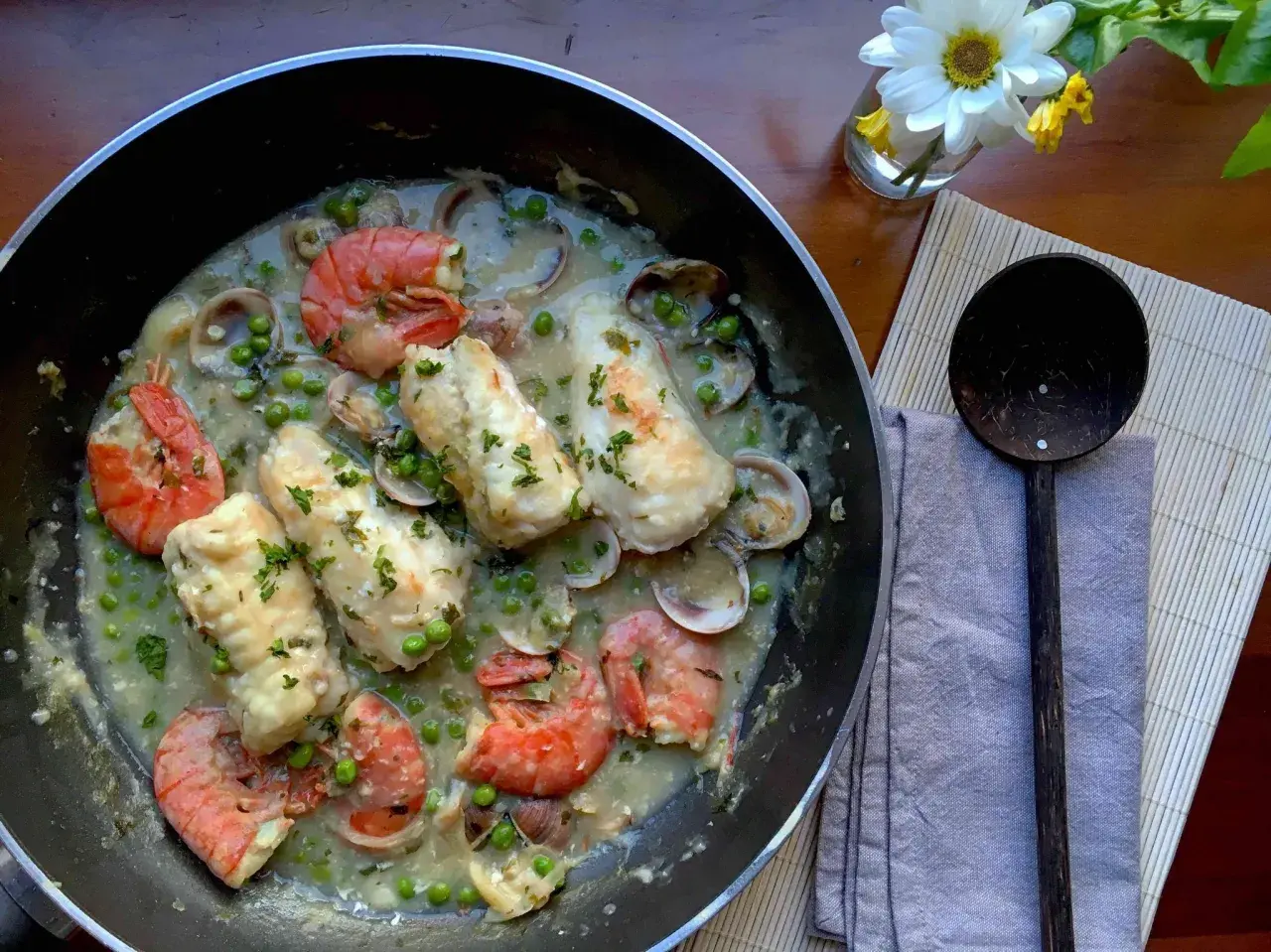
Bonito rewards simple treatment: a brief sear, a slow-cooked base of onions and peppers, and just enough acidity to sharpen the flavour. In this guide I walk through a Basque-style method that keeps the flesh moist, plus the buying, timing, and serving details that matter most in a UK kitchen. This bonito fish recipe leans on restraint rather than complexity, because that is what makes the fish taste clean instead of dry.
The best bonito dishes balance quick heat with a slow-cooked base
- Choose firm steaks or thick fillets, ideally 2-3 cm thick.
- Cook the onion base slowly for 35-45 minutes; the fish itself needs only 1-2 minutes per side.
- If bonito is hard to find in the UK, a thick tuna steak is the closest stand-in.
- Escabeche and marmitako are the most useful alternatives if you want make-ahead or stew-style dishes.
- Stop cooking while the centre is still moist; bonito dries out fast.
Why bonito behaves more like tuna than a delicate white fish
Bonito sits in a useful middle ground. Atlantic bonito, which is the version I have in mind here, has flesh that is meaty, darker than cod or haddock, and more savoury than most people expect from a fish dish. I mean the fish here, not the dried flakes used for dashi. I treat it much more like tuna or mackerel than a fragile fillet: it can take a hot pan, but it does not forgive long cooking. The safest way to keep the flavour balanced is to give it a good base of olive oil, onion sweetness, and a little acidity, then stop before the centre turns chalky. That logic is exactly why a Basque skillet works so well, and it leads naturally into the version I cook most often at home.

My Basque-inspired bonito skillet
This is the version I reach for when I want proper flavour without fuss. It is close to the spirit of bonito encebollado: gentle onions, sweet peppers, a fast sear, and just enough liquid to bring the pan together. If you can find txakoli, use it; if not, a dry white wine with bright acidity, such as Sauvignon Blanc or Albariño, works well.
| Ingredient | Amount | Why I use it |
|---|---|---|
| Bonito steaks or thick fillets | 600-700 g | Enough for 2-3 people |
| Onions, thinly sliced | 4 medium | They become the sweet base |
| Green peppers, sliced | 3 medium | They give the dish its Basque profile |
| Garlic, minced | 2 cloves | Added late so it stays sweet |
| Olive oil | 5 tbsp | For slow cooking and searing |
| Dry white wine or txakoli | 150 ml | Loosens the pan and adds lift |
| Sea salt and black pepper | To taste | Keep seasoning clean and simple |
| Sherry vinegar or lemon juice | 1 tsp, optional | For a sharper finish |
- Heat 3 tbsp olive oil in a wide pan over medium-low. Add the onions, peppers, and a good pinch of salt. Cook for 35-45 minutes, stirring every few minutes, until the vegetables are soft, glossy, and lightly caramelised. Add the garlic for the final 10 minutes.
- If the pan starts to catch, splash in a little wine instead of raising the heat. You want a silky, spoonable base, not a wet stew.
- While the vegetables finish, season the bonito lightly with salt and black pepper. Pat the surface dry first so it sears rather than steams.
- Heat the remaining oil in another pan over medium-high. Sear the fish for about 60-90 seconds per side for 2-3 cm steaks. The outside should colour, but the centre should still look moist.
- Transfer the fish to the onion pan, spoon the vegetables over the top, cover, and turn off the heat for 3-5 minutes. Residual heat finishes the fish gently.
- Taste the sauce, then finish with a few drops of sherry vinegar or lemon juice if the dish needs more lift. Serve immediately.
If the cut is thinner than 2 cm, shorten the sear to 30-45 seconds per side; if it is thicker, give it up to 2 minutes. I care less about the clock than the moment the flesh turns opaque around the edges and still stays soft in the middle.
How I buy and prep bonito in the UK
In the UK, I usually treat bonito as a fishmonger purchase rather than a standard supermarket item. Ask for flesh that looks glossy and firm, smells clean, and springs back when pressed; dull edges and a strong ammonia note are reasons to walk away. If only frozen fish is available, thaw it slowly in the fridge overnight, unwrap it once it is defrosted, and pat it very dry before it hits the pan.
- Choose steaks or fillets that are 2-3 cm thick if you want a clean sear.
- Trim the darker bloodline if you prefer a milder flavour; leave it in if you like a stronger, more savoury taste.
- Pull out any visible pin bones before cooking if the fishmonger has not already done it.
- If bonito is unavailable, use a thick tuna steak first, then albacore, then another oily fish only as a last resort.
- Buy the most traceable fish you can get and do not assume all bonito labels mean the same species.
Dryness is the prep rule that matters most. A dry surface gives you browning, and browning gives you flavour. Once the fish is ready, the only question left is which cooking style suits the rest of the meal, and that is where the comparisons become useful.
Three other bonito dishes worth knowing
The Basque skillet is my default, but it is not the only sensible answer. If the fish is especially fresh, I go for a fast grill; if I want something that keeps well, I switch to escabeche; and if I want comfort food, marmitako does the job without making the bonito feel heavy. Each method suits a different cut and a different level of freshness, which is why a good cook chooses technique before seasoning.
| Method | Best for | Timing | What it tastes like |
|---|---|---|---|
| Quick grill or sear | Very fresh steaks | 6-8 minutes total | Clean, meaty, and lightly smoky |
| Escabeche | Make-ahead lunches or picnics | About 40 minutes, plus resting | Sharp, silky, and better the next day |
| Marmitako | Cooler evenings or less pristine cuts | 35-45 minutes | Potato-rich, peppery, and comforting |
| Bonito with tomato and wine | A softer, saucier supper | 20-25 minutes | Gentler and more rounded, but still savoury |
In a stew, I add the bonito at the end and let the residual heat finish it; if you boil it for long, the fibres turn dry and stringy. That same rule applies to tomato sauces and any dish with a lot of liquid: bonito should be one of the last ingredients in the pot, not the first.
What I serve with it when I want the table to feel Basque
For a UK table, I like to keep the sides plain and let the fish and sauce carry the flavour. Boiled new potatoes with olive oil and parsley are the safest companion, followed by a crisp green salad with fennel or cucumber, or a plate of charred peppers. Crusty bread matters more than people admit, because the onions and oil are part of the pleasure, not just a garnish.
- Boiled new potatoes or crushed Jersey Royals
- Simple tomato, cucumber, and spring onion salad
- Charred peppers or fennel
- Crusty sourdough or a good baguette
- A dry white wine, or txakoli if you can get it
If I am serving it as pintxos, I slice the fish more thinly, spoon the onion-pepper mixture over toast, and finish with a few drops of the pan juices. That gives you a more casual plate without losing the Basque character.
The version I would cook again on a weeknight
That is why I would start with this bonito fish recipe if I wanted one dependable dish that feels Basque without being fussy. The onion-and-pepper skillet gives you the most flavour for the least risk, and it leaves you with a meal that still tastes good if you pace the heat properly. If you buy a whole fish, save the bones and trimmings for stock, and if there are leftovers, cool them quickly and use them within 24 hours over toast, in a salad, or folded into cold potatoes, because bonito is at its best when it stays just cooked rather than fully reheated.
