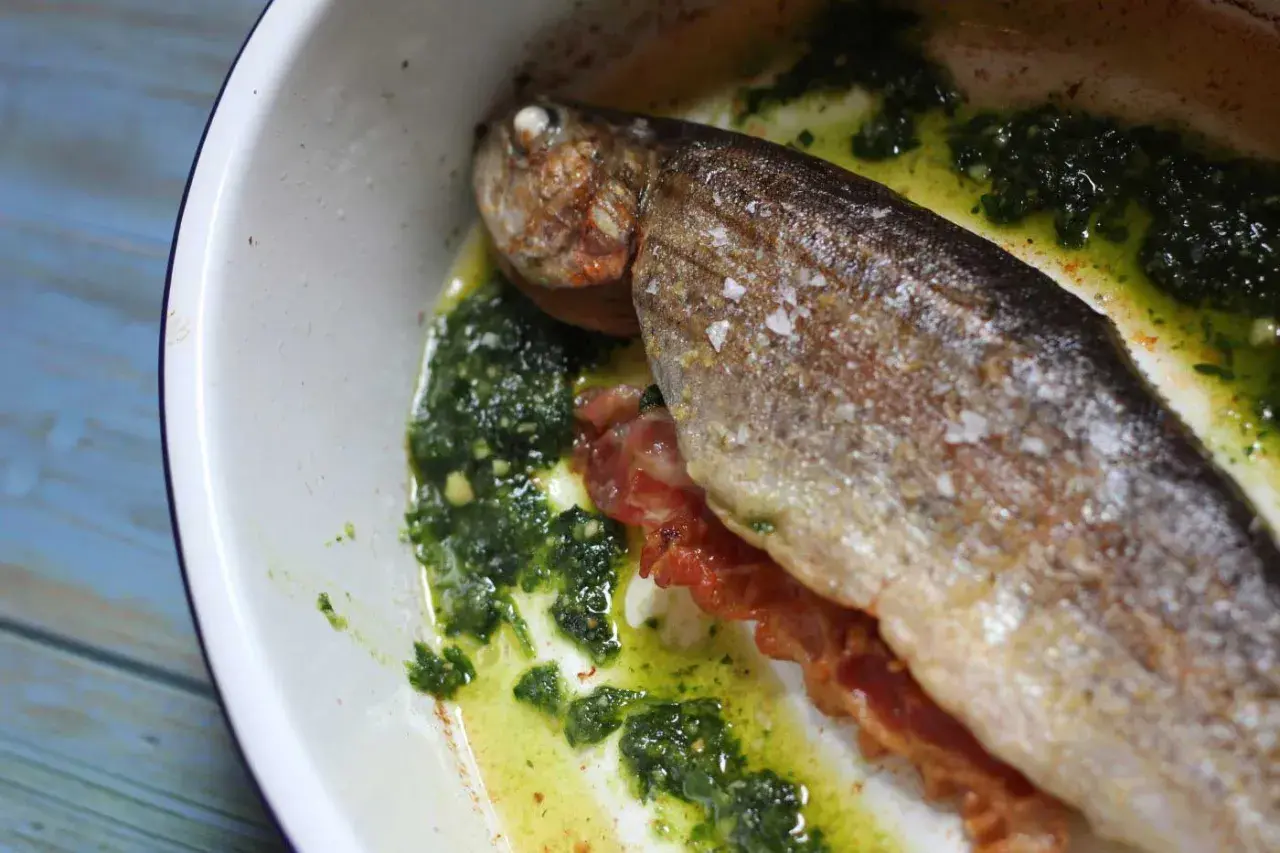
The Spanish term la trucha simply means trout, but on a Basque or Spanish menu it can tell you much more than the species of fish. It usually points to a straightforward regional dish built around freshness, restraint, and one or two savoury accents such as ham, herbs, or butter. For a UK reader, that matters whether you are ordering in a restaurant, choosing fish at the counter, or deciding how to cook a clean, elegant seafood plate at home.
The practical takeaways on trout, Basque style
- It is simply trout, but on a menu it often signals a regional fish dish rather than a plain fillet.
- The best-known Basque and Navarre version pairs trout with ham or bacon and keeps the sauce light.
- In the UK, farmed rainbow trout is the version you will most often see at fish counters and supermarkets, while brown trout is the native species and appears less often.
- Cooking works best when you keep the fish dry, hot, and only lightly seasoned.
- Good partners are new potatoes, peppers, green salad, lemon, and a crisp white or dry cider.
What that Spanish word means on a menu
In practice, this is one of those menu words that is easier than it looks. It means trout, usually a freshwater fish, and it can appear as a whole fish, a fillet, or part of a named regional dish. In the Basque Country and neighbouring Navarre, it often means a home-style plate rather than a heavy restaurant preparation.
If I see it on a menu in the UK, I expect a dish that is simpler than salmon and a little leaner, with the cook relying on timing rather than a rich sauce. That is useful because trout rewards confidence: if the fish is fresh, you do not need to do much to it.
That distinction matters, because the regional style becomes clearer once you know what makes it different from the more famous versions of northern Spanish fish cookery.
Why Navarre and the Basque Country do it this way
River trout has long fit the inland edge of Basque and Navarre cooking, where you find a strong habit of turning a small set of good ingredients into something memorable. Basco Fine Foods describes the Navarre version as trout filled with smoked streaky bacon and baked in the oven, which is a good shorthand for the style: modest ingredients, direct heat, no fuss.
That approach is not about masking the fish. The ham or bacon brings salt and smoke; a little olive oil or butter adds gloss; herbs, lemon, or almond-based accompaniments keep the plate from feeling one-dimensional. I like that balance because it tastes deliberate without becoming ornate.
It is also worth remembering that Basque fish cookery is not one single formula. Some cooks pan-fry trout with butter, others bake it, and some serve it with a sharper pan sauce or pepper relish. The common thread is clarity: the fish should still taste like fish, which is why the method matters so much in the next section.

How to cook it at home without overthinking it
If you are cooking trout in a British kitchen, start with the cut and the size. A whole cleaned fish of about 350-450g serves one person comfortably; a fillet of 150-200g is enough if you are adding potatoes or vegetables. The smaller the fish, the easier it is to keep the flesh moist.
| Method | Best for | Typical time | What to watch |
|---|---|---|---|
| Baking | Whole trout with ham, herbs, or lemon | 12-15 minutes at 200°C / 180°C fan | Do not overfill the cavity; the fish should flake, not dry out |
| Pan-frying | Fillets or small whole trout | 3-4 minutes skin-side down, then 1-2 minutes on the other side | Dry the skin first so it crisps instead of steaming |
| Grilling | Quick weeknight cooking | 6-8 minutes total, depending on thickness | Stay close to the grill; trout goes from perfect to dry fast |
For doneness, I look for opaque flesh that separates cleanly at the thickest point, or an internal temperature of about 63°C if I want a number I can trust. If you add ham, bacon, or other cured meat, keep the extra salt light; the fish should taste seasoned, not cured.
The real skill is not complexity. It is restraint, and that is exactly why the dish makes sense when you start thinking about side dishes and drinks.
What to serve with it in a UK kitchen
Trout needs companions that keep the plate bright. In the UK, I would reach for buttered new potatoes, charred asparagus, sautéed spinach, or a simple green salad with a sharp dressing. If you want a more clearly Basque feel, roasted peppers, onions, or a quick tomato-and-pepper piperade, a soft Basque pepper stew, work well because they echo the clean, sweet-savory profile of the fish.
- Lemon or sherry vinegar to lift the richness without drowning the trout.
- New potatoes because they carry butter or olive oil without competing for attention.
- Peppers and onions for a Basque-style plate with more colour and sweetness.
- Dry cider or a crisp white wine if you want a drink that refreshes the palate instead of weighing it down.
- Txakoli if you want the most regional pairing, especially with a lighter, simply baked fish.
If you are cooking for guests, this is a good dish because it feels more polished than the ingredient list suggests. The caveat is that the sides must stay disciplined; once the plate gets too creamy or too busy, trout loses the very thing that makes it appealing.
That balance also shows up in the mistakes people make, which are usually easy to fix once you know what to look for.
The mistakes I would avoid
The first mistake is overcooking. Trout is leaner than salmon, so it has less margin for error. The second is buying fish that already smells flat or fishy; fresh trout should smell clean, not muddy or aggressive.
- Do not cook it straight from a wet surface. Pat the skin dry or it will steam.
- Do not overload it with sauce. If the sauce is the point, you have probably picked the wrong fish.
- Do not salt aggressively when using ham or bacon. The cured meat is already doing part of that work.
- Do not treat a small trout like a thick cod loin. The timing is shorter and the flesh is more delicate.
- Do not ignore the skin. A little crispness is often what makes the dish memorable.
The Wild Trout Trust notes that rainbow trout are not native to the UK, and that is one reason farmed trout is the version most shoppers encounter. For me, that makes sourcing easier, not harder: you can buy good trout in Britain without hunting for a rare species, as long as you pay attention to freshness and handling.
Once you have those basics in place, the last question is not whether the fish works. It is why this simple dish still feels special.
Why this simple fish still feels unmistakably regional
What I like about trout in Basque cooking is that it stays honest. There is no attempt to turn it into something grander than it is. Instead, the dish leans on local habits: strong but not heavy seasoning, a willingness to pair fish with cured meat, and a preference for cooking that leaves the main ingredient recognisable.
That is why it translates so well for a UK audience. The ingredients are easy to find, the method is manageable on a weeknight, and the result still carries a distinct regional character. If you remember only one thing, make it this: fresh trout plus simple treatment usually beats elaborate garnish.
In other words, the dish succeeds when you let the fish lead, which is exactly the kind of cooking Basque cuisine does best.
