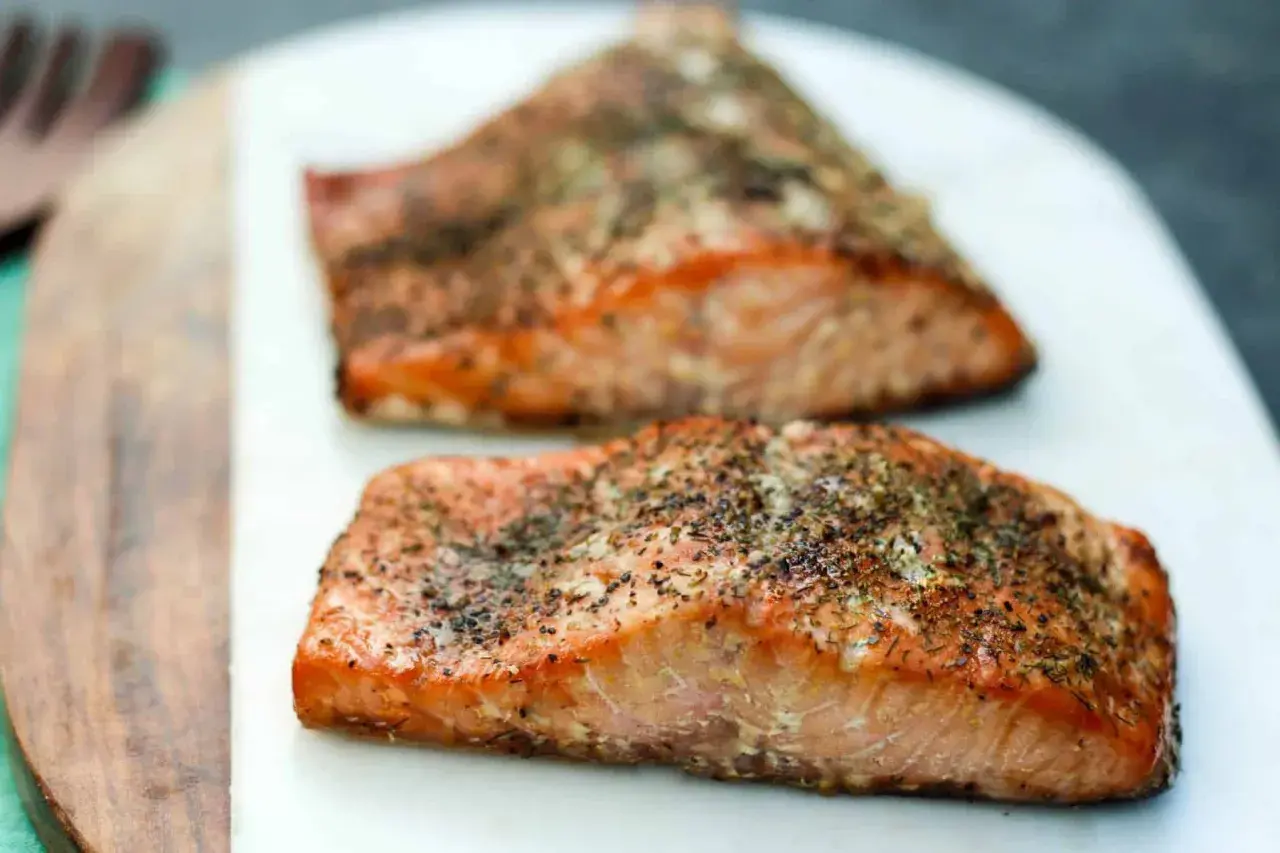
Smoking salmon in an electric smoker is mostly a control exercise: steady heat, a mild wood choice, and enough curing time to season the fish without turning it stiff. The practical problem behind how to smoke salmon in electric smoker setups is simple: keep the flesh moist, build a clean surface for smoke to cling to, and stop at the right moment. I prefer treating smoked salmon as a delicate seafood dish rather than a hard barbecue project, because the difference between silky and dry comes down to a few small decisions.
The essentials are a mild cure, a dry surface, and a gentle finish
- Use a centre-cut side of salmon if you want the most even result.
- Cure the fish before it goes in the smoker; smoke alone will not season it properly.
- Let a tacky pellicle form so the smoke sticks evenly instead of beading on the surface.
- Run the electric smoker low and steady, ideally around 95-110C.
- Check internal temperature, not just time, and pull the fish before it dries out.
- Serve it with sharp, bright accompaniments so the richness stays balanced.
Choose the right salmon and trim it for even smoking
I always start with a side of salmon that is as even in thickness as possible. A centre-cut fillet is easier to manage than a tail-end piece, because the thin end cooks much faster and can go dry before the centre is ready. Skin-on salmon is the better choice here too, since the skin helps hold the fillet together and makes it easier to lift off the grate cleanly.
For a first attempt, I prefer a fillet in the 1 to 1.5 kg range with bones removed and the surface patted dry. If the salmon has a loose belly flap or ragged edges, I trim those off because they overcook quickly and throw off the final texture. Farmed salmon is usually a little fattier and more forgiving, while wild salmon is leaner and deserves a gentler hand. Once the fillet is shaped properly, the cure can work evenly, and that is where the real flavour starts.
Cure it properly before the smoker
I do not treat salmon cure as an optional extra. It seasons the fish, firms the flesh, and helps the surface dry into the tacky layer that takes smoke so well. For an electric smoker, I usually choose either a wet brine or a dry cure depending on the texture I want. Wet brine gives a softer, rounder result; dry cure gives a firmer slice and a cleaner finish.
| Method | Best for | Typical time | What it gives you |
|---|---|---|---|
| Wet brine | A gentler, juicier result | 4-8 hours for thinner fillets, up to 12 hours for thicker sides | Even seasoning and a slightly softer surface |
| Dry cure | A firmer texture and a more concentrated flavour | 2-6 hours for a smaller side, or overnight for a firmer finish | Less surface moisture and a denser bite |
My default wet brine for about 1 kg of salmon is 1 litre of cold water, 60-80 g fine sea salt, and 50-70 g soft brown sugar, with lemon peel or a few dill sprigs if I want a brighter profile. For a dry cure, I use roughly 30-40 g salt and 30-40 g sugar per kilo of fish. I keep the seasoning restrained because salmon should taste like salmon first, not like salted candy.
If you use a wet brine, I rinse the fillet lightly and pat it very dry before the next stage. If you use a dry cure, I usually just brush off any excess cure unless the surface looks overloaded. Once the fish has been salted, the next job is to let the skin dry enough for smoke to cling properly.
Let the pellicle form so the smoke actually sticks
A pellicle is the slightly tacky, dry-looking film that forms on the surface of cured fish. It sounds technical, but the idea is simple: smoke sticks better to a dry, sticky surface than to a wet one. I set the salmon on a wire rack and leave it uncovered in the fridge for 1-3 hours, or until the outside feels tacky rather than damp.
This is the step many home cooks skip, and I think that is one reason their salmon ends up blotchy or faintly harsh. If the surface is still wet, the smoke does not settle evenly and the colour can look muddy. When the fillet feels like it has a thin sheen and a little grip, it is ready for the smoker, and that is the point where temperature control matters most.
Set the electric smoker for a clean, steady burn
An electric smoker is ideal for hot-smoked salmon because it gives you stable heat without a lot of fire management. I keep the cabinet around 95-110C, which is hot enough to cook the fish gently while still giving the smoke time to work. If your smoker runs hot or swings a lot, stay near the lower end of that range and check the fillet earlier rather than later.
I also keep the smoke clean and restrained. Thin, pale smoke is what I want; thick white smoke usually means the flavour is getting harsher than it needs to be. For salmon, mild woods are the safest bet.
| Wood | Flavour | How I use it |
|---|---|---|
| Alder | Mild, classic, slightly sweet | My first choice for a traditional salmon profile |
| Apple | Soft fruit sweetness | Good when I want a gentler smoke |
| Cherry | Light, fruity, with attractive colour | Useful when I plan to serve the fish cold or on toast |
| Maple | Clean and slightly sweet | A balanced middle ground that rarely overwhelms the fish |
| Oak | Deeper and a little stronger | I use it sparingly, never as the main smoke for salmon |
I preheat the smoker before the salmon goes in, and I use the water pan if the unit tends to dry things out. The goal is not to blast the fish with smoke; it is to hold a calm, steady environment so the cure and the wood can do their work. Once the cabinet is stable, the actual smoking is the easy part.

Smoke it until the texture is right, not until the clock says stop
I place the salmon skin-side down and leave it alone. No flipping, no constant checking, and no rushing the process. For most side fillets, the smoking time lands somewhere between 45 minutes and 2 hours, but thickness matters more than the clock. A thinner piece can finish quickly, while a thick centre-cut side may need closer to the 2-hour mark.
| Fillet thickness | Approximate time at 95-110C | What I look for |
|---|---|---|
| About 2 cm | 35-50 minutes | Opaque edges and a just-set centre |
| About 2.5-3.5 cm | 45-90 minutes | Even colour and a firm but moist bite |
| 4 cm and above | 90-120 minutes | Fully cooked edges with a still-succulent centre |
For safety, I take salmon to 63C in the thickest part. That gives a firm, fully cooked result that works for most tables. If I want a softer, restaurant-style centre, I may pull it a little earlier, but I treat that as a texture choice rather than the baseline. The fish should flake cleanly, but it should not look dry or chalky. If you see a lot of white albumin on the surface, the heat was probably a little too aggressive or the fish went a little too far.
When it is done, I rest the fillet for 5-10 minutes before slicing. That short pause lets the juices settle and makes the fish easier to portion cleanly. From there, the only question left is how to serve it well.
Serve it in a Basque-leaning way
Because this site leans into Basque food culture, I like to think about smoked salmon as something more interesting than a plain brunch topping. Its richness works beautifully with bright vegetables, good bread, and sharp acidity. If I were building a plate with a Basque feel, I would keep the accompaniments simple and let the fish stay at the centre.
- Serve it on toasted sourdough with olive oil, chopped tomato, and a few pickled shallots.
- Pair it with piperade or slow-cooked peppers and onions for a warm, savoury plate.
- Lay it over new potatoes with lemon zest, dill, and a drizzle of good olive oil.
- Turn it into pintxos by topping small slices of bread with salmon, roasted piquillo peppers, and a little herb oil.
I avoid heavy sauces here because salmon already brings enough richness of its own. A little acidity, a little salt, and some clean vegetables are usually enough. If you want the dish to feel more complete, think in terms of contrast rather than complexity, and the salmon will taste more refined for it.
The small adjustments that make the next fillet better
When a batch falls short, it is usually because of one or two small errors rather than one dramatic failure. I see the same problems again and again: curing too long, skipping the pellicle, piling on too much smoke, or judging doneness by time alone. Those mistakes are easy to avoid once you know what matters.
- Do not over-cure the fish if you want a delicate texture; a salty, dense result is hard to rescue.
- Do not smoke two very different thicknesses together unless you are ready to pull them at different times.
- Do not overload the smoker with chips; salmon wants clean smoke, not a campfire.
- Do not open the door repeatedly; every draft makes the temperature less predictable.
- Do not leave leftovers sitting out; cool them quickly, then refrigerate them promptly.
For storage, I keep cooked smoked salmon chilled in an airtight container and use it within 3 days for the best flavour and texture. If I know I will not finish it quickly, I portion and freeze it instead of letting the quality slide in the fridge. Leftovers are useful too: I fold them into scrambled eggs, potato salad, pasta, or a simple Basque-style omelette, which is a better fate than letting a good fillet sit forgotten at the back of the refrigerator.
If I were making this again tomorrow, I would focus less on chasing smoke and more on shaping the fillet, drying it properly, and pulling it at the right temperature. That is the difference between respectable smoked salmon and the kind people keep reaching for before it hits the table.
