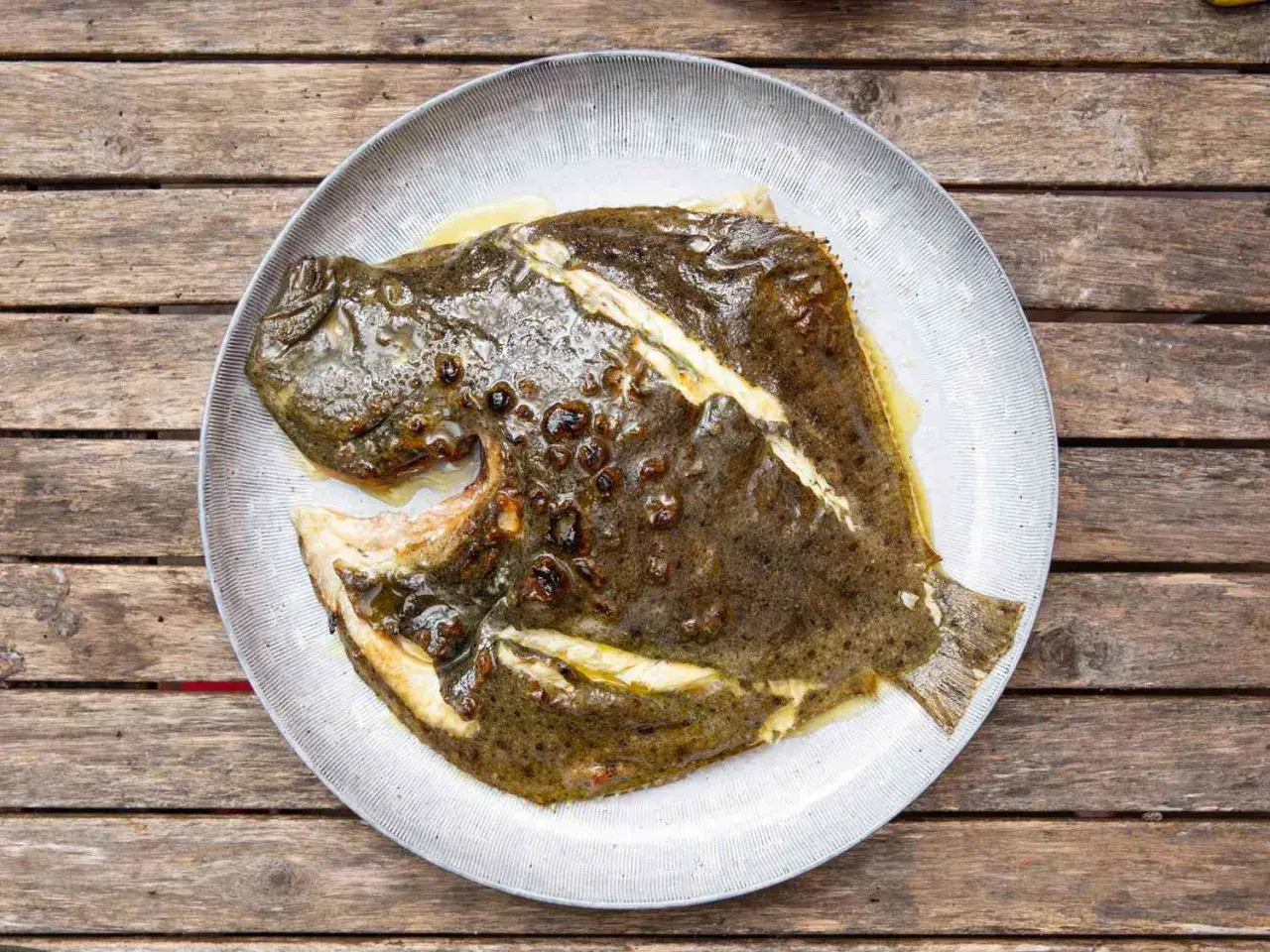
The key things to get right before you light the grill
- Buy the best whole turbot you can manage; it is the format that makes the most sense for grilling.
- Use moderate heat, not a roaring fire, so the skin browns before the flesh dries out.
- Cook until the fish is opaque and just flakes at the thickest point; 57-60°C gives a juicy finish, while 63°C is the safer home-cooking benchmark.
- Keep the sauce simple: olive oil, sharp acid, salt, and a splash of dry white wine or txakoli if you can find it.
- Serve it immediately with potatoes, peppers, or a bitter green salad so the fish stays the centre of the plate.
Why turbot behaves so well on the grill
I like turbot on the grill because it has structure. As a flatfish, it lays well against the heat, and its firm flesh can take a proper sear without collapsing if the fire is controlled. That matters in Basque cooking, where the point is not to hide the fish under a sauce, but to respect the catch, keep the seasoning sharp, and let the skin and juices do the work.
What makes it special is the way the flesh stays rich instead of chalky when you stop short of overcooking. The skin protects the meat, the meat stays juicy, and the whole fish gives you better balance than a thin fillet. This is the same logic you see on the Basque coast: the grill adds smoke and colour, but the fish stays the focus. Once that makes sense, the next decision is whether you want to buy it whole or cut down for easier handling.
Choose the right fish and prep it properly
For this dish, I almost always prefer a whole fish. It is more forgiving on the grill, and the presentation suits a Basque table. If I can only find fillets, I still cook them, but I treat them as a faster, more delicate second choice.
| Cut | Best for | What works well | Limits | Typical grill time |
|---|---|---|---|---|
| Whole turbot, about 1 to 2.5 kg | Sharing, table-side carving, fuller flavour | Stays juicier, looks impressive, suits a fish basket and moderate heat | Needs a little more care when turning | About 8 to 16 minutes total, depending on size and heat |
| Fillets | Weeknight cooking, smaller grills, faster service | Quick to cook, easy to portion | Dry out more easily and give less of that restaurant-style presentation | About 3 to 5 minutes per side |
For a whole fish, I ask the fishmonger to gut and trim it cleanly, then I pat it dry and season it just before it hits the heat. If the surface is wet, it is far more likely to stick. I also let the fish sit out for 15 to 20 minutes before cooking so the chill comes off the flesh evenly.
- Salt the fish lightly just before grilling, or 20 to 30 minutes ahead if you want the skin a little firmer.
- Brush the fish, basket, and grates with oil, not just the fish.
- Use medium heat rather than an aggressive fire.
- If you are feeding four or more people, two smaller fish usually cook more evenly than one oversized one.
With the fish ready, the cook itself becomes a short, controlled job rather than a gamble.

How I grill it without drying it out
The cleanest method is the one that gives you room to manage heat. On charcoal, I wait until the coals are glowing and covered with ash; on gas, I preheat thoroughly and keep one side a little cooler. A fish basket is helpful because it lets you turn the fish once without tearing the skin.
- Season the fish with sea salt and a thin film of oil.
- Place it over medium heat, dark skin side down first if you are cooking it whole.
- Leave it alone until it releases cleanly, then turn it once.
- Baste lightly with the dressing as it cooks, but do not flood the surface.
- Pull it while the centre is still glossy, then rest it for 3 to 5 minutes.
For a whole fish around 1 to 1.5 kg, I expect roughly 8 to 10 minutes total. At 2 kg, the better guide is 12 to 16 minutes, depending on the grill and the thickness of the basket. I use a thermometer when I can: 57-60°C gives me a moist finish, while 63°C is the conservative home-cooking benchmark. The flesh should be opaque, just starting to separate at the backbone, and never dry. That is the point where the sauce and sides start to matter, because they should sharpen the fish rather than distract from it.
Bring in the Basque character without overcomplicating it
The simplest Basque approach is the one I reach for most: olive oil, a sharp acid, salt, and a little dry white wine. The sauce known as agua de Lourdes is basically an emulsified dressing that gets spooned over the fish and its cooking juices. It belongs to the same coastal tradition you find around Getaria: direct heat, sharp seasoning, and not much else getting in the way. It should taste bright, saline, and slightly glossy, not creamy or heavy.
- 3 tbsp extra-virgin olive oil
- 1 tbsp cider vinegar
- 1 tbsp dry white wine or txakoli
- Pinch of sea salt
Whisk it just enough to bring it together. If txakoli is easy to find, it gives the dish a natural Basque edge; if not, a dry English white with good acidity is a sensible stand-in. I spoon the sauce over the fish and around the platter, then finish with lemon only at the table. For sides, I keep to new potatoes, charred peppers, a fennel salad, or samphire if I want something briny and seasonal. That keeps the main ingredient in charge, which is exactly the right balance for this kind of seafood.
The mistakes I see most often
Most bad fish on the grill comes from rushing. The ingredient is too good to be treated like a steak with guesswork, and the fix is usually simpler than people think.
- Using too much heat burns the skin before the centre firms up. Medium heat is the sweet spot.
- Turning too soon tears the flesh. Wait for the fish to release from the grate or basket.
- Over-seasoning with heavy marinades hides the flavour. Salt, oil, and acid are enough.
- Cooking until the flesh goes stiff turns a premium fish into a dry one. Stop when it still looks moist.
- Skipping the dry-off makes sticking much more likely, especially on a gas grill.
If your grill runs hot, I would rather move the fish to the cooler side than keep forcing it over direct heat. That small adjustment is often the difference between a crisp skin and a burnt one. Once you protect the texture, the last job is serving it cleanly and at the right moment.
The version I would serve at a Basque table
For guests, I would keep the fish whole until the last possible moment, then carve it at the table so the platter stays warm and the juices collect where they should. The best pieces are not always the neatest ones: the cheeks, collar, and skin can be the most rewarding bites, especially when the sauce has been spooned over the top.
If I were cooking this in the UK, I would buy the best whole turbot I could find, keep the grill steady, and avoid trying to make it into something fancier than it needs to be. That is the real lesson of the Basque approach: start with excellent fish, handle it gently, and let the grill add just enough character without taking over.
