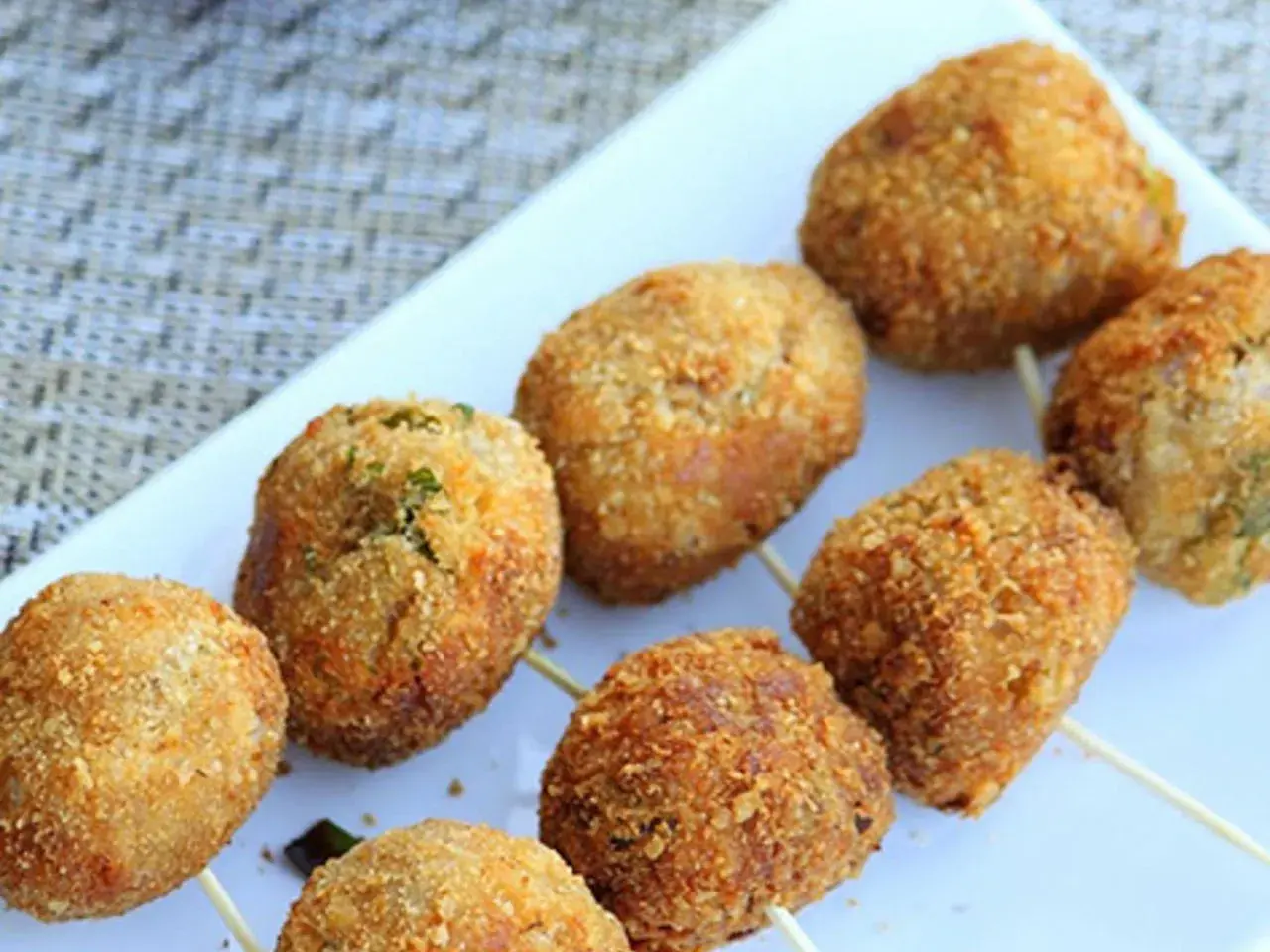
I like tuna balls because they solve a small but useful problem: they turn a cupboard staple into a bite that feels intentional, not improvised. In this guide I cover what they are, how to keep the mixture from drying out, which ingredients matter most, and how I would serve them on a Basque-influenced table. I also note the practical UK details that help if you are cooking for guests, packing lunch, or making a quick seafood supper.
What matters most when you make them
- Drain the tuna thoroughly, then build flavour with onion, parsley, lemon, and a little garlic.
- Use just enough binder to hold the mixture together; too much turns the inside pasty.
- Chill the shaped bites before cooking so they stay neat and crisp.
- Pan-frying gives the best crust, while baking is the cleanest low-mess option.
- Serve them with something bright and acidic, such as aioli, pickled peppers, or a sharp salad.
- Keep leftovers cold and reheat only once for the best texture and safety.
What they are and when they make sense
These little seafood bites sit somewhere between a fish cake and a tapas snack. That makes them useful in more than one setting: I would put them out as an aperitif with drinks, tuck them into a lunchbox, or serve them as a light supper with salad and potatoes. I also like the format because it gives tuna a shape and a crust, which is often all it needs to feel more polished.
For me, the real decision is size. At around 25-30g each, they work well as party food; at 40g, they become more like a small main or a plated starter. I would not overcomplicate the idea beyond that. Once the shape is right, the ingredient balance does the rest, and that is where most people either get a clean result or a bland one.
Once you treat them that way, the real question becomes ingredient balance.
The ingredient balance I rely on
I usually start with 2 tins of tuna, drained, which gives me enough for 12 small bites. If the tuna is packed in olive oil, I drain it well but keep a little of the richness; if it is in spring water, I make up for the leaner texture with good olive oil and a slightly more generous spoon of mayonnaise or aioli.
| Ingredient | What it does | My preference |
|---|---|---|
| Tuna | Main flavour and protein | In olive oil for a richer result, in spring water for a lighter one |
| Breadcrumbs | Holds the shape and absorbs moisture | 50-60g fresh breadcrumbs for a soft interior |
| Egg | Sets the mixture | 1 medium egg |
| Shallot or spring onion | Adds sweetness and lift | 1 small shallot, very finely chopped |
| Parsley and lemon zest | Keep the flavour bright | 1 tbsp parsley and the zest of 1/2 lemon |
| Olive oil and seasoning | Rounds out the texture and taste | 1 tsp olive oil, salt, black pepper, and a pinch of smoked paprika |
| Optional extras | Adds a sharper or more savoury edge | Capers, chopped gherkin, or a little garlic |
Fresh breadcrumbs make the inside softer, while panko gives a rougher crust and a slightly drier finish. I use panko when I want more crunch, but for a more delicate seafood bite I still prefer fine fresh crumbs. The NHS notes that fresh and canned tuna do not count as oily fish, so I treat this as a lean protein bite rather than a stand-in for salmon or mackerel.
That balance matters more than any single ingredient. If the tuna is dry and the aromatics are clean, the rest of the recipe can stay simple, which is exactly how I prefer it for this kind of dish.
A Basque-leaning version that stays light
If I want a Basque-leaning version, I keep the flavour clean and let the seafood stay in front. My mix is simple:
- Flake 2 drained tins of tuna into a bowl.
- Add 1 medium egg, 50-60g fresh breadcrumbs, 1 small finely chopped shallot, 1 tbsp chopped parsley, the zest of 1/2 lemon, 1 tbsp mayonnaise or aioli, 1 tsp olive oil, salt, black pepper, and a pinch of smoked paprika.
- Mix gently until it just holds together; the texture should feel damp, not wet.
- Shape into 12 balls, then chill for 15 minutes.
- If the mixture feels loose, add breadcrumbs 1 tsp at a time; if it feels dry, add a little more olive oil or a spoon of mayo.
I like this stage because it tells me exactly what kind of final bite I will get. A loose mix fries badly and falls apart; a dry mix gives you dense centres. The sweet spot is cohesive but still soft, with enough acidity from the lemon to keep the tuna fresh-tasting. From there, the cooking method decides whether you end up with a delicate tapa or a heavy little pellet.
How to cook them so they stay crisp
Pan-frying is my first choice because the olive oil gives the outside the most flavour. Baking is fine if you want less mess, and an air fryer works when speed matters more than depth of colour.
| Method | Time and temperature | Result | When I use it |
|---|---|---|---|
| Pan-fry | 2-3 minutes per side in a thin layer of olive oil over medium heat | Crispest crust and the best flavour | When I am serving guests or building a tapas plate |
| Bake | 200C fan for 12-15 minutes, turning once | Lighter, more even, slightly less rich | When I want a tray-cook option |
| Air fry | 190C for 8-10 minutes, lightly brushed with oil | Quick and tidy, but easier to dry out | For lunch prep or a small batch |
Whichever method I choose, I keep the pieces evenly sized and avoid crowding the pan or tray. If you are checking doneness with a probe, the Food Standards Agency uses 70C for 2 minutes as a practical cooked-food benchmark. That kind of detail is not glamorous, but it does remove guesswork.
Once the texture is sorted, the final layer is what you put next to them.
How I serve them on a British table
The most natural partner is acidity. Tuna and breadcrumbs need a sharp counterpoint, otherwise the flavour can flatten out after the first bite. That is why I reach for aioli, lemon, pickled peppers, or a crunchy salad before I think about anything creamy.
- As pintxos, the Basque bar-snack format, on toasted bread with aioli and a strip of piquillo pepper.
- With salad, especially rocket, fennel, cucumber, and a lemon dressing.
- With potatoes, boiled new potatoes tossed in olive oil and parsley.
- With pickles, such as gherkins, capers, or pickled onions, when I want more bite.
- With drinks, a dry white, a crisp cider, or a sharp sparkling drink works better than anything sweet.
The Basque influence is easiest to keep subtle: olive oil, herbs, peppers, and a clean edge of garlic are enough. I do not think these need a heavy sauce; they need a bright one. That small choice changes them from ordinary pantry food into something that feels like a proper bar snack.
The small details that keep leftovers worth eating
The mistakes are predictable. People overmix the tuna, add too much breadcrumb, skip the chill, or cook them in oil that is either too cool or too hot. Any one of those choices can flatten the flavour or split the surface before the centre is ready.
- Mix only until the ingredients hold together; stop as soon as the bowl looks unified.
- Keep the bites small and even, because mixed sizes cook unevenly.
- Let the shaped mixture rest for 15 minutes so the binder can do its job.
- Store cooked leftovers in a covered container in the fridge, then eat them within 2 days.
- For best texture, keep your fridge between 0 and 5C and reheat only once.
- If you want to make ahead, freeze the shaped uncooked bites on a tray first, then bag them once firm.
For me, the best tuna balls taste clean, savoury, and lightly crisp rather than heavy, and that is why this little seafood format earns its place on a Basque-style table. It is flexible enough for a snack, a starter, or a casual supper, but specific enough that a few careful details make all the difference.
