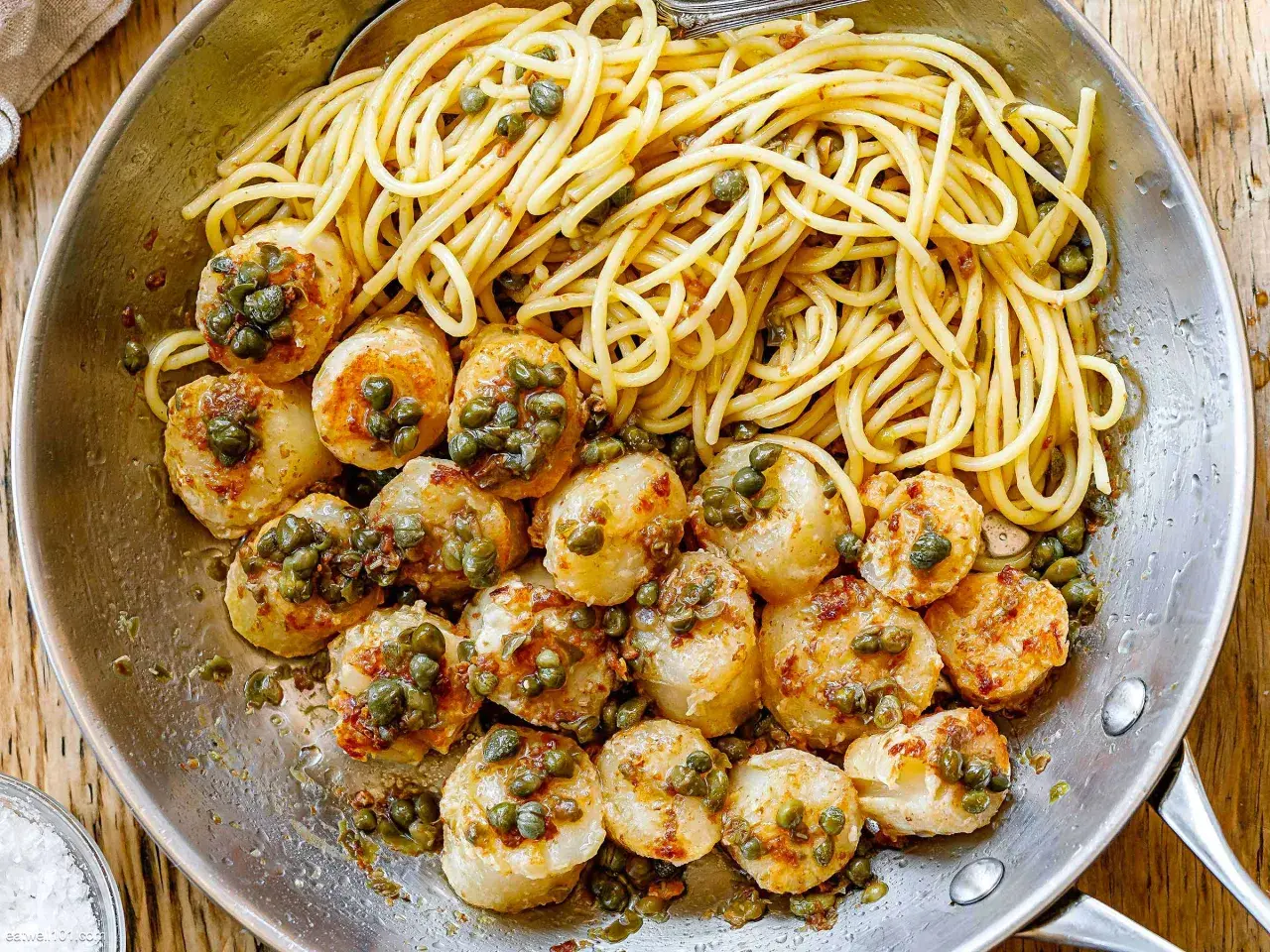
A good scallops and pasta recipe with white wine should feel elegant, not fussy: sweet sea scallops, al dente pasta, and a sauce that lifts the seafood instead of hiding it. I keep the flavours bright with garlic, lemon, parsley, and a dry white wine, then decide whether the dish needs only butter and pasta water or a little cream for extra body. The real work is in the timing, because scallops cook fast and pasta sauce can turn flat just as quickly.
Quick take on a bright scallop pasta
- Dry sea scallops give you the best sear and the cleanest flavour.
- A crisp white wine such as Sauvignon Blanc, Pinot Grigio, or txakoli keeps the sauce lively.
- I finish the pasta in the pan with butter, lemon, and a splash of pasta water, not a heavy sauce.
- Scallops need about 1.5 to 2 minutes per side in a hot pan, depending on size.
- Use linguine, spaghetti, or tagliatelle so the sauce can cling without overpowering the seafood.
- This is a 30-minute dinner if you prep everything before the pan gets hot.
Why this combination works so well
Scallops are naturally sweet, so they need a sauce with enough acidity to keep the dish from feeling rich in a dull way. White wine does that job better than almost anything else: it deglazes the pan, pulls up the browned bits, and gives the sauce a clean edge that suits seafood. When I want the plate to feel a little Basque, I think in the same direction - coastal, sharp, and restrained - which is why txakoli, lemon, olive oil, garlic, and herbs fit this dish so naturally.
The other reason this pairing works is texture. Pasta gives the dish substance, but the scallops still need to stay front and centre, so I avoid thick sauces that turn the whole plate heavy. A light wine butter sauce, finished with pasta water, keeps everything glossy and balanced. Once that balance is right, ingredient choice becomes much easier.
The ingredients I would choose first
I am selective here because a short ingredient list only works when every part is doing something useful. If one element is too sweet, too oily, or too watery, the whole dish slips out of balance.| Ingredient | What I choose | Why it matters |
|---|---|---|
| Scallops | 500g dry sea scallops | They sear cleanly, stay sweet, and give you the best texture for pasta. |
| Pasta | 320g linguine, spaghetti, or tagliatelle | Long strands carry the sauce without overwhelming the seafood. |
| White wine | 150ml Sauvignon Blanc, Pinot Grigio, dry Riesling, or txakoli | Dry acidity keeps the sauce sharp and stops it from tasting flat. |
| Aromatics | 2 shallots, 3 garlic cloves, 1 lemon, parsley | They build flavour without turning the dish heavy. |
| Optional extras | 150g cherry tomatoes, 60ml double cream, pinch of piment d'Espelette | Use them only if you want more body or a Basque-style accent. |
If I have to choose between a better scallop and a fancier wine, I always improve the scallop first. Dry scallops are the key detail: they brown properly, while wet-packed scallops release so much moisture that they steam instead of sear. Sea scallops are the best fit for this dish because they stay meaty; bay scallops are smaller and sweeter, but I would only use them if I planned to toss them in right at the end rather than searing them as the main feature.

How I cook it step by step
This version serves 4 and takes about 30 minutes if everything is ready before the first scallop hits the pan. I like to cook the pasta and sauce in parallel so the seafood never waits around.
- Bring a large pot of well-salted water to a boil and cook 320g pasta until just al dente. Reserve about 150ml of the cooking water before draining.
- Pat 500g dry sea scallops completely dry with kitchen paper. Remove the little side muscle if it is still attached, then season lightly with salt and black pepper.
- Heat a large stainless-steel or cast-iron pan over medium-high heat. Add 1 to 2 tablespoons of olive oil, then sear the scallops in a single layer for 1.5 to 2 minutes without moving them.
- When the first side is deeply golden and the scallops release easily, flip them and cook the second side for about 1 minute to 1.5 minutes more. Remove them to a warm plate.
- Lower the heat slightly and add 2 chopped shallots. Cook for 2 minutes, then add 3 minced garlic cloves and cook for 30 seconds more, just until fragrant.
- Pour in 150ml dry white wine and scrape up the browned bits from the pan. Let it reduce by about half, usually 2 minutes.
- If you want tomatoes, add 150g halved cherry tomatoes and cook for 2 to 3 minutes until they just soften. For a richer version, add 60ml double cream now and keep the heat low.
- Add the pasta, 1 to 2 tablespoons of butter, a few tablespoons of reserved pasta water, and the zest plus juice of half to one lemon. Toss until the sauce coats the strands.
- Return the scallops to the pan only long enough to warm through, then finish with chopped parsley, a final grind of black pepper, and a little more lemon if needed.
I do not leave the scallops sitting in the sauce. That is the easiest way to lose the texture you worked for. The pan should be doing just enough to glaze the pasta, not simmer the seafood into toughness.
The mistakes that matter most
Most scallop pasta problems come from a handful of avoidable errors, and nearly all of them are about moisture, heat, or timing.
- Using wet-packed scallops - they release water and stop browning properly, which means you lose the crust that makes the dish feel special.
- Starting with a lukewarm pan - scallops need an actively hot pan so the surface can caramelise before the centre overcooks.
- Crowding the pan - too many scallops at once create steam, not colour. Cook in batches if you need to.
- Cooking them too long - scallops should still be just slightly translucent in the centre when they come off the heat, around 52-54 C or 125-130 F if you use a thermometer.
- Overbuilding the sauce - heavy cream, too much cheese, or too many add-ins can bury the seafood instead of supporting it.
If you remember only one thing, remember this: scallops reward confidence, not fussing. Let them sit in the pan until they release, then get them out. That one habit changes the whole dish.
Easy ways to adapt the recipe without losing balance
I like recipes that can move a little without losing their identity. This one can be richer, lighter, or more Basque-leaning, as long as the sauce stays bright and the scallops stay in charge.
For a richer version
Whisk in 60ml double cream after the wine has reduced. Keep the heat low and stop as soon as the sauce lightly coats the spoon. I would only do this if the rest of the menu is very simple, because cream makes the dish feel more luxurious but also less sharp.
For a Basque-leaning version
Add a pinch of piment d'Espelette and, if you can find it, use txakoli instead of a neutral white wine. A few strips of piquillo pepper can work too, but I keep them modest so they do not take over the shellfish. That small amount of heat and acidity gives the plate a coastal, northern-Spain feel without turning it into a different recipe.For a lighter version
Skip the cream entirely and lean on lemon zest, parsley, olive oil, and a little butter for gloss. If the sauce feels too tight, loosen it with more pasta water rather than adding more fat. This version is the cleanest and probably the one I would cook most often at home.
Read Also: Salt-Crusted Sea Bass - Master This Impressive Dish
For an alcohol-free version
Use fish stock or light vegetable stock in place of the wine, then add a teaspoon of white wine vinegar or extra lemon juice for acidity. It will not taste identical, but it still gives the sauce the lift it needs. Without that acidic edge, the whole plate can taste round but dull.
What to serve with it in a Basque-leaning meal
I like this dish with sides that stay crisp, green, or bread-based. Anything creamy or strongly spiced starts competing with the scallops, which is rarely a good idea.
| Side or pairing | Why it works |
|---|---|
| Simple green salad with lemon vinaigrette | It cuts through the butter and keeps the plate fresh. |
| Tenderstem broccoli or asparagus | Both bring a clean bitterness that suits shellfish. |
| Crusty bread or warm sourdough | Useful for the last spoonfuls of sauce and pan juices. |
| Txakoli, Albariño, Sauvignon Blanc, or unoaked Chardonnay | Dry acidity keeps the seafood tasting bright instead of heavy. |
If I were building a fuller Basque-leaning table, I would keep the first course very simple, then let this pasta be the centre of attention. A chilled dry white wine is enough. Heavy reds or very oaky whites can flatten the scallops, while a brisk coastal wine keeps the meal lively.
The last 60 seconds that make the plate taste finished
The final difference between a decent scallop pasta and a polished one is usually tiny: warm plates, a final squeeze of lemon off the heat, and enough pasta water to make the sauce look glossy rather than oily. I also taste for salt at the very end, because the sauce changes once the pasta joins the pan.
When I want the cleanest result, I stop before I am tempted to add more. The scallops should taste sweet, the wine should still feel fresh, and the pasta should carry the sauce without drowning in it. That restraint is what makes the dish feel coastal, confident, and worth repeating.
