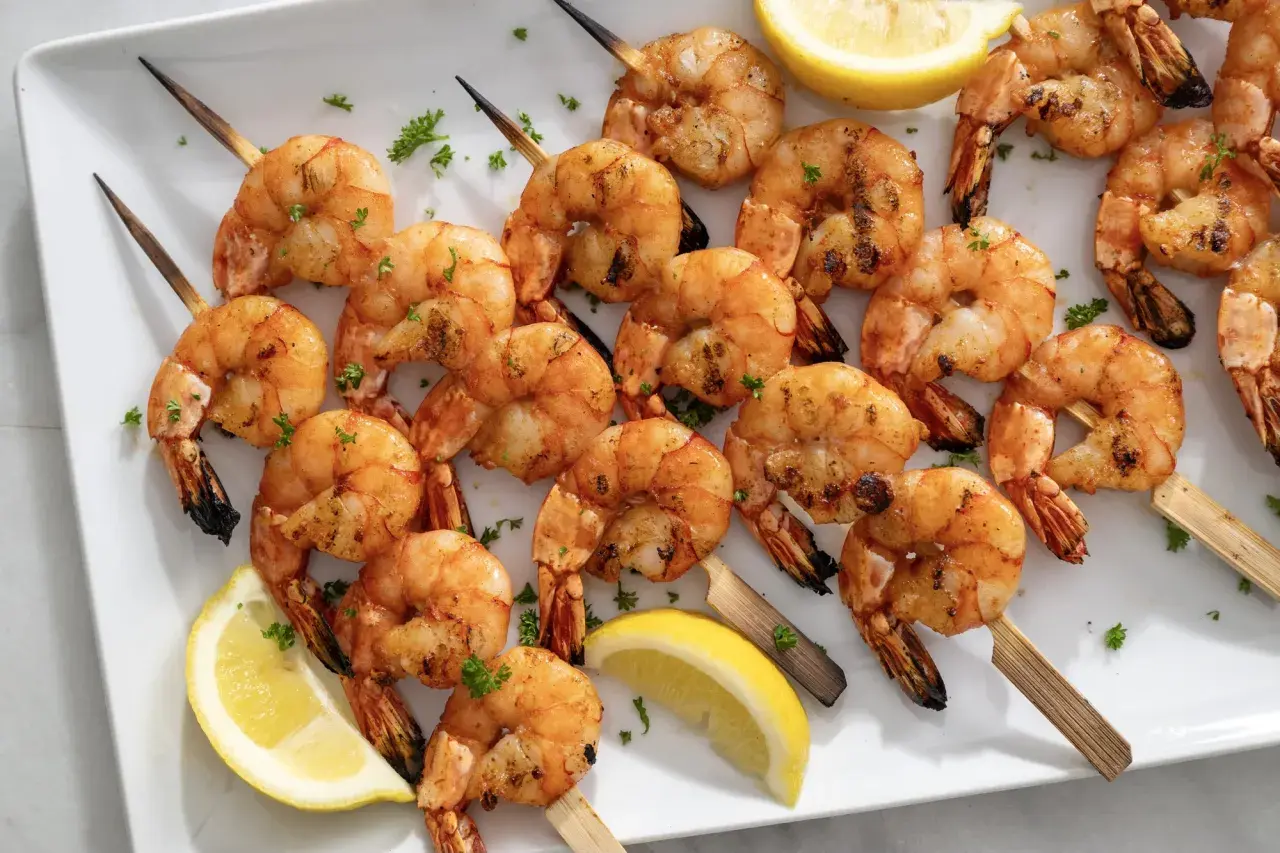
Fire is the whole trick with shellfish: it rewards speed, clean seasoning, and a little restraint. Grilled shrimp is at its best when the flames add smoke without stealing the sweetness, and that balance is easier to reach than most people think. In the sections below, I focus on the practical details that change the result: the best size to buy, how to season it, how long to keep it over the heat, and how to serve it with a Basque-leaning plate.
The essentials at a glance
- Buy large or jumbo prawns when you want the easiest, juiciest result.
- Use medium-high direct heat, a clean grate, and a light coat of oil.
- Keep marinades short; citrus works, but too much time turns the texture mushy.
- Cook until the flesh is opaque and the thickest part reaches 145°F / 63°C.
- Finish with lemon, parsley, sea salt, and a Basque touch such as piment d'Espelette.
Start with the right prawns
I usually buy the largest prawns my budget allows. Medium ones can be good for skewers or salads, but larger shellfish are much easier to manage on a hot grill because they are less likely to dry out before you get any colour on the outside. In UK fishmongers, they are more often sold as prawns, but the method is exactly the same.
If I have a choice, I lean toward shell-on. The shell slows the heat a little, protects the flesh, and keeps more flavour in the seafood. Peeled prawns are still fine, especially when I want a cleaner presentation or I am serving them over rice, but they give you less room for error.
| Choice | What it changes | My take |
|---|---|---|
| Shell-on | More moisture, a little more smoke, slightly messier eating | Best for the juiciest result |
| Peeled | Faster seasoning and easier serving, but faster overcooking | Best for salads, tacos, and quick platters |
| Tail-on | Easier to handle on the grill and at the table | My default for entertaining |
Whatever you buy, I dry the prawns well before they touch the fire. Surface moisture creates steam, and steam is the enemy of good browning. That leads straight into the part most home cooks underestimate: the grill itself.
Set the heat up for speed, not rescue
Prawns want direct heat and a short stay over the flame. I preheat the grill until it is properly hot, clean the grates, and oil them lightly so the seafood releases cleanly instead of tearing when I turn it. Medium-high is the sweet spot for most home grills; low heat tends to make the meat tough by the time you get colour.
Charcoal gives you a little more smoke, gas gives you more control, and both work if the grate is hot enough. If I am cooking smaller prawns, I often use a skewer or a grill basket; a plancha, which is a flat metal surface set over the fire, is even better when the pieces are tiny or the bars on the grate are wide.
The simplest rule is this: the fire should do the work quickly. If I need to keep lifting, moving, and second-guessing the prawns, the heat is probably wrong. Once the setup is right, seasoning starts to matter more than technique.
Seasoning that suits Basque-style seafood
I like to keep the seasoning direct. Olive oil, fine sea salt, black pepper, garlic, and lemon are enough for a clean seafood flavour, and they make an easy base if you want a more coastal, Basque-leaning profile. A pinch of piment d'Espelette works especially well here; it is a gentle Basque chilli powder that adds warmth without burying the sweetness of the shellfish.
For about 500 g of prawns, I usually start with 2 tablespoons of olive oil, 1 small grated garlic clove, the zest of half a lemon, 1/2 teaspoon of sea salt, and a small pinch of pepper. If I want more lift at the end, I add chopped parsley after grilling rather than before, so the herb stays bright instead of fading on the fire.
I avoid heavy sugar-based marinades before grilling. They darken too fast, and the goal here is not a sticky barbecue glaze; it is a sharp, smoky finish that lets the seafood stay the main event. That is why the cooking stage matters so much.

How I cook them so they stay juicy
For me, the cleanest approach is simple: marinate briefly, skewer if needed, and grill fast. Seafood Nutrition Partnership suggests a marinade window of 15 minutes to 2 hours for lemon-based seasoning, and I stay near the short end when citrus is in the mix because acid starts changing the texture sooner than most people expect.
Once the prawns hit the grill, I turn them once only, just enough to get a little char and even colour. For large prawns, 2 to 3 minutes per side is a sensible home-grill benchmark; smaller ones may need less. The flesh should turn opaque and firm up, not curl into a tight ring.
| Size | Approximate grill time | What I look for |
|---|---|---|
| Medium | 1 to 2 minutes per side | Opaque edges, light char, still springy |
| Large | 2 minutes per side | Firm but juicy, pink shell, opaque centre |
| Jumbo | 2 to 3 minutes per side | Even colour without a dry, rubbery bite |
USDA puts fish and shellfish at 145°F / 63°C, and I treat that as the safe finish line when I want both good texture and peace of mind. If you rely only on colour, you can miss the sweet spot, so a thermometer is useful the first few times until your eye calibrates. Once you know the look, the timing becomes much easier to repeat.
The mistakes that ruin shellfish on the grill
The most common error is simple overcooking. Prawns do not forgive hesitation: one extra minute can move them from tender to squeaky, and from there to dry. The second mistake is crowding the grate. When the pieces sit too close together, the temperature drops and the seafood steams instead of searing.
I also see too much acid in marinades. Lemon, lime, and vinegar are useful, but they are not meant to sit on shellfish for hours. If I want a stronger citrus note, I add it after grilling, or I keep the marinade short and acidic only in part.
Another easy way to spoil the result is to add sauce too early. Thick glazes burn quickly over open flame, especially when they contain honey or sugar. I prefer to finish with a quick brush of oil, a squeeze of lemon, or a spoonful of herb dressing after the prawns leave the heat. That keeps the surface bright instead of scorched.
How I serve them for a Basque-leaning table
This is where the dish becomes more than a quick grill job. I like to serve the prawns with crusty bread, a simple green salad, and something with a little acidity, such as tomato, charred peppers, or a light garlic mayonnaise. A spoonful of piperrada - the Basque pepper-and-tomato relish - gives the plate sweetness, smoke, and acidity in one move.
For drinks, I reach for a dry, crisp white with enough brightness to reset the palate between bites. A chilled Basque white works beautifully, but any wine with lively acidity will do the job. The point is not luxury; it is contrast. Fire-kissed seafood needs something fresh beside it.
If I am building this into a pintxos-style spread, I thread the prawns onto small skewers, set them over toast, and finish with parsley and lemon zest. It is a small presentation change, but it turns a weeknight grill into something that feels deliberate, which is exactly the kind of detail that suits this cuisine.
The version I keep coming back to on a weeknight grill
For me, grilled shrimp is at its best when I keep the formula almost stubbornly simple: large shell-on prawns, a brief olive-oil marinade, a very hot grate, and a fast finish with lemon and parsley. If I want the Basque note, I add a pinch of piment d'Espelette or a spoon of piperrada rather than trying to bury the seafood under sauce.
That approach gives you smoke, sweetness, and enough acidity to keep each bite lively. It is also forgiving enough for home cooking in the UK, where the best seafood dishes often depend less on complexity than on restraint, heat control, and good timing.
