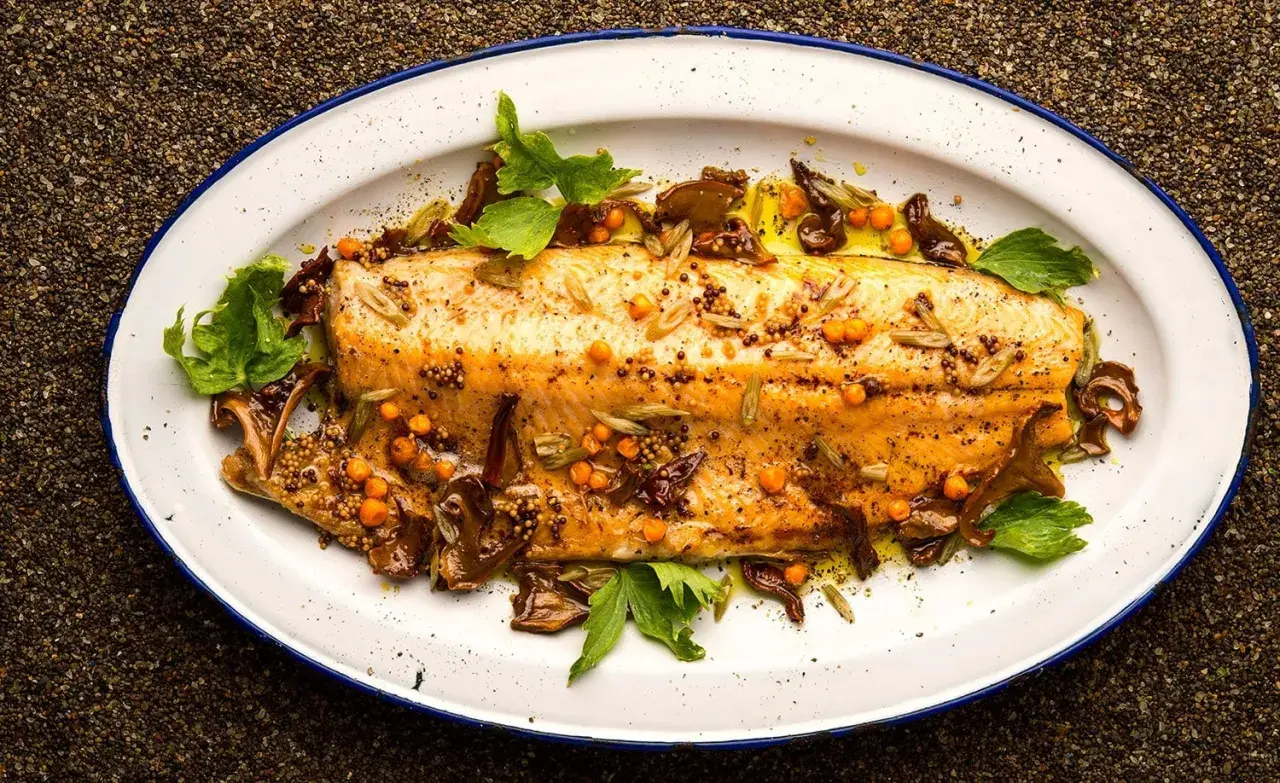
A well-made broiled trout depends on restraint, not complexity. With direct heat, the skin can crisp fast while the flesh stays moist, which is exactly why this method suits a quick seafood supper. In this guide, I focus on the parts that matter in a real kitchen: how to prep the fish, how long it needs under the grill, which seasonings work, and what to serve with it so the plate feels finished.
The quickest wins are dry fish, close heat, and a light hand
- For fillets, 4-6 minutes under a hot grill is usually enough if they are around 1.5-2 cm thick.
- Small whole trout or butterflied fish usually need 8-12 minutes, depending on size and thickness.
- I aim for 63°C in the thickest part, then let the fish sit for about a minute before serving.
- Lemon, olive oil, parsley, garlic, and a pinch of piment d'Espelette give a Basque-leaning finish without masking the fish.
- Serve it with new potatoes, green beans, samphire, or roasted peppers for a balanced plate.
Why trout handles direct heat so well
In a UK kitchen, this is the oven grill; in North American cookbooks, the same method is usually called broiling. The logic is simple: trout is delicate enough that a long cook works against it, but firm enough to take on a little colour without falling apart. I treat it more like a fast sear than a roast, because that is what protects the sweetness of the flesh.
This is also why trout rewards a light hand. You do not need a heavy spice crust, a thick marinade, or a long list of ingredients to make it interesting. Skin-on fillets are especially useful here, since the skin gives the flesh a buffer against the heat and adds a better contrast between crisp and tender. Once you accept that the method is about speed, the prep becomes much simpler.
How to prep it for the grill
I prefer to set the fish up properly before the heat goes on, because there is very little time to fix mistakes once it is cooking. A few small habits make the difference between trout that is bright and juicy and trout that tastes merely hot.
- Pat the fish dry. Moisture on the surface turns into steam, and steam is the enemy of crisp skin.
- Check for pin bones. A quick pass with tweezers or fish pliers makes the fillet more pleasant to eat.
- Season lightly and oil the fish, not the tray. I like a thin coat of olive oil or a mix of oil and melted butter, plus salt and black pepper.
- Salt 10-15 minutes ahead if you can. That short rest firms the surface and gives the flesh a cleaner finish.
- Keep acids subtle. Lemon is best as a finish, or in a very short marinade, because too much time in citrus can make the texture turn soft and slightly mealy.
- Use a foil-lined tray. It makes cleanup easier and helps you avoid sticking, especially if the fish is skin-on.
If I am cooking a whole trout, I usually butterfly it or open it flat so the heat reaches the thickest part more evenly. After that, the only real variable left is the clock.

How to judge doneness without drying it out
Grill elements vary more than most recipes admit, so I start checking early and I keep watching closely. A minute too long can move trout from tender to chalky, especially if the fillets are thin. For that reason, I rely on both time and texture rather than time alone.
| Cut | Distance from heat | Typical time | What I look for |
|---|---|---|---|
| Fillets, about 1.5-2 cm thick | 10-12 cm | 4-6 minutes | Edges turn opaque first, centre stays just glossy |
| Small whole trout, butterflied | 10-12 cm | 6-9 minutes | Flesh lifts cleanly from the bone and the skin blisters lightly |
| Thicker fillets or larger fish | 12-15 cm | 8-12 minutes | Thickest point reaches 63°C and flakes without resistance |
If you use a thermometer, aim for the thickest part of the fish, not the thinnest edge. If you do not use one, look for flesh that is opaque, still moist, and just beginning to separate into clean flakes. That is the point where the grill has done its job and the seasoning can take over.
Seasoning ideas that suit the fish and the Basque table
Trout does not need much, but it does need direction. I usually think in flavour families rather than fixed recipes, because the right finish depends on what is on the rest of the plate. A Basque-leaning approach is especially good here: olive oil, garlic, herbs, peppers, and a little mild heat give you character without burying the fish.
| Style | What goes in it | Why it works | Best use |
|---|---|---|---|
| Classic lemon-herb | Olive oil, lemon zest, parsley, black pepper, a little butter | Bright, clean, and safe for first-time cooks | Weeknight dinner with potatoes or greens |
| Basque-inspired | Olive oil, garlic, parsley, piment d'Espelette, roasted peppers | Warmth without heaviness; a gentle nod to Basque cooking | When you want a more characterful seafood plate |
| Briny and sharp | Capers, dill, shallot, lemon juice, a touch of Dijon | Gives the fish lift and cuts through richer sides | With potatoes, buttered vegetables, or a grain salad |
I avoid sugary glazes and heavy spice rubs on trout, because they scorch before the fish is ready. If I want more depth, I add it at the table with a spoon of herb oil, a squeeze of lemon, or roasted peppers on the side. Once the seasoning is set, the side dishes should simply echo those flavours.
Sides that make it feel like a proper meal
This is where the dish starts to feel complete rather than merely cooked. In a UK kitchen, I would keep the sides simple and seasonal: new potatoes, green beans, samphire, or a sharp salad all work because they keep the fish at the centre. If I want the plate to lean more clearly toward Basque cooking, I reach for peppers, tomatoes, garlic, and olive oil.
- New potatoes with parsley and olive oil give you something starchy without making the plate heavy.
- Samphire or green beans add salt and crunch, which is useful when the fish is lightly seasoned.
- Tomato, cucumber, and red onion salad keeps the meal fresh and bright.
- Roasted peppers and onions bring sweetness and a gentle char that fits the direct-heat finish.
- Lemon wedges and a little aioli let each person adjust the finish at the table.
For drinks, I like a crisp white that does not overwhelm the fish. Txakoli is the obvious Basque choice, but a dry English Bacchus or a lively sparkling wine works just as well if that is what you have on hand. From there, the only thing left is to keep the final plate simple enough for the trout to stay in focus.
The small habits I keep coming back to
The last few details matter more than most people expect. I serve trout immediately, because lingering in a warm pan or on a hot tray keeps the carryover heat moving and can push the flesh past the point where it tastes supple. If the fish was frozen, I thaw it fully first and dry it again before seasoning; otherwise, the surface steams instead of browning.
Leftovers are best treated cold or barely warmed. I flake them into a salad, fold them through potatoes, or tuck them into a sandwich with herbs and lemon rather than reheating them aggressively. That approach keeps the texture intact and gives you a second meal that still tastes deliberate. For me, that is the real strength of trout cooked under direct heat: fast, clean, and best when the rest of the plate stays honest.
