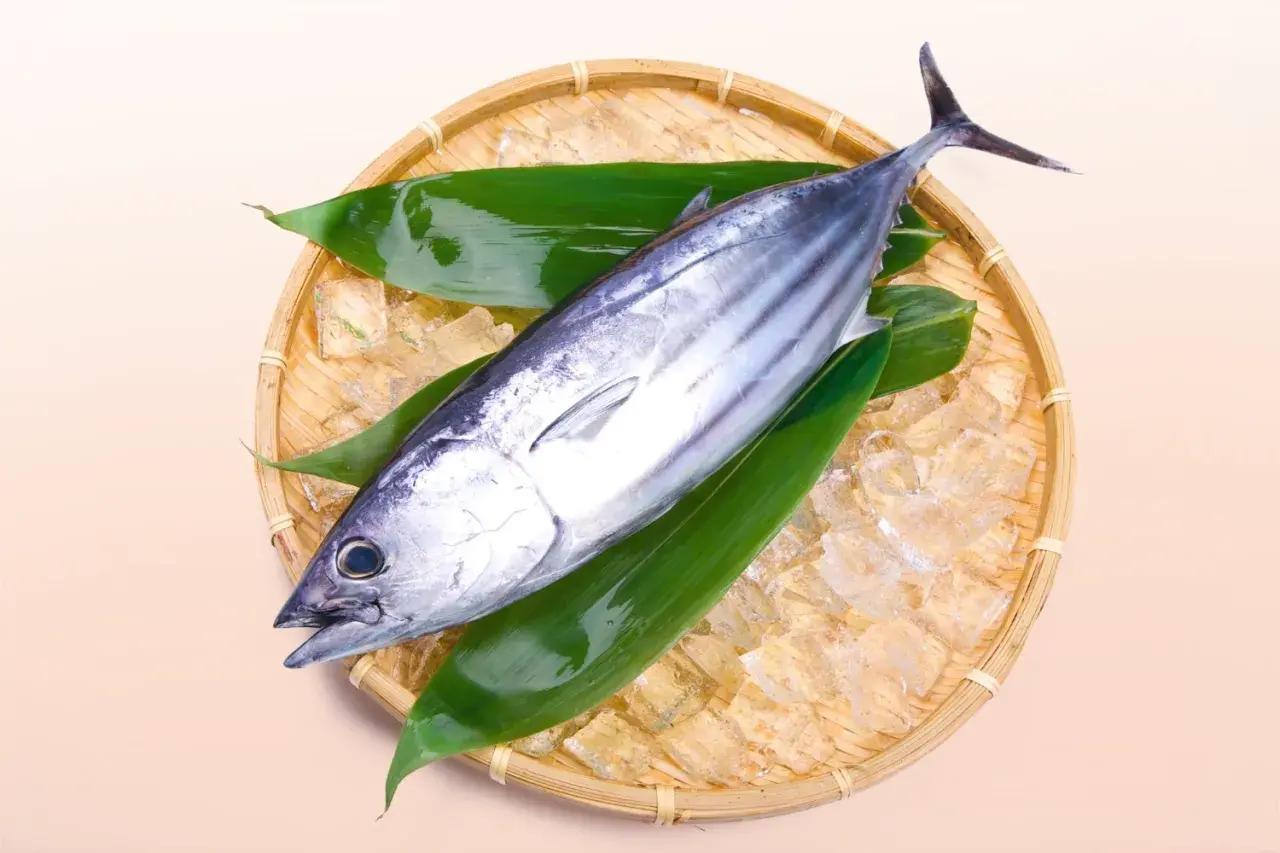
Bonito sits close to tuna in the fish family tree, which is why the two are so often confused. The short answer is that bonito is not a true tuna, but it is a close relative and can behave like one in the kitchen. That difference matters if you are comparing fish counters, reading canned seafood labels, or choosing the right fish for a Basque-style recipe.
The clean answer in one glance
- Bonito and tuna both belong to the broader Scombridae family, but they do not mean the same thing in strict fish classification.
- True tunas sit in a narrower tuna group; bonitos sit in a separate bonito group within the same family.
- Some market names blur the line, especially with skipjack tuna, which is sometimes called ocean bonito.
- On the plate, bonito is usually a little leaner and more assertive, while tuna ranges from mild albacore to rich bluefin.
- In Basque cooking, bonito often appears in stews and conservas, while bonito del norte usually refers to albacore tuna.
Why bonito and tuna are easy to mix up
Common names are messy, and seafood is one of the worst places to rely on them blindly. In the technical sense, tuna belongs to the narrower Thunnini group, while bonito sits in the same broader mackerel-tuna family, Scombridae, but outside that true tuna group. That is why the correct answer is usually “no” if you mean a true tuna, and “close enough to confuse people for a reason” if you mean appearance and culinary use.
| Fish | Scientific clue | What it means |
|---|---|---|
| Atlantic bonito | Sarda sarda | A bonito species; related to tuna but not a true tuna |
| Skipjack tuna | Katsuwonus pelamis | A true tuna that is sometimes called ocean bonito |
| Albacore tuna | Thunnus alalunga | A true tuna often sold in Spain as bonito del norte |
Size also adds to the confusion. Atlantic bonito usually tops out at about 91 cm and 11 kg, while skipjack tuna can reach roughly 110 cm and 35 kg. In other words, bonito can look and move like a tuna without being one in the strict biological sense. Once you look at the family tree rather than the market label, the confusion becomes easier to explain. The next question is more useful for cooks: how does that difference actually show up when the fish hits the pan?
How they differ on the plate
I usually think of bonito as the more outspoken fish. The flesh is typically darker, firmer, and a little leaner, which gives it a stronger marine flavour and makes it very good with tomato, peppers, garlic, and olive oil. Tuna covers a wider range: albacore is pale and mild, yellowfin sits in the middle, and bluefin can be richly fatty.
| Feature | Bonito | Typical tuna |
|---|---|---|
| Flesh colour | Darker and deeper | Ranges from pale albacore to deep red bluefin |
| Texture | Firm, compact, slightly drier | Varies by species, often meatier or richer |
| Flavour | Bolder, more pronounced | From mild to luxurious |
| Best use | Quick grilling, stews, conservas | Steaks, sashimi, cans, grilling |
| Overcooking risk | High | Present, but especially noticeable in lean fish |
The practical takeaway is simple: bonito rewards restraint. If you cook it as if it were a generic tuna steak, you can lose the very thing that makes it interesting. That is exactly why Basque recipes treat it carefully rather than burying it.
Why Basque cooking makes the distinction practical
In Basque cooking, the difference matters because fish choice is tied to method. In a marmitako, the classic potato-and-pepper stew from the coast, I want the fish added near the end so it stays juicy and flakes cleanly. For conservas, olive oil and gentle heat do a lot of the work; escabeche, a vinegar-and-oil marinade, gives the fish a brighter, more savoury edge.
- Use bonito for short cooking times and bold sauces.
- Add it late in stews so it does not dry out.
- Choose oil-packed tins when you want a richer, softer texture.
- Remember that bonito del norte usually means albacore tuna, not Atlantic bonito.
That last point is the one that matters most on a Basque menu, because the word bonito can mean a fish family, a species, or a culinary tradition depending on who is speaking. Once you separate those layers, the rest gets much clearer. In the UK, that clarity is useful at the fish counter too, because the label alone is not always enough.
What I would check on a UK fish counter or a tin
On a UK counter, I would always ask for the species name if the label is vague. That is the fastest way to tell whether you are buying a true tuna, a bonito, or a product that is simply borrowing the wrong common name. Canned seafood is a little easier because the label usually gives you more clues, but only if you read past the marketing copy.
- Sarda sarda means Atlantic bonito.
- Thunnus alalunga means albacore tuna, often the closest match to bonito del norte.
- Katsuwonus pelamis means skipjack tuna, which some markets call ocean bonito.
- If the tin says only “tuna”, check the species, the packing medium, and the origin.
- For a Basque-style conserve, oil-packed fish usually gives the best texture and flavour.
Fresh bonito is less common in Britain than canned tuna, so the label matters even more than usual. If all you have is a photo and a product name, you are still guessing; if you have the species, the guesswork drops away fast. That makes the final rule easier to use in everyday cooking.
The rule I use when a menu says bonito
My rule is straightforward: if the dish needs a fish with a stronger voice and a bit of character, bonito can be the better pick; if it needs the familiar richness people expect from tuna, I choose a true tuna species instead. That distinction is especially useful in grilled dishes, oil-packed conservas, and Basque stews, where the fish is not just an ingredient but the centre of the plate.
- Choose bonito for quick grilling, stews, and assertive Mediterranean sauces.
- Choose albacore or yellowfin when the recipe expects a milder tuna steak.
- Choose skipjack when you want a small, affordable true tuna with a clean tuna flavour.
- Do not swap blindly in raw dishes unless the fish has been handled for that use.
So the clean answer is this: bonito and tuna are close relatives, but bonito is not a true tuna. In Basque cooking, that distinction matters less than freshness, cut, and season, yet it still helps to know exactly what you are putting in the pan or opening from the tin.
