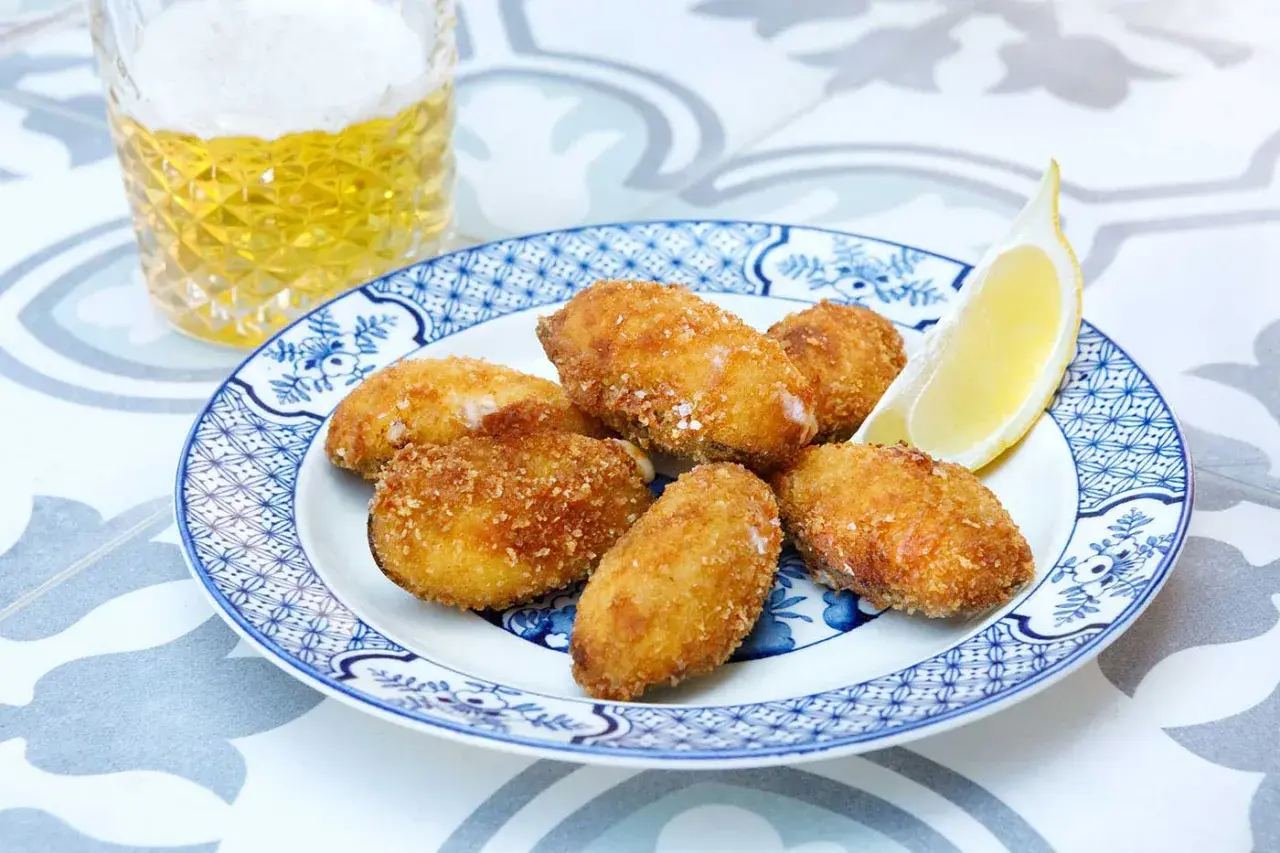
Basque stuffed mussels turn a modest shellfish into a crisp, creamy pintxo that feels much bigger than the sum of its parts. When people say tiger mussels, they usually mean the Basque-style dish known as tigres: mussels folded into a thick filling, tucked back into the shell, breaded, and fried until the outside goes golden. I’m focusing here on what the dish is, how to choose good mussels in the UK, how to keep the filling balanced, and how to serve it so it still tastes bright rather than heavy.
What to know before you start
- This is a Basque pintxo, not a separate mussel species.
- Use live, closed mussels and a reputable UK fishmonger or rope-grown supply.
- The filling should be thick enough to mound on a spoon and chill cleanly before breading.
- Quick frying gives the most authentic texture, but a baked finish can still work at home.
- Dry white wine, txakoli, or a sharp cider keeps the plate from feeling too rich.
What the dish actually is
In Bilbao and across the Basque Country, this dish is usually called tigres or mejillones rellenos. I think of it as a seafood croquette in its shell: you start with cooked mussels, build a sauce that is firm enough to hold shape, then coat and fry it for contrast. The “tiger” idea is about character and a little heat, not about a fiery chilli bomb. In most versions, the flavour comes from onion, garlic, paprika, tomato, and the briny mussel meat itself.
Because it is a pintxo, portion size matters. One or two pieces can start a meal; a few more can sit happily beside other tapas without crowding the table. That makes it ideal for a Basque-style spread, where small dishes are expected to do more than one job. Before the pan comes out, the real decision is which mussels to buy.
Choosing mussels that give the right texture
For this dish I want mussels that are alive, fresh, and not oversized. Closed shells, a clean sea smell, and cold storage are the basic checks; if a shell is open, it should close when tapped, and anything damaged or unresponsive goes in the bin. I also prefer smaller to medium mussels because they taste sweeter and fit the croquette-style filling better than huge ones.
| What to check | What I look for | Why it matters |
|---|---|---|
| Shell condition | Tight, intact shells that close when tapped | It is the fastest sign that the mussels are alive and worth cooking |
| Smell | Fresh sea smell, never fishy | Clean aroma usually means cleaner flavour after cooking |
| Size | Small to medium shells | They are sweeter and keep the filling balanced instead of bulky |
| Source | Reputable fishmonger or UK rope-grown mussels | Good quality, strong value, and a low-impact seafood choice |
In the UK, rope-grown mussels are a smart buy for this recipe: low-impact, quick to cook, and usually excellent value. I like them here because the dish already has enough richness; it does not need a heavy seafood choice on top. Keep them cold, use them quickly, and treat them as fresh shellfish rather than something you can leave sitting around. Once the shellfish are right, the filling becomes straightforward.
How I build the filling and coating
The filling only needs four jobs: taste like the sea, hold together, survive the oven or fryer, and give the shell a clean bite. My base is a small sofrito - slowly cooked onion and garlic - followed by chopped mussels, a little flour or roux (butter and flour cooked together), and enough milk or mussel liquor to make a thick béchamel. I do not want a pourable sauce; I want something that can sit in the shell without slumping.
| Version | Texture | Best for | My take |
|---|---|---|---|
| Classic fried | Crisp outside, creamy middle | Tapas nights and the most authentic finish | This is the version I reach for when I want contrast and drama |
| Lighter baked | Softer crust, still savoury | Home cooking when you want less oil | Good in a pinch, though the shell loses a little of its snap |
| Richer seafood mix | More layered, slightly fuller | Special occasions | Useful if you want a more luxurious filling, but I would not overdo it |
If I want the most useful flavour, I add a little smoked paprika and a splash of strained mussel liquor rather than another handful of milk. Mussel liquor is simply the cooking liquid released when the shells open, and it brings saltiness without making the filling watery. If the mixture can hold a line drawn through it with a spoon, it is probably ready to go. Once the filling behaves, the cooking method is mostly about temperature and timing.

How I cook them without making them heavy
I usually work in six short steps:
- Clean and debeard about 1 kg of mussels, then steam them with a splash of water or white wine for 3 to 4 minutes until they open.
- Discard any that stay shut, then save the shells and strain the liquor.
- Cook a small onion and a little garlic slowly in butter or olive oil, then stir in flour to form the base.
- Add milk and a little mussel liquor gradually until the mixture thickens, then fold in the chopped mussels and season lightly.
- Spoon the filling back into the shells, chill it for 20 to 30 minutes, and ideally longer if you have the time.
- Coat with flour, egg, and breadcrumbs, then fry at about 170-180C for 2 to 3 minutes, just until deeply golden.
I prefer to chill the filled shells before breading because it firms the surface and keeps the crust from slipping. If I want a lighter result, I bake them at 200C until crisp and hot, but I accept that the crust will be a little less dramatic. The key is not to overcook them; they should taste creamy, not dense. That method gives you the right texture, but the dish only really works when the rest of the plate is planned around it.
How I serve them in a Basque-style spread
These are rich, so I keep the rest of the table sharp and simple. A small bowl for shells, a wedge of lemon if your guests like brightness, and one clean drink make a bigger difference than another sauce. If I am building a full plate, I use roasted peppers, a green salad, or a few slices of crusty bread rather than heavy potatoes.
- Best drinks: txakoli, dry white Rioja, Albariño, English sparkling wine, or a very cold dry cider.
- Best sides: peppers in olive oil, tomato salad, grilled padrón peppers, or simple greens with a sharp vinaigrette.
- Best portion: 1 to 2 pieces as a pintxo, 3 to 4 as a starter, and a slightly larger platter only if the rest of the menu is very light.
I would not pair them with another fried dish unless the menu is very small. The appeal here is contrast: crisp coating, creamy centre, and a clean seafood finish. Serve them warm rather than blazing hot, because the flavour opens up once the filling settles.
What usually goes wrong and how I fix it
- The filling is too loose: cook it a little longer or add more roux before stuffing the shells.
- The crumb falls off: chill the filled shells longer and make sure the surface is dry before flouring.
- The flavour tastes flat: add a touch more paprika, a little onion sweetness, or a few drops of sherry vinegar rather than more salt.
- The result feels greasy: the oil was probably too cool; hold it around 170-180C and fry in small batches.
- Some shells stayed shut: discard them. That rule matters more than being economical with one extra mussel.
If I need to hold them for service, I keep them chilled and fry at the last minute. That is the difference between a neat pintxo and a soggy one. Once those details are in place, the dish stops feeling fiddly and starts feeling repeatable.
Why I keep coming back to this pintxo
What makes this recipe worth the effort is the balance: a low-cost shellfish, a creamy centre, a crisp shell, and enough salt and acidity to keep the bite lively. It also fits the way many UK cooks already shop, because rope-grown mussels are widely available, good value, and easy to justify from a sustainability angle.
If I have leftover filling, I spoon it onto toast with parsley or turn it into a small batch of croquettes for the next day. That is the part I like most about this dish: it does not just reproduce a bar snack, it gives you a reusable seafood base that can support a second meal without feeling like leftovers. If you want the version closest to a Basque bar, keep the filling thick, fry fast, and serve immediately; if you want a weeknight version, bake them and accept a slightly softer crust.
