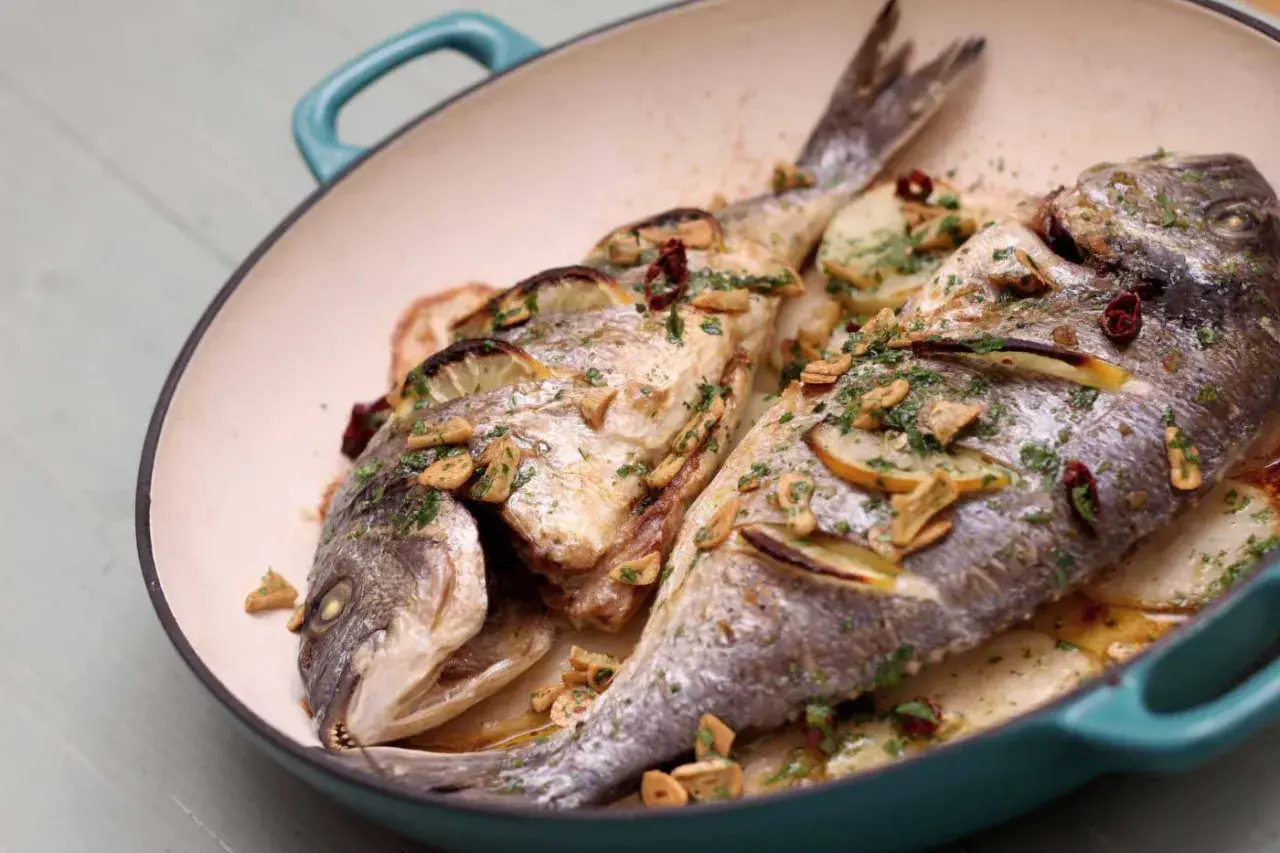
A whole sea bream is one of those seafood dishes that looks more difficult than it is. The bones protect the flesh, the skin takes on heat beautifully, and the mild flavour works especially well with Basque staples like olive oil, garlic, parsley, lemon and a little white wine. In this article I focus on how to buy it in the UK, how to prep it, which cooking method gives the best result, and what to serve beside it.
Key things to know before you cook it
- Whole fish stays juicier than fillets when you roast or grill it properly.
- Look for clear eyes, red gills, firm flesh and a clean sea smell when buying.
- For a medium fish, roast at 200C fan / 220C conventional for about 18-25 minutes.
- Aim for 63C at the thickest point or flesh that flakes cleanly.
- Basque-style flavouring works best when it stays simple: olive oil, garlic, parsley, lemon, white wine and a little chilli if you want it.
- The best sides are usually potatoes, green beans, peppers and a sharp salad.
Why sea bream works so well as a whole fish
I like sea bream because it gives you a lot of flavour without needing much interference. When you cook it on the bone, the flesh stays moist, the skin has a chance to crisp, and the finished dish feels more generous than a fillet on its own. That is why it suits Basque cooking so naturally: the style is built on restraint, fresh ingredients and a clean finish rather than heavy sauces.
There is also a practical reason to keep it whole. The structure of the fish protects it from drying out, so you get a wider window for cooking success than you do with thinner cuts. That makes it a smart choice for home cooks who want something polished without turning dinner into a technical exercise. Once you understand that, the real difference comes from buying and prepping it well.
How I buy and prep it in the UK
In a British fish counter, I look for the same signs every time: bright, clear eyes; red or pink gills; firm flesh that springs back; and a smell that is clean rather than sour or strong. If the fish has been on ice properly, it should smell like the sea, not like a dock left in the sun. I also prefer fish that has already been scaled and gutted, because that removes most of the faff before cooking begins.
If I am buying for a more deliberate dinner, I ask the fishmonger to score the skin lightly and to remove any remaining scales or fins. For sustainability, I check the Marine Conservation Society’s Good Fish Guide and stay flexible about whether the fish is farmed or wild-caught. In the UK, that small bit of flexibility matters because availability and sourcing can vary week by week.
Preparation is straightforward. Pat the fish dry, season it inside and out, and give it a few minutes to sit while you get the oven or grill ready. If you have 20 minutes, salt it early and leave it uncovered in the fridge so the skin dries slightly. That one small step makes a noticeable difference later, especially if you want a better crust.

The Basque-style method I trust most
For me, the most reliable approach is a simple roast built around garlic, parsley, lemon and olive oil, with a splash of dry white wine or txakoli, the lightly sparkling Basque white wine that suits seafood very well. I do not pile on ingredients; I want the fish to taste like itself, only better. A pinch of dried chilli or piment d'Espelette is optional, but it can add a nice regional edge without overpowering the dish.- Heat the oven to 200C fan / 220C conventional.
- Score each side of the fish 2-3 times, then season the cavity and skin generously with salt.
- Stuff the cavity with lemon slices, sliced garlic and parsley sprigs. A bay leaf works too if you want a slightly deeper aroma.
- Drizzle the fish with olive oil and add a small splash of dry white wine or txakoli to the tray.
- Roast for 18-25 minutes for a medium fish, or until the thickest part reaches 63C and the flesh flakes cleanly.
If I am roasting the fish on a bed of thin potatoes and onions, I parboil the potatoes first for about 8-10 minutes. That way the vegetables finish in the same window as the fish instead of turning out underdone. Once you have that base method in place, the next question is whether oven, grill or foil gives you the result you want.
Which cooking method gives you the result you want
Different methods change the final texture more than people expect. Oven-roasting is the safest all-round choice, grilling gives you more smoke and char, and foil or parchment keeps everything especially moist. If you know what you want from the plate, the decision becomes much easier.
| Method | Best for | Approximate time | What you get | Watch-outs |
|---|---|---|---|---|
| Oven roast | A reliable everyday result | 18-25 minutes | Crisp skin, juicy flesh, easy timing | Can dry out if left too long |
| Grill | Smokier flavour and a little char | 10-15 minutes total | Bolder edges and a more rustic finish | Sticking is the main risk |
| Foil or parchment | Very moist fish with minimal fuss | 20-25 minutes | Soft, clean flavour and delicate flesh | The skin will not crisp as much |
| One-pan with potatoes | A complete meal in one tray | 25-35 minutes | More substantial, restaurant-style serving | Potatoes need a head start |
If I want the skin to really sing, I choose roast or grill. If I want maximum tenderness and I am serving guests who prefer a gentler texture, I go with parchment. The method changes the mood of the dish, but the plate is still only as good as the sides around it.
What to serve with it on a Basque table
Sea bream works with sides that bring contrast rather than weight. I usually think in three directions: something starchy, something green, and something sharp. That balance keeps the plate lively and stops the fish from feeling too delicate or too plain.
- New potatoes with olive oil and parsley give the meal enough substance without covering the fish.
- Green beans or tenderstem broccoli add freshness and a bit of bite.
- Roasted peppers and onions lean into the Basque feel and echo the sweetness of the fish.
- Piperrada, a Basque mix of peppers, onions and tomatoes, gives the table a little more depth if you want a more regional plate.
- Crusty bread is not optional in my view, because the pan juices are too good to leave behind.
- Txakoli or another dry, bright white wine keeps the whole meal clean and coastal.
My own rule is simple: one soft element, one bright element and one fresh green element. That is enough to make the dish feel complete without turning it into a crowded plate. From there, the real danger is not lack of flavour but a few avoidable mistakes.
The mistakes that flatten the flavour
- Overcooking the fish is the biggest problem. Sea bream is done when the flesh turns opaque and flakes easily, not when it has gone dry and chalky.
- Skipping the drying step makes the skin softer than it should be. A dry surface gives much better colour.
- Stuffing the cavity too heavily can block heat from moving through the fish evenly. A little aromatics go a long way.
- Using a heavy sauce before cooking hides the fish instead of supporting it. I prefer to finish with olive oil, lemon and cooking juices.
- Adding lemon too early on the grill can make the surface stick. I usually finish with citrus at the table.
- Ignoring the temperature of the thickest part leads to guesswork. The common fish benchmark is 63C, and I trust that more than the clock alone.
If you keep those points in mind, the dish becomes one of the most forgiving seafood mains you can make. It is also the kind of food that rewards confidence more than complexity, which is exactly why I keep coming back to it.
The plate I would serve for a relaxed Basque-style dinner
When I cook whole sea bream for a relaxed dinner, I keep the formula tight: fish, salt, olive oil, garlic, parsley, lemon and one good side. If I want it to feel a little more special, I add roasted peppers, a glass of txakoli and a spoon of the pan juices over the top just before serving. That is usually enough to make the meal feel deliberate without becoming fussy.
Leftovers are worth treating well. Pull the flesh from the bones while it is still fresh, chill it promptly and use it the next day in a salad, a warm potato dish or a simple sandwich. The flavour holds better than people expect, and the bones make the original meal feel like a better deal than fillets ever do.
