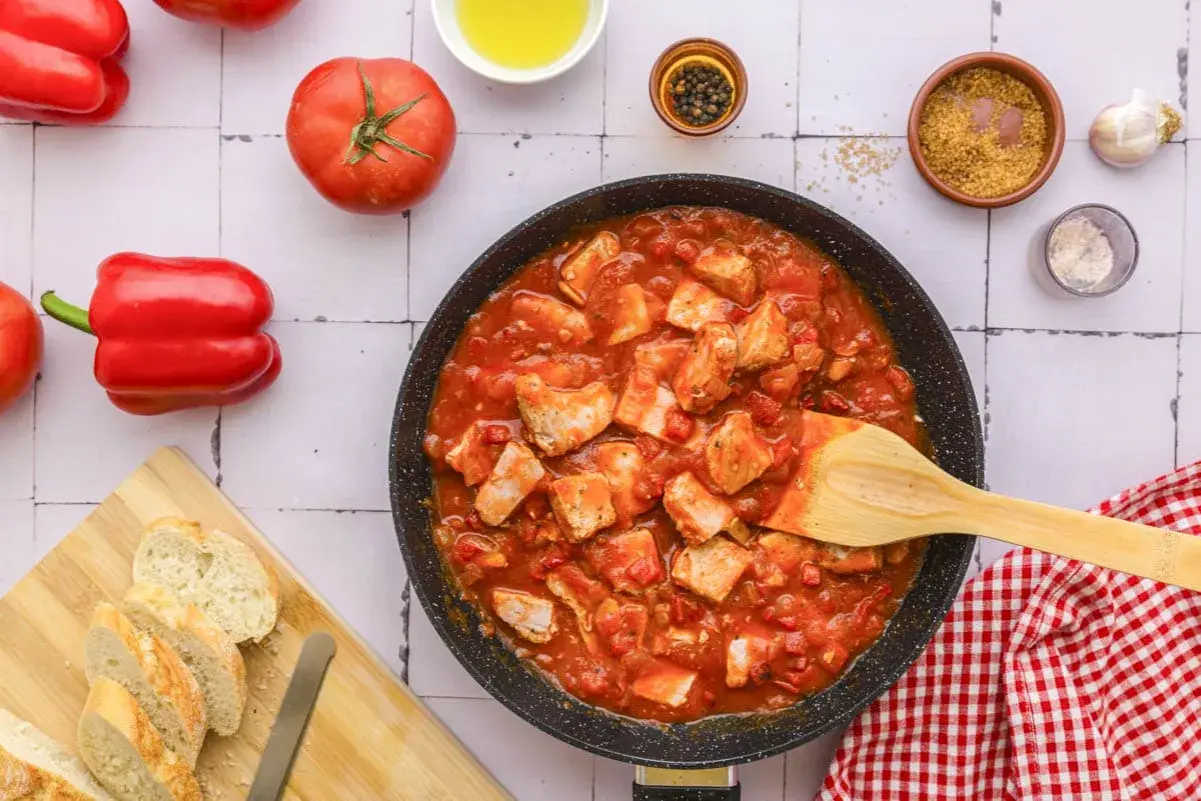
Spanish tuna in tomato sauce is one of those dishes that looks modest on the plate but delivers far more than its ingredients suggest. The dish many Spanish cooks know as atun en salsa de tomate is really about balance: soft tomato, good olive oil, onion sweetness and tuna added late enough to stay tender. In this article I break down what the dish is, how to cook it properly, how to serve it, and where people most often go wrong.
What matters most before you cook it
- This is a fast, pantry-friendly seafood dish built on onion, garlic, tomato and tuna.
- The sauce should be reduced first, then the fish folded in at the end so it stays flaky.
- Canned tuna in olive oil gives the richest weekday version, while fresh tuna makes the dish feel more refined.
- It works as a main course, a tapa, a sandwich filling or a base for rice and pasta.
- For UK readers, tuna limits matter if you are pregnant or trying for a baby, and sourcing can be improved with sustainable labels.
Why this dish works so well
I like recipes like this because they prove that seafood does not need to be complicated to feel complete. Tomato brings acidity and body, olive oil rounds the edges, and tuna adds a clean savoury note that holds up surprisingly well against a slow-cooked sauce.
What makes the dish especially useful is its flexibility. It can lean rustic and homey, or it can be served a little more neatly with fresh parsley and good bread. In Basque and wider Spanish cooking, that kind of practical generosity matters: the food should be honest, but it should still feel considered. That balance is exactly why tuna with tomato has stayed in rotation for so long, and it leads naturally into the ingredients that make or break it.
The ingredients I would not compromise on
The list is short, which is a blessing and a warning. When there are only a few components, each one counts more than usual. I would rather use six good ingredients than try to rescue a thin sauce with extra seasoning at the end.
| Ingredient | What I use | Why it matters |
|---|---|---|
| Tuna | Canned tuna in olive oil, or fresh tuna steak for a more delicate finish | Oil-packed tuna brings more flavour and a softer texture |
| Tomatoes | Passata or crushed tomatoes | Passata gives a smoother sauce; crushed tomatoes give more rustic texture |
| Onion and garlic | 1 medium onion and 2 garlic cloves | They build sweetness and depth before the tomato goes in |
| Olive oil | Extra virgin olive oil | It carries the flavour and gives the sauce a rounder finish |
| Paprika | Sweet Spanish paprika, with a small pinch of hot paprika if you want more lift | It adds warmth without making the dish taste heavy |
| Finishers | Parsley, black pepper and a small splash of sherry vinegar or lemon juice | They keep the sauce bright instead of flat |
If you want a slightly more Iberian profile, add a little green pepper with the onion. I would avoid making the sauce too sweet, because tuna already has enough richness to carry the dish without help. The next step is learning the method that keeps that balance intact.
How I cook it in a home kitchen

Serves 4. Prep takes about 10 minutes, cooking takes around 20 minutes, and the whole dish is usually ready in half an hour.
Ingredients
- 2 tbsp extra virgin olive oil
- 1 medium onion, finely diced
- 1 small green pepper, finely diced, optional
- 2 garlic cloves, minced
- 1 tsp sweet paprika
- 400 g crushed tomatoes or passata
- 1 tsp tomato purée, optional for a deeper base
- 2 x 160 g tins tuna in olive oil, drained but not bone-dry
- Salt and black pepper
- 1 small pinch of sugar, only if the tomatoes are sharp
- 1 tbsp chopped parsley
- 1 tsp sherry vinegar or a little lemon juice
Read Also: Moules Marinière - The Simple Secret to Perfect Mussels
Method
- Warm the olive oil in a wide pan over medium heat. Add the onion, and the green pepper if you are using it, then cook gently for 8 to 10 minutes until soft and sweet, not browned.
- Add the garlic and cook for 30 seconds. Stir in the paprika for another few seconds so it blooms in the oil, but do not let it burn.
- Pour in the tomatoes and tomato purée, season lightly, and simmer uncovered for 10 to 12 minutes until the sauce thickens and loses its raw edge.
- Fold in the tuna in large flakes. Keep the heat low and give it only 2 to 3 minutes, just long enough for the fish to warm through and absorb the sauce.
- Finish with parsley and a small splash of sherry vinegar or lemon juice. Taste once more, then adjust salt and pepper only at the end.
I usually serve it straight from the pan with bread, because the sauce is the part people remember. If I am making it for a fuller meal, I pair it with boiled potatoes or rice. That leads neatly into the question of how to serve it without losing the dish’s character.
How I serve it in a Basque-leaning meal
For me, the smartest way to serve this dish is to keep the plate simple. The sauce should be the main event, so the rest of the meal should support it rather than compete with it. That is very much in the spirit of Basque home cooking, where good ingredients are usually allowed to speak clearly.
| Serving style | Best for | Why I like it |
|---|---|---|
| Crusty bread | Tapas, lunch, casual sharing | Ideal for soaking up the tomato sauce |
| Boiled potatoes | Family dinner | Turns the dish into a proper main without adding heaviness |
| White rice | Batch cooking | Useful when you want a filling plate that reheats well |
| Pasta | Weeknight shortcut | Works well if you want the sauce to stretch further |
| Green salad or dressed leaves | Lighter meal | Cuts through the richness and keeps the plate fresh |
| Txakoli or a dry white | More polished meal | The acidity suits the tomato and the fish |
If I want a slightly more Spanish feel, I add roasted peppers, a few olives or a slice of pan con tomate on the side. I would not pile on too many extras, because the beauty of this dish is that it already tastes complete. From here, the real decision is not presentation, but which tuna and tomatoes you choose in the first place.
Choosing tuna, tomatoes and the right balance of sauce
This is where most home versions quietly split apart. The recipe sounds easy, but the result changes a lot depending on whether you are using canned tuna, fresh tuna, passata or a ready-cooked tomato sauce. I think of it less as a single recipe and more as a set of workable paths.
| Choice | Best for | My take |
|---|---|---|
| Canned tuna in olive oil | Fast weekday cooking | The richest and easiest option; it needs very little help |
| Canned tuna in water | Lighter meals | Useful if you want a cleaner finish, but it needs more olive oil and seasoning |
| Fresh tuna steak | A more elegant version | Best if you sear it briefly and add it at the very end so it stays juicy |
| Passata | Smooth sauce | My default if I want something clean and controlled |
| Crushed tomatoes | Rustic texture | Better if you want visible tomato body and a more homely result |
| Tomate frito | Shortcut version | Convenient, but sweeter and less layered; I use it sparingly |
The biggest mistake here is trying to force flavour with sugar. If the tomatoes taste sharp, I would rather simmer them a little longer than add too much sweetness. A small pinch can help, but the better fix is time, salt and enough olive oil. Once you understand that, the rest is mostly about avoiding the traps that make the sauce feel dull or the fish feel dry.
The mistakes that flatten the dish
- Adding the tuna too early. It turns dry and stringy if it sits in the sauce for too long.
- Boiling instead of simmering. A hard boil can break the fish apart and make the sauce taste harsh.
- Rushing the tomato base. Raw tomato tastes thin and sharp, so give it time to cook down properly.
- Skipping acidity at the end. A small splash of vinegar or lemon often does more than extra salt.
- Overloading the pan. Too much fish or too much liquid makes the dish feel watery instead of glossy.
When I cook it well, the sauce should cling lightly to the tuna rather than drown it. That final texture is the difference between a throwaway pantry meal and something you would happily make again next week. The last piece of the puzzle is how to keep it useful beyond the first serving.
Why I keep this dish in rotation all year
This is one of the few seafood dishes I would confidently keep in a regular meal plan because it stays useful in several forms. Leftovers keep well in the fridge for 2 to 3 days in a sealed container, but I would reheat them gently and avoid repeated boiling, which only toughens the fish. If I know I want to batch-cook, I make the tomato base first and add the tuna later, because the sauce freezes better than the finished dish.
In the UK, NHS guidance says people who are pregnant or trying for a baby should limit tuna to no more than four cans a week or two tuna steaks a week, so that is worth remembering if this becomes a frequent lunch or family dinner. When I am buying tins, I also look for the blue MSC label when I can, because that is the simplest signal that the tuna comes from a certified sustainable fishery. For me, that combination of practicality, flavour and restraint is exactly why this dish earns a place on a serious home-cooking list.
Keep the method gentle, keep the sauce bright, and treat the tuna as the final ingredient rather than the starting point. That is how a simple pan of fish and tomato turns into something I would happily serve in a Basque-leaning kitchen or on an ordinary weeknight in the UK.
