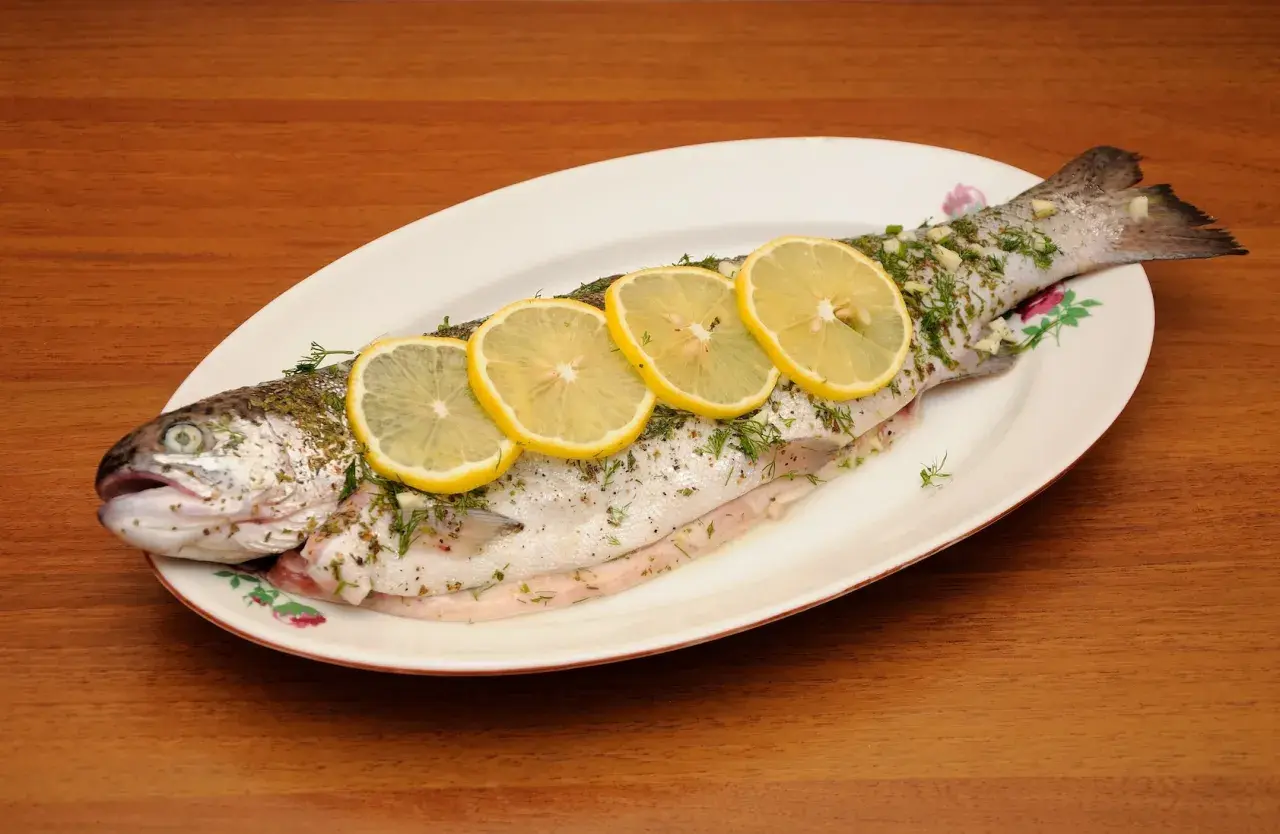
The dish works because the trout stays delicate and the ham stays thin
- The classic version is trout stuffed with cured ham, then fried or baked quickly.
- Peppers are usually an accompaniment or modern variation, not a strict requirement.
- Small to medium trout, thin ham, and short cooking time make the biggest difference.
- Whole fish is more traditional, while butterflied fish is easier for a weeknight pan-fry.
- Season lightly because the ham already brings salt and depth.
What this dish really is
Navarre-style trout is a classic northern Spanish fish dish built on contrast rather than complexity. The trout gives you a mild, clean base; the cured ham adds salt, smoke, and fat; and the cooking method is deliberately short so the fish stays juicy. Spain’s official tourism site presents it as a low-cost main course with trout, cured ham, flour, olive oil, salt, and sliced potatoes, which is a good clue to how practical the dish really is.
That simplicity is the point. I think this is why it works so well in 2026: you do not need a sauce-heavy recipe or a long marinade to make the flavour register. Once the basic structure is clear, the ingredient choices become easy to judge.
Choose ingredients that protect the fish, not just flavour it
In my kitchen, I start with structure. Trout is delicate, so the supporting ingredients should help it hold together and cook evenly. Thin cured ham is ideal because it melts slightly into the flesh without becoming heavy, while peppers are best treated as a bright side or garnish rather than a filler that overwhelms the fish.
| Ingredient | Best practical choice | My note for UK cooks |
|---|---|---|
| Trout | 4 small or medium whole trout, about 250-350 g each | Ask for them gutted; butterflied fish, meaning opened along the belly and flattened, is easier if you want a cleaner pan-fry. |
| Cured ham | 8 very thin slices of serrano ham or dry prosciutto | Choose a drier ham so it crisps lightly instead of turning chewy. |
| Flour | 3-4 tbsp plain flour | Use just enough for a light dusting. |
| Olive oil | 3-4 tbsp | The pan should be hot, but not so hot that the ham burns before the fish cooks. |
| Peppers | 2 roasted red peppers or 6-8 piquillo peppers | Best as a side or base, not as a heavy sauce. |
| Potatoes | 2 medium potatoes, thinly sliced | Good if you want the traditional plated look. |
| Lemon | 1 lemon | Add at the end for brightness, not at the start. |
- Keep the ham thin. It seasons the fish and helps it stay moist.
- Keep the peppers sweet. Bitter or hot peppers pull the dish away from its roots.
- Don't overspend on complexity. This recipe pays you back through technique, not through a long ingredient list.
If you can only upgrade one thing, upgrade the trout. Fresh fish with clear eyes, firm flesh, and a clean smell matters more than any garnish. With those ingredients in hand, the method becomes the real make-or-break step.
How I cook it at home
I usually choose whole trout that have already been gutted, because the skin and shape help protect the flesh. If the fishmonger can butterfly them, that makes pan-frying simpler; if not, whole fish still works well.
- Pat the trout dry, then season lightly inside and out. If the ham is very salty, go especially easy on the salt.
- Slip 1 or 2 thin slices of ham into each fish. The goal is to perfume the trout, not stuff it until it bursts.
- Dust the outside lightly with plain flour. That gives the skin a little protection and a more even colour in the pan.
- Heat 3-4 tablespoons of olive oil in a large pan over medium-high heat, then cook the trout without crowding the pan. For butterflied fish, I usually allow 3-4 minutes on the first side and 2-3 minutes on the second. For thicker whole fish, think closer to 4-5 minutes per side.
- If you prefer the oven, roast at 200°C for about 12-15 minutes for small fish or 18-20 minutes for medium fish. The flesh should be opaque and just firm, not dry.
- Warm roasted peppers or piquillos separately and serve them beside or under the trout. If you want potatoes, keep them thin and simple so they do not crowd the plate.
- Finish with a small squeeze of lemon and serve at once.
A thin dusting of flour is enough; anything heavier turns the coating pasty. If you prefer the oven, the texture is a little cleaner and the kitchen is less smoky, but you lose some of the pan-fried crispness. That trade-off is why peppers matter next: they can add colour and sweetness, but only if they stay in the background.
Where peppers fit, and when they do not
The core dish does not require peppers, but they make sense in a broader Navarre setting. Sweet red peppers, piquillos, or a soft piperade-style mix, meaning a cooked pepper, onion, and tomato base, can add sweetness and acidity that cut through the ham. That works especially well in a modern plated version, where you want colour and a second flavour note without pushing the trout into stew territory.
| Version | What changes | When I use it |
|---|---|---|
| Classic | Trout, ham, flour, oil, salt | When I want the cleanest and most traditional result |
| With roasted peppers | Sweet peppers on the side or underneath | When I want a little colour and a softer plate |
| Piperade-style | Peppers with onion and a little tomato | When I want a more restaurant-style presentation |
What I would avoid is anything too sharp or hot. Chilli heat, raw peppers, or a thick tomato sauce changes the character of the dish. If you want peppers, keep them soft, sweet, and lightly seasoned. A spoonful under the fish or to the side is usually enough, and that restraint leaves room for the trout to stay the main event.
The mistakes that make the dish feel flat
- Overstuffing the trout. One or two thin slices of ham are enough; too much filling stops the fish from cooking evenly.
- Using thick ham. A heavy slice turns leathery before the trout is ready.
- Coating too heavily in flour. You want a light film, not a crust that hides the fish.
- Starting with weak heat. The surface should set quickly or the trout drinks oil.
- Cooking until dry. Trout should be opaque and just firm, not chalky.
- Seasoning everything the same way. If the ham is already salty, keep the side dishes cleaner.
Most of these problems come from impatience, not bad ingredients. If the fish is fresh and the ham is thin, the dish should feel almost obvious once it hits the plate. After the technique is sorted, the sides need the same discipline.
What to serve with it for a proper meal
For a full plate, I lean toward something starchy and something green. The most traditional route is thinly sliced potatoes, either fried, baked, or slowly cooked in oil. A simple green salad, braised fennel, or buttery new potatoes also works well, especially in a UK home kitchen where you may not want to chase every regional detail at once.Drinks should follow the same rule: crisp, dry, and clean. A white from the Atlantic side of Spain, a dry cider, or a mineral Sauvignon Blanc all do the job. If I were serving this for guests, I would keep the menu simple and let the trout stay the focus. That leaves the weeknight version I trust most, which is the safest way to land the dish well.
The weeknight version I trust most
If this is your first attempt, I would use medium trout, thin serrano ham or dry prosciutto, and a simple side of roasted red peppers or piquillos. That combination is forgiving, looks good on the plate, and stays close to the traditional dish without demanding specialist shopping. The important thing is not to chase volume; the dish should taste precise, not loud.
My rule is simple: keep the trout fresh, the ham thin, the heat controlled, and the peppers sweet if you use them at all. Do that and you get a seafood dish that is rustic in origin but polished in execution, which is exactly why it has stayed useful far beyond Navarre. It is the kind of recipe I return to when I want something fast, regional, and genuinely satisfying.
