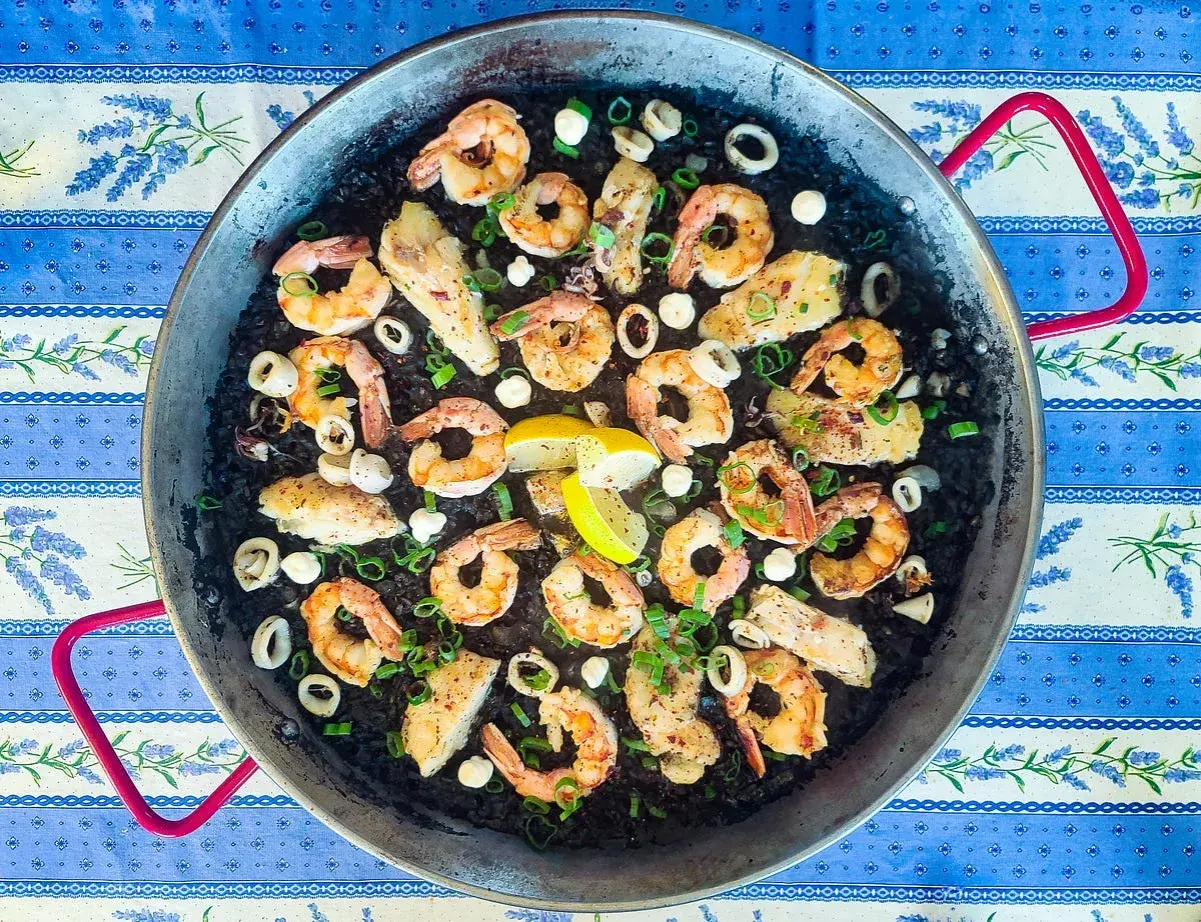
Black, glossy rice changes the mood of a seafood table immediately: it looks dramatic, but the real appeal is the deep, briny flavour underneath. This article explains squid ink rice, which ingredients matter most, how to cook it without turning the squid rubbery, and how I would serve it on a Basque-leaning seafood menu. If you want a dish that feels special without being fussy, this is one worth understanding properly.
The essentials before you start
- A good pan of squid ink rice should taste of shellfish stock first, ink second, with a clean sea finish rather than bitterness.
- Use bomba or Calasparra if you can find them; in the UK, arborio or carnaroli are the most practical substitutes.
- The ink is a seasoning and colouring agent, not the whole flavour, so the stock and seafood still need to be strong.
- I would keep the texture loose and glossy, not creamy, so it reads like a rice dish rather than risotto.
- Alioli, lemon, grilled peppers, and a dry white with sharp acidity are the safest finishing moves.
What this dish really is
This is a seafood rice dish stained and seasoned with squid ink, most often seen in Spain as arroz negro. I would not confuse it with naturally dark rice grain; the colour here comes from the ink, and the flavour comes from the sea. When it works well, it tastes saline, savoury, and slightly sweet, with enough depth to feel luxurious but not heavy.
The best versions sit between paella and a dry seafood pilaf. They are not meant to be creamy, and they should not taste muddy or overly fishy. Once you understand that balance, the rest of the decisions become much easier to make. That leads straight to the ingredients, because this is a dish where a few small choices change everything.
The ingredients that make or break it
The dish is simple on paper, which is exactly why weak ingredients show up so quickly. I pay most attention to the rice, the stock, the seafood, and the ink itself, because those four elements determine whether the pan tastes layered or flat.
| Ingredient | What I would use | Why it matters |
|---|---|---|
| Rice | Bomba or Calasparra if available; arborio or carnaroli in a UK kitchen | Short-grain rice absorbs flavour without collapsing into mush |
| Seafood | Squid or cuttlefish, plus prawns or mussels if you want more body | The rice needs real marine flavour, not just colour |
| Stock | Fish stock or shellfish stock, ideally with prawn shells or a light bisque note | Good stock gives the dish depth; weak stock leaves it tasting thin |
| Squid ink | Small amounts added to the hot stock | It deepens the flavour and creates the black colour, but too much can turn harsh |
| Acid and fat | Lemon, alioli, and good olive oil | They sharpen the finish and stop the dish from feeling one-note |
In the UK, I would also think practically about sourcing. Specialist fishmongers, Spanish or Basque grocers, and well-stocked online shops are usually more reliable than a standard supermarket aisle. If you cannot find exactly the right rice, choose the closest short-grain option and keep the cooking gentle. From there, technique matters more than theatrics.

How I would cook it for the right texture
The biggest technical mistake is treating it like soup or like risotto. I prefer a wide pan, hot stock, and enough control to keep the rice distinct while it absorbs flavour. The squid should stay tender, which means it needs very brief cooking, usually around 1 to 2 minutes per side if you sear it separately or near the end.
- Warm the stock first and dissolve the squid ink into it so the colour and seasoning spread evenly.
- Cook onion, garlic, or spring onion slowly in olive oil until sweet, not browned.
- Stir in the rice and coat the grains for a minute so the starch surface takes on flavour.
- Add the hot stock, then let the rice simmer without constant stirring.
- Fold in the squid or other seafood near the end, or cook it separately and place it on top so it stays tender.
- Rest the pan for a few minutes before serving, then finish with alioli, herbs, or lemon.
For a home-cook portion, I usually think in terms of about 350 to 400g rice and roughly 900ml to 1 litre of hot stock, adjusting as needed for the grain and the pan size. If the rice starts to look dry before it is tender, add a little more hot stock rather than cold water. Once the pan is cooked correctly, the question becomes how to serve it in a way that respects the flavour instead of covering it up.
What to serve with it
I like to keep the sides sharp and simple, because the rice already carries enough personality. Basque-style eating is at its best when the seafood is clear, the seasoning is clean, and the plate does not need extra decoration to feel complete.
- Alioli: the classic choice, because garlic and olive oil lift the briny rice without masking it.
- Lemon wedges: useful when you want the dish to taste brighter and less dense.
- Grilled green peppers or piquillo peppers: they add sweetness and a little char, which works well against the black rice.
- Simple green salad: a light bitter edge keeps the meal from feeling heavy.
- Dry white wine: I would pour txakoli first if I had it, then fall back on a crisp, high-acid white such as an Albariño-style wine.
If I were building a fuller table in the UK, I would serve this after a few small seafood starters and before anything rich or creamy. That order keeps the palate fresh and makes the rice feel like the centrepiece it should be. Even so, a strong serving plan can still be undermined by a few avoidable mistakes.
The mistakes that flatten the flavour
I see the same problems repeated in home kitchens, and they are easy to avoid once you know what to look for. Most of them come down to either using the wrong grain or treating the rice too aggressively.
- Using long-grain rice: it stays too separate and never gives the dish the right body.
- Adding cold stock: this interrupts the cooking rhythm and can make the final texture uneven.
- Overcooking the squid: this is the quickest way to turn a good pan into something chewy.
- Relying on ink alone: colour without a strong stock tastes flat and unfinished.
- Stirring too much: you push the dish toward risotto, which changes both texture and character.
- Overloading the pan with garnish: too many extras bury the marine flavour that should be leading.
The best correction is usually restraint, not more ingredients. Once that mindset is in place, the remaining variables are mostly about swapping ingredients sensibly and handling leftovers well.
Swaps and leftovers that still feel right
Not every kitchen has the same pantry, and this dish tolerates a few substitutions as long as you keep the seafood profile intact. I would rather see a clean, well-seasoned pan made with the right spirit than a purist version cooked with tired ingredients.
| Situation | What I would do | What to avoid |
|---|---|---|
| No bomba or Calasparra rice | Use arborio or carnaroli and watch the liquid closely | Long-grain rice or basmati |
| No fresh squid | Use cuttlefish, prawns, mussels, or a mix of the two | Replacing the seafood with ingredients that have no marine flavour |
| No shellfish stock | Use fish stock and boost it with prawn shells if possible | Plain water, unless you have no other option |
| Leftovers | Reheat gently with a splash of hot stock and add a fresh squeeze of lemon | Microwaving it dry and expecting the texture to stay perfect |
If I have leftovers, I cool them quickly, store them promptly, and reheat only what I plan to eat. The rice will never be quite as perfect as it was from the pan, so I treat leftovers as a second-service dish, not a rerun of the first plate. That same practical approach is why I think this style of seafood rice deserves a place on a Basque table in the first place.
Why restraint is what makes this seafood rice memorable
For me, the dish works when it tastes like the sea in concentrated form, with enough depth to feel generous but not enough richness to become heavy. The black colour gets attention, but the real reason I keep coming back to this style is the balance: good stock, clean seafood, short-grain rice, and a sharp finish. When those parts line up, the pan looks dramatic and tastes even better.
If you want the most reliable result, start simple and keep your focus on texture, seasoning, and timing. That approach gives you a rice dish with enough Basque-style confidence to stand on its own, and enough practical flexibility to work well in a UK kitchen. In other words, the best version is not the flashiest one, but the one that tastes precise, briny, and complete.
