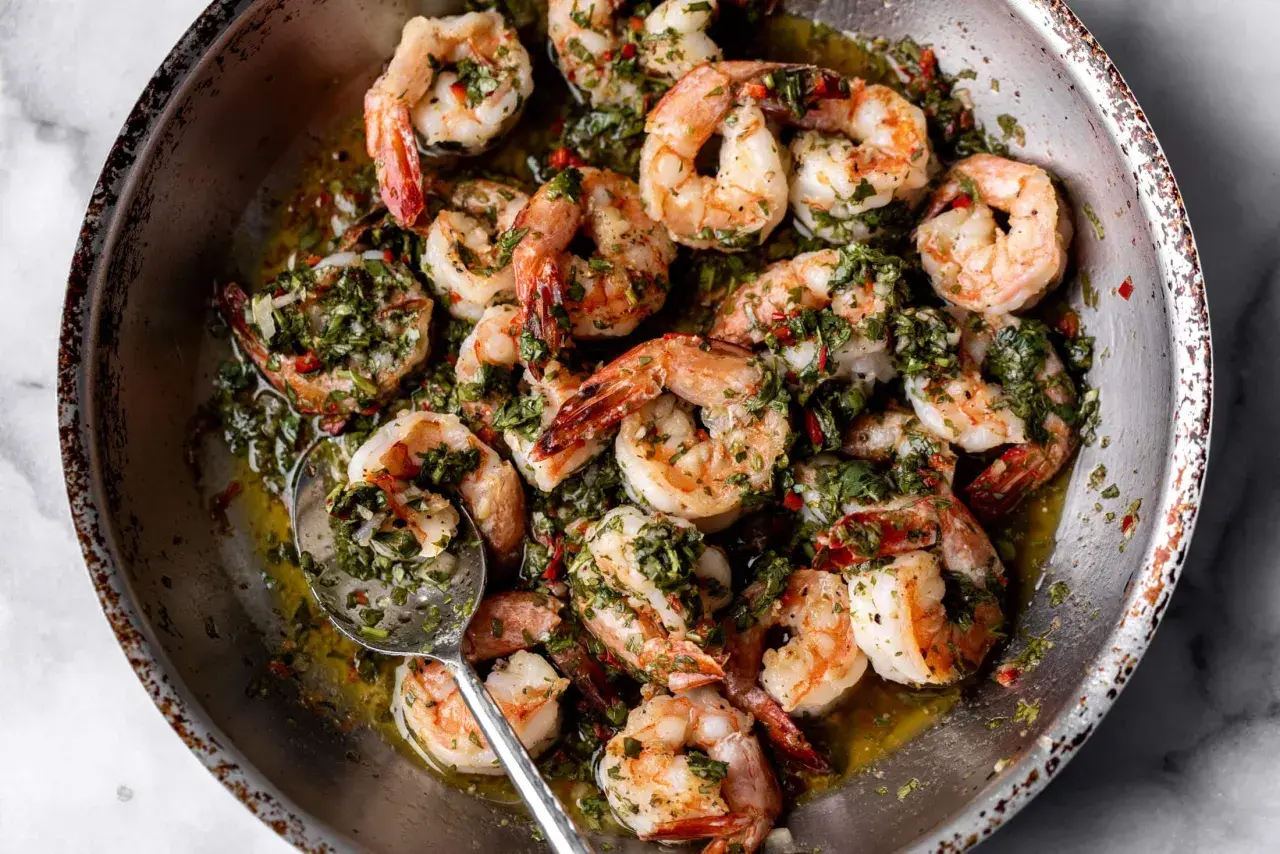
I usually find that quick seafood works best when the method stays simple and the seasoning does the heavy lifting. This guide focuses on shrimp recipes that are fast enough for a weeknight but still polished enough for a proper table, with the garlic, lemon, olive oil, and chilli combinations that suit Basque-leaning cooking. I also cover how I choose prawns in the UK, which techniques keep them tender, and the mistakes that usually ruin the texture.
Fast seafood dishes depend on timing, dry heat, and a few sharp flavours
- Most prawns cook in 4 to 8 minutes total; larger ones need a little longer, smaller ones less.
- I trust frozen raw prawns more than chilled packs that have sat around too long.
- Dry prawns sear; wet prawns steam. Patting them down matters.
- Garlic, olive oil, lemon, parsley, chilli, and white wine are the safest flavour base.
- Basque-style touches such as piment d'Espelette and a dry Basque white like txakoli keep the dish bright rather than heavy.
Why prawns are one of the most practical seafood choices
When I plan a seafood supper around prawns, I treat them as a forgiving ingredient with one major rule: they cook fast and stop being pleasant when they stay in the pan too long. A pan-seared dish can be on the table in roughly 15 minutes from start to finish, which is why I reach for them when I want dinner to feel deliberate without turning into a project.
- They work in starters, mains, and sharing plates.
- They take strong flavours well, so the ingredient list can stay short.
- They are useful in pasta, rice, grills, broths, and quick sautés.
- They turn a simple plate into something that looks more finished than the effort suggests.
For me, that flexibility is the real reason people keep coming back to prawn dishes. Once that is clear, the next question is how to buy and prep them so the texture stays right.
How I choose and prep prawns in the UK
In British kitchens, I usually think in terms of raw prawns, king prawns, and small cooked prawns rather than getting stuck on the label. The details that matter are size, freshness, and whether the seafood has already been cooked, because those three things decide how you should treat it.
| Type | Best for | What I look for | My rule of thumb |
|---|---|---|---|
| Raw king prawns | Stir-fries, pasta, grills | Firm flesh, translucent colour, clean sea smell | My default choice for most hot dishes |
| Small prawns | Salads, rice, fritters | Sweet flavour and even size | Best when I want the seafood folded through rather than spotlighted |
| Shell-on prawns | Grilling, brothy dishes, garlic oil | Intact shell and no excess liquid | More flavour, slightly more work |
| Cooked prawns | Cold salads, sandwiches | Chilled, plump, and not swimming in brine | Warm only briefly, or serve cold |
| Frozen raw prawns | Everyday cooking | Light ice glaze and no freezer burn | Usually the most reliable buy |
To thaw frozen prawns, I put them in the fridge overnight or in a sealed bag under cold running water if I am short on time. I do not leave them on the counter, and I always pat them dry before they hit the pan; that tiny step makes a bigger difference than most people expect. Deveining is simply removing the digestive tract, and I usually do it on larger prawns because it keeps the plate cleaner and more pleasant to eat.
Once you start with the right pack, the cooking method becomes the real choice. That is where the texture either stays juicy or slips into rubber.

The cooking methods that keep them juicy
I think of prawns as a precision ingredient: the best method depends less on the seafood itself and more on the finish I want. Searing gives colour, grilling adds smoke, baking is easy for larger batches, and poaching is useful when the sauce or broth is the point.
| Method | Typical time | Best for | What I watch |
|---|---|---|---|
| Sauté or pan-sear | 2 to 4 minutes | Garlic butter, scampi, one-pan dinners | A hot pan and enough space between prawns |
| Grill or barbecue | 2 to 3 minutes per side | Skewers, tapas, smoky plates | Oil first so they do not stick |
| Bake | 6 to 8 minutes at 200°C conventional / 180°C fan | Tray bakes and breadcrumb toppings | Do not bury them under too much sauce |
| Poach or simmer | 3 to 4 minutes | Salads, broths, chilled dishes | The liquid should stay gently simmering, not boiling hard |
| Deep-fry | 1.5 to 3 minutes at about 180°C | Tempura and popcorn-style prawns | Keep batter light and dry |
Dry prawns sear; wet prawns steam. I pull them the moment the flesh turns opaque and the bodies curl into a loose C. Once they tighten into an O, they are usually already a little past their best. That one detail matters more than any sauce you pour over the top.
Technique is only half the story; flavour decides whether the dish feels flat or memorable.

Basque-leaning flavours that make seafood feel complete
When I want a dish to feel at home on a Basque-inspired menu, I lean on olive oil, garlic, parsley, chilli, good acid, and one grounded note from paprika or piment d'Espelette. Those flavours do not hide the prawns; they frame them.
| Flavour base | Best use | Why it works |
|---|---|---|
| Garlic, olive oil, parsley, chilli | Quick tapas starter | Direct, bright, and easy to repeat |
| Piment d'Espelette, tomato, white wine | Skillet dish or rice | Gentle warmth without drowning the seafood |
| Lemon, capers, dill | Lighter lunch or salad | Sharp and clean, with no heavy sauce |
| Butter, cider, chives | UK-friendly supper | Richer, but still fresh enough for shellfish |
| White beans, fennel, saffron | Stew or casserole | More substantial for colder evenings |
If I have txakoli, the dry, lightly sparkling Basque white, I use a splash in the pan or pour the rest alongside the meal. The point is acidity, not alcohol for its own sake. A good seafood dish should taste brighter at the end than it did when it started.
That balance also explains why some prawn dinners fail: the ingredient list is fine, but the seasoning is blunt or the heat is too timid. The next section covers those mistakes directly.
The mistakes that make a good pan turn rubbery
- Cooking from wet prawns. Water in the pan steams them instead of searing them.
- Using low heat. A timid pan leaves them pale and soft before they get any colour.
- Overcrowding. If the prawns are stacked, they cannot brown properly.
- Adding lemon too early. Acid is useful, but I prefer it as a finish, not as the first move.
- Leaving cooked prawns on the heat. If they are already pink, they usually need only 30 to 60 seconds to warm through.
My fix is boring but effective: hot pan, dry prawns, short cooking time, and the sauce ready before the seafood goes in. I would rather serve a simpler plate that is properly cooked than a flashy one with tough texture.
Once those errors are out of the way, serving becomes easier, because I can build the whole plate around what the prawns do well.
The plates I would actually serve for dinner or tapas
When I cook for people, I think in portions and pairings, not just recipes. For a starter, I plan on 100 to 125 g of raw prawns per person; for a main, 150 to 200 g is a more realistic range. That keeps the plate satisfying without making it feel heavy.
| Dish style | What to serve with it | Why it works | Best occasion |
|---|---|---|---|
| Garlic prawns with sourdough | Crusty bread, parsley oil, green salad | The bread catches the sauce instead of letting it go to waste | Starters and sharing plates |
| Prawns over linguine | Olive oil, lemon zest, rocket | Quick, filling, and not weighed down by cream | Weeknight dinner |
| Grilled prawns with piment d'Espelette | Charred peppers, new potatoes, aioli | Smoky with clean edges | Casual supper |
| Prawn and bean stew | Crusty bread, cabbage or other greens | Comforting while still seafood-led | Colder evenings |
| Cold prawn salad | Cucumber, fennel, dill, yoghurt or mayonnaise dressing | Light, fresh, and easy to scale up | Lunch or buffet |
I like these combinations because they do one job each: bread handles the sauce, greens keep the plate fresh, and starch gives the seafood a proper home. If the sides are all competing, the prawns get lost.
That leaves one final thing worth keeping in mind: the small pantry choices that make these dinners easier to repeat.
What I keep in the cupboard for better seafood all week
These are the items I reach for most often when I want a prawn dish to feel complete without extra effort.
- Extra-virgin olive oil for sautéing and finishing.
- Garlic, because prawns rarely need much more to taste alive.
- Fresh lemons, ideally one for juice and one for zest.
- Flat-leaf parsley for freshness and colour.
- Piment d'Espelette or mild chilli flakes for gentle heat.
- Dry white wine or a sharp splash of cider for deglazing.
- Good bread, pasta, or rice so the sauce has somewhere to go.
- Frozen raw prawns in the freezer, because reliability beats impulse buying.
If you keep the cooking simple and the timing tight, shrimp recipes stop feeling like a special project and start behaving like dependable dinner ideas. That is the version I like best: quick, bright, and generous enough to suit a Basque-leaning table without losing the clean flavour of the seafood itself.
