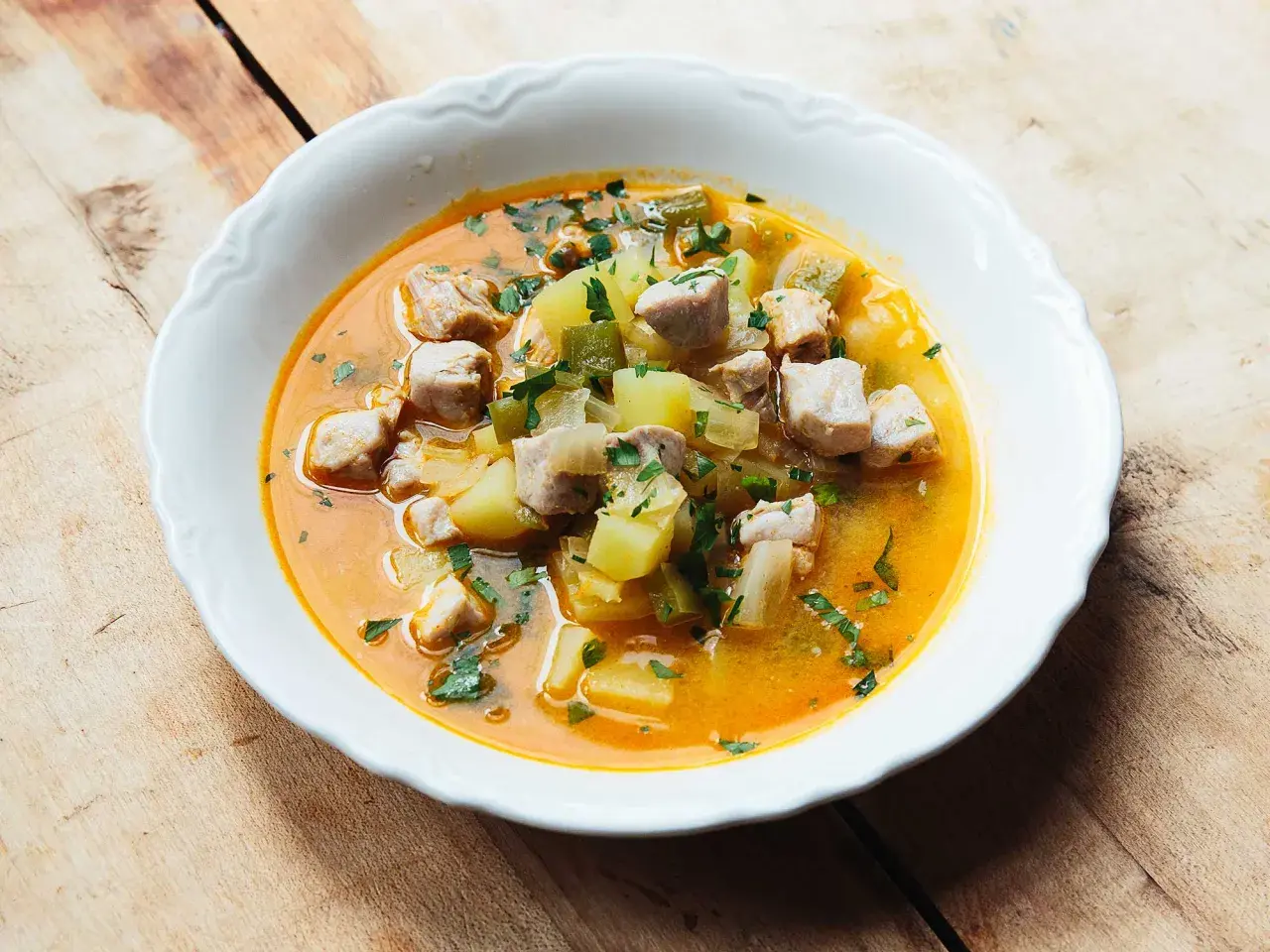
A well-made marmitako recipe is one of the best ways to bring Basque coastal cooking into a home kitchen without making the process fussy. It is a tuna and potato stew built on a simple logic: a good sofrito, properly handled potatoes, and fish added only at the end. In this article I break down what matters, the ingredients I would buy in the UK, the cooking order, and the small adjustments that keep the stew authentic rather than heavy.
What matters most when making this Basque tuna stew
- Use good tuna and add it late. Overcooked fish is the fastest way to ruin the dish.
- Break the potatoes instead of cutting them neatly. The rough edges help thicken the broth naturally.
- Build a slow sofrito. Onion, peppers, garlic, and olive oil create the stew’s backbone.
- Use choricero pepper if you can find it. Smoked paprika and roasted red pepper are the closest supermarket-friendly fallback.
- Keep the broth light but savoury. Marmitako should feel brothy and substantial, not creamy or overloaded.
What makes marmitako a Basque stew rather than a generic tuna soup
Tourism Euskadi describes marmitako as one of the classic dishes of the Basque Country, and that matters because the dish is not trying to be refined or overbuilt. It began as practical fishing food, which is why the best versions stay focused on a few ingredients that do real work. The flavour comes from patience at the beginning and restraint at the end, not from adding more seafood or more spice.
I think that origin explains why the dish feels so satisfying: the potatoes give body, the peppers and onion create sweetness, and the tuna finishes the pot with a clean, sea-bright flavour. If any one part takes over, the stew stops tasting Basque and starts tasting like a random fish chowder. That balance is the thread that runs through everything else.
Once you understand that logic, the ingredient list becomes much easier to judge.
The ingredients I would not compromise on
For a home cook in the UK, the key is not chasing rare ingredients at any cost. It is choosing the right substitutes when needed and keeping the structure of the dish intact. I would treat the ingredients below as the backbone of the stew.
| Ingredient | What I look for in the UK | Why it matters |
|---|---|---|
| Tuna | Fresh tuna steak, tuna loin, or good frozen tuna steaks thawed slowly in the fridge | This is the final protein, so it needs to stay tender and just barely cooked |
| Potatoes | Maris Piper, King Edward, or Desiree | They soften well and release enough starch to give the broth body |
| Onion and peppers | 1 onion, 1 green pepper, and 1 red pepper | They form the sofrito, which is the flavour base of the whole pot |
| Choricero pepper or paprika | Choricero pepper pulp if available; otherwise smoked paprika plus a little roasted red pepper | This is where the stew gets its deep colour and gentle sweetness |
| Stock and olive oil | Good fish stock and extra virgin olive oil | They keep the stew savoury, glossy, and coherent instead of flat |
I would keep tomato optional rather than mandatory. A spoonful of tomato purée or a small chopped tomato can round the broth, but too much pushes the stew away from its coastal, savoury identity. I also would not use canned tuna. It changes the texture completely and takes the dish in the wrong direction.
If you can find bonito del norte or another high-quality tuna loin, that is ideal. If not, a firm tuna steak from a good fish counter is the practical answer, and it works well as long as you do not overcook it. That leads neatly into the method, because timing matters more here than fancy technique.

How I cook the stew without overcooking the fish
For 4 servings, I usually use 2 tablespoons olive oil, 1 onion, 1 green pepper, 1 red pepper, 2 garlic cloves, 750 g potatoes, 750 ml fish stock, 450 g tuna steak, 1 tablespoon choricero pepper pulp or 1 teaspoon smoked paprika, and salt to taste. I keep tomato optional, because it can help round the stew but should not dominate it.
-
Start with a slow sofrito. Warm the olive oil in a wide pot, then cook the onion and peppers with a pinch of salt for 8 to 10 minutes over medium heat. You want them soft, glossy, and sweet, not browned.
-
Add garlic and your pepper base. Stir in the garlic for 30 seconds, then add choricero pulp or smoked paprika. If you are using a little tomato, add it now and cook for another minute so the raw edge disappears.
-
Bring in the potatoes. Break the peeled potatoes into irregular chunks rather than slicing them cleanly. Toss them through the base, then add fish stock just to cover. Simmer gently for 18 to 25 minutes, until the potatoes are tender and the broth has started to thicken.
-
Finish with the tuna. Cut the fish into 3 cm cubes and add it only when the potatoes are ready. Simmer for 2 to 4 minutes at the most. The tuna should turn opaque around the edges but stay juicy in the middle.
-
Rest briefly and serve. Taste for salt, let the stew sit for 2 minutes, then serve with parsley if you like. I never let it boil hard after the tuna goes in, because that is when the fish turns dry and the whole pot loses its elegance.
The method is simple, but the order is not negotiable. If you rush the sofrito, the stew tastes thin. If you overwork the potatoes, the texture gets gluey. If you leave the tuna in too long, the best part of the dish disappears. That is why marmitako rewards calm timing more than clever improvisation.
The small details that change the result
Most home cooks do not fail here because the recipe is complicated. They fail because they miss one or two small details that matter a lot. These are the ones I pay attention to every time.
- Break the potatoes instead of dicing them neatly. The rough edges release starch and help the broth feel naturally thick. Clean cubes look tidy but often give a flatter result.
- Keep the tuna cooking window very short. Two to four minutes is usually enough, depending on the size of the cubes. If the fish is firm and opaque all the way through, it has probably gone too far.
- Season for depth, not heat. Marmitako should taste savoury, lightly smoky, and a little sweet from the peppers. It should not taste spicy in the modern sense.
- Use tomato sparingly. A little can help, especially in a supermarket kitchen, but too much tomato makes the stew read like a different dish entirely.
- Choose the right pot. A wide, heavy pot helps the sofrito cook evenly and gives the potatoes enough room to move without breaking apart too aggressively.
If you want to make the stew ahead, stop before the tuna goes in. Reheat the base gently, then add the fish at the last minute. That approach keeps the texture fresh and makes the dish much easier to serve for guests.
Once those details are under control, the dish becomes easy to adapt without losing its character.
How I serve it in a UK kitchen
In the UK, I would keep the sides simple. A slice of crusty sourdough, a piece of baguette, or even a plain green salad is enough. The stew already carries potatoes, so the bread is there for soaking rather than filling a gap.
For drinks, I would reach for a dry white wine with enough acidity to cut through the olive oil and the tuna. If you want to stay close to the northern Spanish feel, an Albariño-style white works well. A crisp English white can do the job too, as long as it is not too oaky or too sweet.
Here is how I would handle the main practical swaps:
- No choricero pepper? Use smoked paprika plus a little roasted red pepper. That keeps the sweetness and colour in place.
- No fresh bonito or tuna loin? Buy good tuna steaks and thaw them gently if frozen. Avoid canned tuna entirely.
- Need a make-ahead version? Cook the base and potatoes first, chill, then add tuna just before serving.
- Want a lighter bowl? Reduce the potatoes slightly and add a little more stock, but do not add cream.
For leftovers, I would keep the stew in the fridge for up to 2 days, but I would not expect the tuna to reheat beautifully a second time. The base freezes better than the finished dish, which is another reason to separate the fish from the rest of the pot when you can. That practical flexibility is one of the reasons this stew earns a place in regular rotation.
A Basque stew worth cooking more than once
What I like most about this dish is that it does not hide behind technique. A few ingredients, treated with care, create something that feels much larger than the sum of its parts. The potatoes give it comfort, the peppers give it sweetness, and the tuna gives it the final lift that keeps it from becoming ordinary.
If I were cooking it for guests in the UK, I would make the base earlier in the day, reheat it gently, and add the tuna in the last few minutes so the fish stays supple. That approach keeps the stew flexible without losing the direct, coastal character that makes marmitako worth cooking in the first place.
