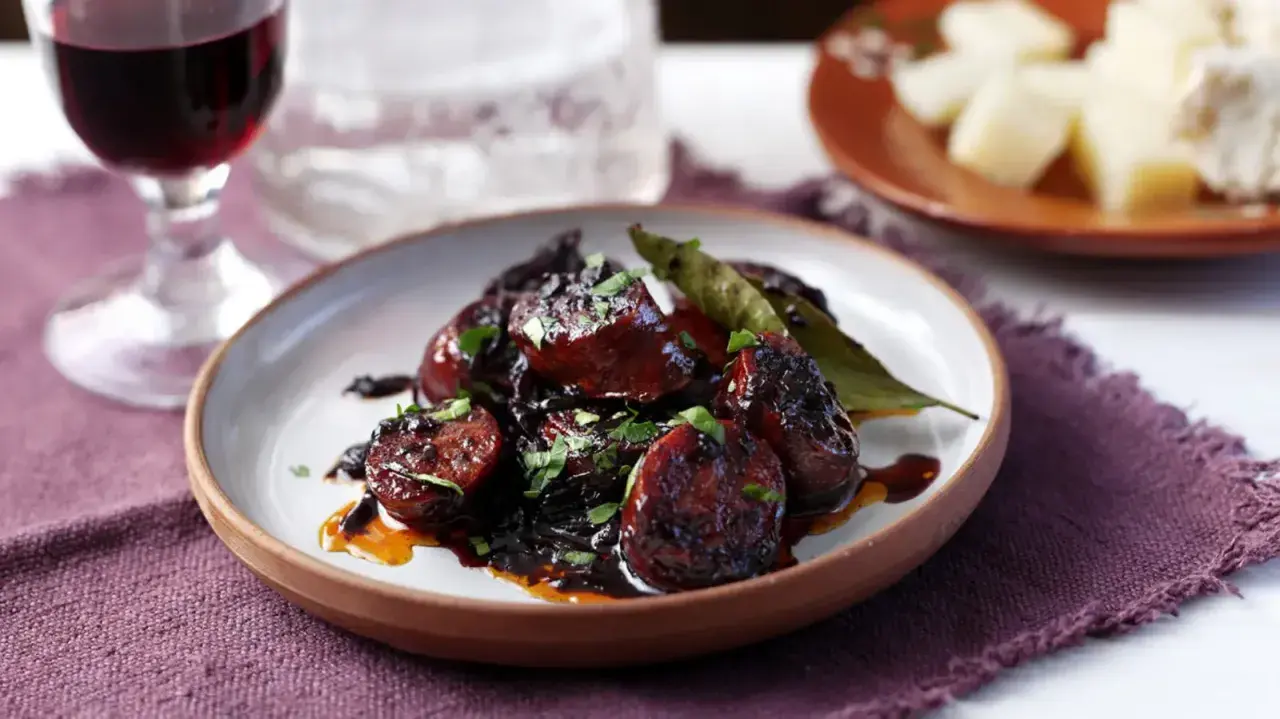
Few small plates are as dependable as chorizo tapas: they come together quickly, taste bold without much effort, and fit naturally into a shared table. I am focusing here on the versions that actually make sense at home, the Basque pintxo angle, and the practical details that keep the sausage juicy rather than greasy. If you are cooking in the UK, you will also get the buying and serving cues that matter most.
The quickest route to a good chorizo plate
- Use Spanish-style chorizo, not a raw sausage that needs a different method.
- Gentle heat matters more than speed; 8 to 12 minutes is usually enough for a hot tapa.
- Bread, acidity, and something green keep the plate from tasting heavy.
- Basque pintxos are usually bread-based, so chorizo fits them especially well.
- For four people, 250 to 300 g of chorizo is enough when it is part of a wider tapas spread.
Why chorizo belongs on a tapas table
I like chorizo on a tapas table because it does three jobs at once. The paprika brings warmth, the fat carries flavour into bread or potatoes, and the salt gives you the sharp, savoury hit that makes people reach for a second bite. That is also why it works better as a shared plate than as a lone sausage: it wants contrast, not volume.
In practice, that means treating it as seasoning as much as protein. A good tapa is never just more meat; it is a small composition of rich, acidic, and fresh elements. Once that logic clicks, the rest of the choices become easier.
Once that flavour logic is clear, the next step is deciding which style belongs on the table.

The styles I would expect in Spain and the Basque Country
Tourism Euskadi describes pintxos as part of the bar-hopping ritual known as txikiteo, and that is exactly why chorizo on bread feels so natural in the Basque Country. Spain.info also notes that chorizo cooked in cider is commonly served as a starter or alongside other tapas, which is still one of the simplest ways to build a convincing spread at home.
| Style | What it is | When I use it | Why it works |
|---|---|---|---|
| Chorizo a la sidra | Chorizo gently simmered in dry cider with a bay leaf | When I want one warm bowl on the table | Glossy sauce, soft texture, easy to share |
| Chorizo and pepper pintxo | Bread, chorizo, and a fried or roasted green pepper | For parties and standing meals | Simple, fast, and easy to eat with one hand |
| Chorizo with potatoes or mushrooms | Pan-fried or roasted with vegetables | When I need something more filling | Absorbs paprika oil without becoming sloppy |
| Cured chorizo on bread with cheese | Thin slices on toasted bread, sometimes with Manchego | For cold service | Fastest option, no stove time, very bar-friendly |
For me, the real distinction is not formal versus casual; it is whether the bite is meant to be picked up with one hand or eaten from a small plate. That difference sounds minor, but it changes the whole rhythm of the meal.
That mix of styles is useful, but it only works if the sausage is cooked with a light hand.
How I make it at home without losing the sausage's character
When I cook it at home, I start with the least fussy method that still respects the sausage. For 4 people as part of a larger spread, I use 250 to 300 g of Spanish-style chorizo, 120 ml of dry cider or dry white wine, 1 bay leaf, and 1 tsp of olive oil only if the pan needs it.
- Slice the chorizo into 1 to 1.5 cm coins, or halve it lengthwise if you want a more pintxo-like shape.
- Set the pan over medium-low heat and let the sausage render for 2 to 3 minutes before moving it around.
- Add the cider or wine and the bay leaf, then simmer for 5 to 7 minutes until the liquid becomes lightly syrupy.
- Taste before salting. Chorizo is already seasoned, and extra salt usually makes the plate feel harsh.
- Serve immediately on warm bread, with potatoes, or with peppers so the fat stays glossy rather than dull.
Two rules matter more than any recipe card. First, do not blast the pan with high heat: the outside will overcook before the fat has a chance to perfume the dish. Second, do not salt too early; chorizo is already seasoned, and extra salt makes the plate feel flat rather than round.
If I only have fully cured chorizo, I use it differently: I warm slices briefly and serve them on toast, or I combine them with sauce or cooked vegetables. I do not treat raw-style chorizo as a direct substitute, because it needs a different cook and behaves very differently in the pan.
Once the pan is under control, the rest is mostly about what sits beside the sausage.
What to serve with it so the plate feels balanced
I build the rest of the plate around contrast. Bread gives structure, peppers bring brightness, potatoes add body, and a little cheese cools the paprika without masking it. If I am serving in the UK, I usually reach for what is easy to find and repeat: a crusty loaf, jarred piquillo peppers, baby potatoes, olives, and one good wedge of Manchego or a mild goat cheese.
| Pairing | Why it works | My practical note |
|---|---|---|
| Crusty bread | Catches the oil and sauce | Toast it lightly so it stays crisp under the sausage |
| Roasted peppers | Adds sweetness and acidity | Slice thin so they do not dominate the bite |
| Baby potatoes | Makes the plate more substantial | Boil or smash them first, then finish with olive oil and salt |
| Olives and toasted almonds | Bring salt and crunch | Use small amounts so they support the chorizo instead of competing with it |
| Dry cider or a young red | Helps cut the richness | A 125 ml pour is usually enough for a tapas-style serving |
I keep the drinks simple. A crisp dry cider works beautifully as the easiest UK-friendly stand-in for sidra, and a light Tempranillo-style red is usually more useful than anything heavy or oak-driven. If the drink is sweet, the paprika often tastes flatter and the dish feels less precise.
The common thread is contrast, and that leads straight into the mistakes people make when they skip it.
Common mistakes that make the plate heavy instead of moreish
Most failures are not technical; they are balance problems. I see the same handful of mistakes over and over, and they are easy to avoid once you know what to watch for.
- Too much heat turns the sausage dry and can make the paprika taste bitter.
- The wrong sausage changes the whole dish; raw chorizo, heavily smoked sausages, or very lean substitutes do not give the same result.
- Too much oil makes the plate greasy instead of rich.
- No acidity leaves the flavour one-note after two bites.
- Overcrowding the bread makes the tapa awkward to eat and throws off the texture.
- Serving it cold by accident dulls the spice and tightens the fat.
If you avoid those traps, the same ingredients can feel either rustic or clumsy depending on how you arrange them. That is why the next step is thinking about the whole spread, not just one plate.
How I build a tapas spread around one chorizo plate
When I host, I do not make chorizo the whole menu. I use it as the anchor and then add two or three smaller items that change the pace: one cold bite, one vegetable, and one bread-based piece. For four guests, that is enough to feel generous without turning the meal into a heavy buffet.
| Spread | What I put on the table | Why it works |
|---|---|---|
| Quick drinks | Chorizo on toast, olives, toasted almonds, dry cider | No forks, 10 to 15 minutes of work, easy to refill |
| Casual supper | Chorizo a la sidra, baby potatoes, green salad, bread | More filling without feeling heavy |
| Basque-style grazing | Chorizo pintxos, tortilla wedges, peppers, a cold cheese | Varied textures and a better pace for sharing |
My rule of thumb is simple: keep the hot element to one or two dishes, and make the rest easy to pick up or serve at room temperature. That leaves you with more time at the table and less time circling the kitchen.
That approach keeps the meal relaxed, which is exactly the point of tapas and pintxos.
The small adjustment that makes the whole plate feel deliberate
If there is one adjustment I never skip, it is a bright finish. A squeeze of lemon over peppers, a few pickled onions, or a spoon of the cooking liquid from the pan is enough to stop the richness from taking over. That is the detail that turns a decent sausage into a plate I would happily serve again.
- Warm the chorizo, do not scorch it.
- Keep one fresh or acidic element on the plate.
- Serve immediately so the fat stays glossy, not dull.
Do those three things and the result feels more like a proper Basque-style bite than a generic sausage snack, which is exactly where the dish becomes useful: simple enough for a weeknight, but precise enough to hold its own on a party table.
