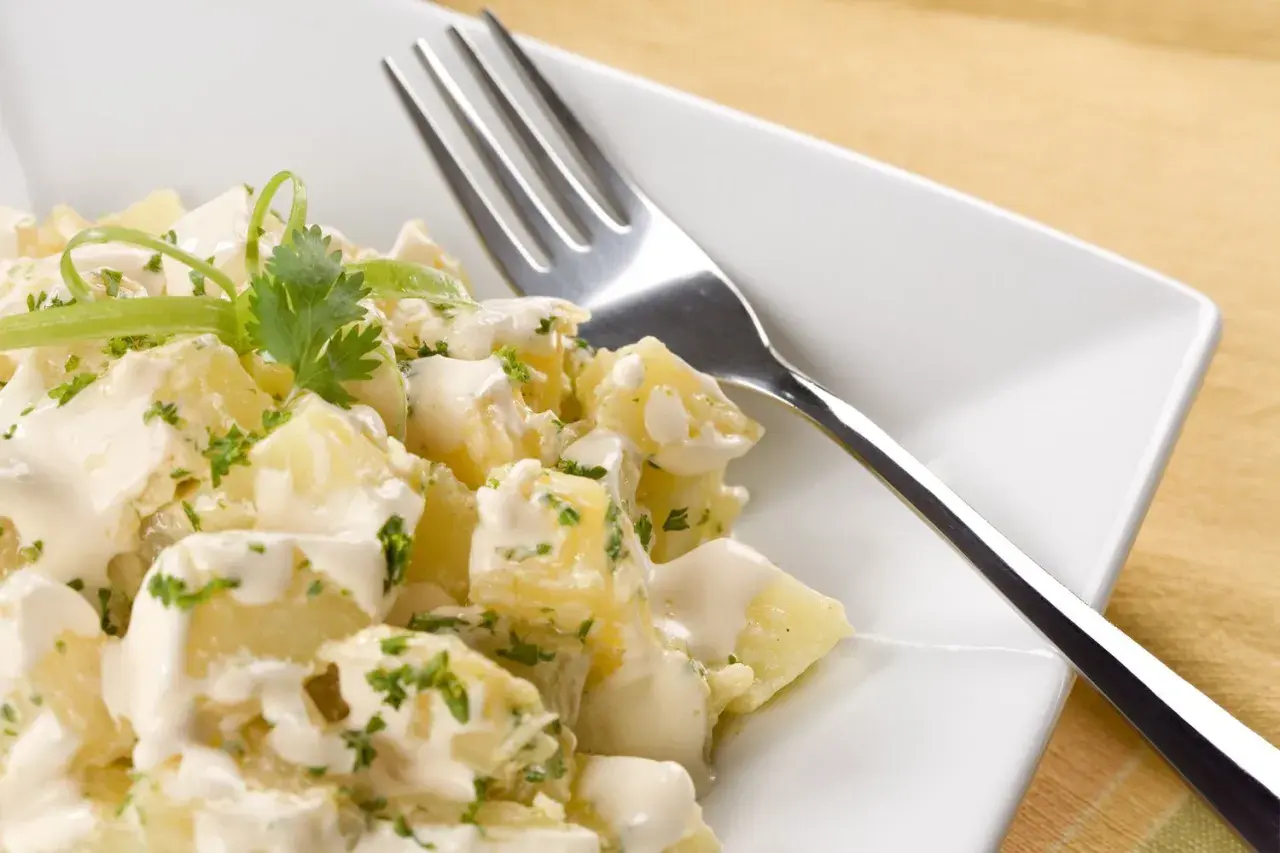
Spanish potato salad works because it is simple, cold, and built for sharing. In a good version of ensalada rusa española, the potatoes stay intact, the mayonnaise is balanced rather than heavy, and the garnish adds just enough salt, colour, and texture to feel at home on a tapas table. I’m focusing here on what the dish actually is, how it fits into tapas and pintxos service, and how to make a version that still tastes bright after a few hours in the fridge.
What makes the dish work on a tapas table
- It should taste creamy, but the potatoes still need to hold their shape.
- Waxy potatoes, frozen peas, and properly cooked carrots give the cleanest texture.
- Egg, tuna, prawns, olives, or peppers are useful, but they should support the salad rather than bury it.
- It works well as a cold tapa in a bowl or as a pintxo on bread, depending on the format of the meal.
- The best version is seasoned in layers and chilled long enough for the flavours to settle.
What this dish really is in Spain
In Spain, ensaladilla rusa is not a vague “potato salad” category. It is a specific cold dish built from potatoes and other cooked vegetables, bound with mayonnaise, and usually finished with something briny or savoury so it tastes lively rather than bland. The classic mix often includes peas and carrots, and many versions add hard-boiled egg, tuna, prawns, olives, or roasted peppers.
What makes it useful on a tapas menu is its range. It can sit quietly next to fried food, it can anchor a spread of smaller bites, and it can be served in a neat scoop that looks elegant without trying too hard. In Basque-style dining, that matters: pintxos and tapas work best when each bite feels deliberate, not random. Once you see the salad as a structured cold dish rather than a leftover side, the rest of the recipe starts to make sense.
That leads straight to the ingredients, because this is one of those dishes where small choices change the result more than people expect.
The ingredients that give it the right balance
| Ingredient | Amount for 4-6 portions | Why I use it |
|---|---|---|
| Waxy potatoes | 700 g | They hold their shape and keep the salad spoonable. |
| Carrots | 120 g | They add sweetness and colour without turning the dish sugary. |
| Frozen peas | 100 g | They stay bright and give small pops of texture. |
| Hard-boiled eggs | 3 large | They add richness and help the salad feel complete as a tapa. |
| Mayonnaise | 150-180 g | Enough to bind, not so much that it turns dense. |
| Optional tuna or prawns | 120 g drained tuna or 100 g cooked prawns | Common in bar versions and useful if you want more protein. |
| Acid and seasoning | 1 tsp vinegar or lemon juice, salt, black pepper | These stop the mayonnaise from tasting flat. |
In the UK, I would reach for Charlotte or another waxy salad potato, because floury potatoes break down too easily. Frozen peas are usually better than canned ones, and good jarred mayonnaise is perfectly acceptable if you do not want to make it from scratch. That balance of convenience and control is exactly what makes the dish work in a home kitchen.
Once the ingredients are right, the method becomes less about cooking and more about managing texture.
How I make it so it stays clean and creamy
- Cook the potatoes whole and unpeeled. I simmer them in salted water for about 15-20 minutes, until a knife meets slight resistance. That keeps the cubes tidy and stops them from soaking up too much water.
- Let everything cool properly. I drain the potatoes, leave them to steam-dry for 5 minutes, and wait until they are fully cool before mixing. Warm potatoes can make the mayo look greasy.
- Cut the vegetables small but not tiny. I want pieces that fit on a spoon, not a mash. A neat dice gives the salad structure and makes each bite more satisfying.
- Add the mayonnaise gradually. I fold it in a little at a time so the salad looks coated rather than smothered. If it needs more moisture, I add a spoonful, not a second heavy layer.
- Season in layers. Salt the potatoes while they are still warm, then adjust again after mixing. A small splash of vinegar or lemon is enough to lift the whole bowl.
For best results, I chill the salad for at least 1 hour before serving, and I think it tastes better after 4-12 hours in the fridge. If you make it the day before, the flavours settle and the dressing clings to the potato instead of sitting on the surface. That texture is what makes the salad useful on a tapas table rather than just pleasant as a side dish.
From here, the real question is not whether to serve it, but how to present it so it feels right in a tapas or pintxos setting.

How to serve it on a tapas or pintxos table
| Service style | How it looks | What to pair it with | What to avoid |
|---|---|---|---|
| Tapas bowl | Spoonable mound in a shallow dish | Tortilla, gildas, boquerones, pimientos de padrón | Too many creamy dishes on the same table |
| Pintxo on bread | Small mound on toast or a firm base | Anchovy, olive, roasted pepper, chopped chive | Runny mayonnaise or oversized chunks |
| Bar case serving | Neat scoop in a glass or ramekin | Chilled txakoli, fino sherry, or a dry cider | Serving it ice-cold straight from the fridge |
Tapas give you room to present the salad as a shared bowl, which is the easiest and most traditional home option. Pintxos, by contrast, ask for tighter control: smaller portions, cleaner edges, and a garnish that looks intentional. In the Basque Country, I would keep the serving shallow and tidy, because the goal is a bite that looks bar-ready even when it comes from a home kitchen.
If I’m building a full spread in the UK, I usually place this dish next to something fried or grilled, something pickled, and something with a sharper bite. That way the table does not drift into soft, creamy sameness. It also means the salad can do what it does best: cool the palate and reset it between stronger flavours.
The next problem is usually not the serving style itself, but the mistakes that make a good bowl taste flat.
The mistakes that flatten the flavour
- Overcooking the potatoes. If they collapse in the pot, they will collapse in the bowl. Pull them while they still offer a little resistance to the knife.
- Mixing while the potatoes are hot. Warm potatoes absorb mayonnaise unevenly and can make the salad look greasy instead of creamy.
- Using too much mayonnaise. The goal is coating, not masking. The salad should still feel like potatoes with a dressing, not dressing with a few potatoes in it.
- Skipping salt until the end. Potatoes need seasoning in layers, especially if the tuna is mild or the garnish is simple.
- Serving it straight from the coldest part of the fridge. I let it stand for 10-15 minutes before serving so the flavour opens up.
If a bowl tastes dull, I usually fix it with a pinch of salt and a few drops of vinegar before I reach for more mayonnaise. That small correction is often enough. The stronger the garnish, the less obvious the problem feels, so it is better to solve the base first and decorate second.
Once that balance is right, you can start deciding which version actually suits the occasion.
The variations I would actually make at home
| Version | Best for | How it changes the dish | My take |
|---|---|---|---|
| Classic tuna and egg | Everyday tapas and mixed tables | Brinier, more filling, and very familiar | This is the safest version if you want broad appeal. |
| Seafood version | Summer lunches or a slightly dressier spread | Lighter in texture and more festive | Cooked prawns work well if you want a cleaner, more elegant finish. |
| Vegetarian version | Shared tables with different diets | Brighter and sweeter, especially with extra peas or roasted pepper | Good when you want the salad to stay soft and neutral next to bolder tapas. |
| Pintxo version on toast | Standing drinks and small bites | More compact, with a firmer base and a neater look | This is the most useful format if you want the dish to feel distinctly Basque. |
I would not pile every variation into one bowl. The salad works because it has a clear structure: potato, binder, and one briny note that keeps it awake. If you want to push it closer to pintxo culture, add a strip of roasted pepper or a single olive on top, not a crowded garnish that competes with the base.
That is also why the version I would serve first is simple, balanced, and easy to repeat.
The version I would serve first on a Basque-style table
When I want a bowl that feels right beside pintxos, I keep the formula tight:
- 700 g waxy potatoes, cut into neat cubes
- 120 g carrots and 100 g peas for colour and sweetness
- 3 hard-boiled eggs, chopped rather than mashed
- 120 g drained tuna, or cooked prawns if I want a lighter seafood note
- 150-180 g mayonnaise, loosened only if the salad needs it
- 1 tsp vinegar or lemon juice, plus salt and black pepper
- A finish of chopped parsley, paprika, or a few sliced olives
Make it the day before if you can, hold back the garnish until the last moment, and serve it slightly chilled rather than icy. That is the point where the salad stops being a filler dish and starts carrying the whole tapas spread. If you build it with restraint, this is one of those simple plates that tastes like it belongs exactly where it is.
