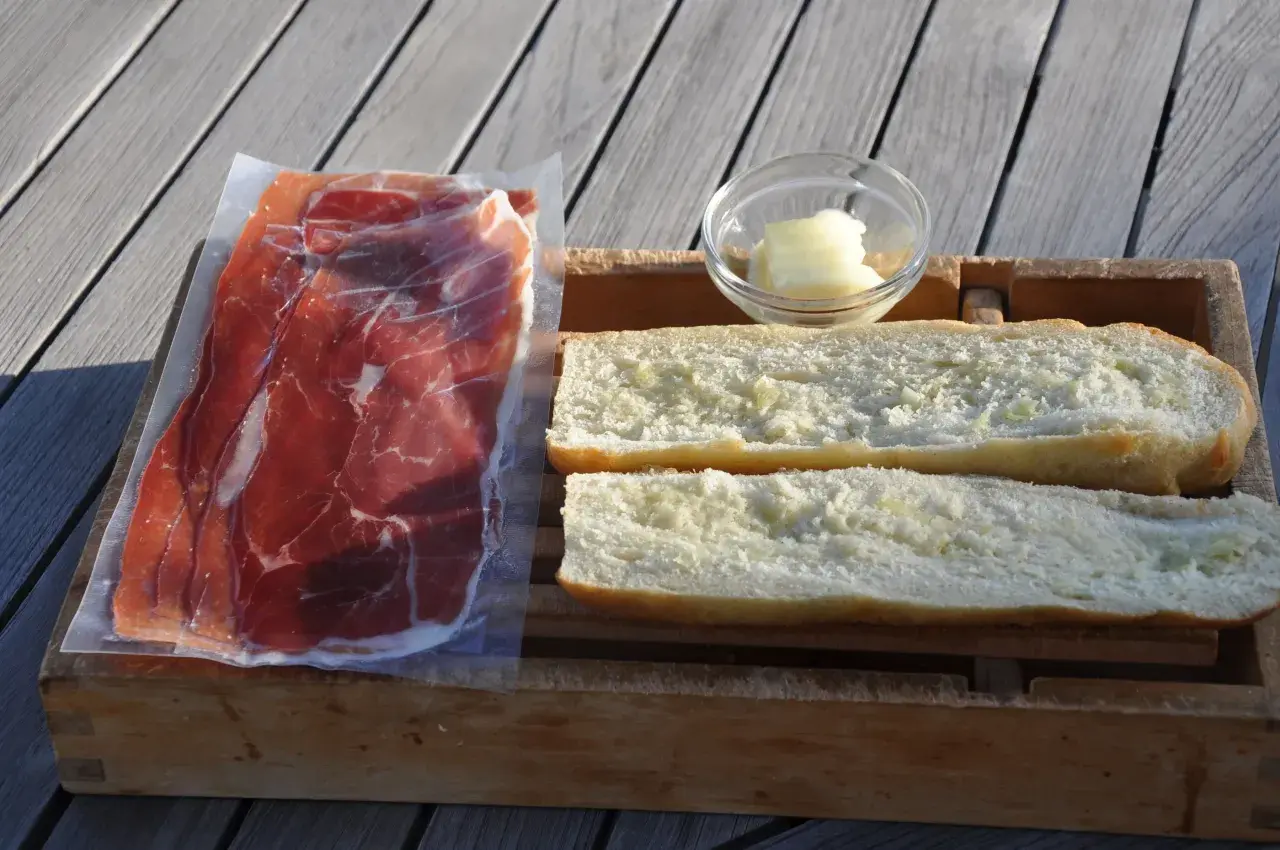
A jamon iberico sandwich only works when the bread stays in the background and the ham does the talking. In this guide I look at the versions that make sense in tapas and pintxos culture, the bread and ham choices that matter most in the UK, how I assemble the bite so it stays crisp, and which drinks and sides keep the flavours sharp rather than heavy. I also cover the mistakes that turn a simple Spanish classic into an overpriced, soggy lunch.
The practical version is small, precise, and built for flavour rather than volume
- Think bocadillo, montado, tosta, or pintxo, not a thick deli stack.
- Use thin bread and about 25-35 g of Iberian ham per serving.
- 100% bellota is superb, but cebo de campo is often the smarter value for home cooking.
- Tomato, olive oil, and a dry drink usually work better than cheese or mayonnaise.
- In the UK, ask for the Spanish format name if you want the closest tapas-style result.

Why this works better as a tapas bite than as a heavy sandwich
In Spain, cured ham is usually treated as something delicate, not something to hide under half a jar of sauce. That is why I prefer the tapas and pintxos approach: it keeps the ham visible, keeps the bread crisp, and gives the fat space to melt on the tongue instead of disappearing into a pile of extras.
For the cleanest mental model, I use the following map:
| Format | What it is | Why I would choose it |
|---|---|---|
| Bocadillo | A full bread roll or small baguette split and filled | Best when you want a proper meal but still want the ham to stay central |
| Montado | A smaller sandwich on a short roll or two slices of bread | Ideal for tapas service and easier to share |
| Tosta | Open-faced bread, usually lightly toasted | Shows off the ham and keeps the texture crisp |
| Pintxo | A bar snack, often on bread and sometimes fixed with a skewer | Best for a quick bite with drinks or a pintxos crawl |
If you are eating casually, a bocadillo is the closest match to a lunch sandwich. If you are bar-hopping, a montado or pintxo feels more natural, and the ham comes across as a tasting bite rather than a full meal. That distinction matters, because it changes everything from bread size to portioning, which is exactly what I cover next.
Choose the ham and bread that let the flavour stay in control
The ham grade matters, but not in the way many people think. I would rather buy a smaller amount of excellent ham than pile on a larger amount of average slices, because the texture and aroma are what make the bite memorable.
| Grade | What it means | How I would use it |
|---|---|---|
| 100% Iberico de bellota | Purebred Iberian pig, acorn-fed | Use sparingly on a very simple sandwich or tosta |
| Iberico de bellota | Iberian ham from acorn-fed pigs, not always purebred | My favourite balance of luxury and value for home |
| Iberico de cebo de campo | Outdoor-raised with mixed feed | Good option when you want quality without the highest price |
| Iberico de cebo | Indoor-raised, grain-fed | Fine for a casual bite, but less complex than the others |
For bread, I look for a firm crust and a soft interior: baguette, barra, rustic white loaf, or a slice of sourdough with enough structure to stand up to olive oil. Soft sandwich bread fails here because it collapses before the ham has a chance to shine.
In the UK, vacuum-packed slices from a specialist deli or a reputable online shop are the most practical option, and they are perfect for a home version. Keep unopened packs cool, then open them about 10-15 minutes before serving so the aroma comes forward. As a rule of thumb, one small roll or two thick slices should carry 25-35 g of ham comfortably. More than that is not automatically better; it often just buries the flavour and makes the bite harder to eat.
That brings us to assembly, where small choices make a bigger difference than expensive ingredients.

Build it like a Basque bar snack
I build this in a very short sequence, because the less handling the ham gets, the better it tastes.
- Toast the bread lightly, just enough to create a little structure without turning it dry.
- If you want tomato, rub a ripe half-tomato over the warm bread or add a thin layer of grated tomato; stop before the crumb turns wet.
- Add a small drizzle of extra virgin olive oil. A teaspoon is usually enough for one sandwich-sized portion.
- Lay the ham in loose folds instead of flat sheets. That keeps the texture airy and stops the bread from sliding apart.
- Finish immediately and serve at once, or let the ham sit for 1-2 minutes so the fat softens slightly.
I usually skip salt, because good Iberian ham already brings plenty of it. If I want a brighter finish, I add a few drops of sherry vinegar or pair the sandwich with something acidic on the side rather than on top. That leads naturally into the drinks and small plates that make the whole thing feel properly Spanish.
Pair it with drinks and small plates that keep the ham in focus
The safest rule is to keep the supporting cast light. Rich ham likes acidity, dryness, and a bit of bitterness; it does not need sweetness or another heavy cured meat to compete with it.
| Pairing | Why it works | Best moment |
|---|---|---|
| Txakoli | Bright acidity and a clean finish cut through the fat | Closest Basque-style match |
| Dry cider | Sharp enough to refresh the palate between bites | Relaxed pintxos night |
| Fino or Manzanilla | Nutty, dry, and very good with cured ham | When you want the most classic tapas pairing |
| English sparkling wine | Easy UK substitute with crisp acidity | Home serving in the UK |
| Light lager or pilsner | Simple and cold, without masking the ham | Casual lunch or bar-style snacking |
On the plate, I like olives, pimientos de padron, a little tortilla española, or a few slices of tomato dressed with oil. Cheese can work, but only if it stays mild; a strong mature cheddar will drag the sandwich away from its Spanish character. If you want a more Basque feel, think restraint first and generosity second.
Where this usually goes wrong in the UK
Most bad versions fail for the same few reasons, and none of them are mysterious.
- Using soft sliced bread that goes soggy as soon as the oil hits it.
- Serving the ham straight from the fridge, which dulls the aroma and tightens the fat.
- Adding mayonnaise, mustard, or too many toppings that flatten the ham’s flavour.
- Cooking the ham, when it should stay cured and barely handled.
- Buying too much bread and too little ham, which makes the result feel empty rather than balanced.
If you are shopping in the UK, I would rather see a 100 g pack of sliced Iberian ham on good bread than a large but forgettable sandwich built from bargain ingredients. One pack usually covers three small pintxo-style portions or one generous sandwich, so there is no need to overcomplicate the shopping list.
Once you avoid those traps, the last step is simply deciding what version you would actually put on the table.
The version I would serve at home when I want it to taste right
For a home version, I would use a small crusty roll or two thick slices of rustic bread, 25-35 g of thinly sliced Iberian ham per serving, a light brush of olive oil, and either no tomato at all or just enough grated tomato to give the crumb a little freshness. If I were feeding guests, I would cut the bread into smaller pieces and make it pintxo-style, because that keeps the whole thing elegant and easier to eat.
The main lesson is simple: keep the build short, keep the ingredients few, and let the cured ham do the work. That is the difference between an ordinary sandwich and a proper Basque-leaning bite, and it is the reason this combination earns its place on any tapas table.
