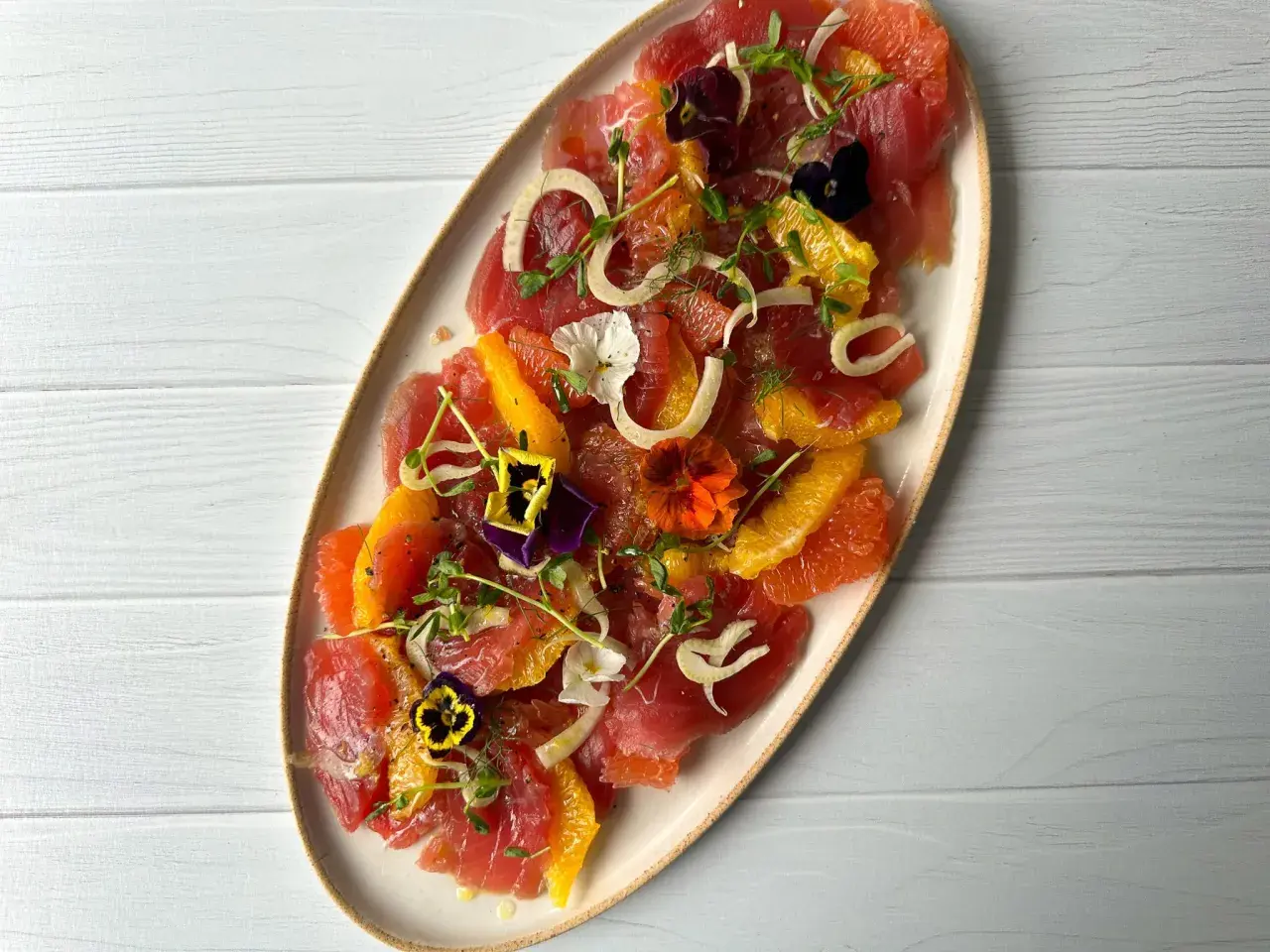
Tuna crudo is one of those dishes that looks minimal but depends on very small decisions: the cut of the fish, the chill of the plate, the balance of acid and oil, and the speed at which it reaches the table. In a tapas or pintxos setting, those details matter even more because the bite has to feel bright, not heavy, and polished without becoming precious. This article breaks down what tuna crudo actually is, how it differs from other raw tuna preparations, how I would serve it in a Basque-inspired small-plates meal, and what to check before serving raw tuna in the UK.
The essentials at a glance
- Tuna crudo is thinly sliced raw tuna dressed simply, usually with olive oil, citrus, salt, and a few sharp garnishes.
- It is closer to sashimi than to tartare, but the dressing is what gives it a crudo identity.
- In tapas and pintxos service, it works best as a small, bright starter or bar bite.
- Freshness, knife work, and cold handling matter more than elaborate sauces.
- For UK home cooks, safe sourcing matters just as much as flavour.
What is tuna crudo, really?
Tuna crudo is raw tuna served in slices or ribbons and finished with a light dressing rather than cooked. The fish stays at the centre of the dish: the oil should gloss it, the acid should sharpen it, and the seasoning should make the tuna taste cleaner and sweeter, not disguised.
In practice, I think of it as a very restrained starter. A good plate usually includes extra-virgin olive oil, citrus juice or zest, flaky salt, and one or two accents such as capers, herbs, chilli, shaved fennel, or radish. The cut can be thin or medium-thin, but it should still read as slices, not a chop. That distinction matters because crudo is about texture as much as flavour.
When I make or order it, I want the first bite to feel cold, silky, and precise. If it tastes muddled or heavily marinated, it stops behaving like crudo and starts drifting into something less elegant. Once that definition is clear, the next useful step is comparing it with the other raw tuna dishes that often appear on the same menu.
How it differs from sashimi, tartare, and carpaccio
These dishes are easy to mix up, but they do not behave the same way on the plate. The cut, the dressing, and the eating style all change how the tuna tastes and how you should serve it.
| Preparation | Typical cut | Usual finish | What it feels like | Best use |
|---|---|---|---|---|
| Tuna crudo | Thin slices | Olive oil, citrus, salt, herbs, capers, or chillies | Bright, glossy, lightly dressed | Starter, share plate, pintxo |
| Sashimi | Clean, deliberate slices | Usually plain, sometimes with soy, wasabi, or pickles | Very clean and fish-led | When the quality of the tuna should speak almost alone |
| Tartare | Small dice | Bound with dressing, egg yolk, mayonnaise, or both | Rich, spoonable, structured | When you want a more composed starter |
| Carpaccio | Very thin slices | Usually olive oil, salt, citrus, and a few delicate garnishes | More delicate and often more precise | When you want the thinnest, most elegant presentation |
The practical difference is not just vocabulary. It changes the texture, the speed of service, and whether the dish belongs on a spoon, a plate, or a piece of bread. That is exactly why tuna crudo fits so naturally into tapas and pintxos culture.

Why it fits tapas and pintxos culture
Basque small-plate eating is built around sociable, shareable food that is easy to pick up, eat quickly, and pair with a drink. Pintxos began as bread with toppings held together by a stick, then evolved into more polished bar bites and miniature plates. I would place tuna crudo comfortably inside that world because it is light, vivid, and easy to portion into one or two satisfying bites.
The key is restraint. A pintxo should not feel like a deconstructed restaurant entrée. It should feel like a sharp, well-balanced mouthful that disappears quickly, which is exactly where raw tuna can shine. I like it on toasted bread with a thin smear of tomato or olive oil, or on a chilled spoon with citrus and herbs. On a bar menu, it also works as a small plate with fennel, radish, or cucumber for crunch.
- Serve it on toasted baguette or country bread so the base stays crisp.
- Keep the garnish lean so the tuna remains the main flavour.
- Pair it with txakoli, a dry white, or a clean lager if you want the drink to cut the richness.
- Think in small portions: about 20-30 g of tuna for a pintxo bite, or 75-100 g for a starter.
That portion logic matters more than people expect. Once the plate gets too large, the dish stops feeling like a pintxo and starts acting like a main course. From there, the real question becomes sourcing and handling, because raw tuna rewards precision and punishes carelessness.
Choosing and handling tuna safely in the UK
The first check is freshness. Good tuna should smell clean and mild, not sour or aggressively fishy. The flesh should look firm, evenly coloured, and spring back when pressed. I also avoid pieces with dried edges or dull, greyish patches, because crudo exposes every flaw that cooking would otherwise hide.
In Great Britain, fish intended to be eaten raw is subject to parasite-control rules unless it qualifies for a documented exemption, so this is not the place for guesswork. For a home cook, the practical answer is simple: buy from a supplier who can confirm the fish is suitable for raw service and keep the chain cold until you plate it.
- Keep the tuna refrigerated until the last minute.
- Use a very sharp knife and cut across the grain for cleaner slices.
- Work on a clean board with clean hands and utensils.
- Dress the fish just before serving so the citrus does not dull the texture.
- If the tuna smells off, do not try to rescue it with herbs or extra acid.
For pregnant readers, I would be conservative and stick to official tuna limits rather than treating raw tuna as an everyday choice. Once the sourcing is right, the rest of the dish is really about keeping the flavour formula balanced and unfussy.
A simple flavour formula that keeps the tuna in charge
My formula is straightforward: raw tuna + acid + good oil + salt + one crisp thing. Anything beyond that should earn its place. The goal is to sharpen the tuna, not to bury it under a busy garnish pile.
- The fish should be the lead. Slice it thin enough to feel delicate, but not so thin that it loses body.
- The acid can be lemon, lime, yuzu, or a light splash of vinegar. I keep it subtle because too much acid starts to blur the texture.
- The oil should be clean and good enough to taste on its own. Extra-virgin olive oil is the classic choice.
- The crunch can come from radish, cucumber, fennel, celery, or even a few toasted seeds.
- The finish is where you add the detail: flaky salt, chives, dill, capers, or a whisper of chilli.
For home cooking, I dress the tuna at the very last second, toss once or twice, and plate immediately. If it sits too long, the surface starts to lose that clean, silky quality that makes the dish worth serving in the first place. That same formula adapts neatly to pintxo-style bites, which is where I would take it next.
The version I would serve for a pintxo bar at home
When I want tuna crudo to feel Basque rather than generic, I keep the plate small, the garnish sharp, and the bread crisp. One or two well-balanced bites beat a crowded platter every time, especially if the dish sits alongside olives, anchovies, croquetas, or a chilled glass of wine.
- Slice 80-100 g of tuna into thin rectangles or clean narrow strips.
- Whisk 1 tbsp olive oil, 1 tsp lemon juice, a few drops of sherry vinegar, and a pinch of salt.
- Add a few capers, shaved radish, and chopped chives or dill.
- Serve it on a small toast or a plain chilled plate with crusty bread on the side.
- Keep the drink dry and lively, not sweet or overly heavy.
That is the version I trust most because it respects the fish and still feels like part of a lively small-plates table, not a precious tasting-menu exercise. Tuna crudo works best when it is cool, direct, and gone in a few bites.
