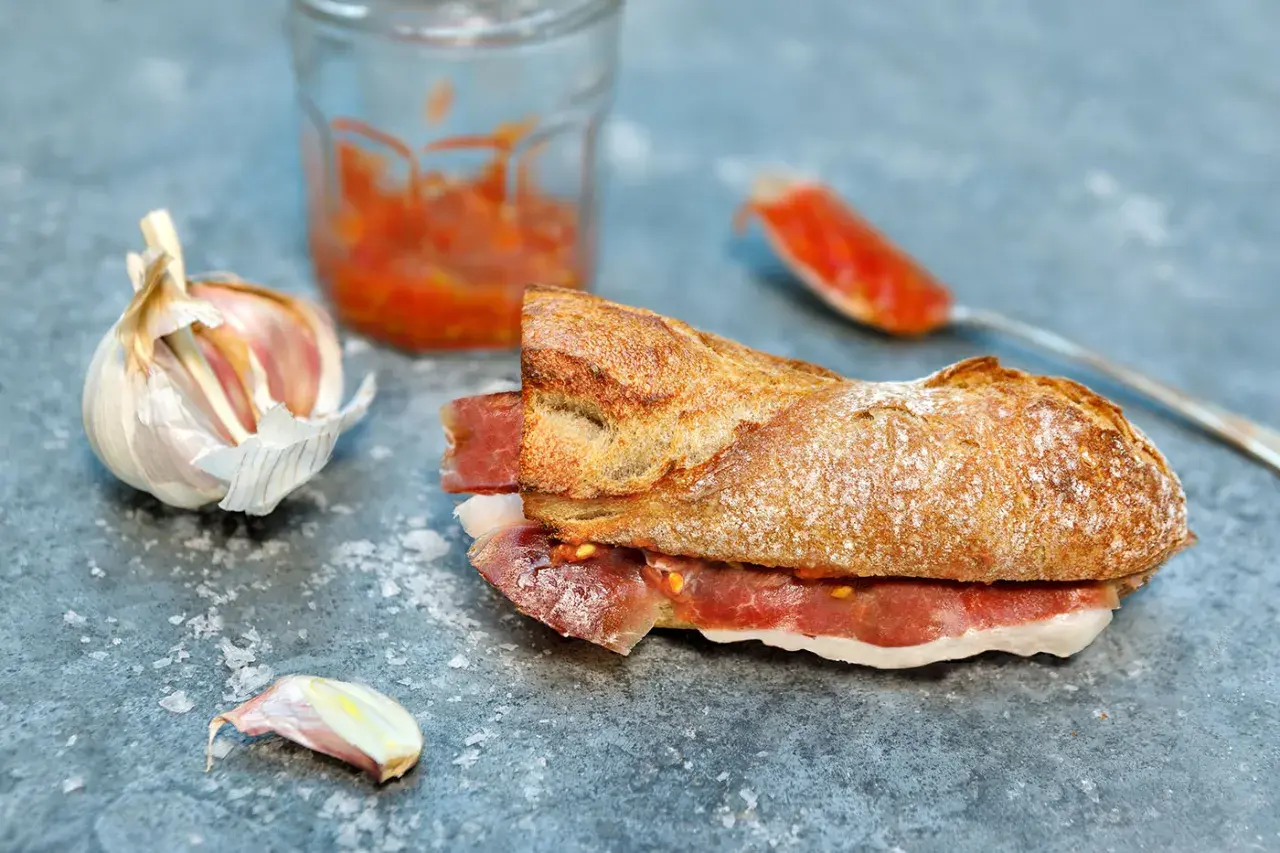
A bocadillo de jamon works because it does very little, and that is exactly the point. Crisp bread, properly cured ham, a little olive oil, and sometimes tomato are enough to make a sandwich that feels closer to a tapa than an ordinary lunch. In this article I explain what the sandwich is, how it fits into tapas and pintxos culture, and how to make a version that tastes right in a UK kitchen without overcomplicating it.
What matters most is bread, ham and restraint
- A classic version needs only 4 to 5 ingredients and can be assembled in about 10 minutes.
- One sandwich serves 1 person generously or 2 people as a tapa.
- Jamón serrano is the sensible everyday choice; Ibérico is richer and better suited to a smaller, more luxurious serving.
- The bread should be sturdy enough to stay crisp, not soft enough to collapse under the ham.
- As a tapa or pintxo, the sandwich works best when it is cut small, served quickly, and kept simple.
Why this sandwich belongs on a tapas counter
I see this sandwich as one of the clearest examples of Spanish restraint. It is not built to impress with size; it is built to let the ham stay central, with bread as support and a little acidity or oil to keep the bite alive. In tapas bars the logic is practical: it is fast to serve, easy to share, and easy to eat while standing.
That is also why it sits comfortably beside pintxos. Pintxos are usually smaller, often pinned to bread with a toothpick, and eaten as social bar food rather than plated dining. A full sandwich is still a bocadillo, not a pintxo, but the same flavour logic applies: keep the portions small enough that the bread never becomes a distraction.
If I were serving it at a Basque-style counter, I would think in contrasts, not complexity: salty ham, bright tomato, olive oil, crisp bread. The less you do beyond that, the more clearly the sandwich reads as intentional rather than plain. That balance starts with the ingredients, because one weak element can flatten the whole thing.

Choose the bread, ham and extras with care
Most versions fail because they try to compensate for ordinary ingredients with extra filling. I would rather have four well-chosen ingredients than a crowded sandwich that tastes muddy. The bread needs structure, the ham needs thin slices, and any tomato or oil should support the ham instead of hiding it.
| Component | What to buy | Why it matters | My note |
|---|---|---|---|
| Bread | Crusty baguette, mini baguette, or a sturdy roll about 20 to 25 cm long | It keeps the sandwich from going soggy and gives the first bite its snap | Lightly toast the cut sides if the bread is soft |
| Ham | Jamón serrano for everyday use, Ibérico for a richer version | The ham is the main flavour, so quality changes everything | Buy it thinly sliced; 40 to 60 g is enough for one sandwich |
| Tomato | Ripe tomato or grated tomato pulp | Adds freshness and acidity without turning the sandwich into a sauce-heavy mess | Use less if the ham is already very expressive |
| Olive oil | Good extra-virgin olive oil | Rounds out the salt and carries the aroma | 1 to 2 teaspoons inside the bread is usually enough |
| Optional extras | Garlic, a thin slice of Manchego, or a few sliced peppers | Can add structure or brightness if used sparingly | One extra is enough; more than that starts to obscure the ham |
For the ham itself, jamón serrano is the dependable everyday option: clean, salty, and easier to source in British delis or Spanish grocers. Ibérico is richer, with more visible fat and a softer finish, so I reserve it for a simpler build where the ham can dominate. If you cannot find either, prosciutto will work in a pinch, but it reads more Italian than Spanish and lacks the same savoury edge.
The other detail people underestimate is temperature. Ham tastes flatter straight from the fridge. Let it sit out for 10 to 15 minutes before serving, and the aroma opens up enough to matter. That small pause makes a bigger difference than adding another condiment. Once those choices are right, the order of assembly matters more than any extra garnish.Build it step by step without losing the balance
My preferred method is simple and repeatable. It gives you a sandwich that is crisp at the edges, juicy where it should be, and not overloaded.
- Slice a crusty roll or small baguette lengthwise. For one generous sandwich, aim for about 20 to 25 cm of bread.
- If you want a warmer version, toast the cut sides lightly for 1 to 2 minutes. Do not dry the bread out.
- Rub the cut bread with a garlic clove if you like a sharper finish, then add a light drizzle of extra-virgin olive oil.
- If you are using tomato, rub the cut side over the bread or spoon on grated tomato. Use just enough to moisten the crumb, not soak it.
- Layer on 40 to 60 g of thinly sliced jamón. Fold the slices loosely so the texture stays light.
- Close the sandwich, press it once, and cut it into halves or smaller pieces right before serving.
If I am serving it as a tapa, I cut the sandwich into 4 bite-sized pieces and secure each piece with a toothpick. That is not traditional for every bar, but it makes the food behave more like a pintxo board and less like a lunch roll. After that, serving it well matters as much as making it well.
Serve it with the right tapas, drinks and portion size
This sandwich does not need a lot of company, but it does benefit from the right company. On a mixed tapas table, I like to place it near briny or acidic plates so the salt in the ham stays lively instead of heavy. Think olives, roasted peppers, boquerones, or a clean tortilla wedge.
| Serving style | Portion | Best moment | Why it works |
|---|---|---|---|
| Full bocadillo | 1 sandwich | Lunch or informal supper | Most satisfying when bread and ham are the whole point |
| Tapa portion | Half sandwich | Shared table with several dishes | Keeps the ham from feeling too heavy |
| Pintxo style | 4 small pieces | Standing bar-style grazing | Easy to pick up and eat in one or two bites |
For drinks, I would choose a dry white with good acidity, txakoli if you can get it, a light cider, or a clean lager. Those drinks keep the fat in the ham from feeling sticky. If you want a non-alcoholic option, sparkling water with lemon is better than a sweet soft drink because it leaves the palate clear.
In a UK setting, this is also a smart sandwich for a drinks board at home. It feels special without demanding a lot of cooking, and it slots neatly between cheese, olives, and charcuterie. The last job is avoiding the common errors that make the sandwich feel ordinary.
The mistakes that make it taste ordinary
The biggest mistake is adding too much. A ham sandwich is not a club sandwich. If you overload it with cheese, sauce, lettuce, and tomato all at once, the ham stops being the lead flavour and the whole thing turns bland in a different way. I also avoid very soft bread, because it collapses before the sandwich reaches the table.
- Do not use paper-thin bread. It needs enough structure to hold cured ham and a little oil.
- Do not salt aggressively. Good ham already brings enough salt for most palates.
- Do not slice the ham thickly. Thick slices make the texture chewy instead of silky.
- Do not serve it ice-cold. A few minutes at room temperature improves aroma and texture.
- Do not bury it under extras. One supporting ingredient is usually enough; two is already a choice.
When I want the sandwich to feel properly Basque rather than generic, I keep repeating the same rule to myself: use better bread, thinner ham, and fewer distractions. That is the version I would serve to a guest, and it is the one most likely to taste like a real tapas-bar snack rather than an improvised roll.
