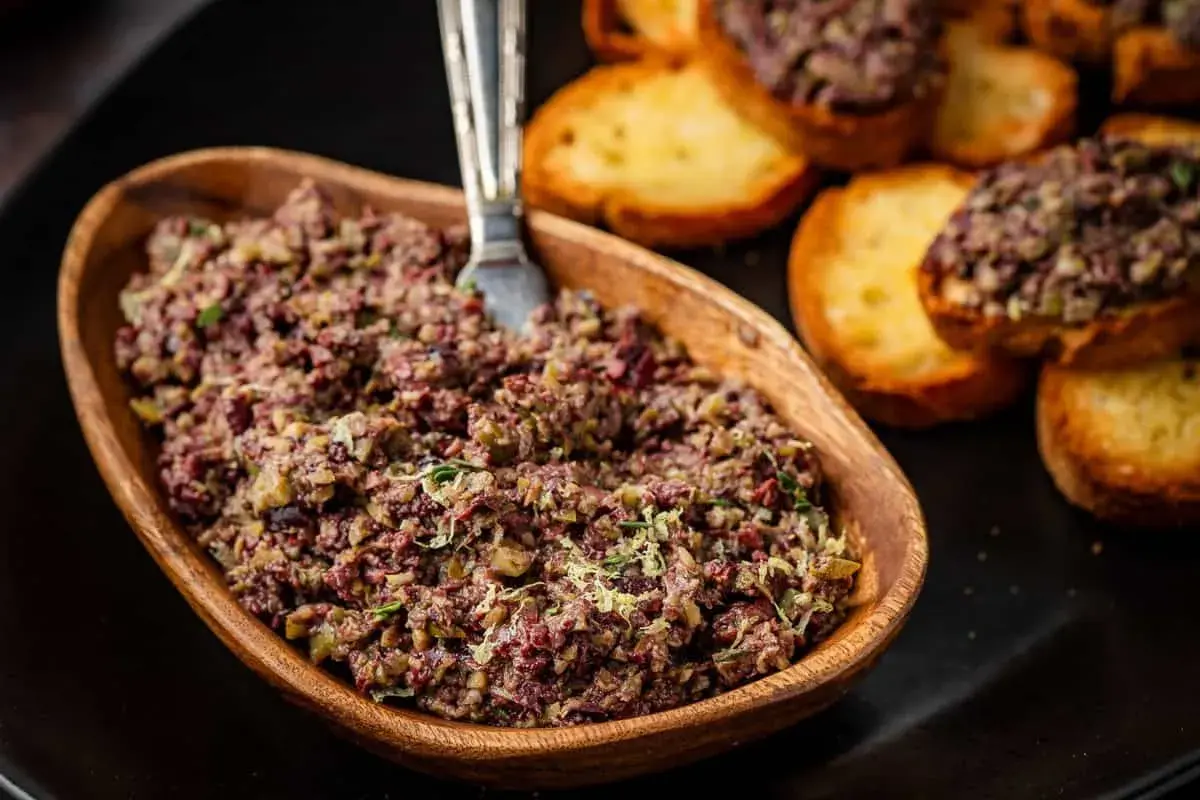
Tapenade is one of those small condiments that can change the feel of a whole table. The question of what is tapenade has a simple core answer, but the useful answer is broader: it is a Provençal olive-and-caper spread, often sharpened with anchovy, garlic, and olive oil, and it fits naturally into tapas and pintxos service. I’ll break down what it is, what gives it its flavour, how to serve it, and how to choose a good version in a UK kitchen.
The essentials in a few lines
- Tapenade is a savoury spread built mainly from olives and capers, usually blended with olive oil and sometimes anchovies.
- Its flavour is briny, salty, and slightly bitter, with a depth that comes from umami rather than sweetness.
- It works best in small amounts on toast, with cheese, with grilled vegetables, or as part of a tapas or pintxos board.
- Classic versions are from Provence, not Basque Country, but they sit comfortably beside small-plate food.
- Short ingredient lists usually taste better than jars padded out with oil, sugar, or unnecessary fillers.
What tapenade is and where it comes from
Tapenade is a traditional spread from Provence in southern France, made to deliver a lot of flavour in a small spoonful. It is not a sauce in the loose sense, and it is not meant to be poured over food; I think of it more as a concentrated savoury paste that wakes up bread, vegetables, fish, and cheese.
The classic profile is built around olives and capers, with anchovy often included for depth. The name itself comes from the Provençal word for capers, which is a useful clue: capers are not an afterthought here, they are part of the identity. That matters when you compare it with other olive-based condiments, because tapenade should taste briny, layered, and a little sharp, not simply salty.
It is not a Basque classic in the strict sense, but it belongs very naturally on a tapas or pintxos table because it does the same job that good small-plate food does: it gives you a strong flavour in a compact bite. Once you understand that, the ingredient list starts to make more sense.
The ingredients that give it its shape
The best tapenades are not complicated, but the balance has to be right. I usually judge them by what each ingredient is doing, not just by the name on the jar.
| Ingredient | What it does | What to watch for |
|---|---|---|
| Olives | Provide the main body, fruitiness, and salt | Black olives tend to taste rounder; green olives taste sharper and more assertive |
| Capers | Add tang, brightness, and the old-school Provençal edge | Too many can make the spread taste aggressively vinegary or one-note |
| Anchovies | Bring umami, which is the deep savoury taste that makes food feel fuller | You should taste depth, not fishiness, when the balance is right |
| Olive oil | Loosens the paste and rounds off the texture | Use enough to bind, but not so much that the flavour turns oily |
| Garlic | Adds lift and bite | One small clove is often enough; too much can flatten the olive flavour |
| Lemon, herbs, or nuts | Modern additions that can brighten or soften the spread | Useful, but easy to overdo if you still want a classic tapenade character |
If I am buying a jar in the UK, I look for a short ingredient list first. A good version usually keeps the focus on olives, capers, oil, and a little seasoning; if the label starts leaning hard on fillers, sugars, or cheap oils, the flavour usually feels flatter. Once you know what belongs in the mixture, the next step is seeing how it behaves on the table.

How it fits a tapas and pintxos table
Tapenade is at its best when it is treated as a base layer, not the whole bite. I like it spread thinly on toasted bread, then topped with something that adds contrast, such as roasted pepper, a slice of manchego, a few tomato cubes, or a sliver of anchovy.
That approach makes sense in tapas and pintxos service because those styles are built around balance. A salty spread needs something fresh, creamy, or crisp beside it. If the table already has olives, anchovies, or cured fish, tapenade can tie the flavours together; if the table is leaning rich, it can cut through that richness and keep the bite from feeling heavy.
For drinks, I reach for something dry and bright. A crisp white, a dry cider, or a glass of Txakoli all work well because acidity cuts through the olive oil and keeps the palate clean. If the tapenade has been chilled, let it sit for 10 minutes before serving so the aroma opens and the texture softens; it is a small detail, but it makes a noticeable difference. From there, it is worth looking at the styles you are most likely to find.
The main styles you will meet
Not every jar tastes the same, and that is one of the reasons people get confused about the category. I find it easier to think in styles rather than in a single fixed recipe.
| Style | Flavour profile | Best use |
|---|---|---|
| Classic black olive | Deep, rounded, salty, and the most familiar version | Toast, grilled fish, roast vegetables, cheese |
| Green olive | Brighter, sharper, and slightly more pungent | Crudités, goat's cheese, shellfish, lighter bites |
| Anchovy-forward | Very savoury, marine, and intense | Simple bread, eggs, potatoes, or anything that needs depth |
| Vegetarian | Cleaner olive flavour with less saline depth | Useful for guests who avoid fish, especially with lemon or capers added for lift |
| Modern variations | May include almonds, sun-dried tomatoes, or extra herbs | Fine for variety, but they move away from the classic profile |
I usually prefer the classic black olive version when I want a dependable pantry staple, and I reach for the green olive style when I want something a little sharper. That distinction matters, because it helps you know whether you are buying a true tapenade flavour or just an olive spread with a new label.
How it compares with pesto, hummus, and plain olive spread
People often group tapenade with other dips and spreads, but it behaves differently on the palate. The easiest way to judge it is to compare it with the condiments most people already know.
| Condiment | Main base | Dominant flavour | Where it fits best |
|---|---|---|---|
| Tapenade | Olives, capers, often anchovies | Briny, savoury, slightly bitter | Toast, fish, vegetables, tapas and pintxos bites |
| Pesto | Basil, nuts, cheese, olive oil | Herbal, nutty, and greener | Pasta, bread, grilled vegetables |
| Hummus | Chickpeas, tahini, lemon | Creamy, earthy, and softer | Flatbreads, crudités, bowls, mezze |
| Plain olive spread | Olives and oil, sometimes herbs | Simple olive flavour | When you want less tang and less complexity |
That comparison helps because it shows what tapenade is not. It is not creamy like hummus, and it is not herb-led like pesto. Its character comes from salt, capers, and savoury depth, which is why it feels so at home next to crisp bread and small bites rather than as a big, soft dip. If you want that character at home, the next question is how to choose or make it well.
How to buy or make a better jar
When I am choosing a jar, I read the label like a cook, not like a shopper. The best versions usually tell you very quickly what they are made of, and the ingredient list should be short enough that you can picture the flavour in your head.
- Check the oil - extra-virgin olive oil usually gives a cleaner, rounder finish than anonymous vegetable oil.
- Look for capers near the top - they should contribute more than just a faint salty note.
- Watch for sugar or starch - these often mean the spread has been softened or bulked out.
- Expect salt - tapenade is meant to be briny, but the salt should support the olives, not drown them.
- Refrigerate after opening - once the jar is open, keep it cold and use clean utensils to avoid contamination.
If you make it at home, pulse the ingredients rather than blending them into a smooth puree. I usually stop while the texture is still a little rough, because that keeps the olive flavour distinct and avoids the heavy, pasted feel that some cheap jars have. A practical starting point is about 2 cups of pitted olives, 2 to 3 tablespoons of capers, 1 small garlic clove, a little lemon juice if needed, and enough olive oil to loosen the mixture.
The most common mistakes are easy to avoid: overprocessing, using too much garlic, adding so much lemon that the spread turns sour, or making it so thin that it behaves like sauce instead of tapenade. Homemade versions are usually best within 3 to 5 days in the fridge, although the exact life depends on how cleanly you handle it and what else you add. Once those choices are in place, the spread becomes one of the easiest tools in the kitchen.
A jar that earns its space in a tapas kitchen
One reason I keep tapenade around is that it rescues plain food fast. A spoonful can sharpen boiled new potatoes, grilled courgettes, roast tomatoes, a cheese sandwich, or a piece of white fish that needs a stronger finish. It is also one of the few condiments that can make a simple bread board feel deliberate without requiring much work.
Used well, it acts like a bridge between pantry food and plated food. That is why it belongs so naturally with tapas and pintxos: it gives you immediate flavour, but it still leaves room for the rest of the table to speak. On a Basque-style board, I would place it beside Gildas, roasted peppers, and anchovies rather than letting it take over. I would not use it as the only note in a meal, but I would absolutely use it to give the meal a centre.
For me, that is the real answer to tapenade. It is a compact, savoury spread with Provençal roots, a strong place in small-plate eating, and enough flexibility to work in a UK kitchen without losing its character. If you want one condiment that makes bread, vegetables, fish, and cheese feel more composed, this is a very good one to keep close.
