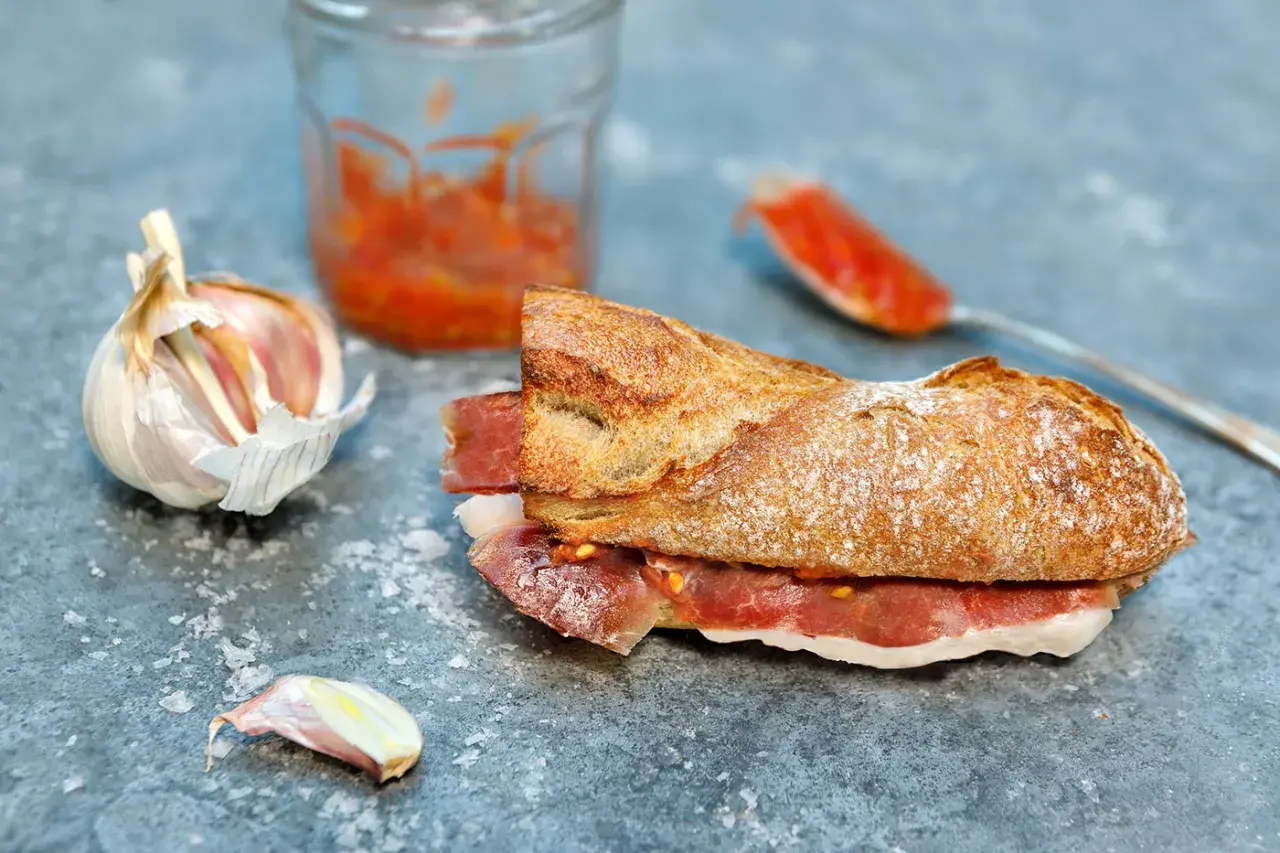
A good bocadillo lives or dies on three things: crusty bread, a filling with enough flavour to stand on its own, and the right amount of moisture. In this article I walk through a practical bocadillos recipe, the ingredients I would actually buy in the UK, and the small decisions that make the sandwich feel properly Spanish rather than like an overfilled baguette. I also cover the tapas and pintxos angle, because that is where this sandwich belongs: quick, generous, and built for sharing.
The essentials before you start
- Use sturdy bread such as a baguette or barra; soft sliced bread will collapse fast.
- Keep the filling focused with one salted element, one creamy or melted element, and one fresh note.
- Tomato and olive oil are the quickest route to a classic Spanish flavour.
- Plan for 10 to 15 minutes for a cold sandwich, or about 20 minutes if you want it warm and pressed.
- Tapas and pintxos logic still applies: small, balanced flavours usually work better than a crowded sandwich.
What makes a bocadillo feel authentic
I think of a bocadillo as the practical cousin of tapas culture: less delicate than a pintxo, more portable than an open-faced bite, and much more filling than a bar snack. Pintxos are usually small, often pinned with a skewer, and meant to be eaten in a couple of bites. Bocadillos are closed sandwiches with more body, but the same rule still applies: good bread, concise filling, enough salt, and a little acidity to keep each bite lively.
The biggest mistake I see is treating it like a standard British sandwich. A proper bocadillo starts with bread that has a crackly crust and a tender crumb, then uses just enough filling to keep the sandwich balanced. The best versions are rarely complicated: a little tomato, a thread of olive oil, good ham, or a well-seasoned tortilla can do more than a stack of extras. That simplicity is also why the sandwich fits tapas and pintxos menus so naturally.
- Bread: the structure matters as much as the flavour.
- Moisture: tomato should season the crumb, not soak it.
- Filling: one or two strong ingredients usually beat five mild ones.
- Finish: a pinch of salt, a light press, or a brief toast is often enough.
Once that balance is in place, the ingredients become easy to choose, which is exactly where I go next.
The ingredients I reach for first
In the UK I keep the shopping list short. If I cannot find a Spanish barra, I buy a bakery baguette that feels heavy for its size; light, airy loaves tend to collapse. I also avoid pre-sliced sandwich cheese. It melts, but it does not taste like much, and this sandwich needs character more than convenience.
| Ingredient | Amount for 2 large sandwiches | Why I use it |
|---|---|---|
| Bread | 1 large baguette or barra, about 350 to 400 g | It needs enough strength to hold the filling without tearing. |
| Tomato | 1 large ripe tomato or 2 small ones | Rubbing the cut side on the bread gives flavour without flooding the crumb. |
| Extra virgin olive oil | 2 tbsp | A light drizzle adds richness and helps the sandwich taste complete. |
| Serrano ham | 120 to 150 g | Thin slices bring salt, depth, and a clean savoury finish. |
| Manchego | 100 to 120 g | A firm cheese gives structure and a nutty edge. |
| Piquillo peppers or roasted peppers | 4 to 6 strips, optional | Useful when I want sweetness and acidity in the same bite. |
| Salt and black pepper | To taste | Use lightly; the cured meat already brings salt. |
If Serrano ham is hard to find, a good dry-cured ham or prosciutto can work in a pinch. I would not try to force the sandwich with a wet filling or a bland cheese; that is where the whole thing starts to feel generic.

How I build a classic ham and cheese bocadillo
When I want the cleanest, most reliable version, I keep the method simple. The goal is not to pack in as much as possible; it is to keep the bread crisp, the filling neat, and the sandwich easy to eat with your hands.
- Warm the bread for 5 to 7 minutes at 200 C, or 180 C fan, until the crust is crisp. If the loaf is part-baked, bake it fully first.
- Split it lengthwise and, if you want the classic Spanish note, rub the cut side with a halved tomato.
- Drizzle about 1 tbsp olive oil over each sandwich, then add a small pinch of salt.
- Layer on the ham and cheese, folding the slices rather than laying them flat and dense.
- If you want a warm sandwich, press it in a skillet or sandwich press for 2 to 3 minutes per side over medium heat.
- Rest for 1 minute, then slice on the diagonal and serve straight away.
For a cold version, I skip the press and keep the cheese thin so the sandwich still eats cleanly. For a warm version, I let the cheese soften but I do not melt everything into a greasy layer; once that happens, the bread loses its edge. That small restraint is what keeps the sandwich balanced.
Versions that work just as well with tapas and pintxos
Once the classic method is in place, I move between fillings rather than changing the structure of the sandwich. That keeps the technique stable and lets the flavours do the work. It is also the easiest way to bring a bocadillo into a tapas spread without losing its identity.
| Filling | Flavour profile | Best served when | What to watch |
|---|---|---|---|
| Ham, Manchego, and tomato | Salty, nutty, clean | You want the most traditional version | Keep the tomato layer thin so the bread stays dry enough to hold. |
| Tortilla espanola with a little aioli | Soft, rich, and filling | You need brunch, lunch, or picnic food | Let the tortilla cool first so it slices neatly. |
| Tuna with roasted peppers | Bright, briny, slightly sweet | You want something lighter for summer | Drain the tuna well or the bread will suffer. |
| Chorizo and melted cheese | Smoky, bold, and rich | You are serving it warm | Use less oil because chorizo already brings plenty of fat. |
| Grilled courgette and goat cheese | Vegetarian, savoury, and slightly sharp | You want a lighter tapas option | Dry the vegetables before assembling so the sandwich does not turn soggy. |
If I want the result to feel closer to pintxos, I cut the sandwich into 3 or 4 pieces, secure each piece with a cocktail stick, and serve it alongside another small bite. That keeps the plate in the Basque rhythm without pretending a bocadillo is the same thing as an open-faced pintxo.
How I serve it so it fits a tapas table
A bocadillo can be lunch on its own, but it also works as the anchor of a larger spread. I like pairing it with one salty item, one sharp item, and one drink that cuts the richness. That might be olives, a small Gilda, and txakoli; a Gilda, for me, is the classic Basque skewer of olive, anchovy, and pickled pepper, and it wakes the palate up immediately.
- Olives or pickled peppers for salt and bite.
- Padrón peppers or a simple tomato salad for freshness.
- A small Gilda if you want a more clearly Basque table.
- Txakoli, dry cider, a crisp lager, or a dry white wine.
For UK readers, a dry white or English cider is an easy stand-in if txakoli is not in the cupboard. The point is not to mimic a bar exactly; it is to keep the sandwich from becoming heavy or monotonous. When the rest of the table has acidity and crunch, the sandwich tastes better too.
The errors that flatten the flavour
Three things usually ruin the sandwich faster than anything else: too much moisture, too much filling, and bread that is softer than it should be. Tomato should season the bread, not flood it. Cheese should support the filling, not fight the ham. And if the bread cannot hold together after one bite, it is the wrong loaf for the job.
- Using soft bread: it compresses and turns soggy almost immediately.
- Overloading with wet ingredients: too much tomato or sauce bleeds into the crumb.
- Choosing bland cheese: the sandwich needs character, not just melt.
- Cutting too early: the filling slides and the juices soak the bread.
- Adding too many extras: lettuce, onion, mayonnaise, and pickles can pull it away from the simple Spanish style.
If you do want a sauce, use it sparingly. A thin smear of aioli can work, but I would not bury the sandwich in mayonnaise unless the filling is very dry. I also avoid making it hours ahead unless it is packed properly and chilled. Once bread sits too long with a wet filling, the texture goes from crisp to tired very quickly.
How to pack it for later without ruining it
The sandwich is best fresh, but a bit of planning helps if you are making lunch for work, a picnic, or a train journey. I assemble the bread and dry ingredients first, then add tomato close to eating time. If that is not practical, I keep the tomato layer very thin and wrap the sandwich in parchment, not plastic, so the crust does not sweat.
- Keep the sandwich chilled if it will sit for more than 2 hours before eating.
- Pack tomato-heavy versions separately if you can, then add them at the last minute.
- For picnics, use an insulated bag with an ice pack and eat the sandwich the same day.
- Warm versions taste best immediately after pressing; do not expect them to hold texture for long.
That makes the method flexible enough for real life, which is usually what home cooking needs more than another perfect-looking photograph.
What I would serve beside it on a Basque-style table
When I want the sandwich to feel more Basque than generic, I keep the filling to three things: bread, a cured element, and something bright. That usually means ham or tuna, a little cheese or pepper, and tomato or pickled pepper for lift. The rest of the plate can do the cultural work while the bocadillo stays honest and easy to eat.
My favourite small spread is simple: the sandwich cut into pieces, a Gilda, a bowl of olives, and one sharp drink on the side. That is enough to turn a weekday lunch into something that feels like a proper tapas moment without adding fuss. If you keep the bread strong, the filling focused, and the seasoning light, the result will taste closer to the best bar food than to a random sandwich built in a hurry.
