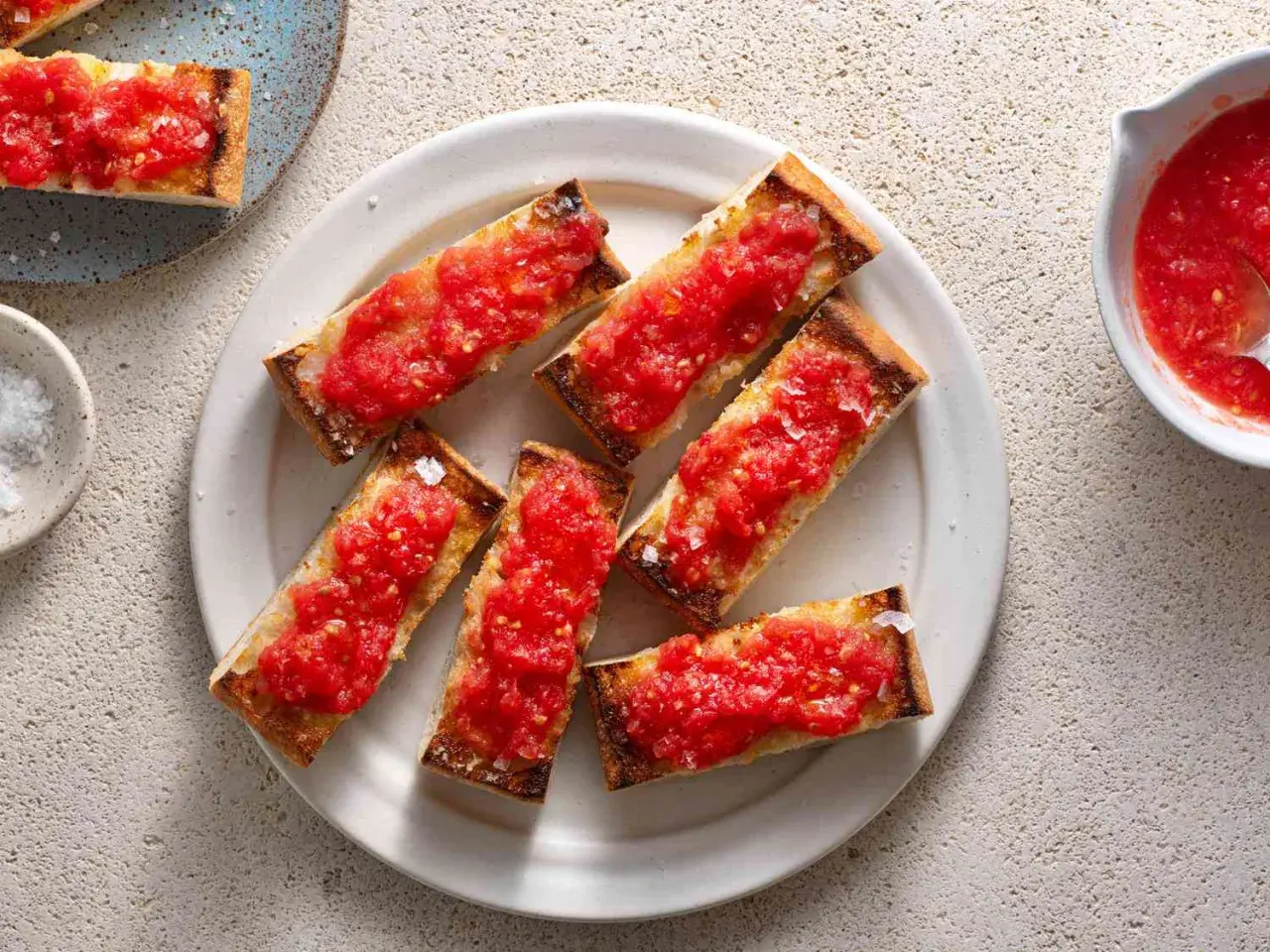
The essentials at a glance
- Use crusty bread, ripe tomatoes, extra virgin olive oil, salt, and only a little garlic.
- The best version is crisp on the outside, juicy on top, and never soggy underneath.
- It works as a breakfast, a tapa, or a pintxo-style bite with anchovies, ham, or cheese.
- In Basque bars, small plates are often ordered separately, while tapas culture can be more casual and drink-led.
- If the tomatoes are weak, the whole dish feels flat, so ripeness matters more than quantity.
Why this toast belongs on a tapas table
I think of this as a dish with a very low barrier to entry and a very high quality ceiling. Catalonia's cultural heritage service places the earliest references to the bread-and-tomato combination in the 19th century, when it made practical sense as a way to soften dry bread with ripe produce. That origin still explains why the best version feels humble but never sloppy.
The tapas angle matters too. Spain.info describes tapas as small plates often enjoyed with a drink, while pintxos in the Basque Country are usually ordered and paid for separately. That means this toast works in two different settings: as a casual snack that wakes up the appetite, or as a neat one-bite bar item that sits comfortably beside more elaborate pintxos.
In practice, I treat it as a test of restraint. If the ingredients are good, it looks generous; if they are weak, there is nowhere to hide. Once that is clear, the next step is choosing the parts that actually carry the flavour.
The ingredients that decide whether it works
The ingredient list is short, but every item matters. I would rather use four excellent components than six average ones, because this dish is built on contrast: crisp bread, ripe tomato, raw garlic, and peppery olive oil.
| Ingredient | Amount for 2 slices | What I look for |
|---|---|---|
| Bread | 2 thick slices, about 1.5 to 2 cm | Sturdy crust, open crumb, enough structure to stay crisp |
| Tomatoes | 1 large ripe tomato or 2 plum tomatoes | Fragrant, soft, deeply coloured, and not watery |
| Garlic | 1 small clove, halved | Just enough to perfume the bread, not dominate it |
| Olive oil | 1 to 1.5 tbsp extra virgin olive oil | Fruity, peppery, and good enough to use raw |
| Salt | A small pinch of flaky sea salt | Clean finish, added at the end, adjusted to taste |
In the UK, I usually reach for a sturdy country loaf or sourdough rather than soft sliced bread. If winter tomatoes are pale and watery, I prefer the best cherry tomatoes I can find over forcing the issue with bland salad tomatoes; the texture is smaller, but the flavour is usually better. From here, technique matters more than shopping, so the next section is about the method.

How I make it at home
My method is intentionally plain, because the dish does not need cleverness. I want the bread hot, the tomato juicy but not watery, and the garlic present enough to matter without taking over.
- Toast 2 thick slices of bread until they are deeply golden and crisp at the edges. A pale toast goes soft too quickly.
- Rub each slice lightly with half a small garlic clove while the bread is still warm. If you are making several toppings, keep the garlic very restrained.
- Grate 1 large ripe tomato into a bowl, then stir in 1 to 1.5 tablespoons extra virgin olive oil and a pinch of flaky salt. I prefer grating because it gives a loose, spreadable texture and keeps the juice where I can control it.
- Spoon the mixture over the toast, let it soak in for a few seconds, then finish with a tiny extra drizzle of oil and a final pinch of salt if needed.
I serve it immediately, not later. If I am cooking for a group, I keep the tomato mixture ready in a bowl and assemble only what will be eaten in the next minute or two, because the bread loses its edge fast once it is topped. That timing is what separates a good plate from a soggy one, and it leads naturally to what you should put next to it.
What to serve alongside it
On a tapas or pintxos spread, this toast works best as the bright, clean element that resets the palate between richer bites. I would not build a whole menu around it alone; I would use it to connect the sharper and fattier dishes around it.
| Pairing | Why it works | When to choose it |
|---|---|---|
| Anchovies or boquerones | Salt and acid sharpen the tomato | When you want a sharper, more aperitif-style bite |
| Jamon serrano or iberico | Adds cured fat and depth | When the toast is a starter rather than a snack |
| Idiazabal or aged Manchego | Brings nutty richness | When you want a cheese-led board |
| Gildas or olives | Add briny contrast | When the table leans strongly Basque |
| Txakoli, dry cider, or a crisp lager | Cleans the palate | When the toppings are richer or saltier |
For a British kitchen, a simple rule works well: choose one salty topping, one richer bite, and one fresh or pickled plate, then let the tomato toast bridge them. That way the dish feels intentional, not like filler, and the next question becomes how not to ruin that balance.
The mistakes that ruin the texture
- Soft bread: if the loaf has no structure, the topping wins and the toast disappears.
- Under-ripe tomatoes: they make the plate taste thin and sharp instead of sweet and full.
- Too much garlic: the dish should smell fresh, not aggressive.
- Over-oiling: the oil should round the flavour, not puddle on the plate.
- Assembling too early: even a good crust goes limp if it sits around.
- Salt too soon: if you salt the tomato heavily and wait, it releases more water than you want.
When something tastes flat, I usually adjust by improving the tomato or increasing the oil slightly, not by adding more seasoning. If the bread is already soggy, though, there is no repair trick that fully brings back the crunch. That is why I prefer the simplest possible topping logic and then move on to the few variations that still respect the original idea.
Small variations that still feel true to the dish
I am happy to add a topping, but only if it improves the balance rather than turning the toast into a pile of extras. The best variations keep the bread-tomato-oil base obvious.
- Anchovy and tomato: this is the sharpest, most bar-ready version. The salt cuts through the sweetness and makes the toast feel more grown-up.
- Ham and tomato: better when you want something more filling. I use it when the toast is serving as a first course rather than a quick bite.
- Grilled pepper or roasted pepper strips: useful when you want a lighter vegetable note and a touch of sweetness.
- Cheese shaved thinly over the top: good when the rest of the spread is very clean and you want a little extra richness without losing the tomato.
The point is not to load the toast until it stops reading as toast. In a Basque-style setting, restraint usually wins, because a single precise topping does more than three competing ones. That is the logic I would use if I were putting the dish on a menu tonight.
What I would keep on the table if I were serving it tonight
If I were setting up a small aperitif at home, I would keep the bread toasted, the tomato mixture in a bowl, and the toppings separate until the last second. I would also plan portions honestly: 2 slices per person as a starter, or 3 to 4 if the toast is doing most of the work on the table.
- Make enough tomato for a little extra, because guests always go back for a second round.
- Use the best oil you have, since it carries more flavour here than in most quick snacks.
- Keep one salty item nearby, such as anchovies or olives, so the spread does not become one-note.
- Serve it the moment it is assembled; the window for great texture is short.
That is the version I trust most: crisp bread, ripe tomato, restrained garlic, and enough olive oil to make the whole thing taste deliberate. In a tapas or pintxos context, that kind of simplicity is not minimalism for its own sake; it is what lets the dish feel generous, balanced, and worth making again.
