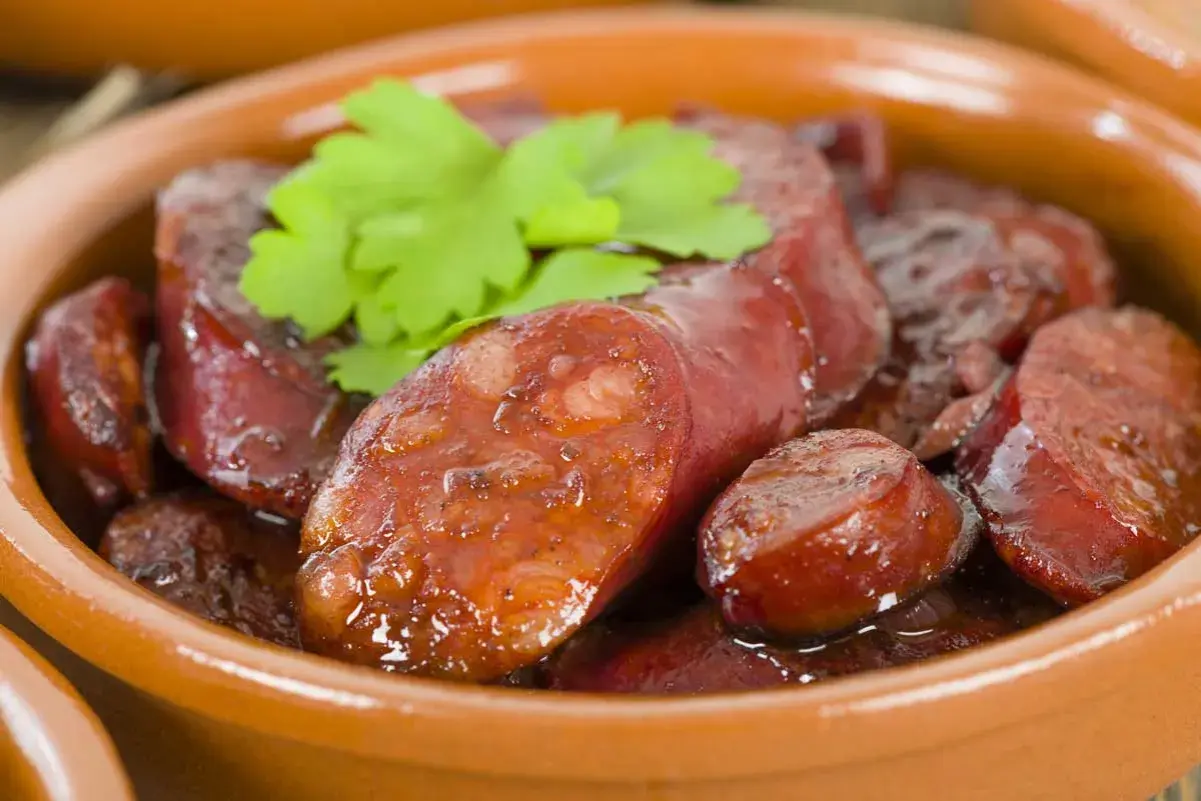
Wine-braised chorizo, often called chorizo al vino, is one of the easiest tapas to get right, but it only tastes balanced when the sausage, wine, and heat are chosen with care. The best versions stay glossy rather than greasy, with enough acidity to cut through the paprika-rich fat and enough reduction to cling to bread. In this guide I cover what the dish actually is, how to make it in a UK kitchen, and how to serve it as tapas or pintxos without losing the clean, savoury finish that makes it memorable.
What matters most before you cook it
- Use cured or semi-cured Spanish chorizo, not raw sausage.
- For 2 to 4 people, 250 to 300g chorizo and 150 to 200ml dry red wine is usually enough.
- Gentle simmering for 6 to 8 minutes gives you a glossy sauce instead of a greasy one.
- Dry Rioja, Tempranillo, Garnacha, or dry cider are the safest liquid choices.
- For pintxos, keep the sauce reduced so the bread stays crisp.
- Serve it with crusty bread, olives, or pickled peppers so the plate feels complete.
What makes wine-braised chorizo such a good tapa
What makes this dish work is not complexity, but contrast. The sausage brings salt, smoke, paprika, and fat; the wine brings acidity and a little fruit; and the heat turns those two things into a sauce that feels richer than the ingredient list suggests.
I think of it as a short, controlled reduction, not a stew. That is why the texture matters so much: if the chorizo stays intact and the sauce coats the spoon, the tapa feels lively and bar-friendly, not heavy. Once that structure is right, the next decision is the ingredients.
Choose the sausage and wine with purpose
In the UK, I would look for a firm Spanish chorizo ring with a deep red colour and a pronounced paprika aroma. If it feels soft and pale, it is usually the wrong style for this dish. The wine does not need to be expensive, but it should be dry and clean tasting, because sweetness or heavy oak can flatten the finished sauce.
| Ingredient | Best choice | Avoid | Why it matters |
|---|---|---|---|
| Chorizo | Cured or semi-cured Spanish chorizo | Raw sausage or very soft fresh chorizo | Holds its shape and seasons the sauce properly |
| Wine | Dry Rioja, Tempranillo, Garnacha, or another dry red | Sweet wine or a heavily oaked bottle | Keeps the flavour bright instead of sugary |
| Alternative liquid | Dry cider | Sweet cider | Creates a sharper, more northern Spanish finish |
| Bread | Rustic sourdough or a crusty baguette | Fluffy sandwich bread | Stays intact under the sauce |
If you want a more Basque-leaning variation, dry cider gives the dish a brighter edge and works especially well when the rest of the menu is already rich. Once the ingredients are right, the method becomes very straightforward.
The method that keeps the sauce glossy
I cook this in a heavy pan over low to medium-low heat, because the goal is to coax out flavour, not fry the chorizo into a crust. I usually skip extra oil at the start, since the sausage normally releases enough fat on its own.
- Slice 250 to 300g chorizo into 1 cm rounds or chunky half-moons. If the ring is small, keep the pieces larger so they stay juicy.
- Put it in a cold heavy pan and bring the heat up slowly. Let it render for 2 to 3 minutes, stirring once or twice.
- Add 150 to 200ml dry red wine and 1 crushed garlic clove. Simmer gently for 6 to 8 minutes.
- Turn the pieces once or twice until the liquid has reduced by about half and the sauce looks glossy.
- Taste, then finish with chopped parsley or a teaspoon of sherry vinegar if the sausage tastes too rich.
The best sign is simple: the chorizo should look lacquered, not swimming. If the sauce splits, the heat was too aggressive; if it tastes flat, it usually needs a little more reduction or a sharp finish. That balance matters even more when you move from a casual bowl to a tapas spread.

Serve it as tapas or pintxos without losing the point
For tapas, I serve it in a small cazuela, which is simply a shallow ceramic dish that keeps the heat in and the sauce contained. For pintxos, I think differently: the sauce needs to be tighter, the portion smaller, and the bread sturdy enough to survive a few minutes on the bar.
As a tapa
A spoonful or two in the cazuela is enough for two people if it is part of a broader spread, or for one hungry starter if you are serving it with bread. I like to put the bread on the side so people can control how much sauce they pick up.
Read Also: Perfect Cod Croquettes - Master Basque-Style Frying
As a pintxo
For pintxos, I place a slice of toasted bread on the plate, add one or two slices of chorizo, spoon over a little reduced wine sauce, and finish with a pickled guindilla or a strip of piquillo pepper. A skewer keeps it tidy, but the real point is balance: the bread should stay crisp, not soggy.
If I am building a mixed board in the UK, I keep portions modest. From 300g of chorizo, I would expect around 6 to 8 small pintxos or 2 to 4 tapas servings, depending on how generous the slices are. From there, the main risk is usually not taste, but weight.
The mistakes that make it heavy or flat
- Using the wrong sausage - fresh cooking chorizo behaves differently and will not give the same texture or sauce.
- Boiling hard - high heat drives off moisture too quickly and can make the fat look greasy.
- Choosing a sweet wine - the dish becomes sticky rather than savoury.
- Serving with soft bread - it collapses and turns the plate muddy.
- Overcomplicating the pan - onions, honey, and too many spices can blur the paprika and wine.
The fixes are simple. Use less heat, keep the ingredient list short, and treat acidity as part of the recipe rather than an afterthought. Once that is in place, you can adapt the dish without losing its shape.
Variations that still feel authentic
I prefer the plain version, but a few variations make sense depending on what else is on the table.
| Variation | What it changes | Best use |
|---|---|---|
| Red wine and garlic | Round, classic, bar-style flavour | A standard tapas plate |
| Dry cider | Sharper and brighter finish | Pintxos or a lighter menu |
| Piquillo peppers | Slight sweetness and colour | Bread-based pintxos |
| Chickpeas or beans | More filling and spoonable | Lunch or a small supper |
I would keep the extras subtle. The more you add, the more the dish moves away from a tapa and towards a small stew, which is fine if that is the goal, but it is a different job. If the point is to stay close to a Basque bar snack, restraint usually wins.
Why this dish earns its place on a Basque-style table
This is the kind of dish that earns its place because it gives you a lot of character for very little effort. It sits comfortably on a Basque-inspired menu because it can be a warm tapa, a bread-topped pintxo, or one component of a wider spread without demanding much else from the kitchen.
When I build the rest of the table, I look for contrast: a gilda, which is the Basque skewer of olive, pepper, and anchovy; some plain olives; a plate of tortilla; and something fresh and acidic on the side. For drinks, a young Rioja is the safest red, while txakoli or a dry cider brings a brighter, more regional feel.If I were serving guests in the UK, I would keep the bowl small, the bread crusty, and the sauce just reduced enough to coat the sausage. That is the point where the dish feels both generous and controlled, which is exactly why it works so well.
