The useful facts at a glance
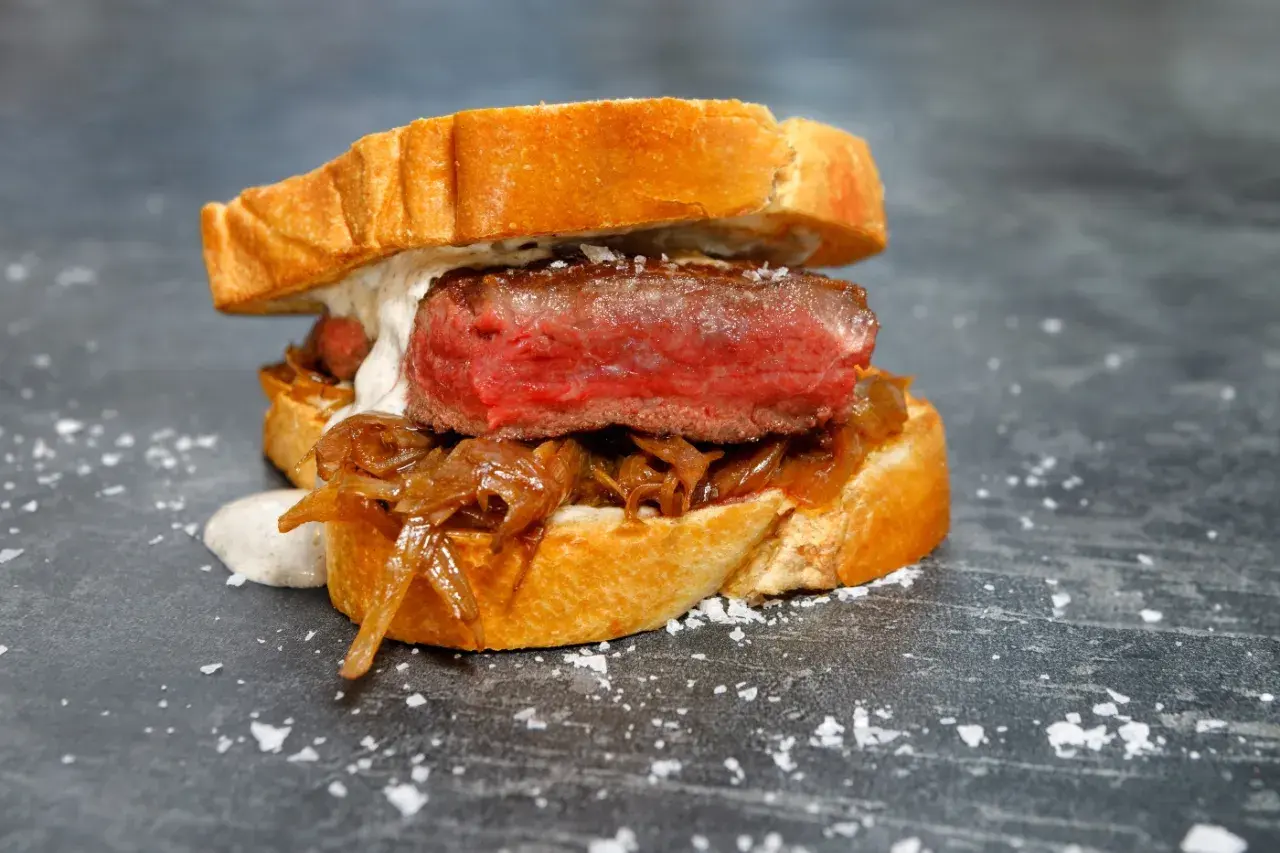
- It is a hot beef sandwich, usually on a crusty roll or small baguette.
- Thin slices cook fast and stay tender; thick steak makes the sandwich harder to eat and easier to overcook.
- For a pintxo-style serving, keep it smaller, cleaner, and less sauced than a pub steak sandwich.
- In the UK, sirloin, rump, ribeye, or flat iron all work if they are sliced very thinly.
- Simple extras work best: onions, roasted peppers, piparras, a little alioli, or a sharp mustard.
What this sandwich actually is
At its core, this is a hot sandwich built around beef cooked fast and served immediately. The exact origin story is fuzzy, but the practical definition is not: a compact roll, a hot pan, thinly cut beef, and very little clutter. I think that simplicity is why it sits comfortably beside tapas and pintxos even when it is not a classic Basque pintxo in the strictest sense.What matters most is the eating experience. You should be able to pick it up, take a few clean bites, and still taste the beef first. If it turns into a drippy, oversized sandwich, the balance is already off. That difference matters because the dish is meant to feel bar-friendly, not like a full pub meal fighting for attention.
| Feature | Beef pepito style | Typical British steak sandwich |
|---|---|---|
| Bread | Small baguette or crusty roll | Often ciabatta, bloomer, or a larger bun |
| Beef | Thin slices cooked very quickly | Sometimes thicker strips or sliced steak |
| Seasoning | Salt, garlic, oil, maybe peppers or onions | Can lean on sauces, mustard, or cheese |
| Size | Compact and shareable | Usually larger and more filling |
| Best setting | Bar snack, lunch, or pintxo-style plate | Lunch, pub menu, or casual dinner |
Once you see that difference, the ingredient choices become much easier to judge.
The ingredients that matter most
I would focus on four things before I think about toppings: the cut, the bread, the heat, and a little acidity. Thin beef is the centre of the whole dish, so the goal is tenderness, not bulk.
| Cut | Why it works | My take |
|---|---|---|
| Sirloin | Balanced flavour and good tenderness | The safest all-rounder for most home kitchens |
| Rump | Cheaper and leaner, but still flavourful | Best when sliced very thinly and against the grain |
| Ribeye | Rich, juicy, and forgiving | Ideal if you want a more indulgent version |
| Flat iron | Tender and underrated | A strong value choice when you want flavour without waste |
| Tenderloin | Very soft, but quite lean in flavour | Luxurious, though not necessary for a sandwich like this |
For two sandwiches, I usually plan on 250-300g beef, one medium onion or half a large one, 2 small rolls or 1 split baguette, and 1-2 teaspoons of olive oil per sandwich. If you add cheese or peppers, keep them secondary. As a rough UK estimate, I would budget about £5-£8 for two sandwiches with rump or sirloin, while ribeye pushes the cost up noticeably.
The bread matters more than many people expect. A baguette-style roll, a crusty white roll, or a good demi-baguette gives you structure without turning the sandwich into a brick. Soft sliced bread is the wrong move here because it absorbs juices too quickly and collapses before the second bite.
The best versions also use a small amount of sharpness. That can be pickled peppers, a touch of sherry vinegar, or even a few onions cooked until sweet but not mushy. A little acidity keeps the beef tasting clean instead of heavy, and that is the real difference between a memorable sandwich and a merely filling one.
Once the ingredients are right, the method becomes much simpler, and that is where the dish starts to behave like proper bar food rather than just another steak sandwich.

How I would build it in a UK kitchen
My approach is straightforward: keep the beef thin, the pan hot, and the build fast. If you want the meat to stay tender, do not treat it like a steak you are serving whole; treat it like a fast-cooked filling.
- Slice the beef thinly. Chill it for 15-20 minutes first if needed, because slightly firm meat is easier to cut cleanly. Aim for slices around 2-3 mm.
- Season just before cooking. Salt, black pepper, and a little garlic are enough. Too many spices hide the beef.
- Heat a pan until it is properly hot. Add a thin film of olive oil and sear the slices in a single layer for about 20-40 seconds per side, just until browned.
- Toast the bread cut-side down in the same pan. A little beef fat or oil on the bread helps, but stop before it turns greasy.
- Assemble fast. Add beef, then onions or peppers, then a small amount of sauce if you want it. Serve immediately while the contrast is still there.
If I were feeding two people in the UK, I would make one version with soft caramelised onions and another with pickled peppers. That gives you variety without losing the character of the sandwich. If you want to prep ahead, keep the beef and bread separate and rewarm the meat in a pan, not a microwave, so the texture stays intact.
For sauce, I would keep it restrained: a thin swipe of alioli, a little mustard, or nothing at all. The more you add, the more the sandwich drifts away from the point of the dish.
How it sits on a tapas or pintxos table
The best versions behave like bar food, not like a plated main course. In pintxo settings, a smaller beef sandwich works because it is easy to hold, easy to share, and easy to pair with a drink. That is why the format matters as much as the filling.
Pintxos are usually a touch more precise than tapas in the way they are built: smaller portions, cleaner presentation, and a stronger sense that the food should be eaten quickly while everything is still lively. A beef sandwich fits that world when it is kept compact and balanced. Make it too large, and it starts to feel out of place on a pintxo counter.
- Gildas, tortilla, or roasted peppers work well if you want a classic Basque-style spread.
- Dry cider or a crisp white cuts through the fat cleanly.
- A light lager or a young red is easier for British drinkers who want something familiar.
- Pickled chillies or piparras sharpen the flavour and keep the sandwich from feeling flat.
If you are serving it as part of a mixed table, I would keep the sandwich slightly smaller than a lunch portion and let other bites do the rest of the work. A hot beef sandwich and three or four sharper snacks make a much better spread than one oversized item and a pile of filler. That principle leads directly into the mistakes people make when they try to improve it too much.
The mistakes that make it feel heavy instead of precise
The most common problem is simple overcorrection. People add more beef, more sauce, more cheese, and more bread, then wonder why the sandwich tastes dull. Once the fillings are too heavy, the roll loses structure and the beef stops being the point.
- Overcooking the beef - thin slices should be browned fast, not cooked until dry.
- Using soft bread - a soft sandwich loaf collapses as soon as the juices hit it.
- Loading on sauce - a little alioli, mustard, or pan juice goes a long way.
- Ignoring acidity - without onions, pickles, or peppers, the flavour can feel flat.
- Leaving it to sit - this is not a sandwich that improves on the counter.
My rule is simple: if the beef stops tasting like beef, the sandwich has already drifted. That is why the final versions worth keeping are the ones that know exactly when to stop.
The versions I would actually order again
When I want the cleanest version, I keep it almost bare: beef, bread, salt, and a touch of garlic oil. When I want it to sit on a tapas table, I add one of three things only: slow onions, roasted peppers, or a sharp pickled element. That keeps the sandwich interesting without turning it into a generic loaded roll.
- Classic bar version - thin beef with simple garlic oil and crusty bread. This is the version that best shows whether the kitchen respects timing.
- With caramelised onions - sweeter, rounder, and better for cooler weather in the UK. It works because the onion adds depth without masking the meat.
- With peppers or piparras - the sharpest and most Basque-leaning option. I like this one when I want the sandwich to feel lighter and brighter.
- With a little cheese - useful if the beef is lean, but keep it light. Too much cheese makes the whole thing taste like a different dish.
If you remember only one thing, make it this: a good beef pepito is about restraint. Use thin slices, hot heat, and a bread that can carry the juices without surrendering to them, and you will end up with a sandwich that feels at home anywhere from a British kitchen table to a pintxo counter.
