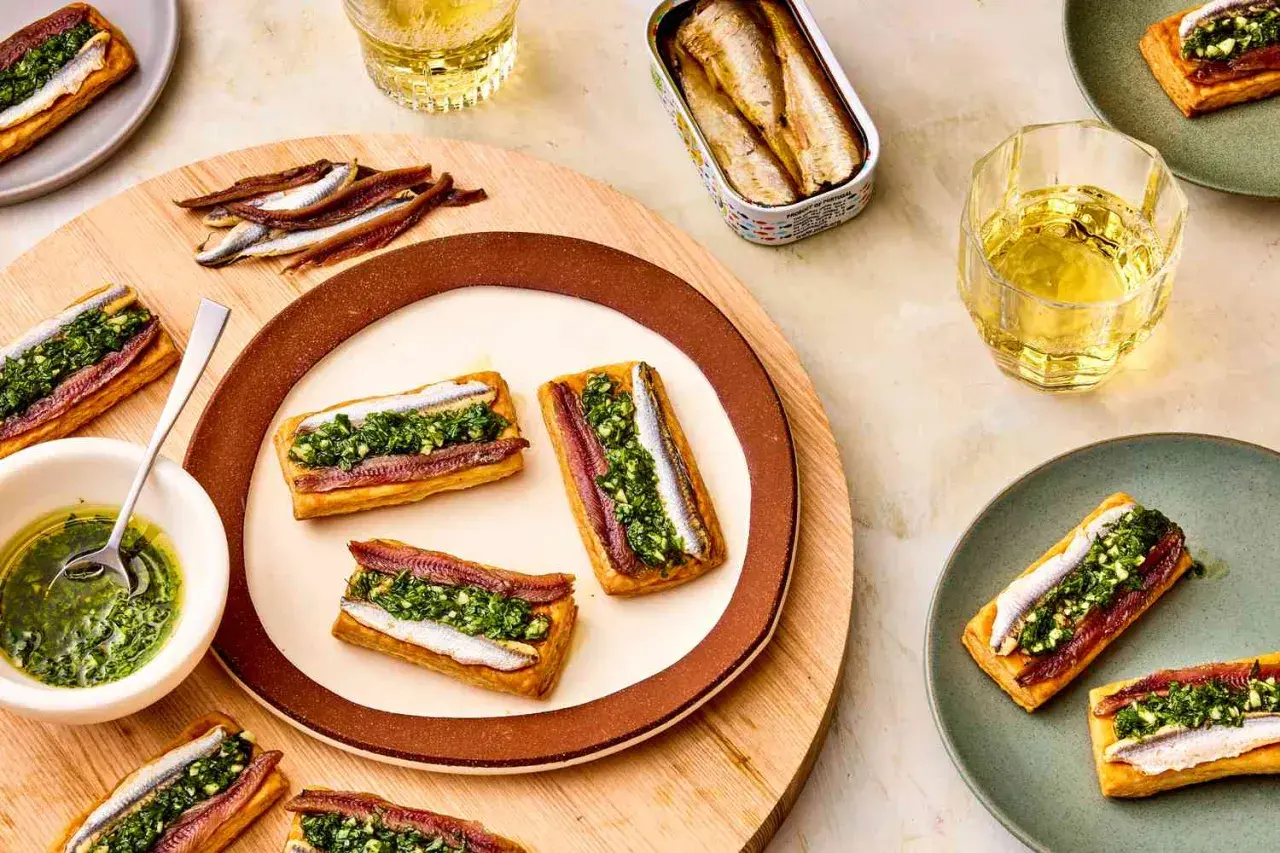
White anchovies are one of the cleanest ways to bring a bright, briny note to tapas and pintxos without overwhelming the rest of the bite. In practice, that means a fish that can sit comfortably with bread, peppers, olives, tomato, and olive oil, while still tasting distinct enough to matter. I’ll break down what they are, why they work so well in Basque-style small plates, which combinations actually make sense, and how I’d serve them at home in the UK.
The essentials in one glance
- They are usually marinated rather than heavily salt-cured, so the flavour is brighter and milder.
- They work best in small, balanced bites where acidity, bread, and good olive oil can do some of the heavy lifting.
- The classic Basque route is simple: a few ingredients, a sharp contrast, and a clean finish.
- Quality matters more than quantity. Firm fillets, a fresh smell, and a short ingredient list are the signs I look for.
- For home serving, keep portions small, chilled, and assembled at the last moment.
What makes them different on a tapas table
What many people call white anchovies are usually fresh fillets that have been marinated until they turn pale, delicate, and lightly tangy. That is a very different experience from the darker, salt-cured style most people think of first: less aggressive salt, less chew, and a cleaner finish. I like them because they bring the anchovy character without demanding the whole plate.
| Style | Flavour | Texture | Best use |
|---|---|---|---|
| Marinated fillets | Bright, lightly acidic, gently salty | Soft and tender | Pintxos, toast, cold starters |
| Salt-cured anchovies | Deep umami, much saltier | Firmer and denser | Sauces, butter, robust savoury toppings |
| Sardines | Richer, oilier, more pronounced fish flavour | Meatier | Grilled bites, warm dishes, fuller plates |
That difference matters because tapas and pintxos are built on restraint. When a bite has only three or four elements, each one has to earn its place. The milder marinated style can do that job well, especially when the other ingredients bring crunch, heat, or freshness. Once you understand that contrast, the Basque logic behind these little snacks starts to feel very natural.
Why Basque bars keep coming back to them
In Basque cooking, I see a strong preference for balance over decoration. A good pintxo rarely tries to do everything at once. It usually gives you salt, acid, fat, and texture in a single bite, then gets out of the way. Marinated anchovy fillets fit that formula perfectly because they sharpen bread and oil instead of disappearing under them.
They also play well with the ingredients that show up again and again in tapas bars:
- Olives add a rounder, greasier saltiness that softens the vinegar edge.
- Pickled peppers bring heat and snap, which keeps the bite from feeling flat.
- Tomato on toast adds sweetness and moisture without stealing attention.
- Good olive oil ties the whole thing together and stops the acidity from feeling sharp.
- Crusty bread gives the dish structure, which is essential when the topping is soft.
That is why they work so well in a standing bar setting. You can eat one in two bites, take a sip, and move on. Nothing feels heavy, but nothing feels random either. That balance is exactly what makes the next section so useful: if the ingredients are right, the pintxos almost build themselves.

The pintxos and tapas I would serve first
When I want to use marinated anchovies well, I start with combinations that respect their brightness instead of fighting it. The best examples are simple enough to assemble quickly, but not so bare that they feel unfinished. These are the ones I come back to most often.
The Gilda
This is the classic for a reason: an anchovy, a pickled pepper, and an olive on a skewer. The salt, acid, and gentle heat line up almost perfectly, and the small size keeps the fish from feeling too dominant. I think of it as the clearest expression of Basque pintxo logic: three ingredients, no clutter, maximum contrast.
Anchovy toast with tomato
This is the easiest way to make the flavour feel familiar to people who are not used to anchovies. Rub toasted bread with tomato, add a thin layer of olive oil, then top it with a couple of fillets and a little black pepper or parsley. The tomato rounds off the vinegar and gives the bite a softer, more relaxed finish.
Potato slices with parsley oil
Waxy potatoes work better than floury ones because they hold their shape. I like them sliced thick, boiled until just tender, then cooled and topped with anchovy and a spoonful of parsley oil. It is a simple move, but it gives you more body than bread while still keeping the dish light.
Read Also: Bocadillo de Jamon: The Simple Secret to a Perfect Spanish Sandwich
Endive cups or little lettuce leaves
This is the version I use when I want something fresh and crisp. The slight bitterness of endive or a tender lettuce leaf cuts straight through the richness of the marinade, and it is a good choice if the rest of the menu is already bread-heavy. A little lemon zest makes the whole thing feel sharper without becoming acidic.
If you are building a mixed tapas plate, I would stop there and let the fish be one of the main voices rather than forcing it into a crowded table. The cleanest pintxos are usually the best ones, and that brings us to the part most people get wrong when they buy them.
How I choose good ones in the UK
In the UK, I usually look for them in the chilled deli section, in Spanish-food shops, or in better supermarkets that carry Mediterranean antipasti. The strongest clue is still the simplest one: the fish should smell fresh and marine, not muddy or aggressively sour. I also want the fillets to look intact, not shredded, because texture matters as much as flavour here.
| What I look for | Why it matters |
|---|---|
| Short ingredient list | Anchovy, vinegar or oil, salt, garlic, parsley. Fewer extras usually means a cleaner flavour. |
| Firm, glossy fillets | They hold up better on toast and keep the bite tidy. |
| Balanced marinade | The liquid should support the fish, not drown it. |
| Cold storage in the shop | If it is meant to be chilled, that is a basic quality signal. |
| Clear, pale appearance | A dull or broken look often means poor handling or old stock. |
Once opened, I keep them cold and use them quickly rather than letting them sit around for days. If the fish starts to break apart or the liquid turns unpleasantly cloudy, I would not serve it on a delicate pintxo. Good marinated anchovies should feel delicate, not fragile. That is why the final assembly step matters so much.
How I build a simple board around them
My rule is to keep the board small and purposeful. I do not want six competing pickles, two creamy sauces, and a handful of herbs that all taste like different ideas. I want one clear line of flavour, then just enough contrast to make it interesting.
- Start with one base: toasted bread, boiled potato, endive, or a thin slice of cooked pepper.
- Add the fish in a restrained amount. For toast, I usually use 2 to 3 fillets per bite.
- Include one acidic or sharp element, such as pickled pepper, tomato, or a little lemon zest.
- Finish with olive oil and, if needed, a small amount of black pepper or parsley.
- Serve immediately after assembling, ideally within 10 to 15 minutes, so the bread stays crisp.
For drinks, I reach for dry, cold styles that refresh the palate rather than coat it. A crisp white, txakoli, fino, a dry cider, or even a clean lager all make sense here. The common thread is freshness. Anything too sweet or too oaky will make the fish taste flatter than it should. Once that board is set, the last thing to protect is the flavour balance.
The small details that keep the flavour clean
The biggest mistake I see is overbuilding the bite. A lot of people try to turn a delicate snack into a miniature sandwich and end up burying the thing they wanted to showcase. Too much garlic, too much mayonnaise, or too much bread can erase the bright, briny character that makes the fish worth serving in the first place.
- Do not overload them with creamy sauces unless you are intentionally changing the style.
- Do not let the bread go soggy before serving.
- Do not stack too many salty elements on one bite unless you want a much harsher result.
- Do finish with a fresh note, such as parsley, lemon zest, or a peppery olive oil.
When I want a reliable Basque-style result, I keep the formula simple: one clean fish, one sharp accent, one proper base. That is enough to make the plate feel thoughtful without becoming fussy, and it is usually the difference between a decent snack and a pintxo I want to make again.
