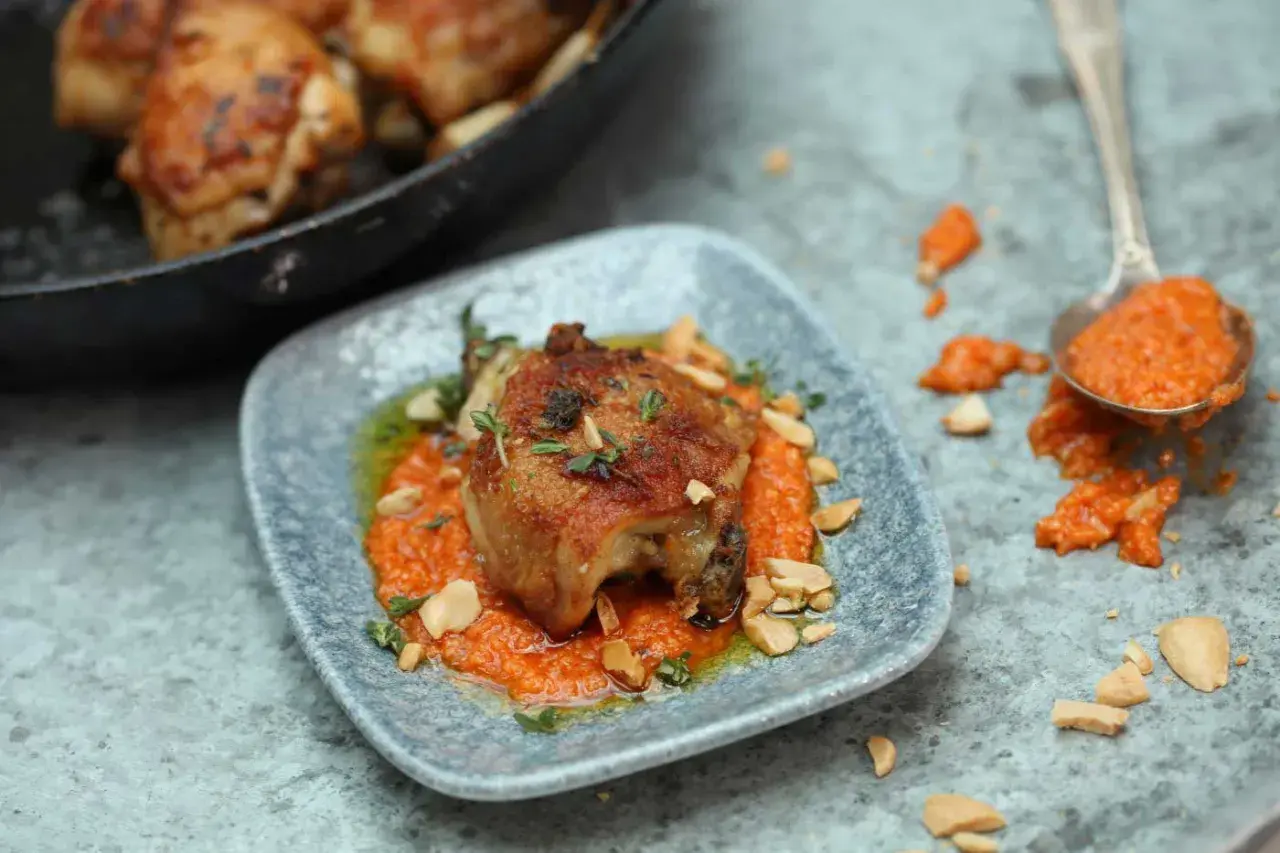
Chicken tapas work especially well in small Spanish-style plates because chicken takes on garlic, paprika, citrus, and sherry without losing its own character. In this article I break down the formats that matter most, from skewers and croquetas to saucy pan dishes, and I show how to make them feel at home in a Basque-style spread. I also cover the practical details that usually get skipped: cut selection, seasoning balance, portion sizes, and the mistakes that make the food feel heavy instead of lively.
The quickest way to make chicken feel right in a tapas spread
- Use thighs for the juiciest result; breast only works well when the pieces are small and the cook time is short.
- Skewers, croquetas, and garlic-style braises are the three formats I reach for most often.
- Keep the seasoning focused: garlic, paprika, parsley, sherry vinegar, lemon, or piment d'Espelette are usually enough.
- For a mixed table, plan about 80-120 g raw chicken per person; for a main hot plate, aim closer to 150-180 g.
- Serve with one acidic element and one bread or potato element so the dish never feels greasy.
Why chicken fits tapas and pintxos so well
Chicken gives you something rare in small-plate cooking: a mild base that can be pushed in different directions without becoming noisy. It can be grilled, skewered, fried, braised, shredded, or folded into a creamy filling, which is exactly why it earns a place on a tapas menu instead of being treated like a fallback ingredient.
It also suits the rhythm of Basque-style eating. Pintxos are usually bite-sized, often built on bread or served on a skewer, while tapas can be a little looser in form but still rely on the same idea: small portions, strong flavour, and food that invites conversation instead of demanding a full sit-down meal. Chicken works in both worlds because it can be rustic, neat, or somewhere in between.
My rule is simple: the chicken should act like a flavour carrier, not a heavy centrepiece. Once that idea clicks, the choice becomes format first and recipe second, which is where the real fun starts.

Three chicken formats that feel most natural on the table
If I am building a chicken-focused small-plates menu, I keep coming back to three shapes. They each solve a different problem: one is quick and handheld, one is make-ahead friendly, and one is ideal when you want a warm dish with enough sauce for bread.
| Format | Best cut | Typical time | Why it works |
|---|---|---|---|
| Skewers or pinchos | Thigh or breast | 20-30 minutes to marinate, 8-10 minutes to cook | Fast, handheld, and easy to serve while drinks are flowing |
| Croquetas | Cooked chicken | 2-4 hours to chill, 2-3 minutes to fry | Ideal make-ahead bite with a crisp shell and soft centre |
| Garlic chicken in sauce | Thighs or drumsticks | 30-40 minutes total | Best for bread, warm plates, and a slower shared meal |
For pintxo-style serving, I keep the portions small and the garnish disciplined: bread, a pickled pepper, a strip of roasted pepper, or a thin swipe of allioli is usually enough. If the plate starts to look crowded, the chicken stops feeling elegant and starts feeling like a buffet. That is also the point where seasoning matters more than decoration, which is what I cover next.
How to build flavour without drying the chicken out
The best small-plate chicken is seasoned in layers, but not so many layers that you lose the shape of the dish. For 500 g of chicken, I usually start with 2 tbsp olive oil, 1 grated garlic clove, 1 tsp smoked paprika, 1 tbsp lemon juice or sherry vinegar, and a generous pinch of salt. If I want a Basque note, I add only a small pinch of piment d'Espelette; it should lift the meat, not bury it.
Cut choice matters just as much as seasoning. Thighs forgive a lot and stay juicy, breast gives a cleaner look but dries out faster, and wings or drumettes are excellent for casual finger food. If I am using breast, I cut it into even pieces and cook it hot and fast. If I am using thighs, I can marinate them for 2-12 hours without worrying that the texture will collapse.
| Cut | What it gives you | Watch out for |
|---|---|---|
| Thighs | Juicier, richer, forgiving | Trim excess fat and cook through without rushing |
| Breast | Clean flavour, neat cubes, quick grilling | Overcooks fast; keep pieces uniform and finish promptly |
| Wings or drumettes | Casual finger food and good value | They are less elegant on bread and can be awkward to plate |
| Leftover roast chicken | Perfect for croquetas or cold pintxos | Needs sauce or fat to stop it reading as dry |
The biggest mistake is to keep adding spices because the dish feels too plain in the bowl. Garlic plus paprika plus acid is already a complete story. If you pile on cumin, rosemary, and oregano all at once, the result stops tasting like a tapas plate and starts tasting like a recipe that is trying too hard. Once the flavour base is right, the next question is how to serve it so the table stays lively.
How I would serve it for a real tapas night in the UK
For a mixed spread, I plan 2-3 small bites per person from the chicken course, or 80-120 g raw chicken per person if it is one dish among several. If chicken is the main warm plate, I go closer to 150-180 g raw chicken per person and make sure there is bread, potatoes, or another starch on the table. That keeps the meal satisfying without making it feel like a full roast dinner in disguise.
- Use one acid: lemon wedges, pickled guindilla peppers, or a spoon of sherry vinegar dressing.
- Use one creamy element: thin allioli, not a heavy mayonnaise mountain.
- Use one fresh or green note: parsley, chives, roasted peppers, or a simple leaf salad.
- Pair it with dry cider, a crisp white, or a light red; if you can find txakoli, it fits the style neatly.
For a British kitchen, the adjustment is mostly about ingredient access, not technique. Skin-on chicken thighs from a supermarket, smoked paprika, sherry vinegar, jarred piquillo peppers, and a decent olive oil are enough to get close to the mood. I would rather cook with those few things well than with a long list of substitutes that blur the style. The last thing worth getting right is what usually goes wrong.
The mistakes that turn a good idea into bland pub food
| What goes wrong | Why it happens | Better move |
|---|---|---|
| Chicken tastes dry | It was cooked too long or the pieces were too thick | Cut evenly and pull it as soon as it is just cooked through |
| The dish feels greasy | Too much oil and no acid | Add lemon, pickles, or a sharp herb finish |
| Bread goes soggy | The sauce was poured on too early | Plate the sauce separately or at the last second |
| Everything tastes the same | One seasoning profile was used across all the dishes | Vary texture and use one accent element per plate |
| Croquetas leak or split | The filling was too warm or too soft | Chill longer and fry in batches |
A three-dish chicken menu that keeps the table moving
When I want the spread to feel relaxed rather than fussy, I build it around three distinct moments: a crisp bite, a grilled bite, and a saucy bite. That gives the table enough variety without forcing me into half a dozen half-finished pans.
- Make the croqueta filling ahead of time, ideally the day before, so it can chill properly.
- Marinate the skewers for 30 minutes to 2 hours, depending on whether you are using breast or thigh.
- Cook the saucy chicken last so it can land on the table hot and glossy.
- Finish with bread, herbs, and one sharp garnish rather than a heavy side.
If I were cooking for four people, I would make 8 skewers, 10-12 croquetas, and one shallow pan of garlic chicken with olives or peppers. That is enough food to feel abundant without becoming messy, and it matches the pace of a real tapas evening better than a single oversized tray ever will. Done well, chicken tapas stops reading like a theme and starts reading like a meal people actually want to linger over.
