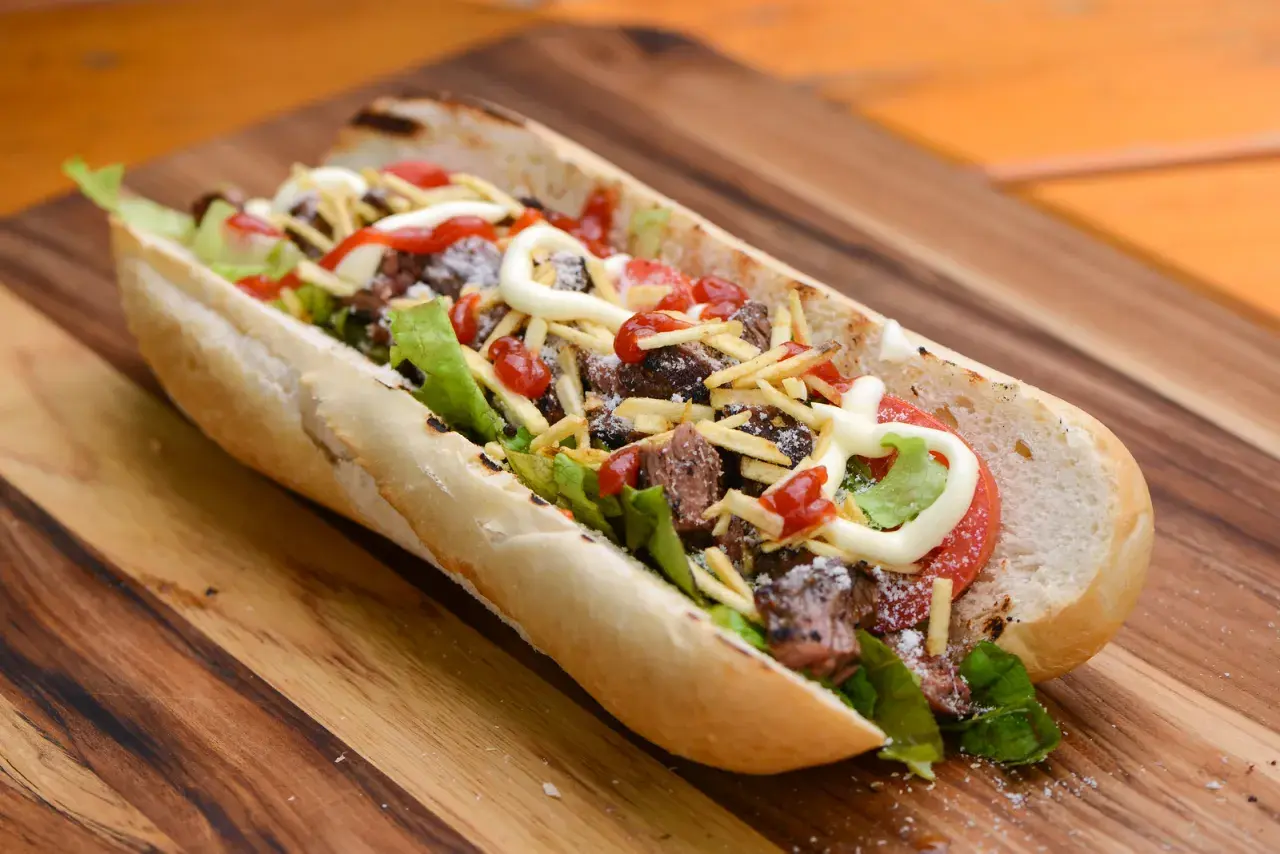
A pepito sandwich is best understood as a hot, compact bocadillo: usually steak, simple seasoning, crusty bread and just enough garnish to keep the bite lively. I look at where it sits in tapas and pintxos culture, how Spanish and Latin American versions diverge, and how to make one that tastes deliberate rather than overloaded.
The version most people mean is a hot steak sandwich with a simple build
- The Spanish classic is usually a beef-led bocadillo, often called pepito de ternera.
- In tapas culture, it works best as the more substantial bite on a table of smaller plates.
- Latin American versions are often saucier, more customisable and more street-food-driven.
- For home cooking, crusty bread, hot meat and restraint matter more than elaborate toppings.
- The fastest route is a thin steak, a toasted roll and one sharp condiment, not a pile of extras.
Why it sits between a bocadillo and a bar snack
In Spain, I would not treat this as a fancy sandwich. It is closer to a clean, hot bocadillo built around good meat and bread that can stand up to heat. In a tapas bar, that matters because a menu of small plates needs one or two things that feel more filling, and the pepito does that job without becoming heavy. It gives you the satisfaction of a proper sandwich while still belonging to the rhythm of shared dishes.
That is also why it feels close to pintxos culture without being the same thing. Pintxos are usually smaller, often skewered or neatly assembled bite-size items, while this sandwich is a larger, hand-held portion. If pintxos are about constant grazing, the pepito is the moment when the table briefly asks for something more substantial. That contrast is useful, because it tells you how to build the rest of the meal around it.
Once that difference is clear, the ingredient choices make a lot more sense.
Spain and Latin America use the idea differently
Most food histories place the Spanish beef version in Madrid, while Latin American pepitos took the same broad idea and pushed it toward street-food abundance. The core concept stays the same, but the eating experience changes: one is leaner and more bar-friendly, the other is usually louder, saucier and more customisable.
| Aspect | Spanish style | Latin American style |
|---|---|---|
| Bread | Crusty roll or baguette | Soft hoagie-style roll or large bun |
| Filling | Grilled beef, sometimes veal, kept fairly simple | Beef or chicken, often with more toppings and sauces |
| Flavour profile | Meat-first, balanced, less messy | Loaded, punchy, often sweeter, spicier or creamier |
| Typical extras | Onions, peppers, a little mayonnaise or aioli | Avocado, beans, jalapeños, ketchup, mustard, guasacaca, potato sticks |
| Best setting | Tapas bar, lunch, quick bite | Street food, late-night food, fully loaded sandwich meal |
I think this distinction is important because it stops the sandwich from being flattened into one generic “Spanish” idea. The same name covers related but different habits of eating, and that is exactly the sort of detail readers usually want clarified before they cook or order it. From there, the real question is how to build one without tipping it into overload.

How I build one at home in a British kitchen
If I am making one at home, I keep the formula tight: 300 to 350 g thin sirloin, rump or bavette for two sandwiches, 2 small baguettes or crusty rolls, 1 small onion, 1 tomato, a handful of lettuce if wanted, 1 to 2 tbsp mayonnaise or aioli, salt, pepper and a little olive oil. That is enough to get the flavour without turning the sandwich into a heap.
- Season the steak well and leave it out of the fridge for 15 to 20 minutes so it cooks evenly.
- Toast the bread lightly. It should be crisp outside but still soft enough inside to bite cleanly.
- Cook the steak quickly in a hot pan, 1 to 2 minutes per side for thin slices, then rest it.
- Use one or two extras only. I like caramelised onions or sliced tomato; both together can already be enough.
- Assemble while the meat is still hot, add a thin layer of sauce, and close the bread before the juices escape.
If you want a more traditional result, use a crusty roll rather than brioche. Brioche makes the sandwich richer, but it also moves it away from the bar-snack feel that gives the dish its charm. In practice, the whole thing should take 15 to 20 minutes if the onions are not involved, or about 35 to 45 minutes if you want a sweeter, slower version. That timing makes the sandwich easy to fold into a tapas evening rather than a full cooking project. Once the sandwich is made properly, the next move is deciding what sits beside it.
What to put beside it on a tapas or pintxos table
This is where the sandwich starts to feel at home on a Basque-inspired table. I would pair it with sharper, lighter bites rather than other heavy foods: a gilda to bring salt and acidity, a tomato salad to reset the palate, grilled peppers for sweetness, and one simple potato dish if you want a second warm element. The point is contrast, not repetition.
- A gilda or olive skewer for briny opening bites.
- Spanish tortilla in neat squares, which gives the table a soft, eggy counterpoint.
- Grilled piquillo peppers or roasted peppers for sweetness and colour.
- Tomato rubbed toast or a simple dressed salad if you want freshness.
- A dry drink such as txakoli, fino sherry, a crisp cider or a light lager.
If you are in the UK and cannot find txakoli, do not force a substitute that fights the food. A dry white with high acidity or an English cider is usually more useful than a sweet wine. That kind of pairing keeps the sandwich from feeling stodgy and leaves room for the smaller dishes to do their job. The downside of this style is obvious: if you surround the pepito with other rich items, the whole meal loses definition. That leaves the traps that make a good idea feel clumsy.
Where it goes wrong
The biggest mistake is treating it like a loaded burger. Too many sauces, too much salad and too much bread all flatten the flavour of the meat, which is supposed to be the centre of the experience. The second mistake is using bread that is either too soft or too thick: it either collapses under the juices or dominates every bite.
- Overfilling the sandwich so it cannot be eaten cleanly.
- Using cold bread and expecting the meat to rescue the texture.
- Cooking the steak too long, which turns a quick bite into a chewy one.
- Adding too many sauces, especially sweet ones, so the sandwich stops tasting Spanish.
- Assembling too early, which makes the bread soggy before it reaches the table.
The pepito works best when the components are obvious: hot meat, warm bread, one clear condiment and maybe one vegetable note. If you keep that balance, it feels confident rather than nostalgic or overworked. That is why I would keep it in the rotation when a menu needs something more filling than pintxos but less formal than a plated main. The final question is what makes it worth keeping on a Basque-style menu.
What makes it worth keeping on a Basque-style menu
There is a reason this sandwich has lasted: it is adaptable without losing its identity. You can make it lean and almost minimal, or richer and more indulgent, but the structure still reads as a proper hot bocadillo with a clear centre of gravity. For me, the pepito sandwich works best when I treat it as a conversation between bread, meat and restraint, not as a chance to pile on every topping in the kitchen.
If you want a reliable takeaway, think in terms of balance: use good bread, cook the meat fast, keep the sauces light and let the sandwich sit naturally beside tapas and pintxos rather than trying to imitate them. That approach gives you the most authentic result and the most useful one, which is usually the same thing.
