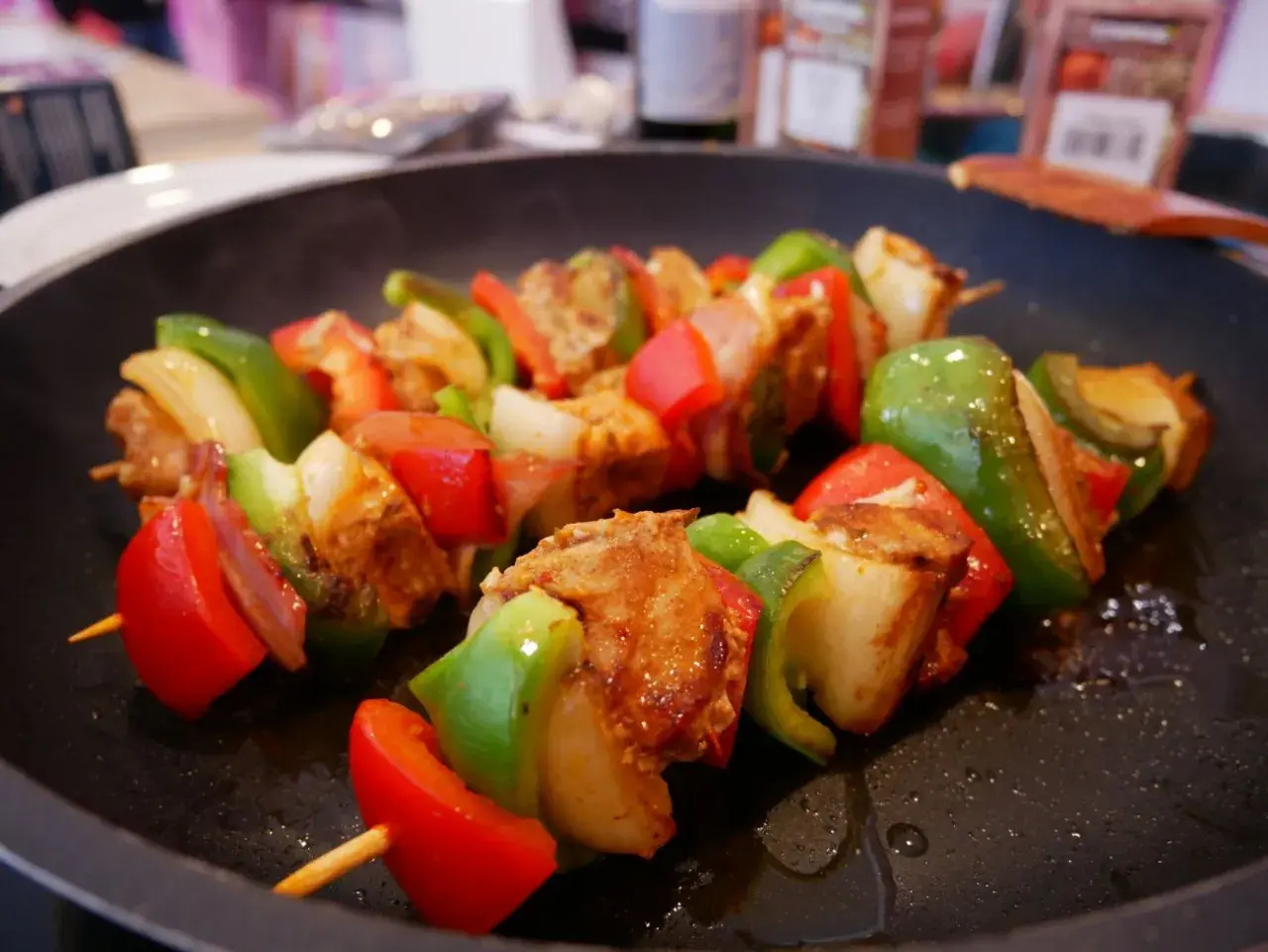
These Spanish skewers work because they keep the formula simple: well-seasoned meat, a short blast of heat, and a plate that lets the spice do the talking. In this guide I break down pinchos morunos, the meat choices that make sense, how I build the marinade, and how to serve them as tapas or in a pintxos-style spread without overdoing the garnish. I’ll also show the small mistakes that turn a good skewer into something dry, flat, or forgettable.
The best version keeps the spice warm, the meat juicy and the garnish simple
- Pork is the modern everyday choice; lamb is closer to the older historical version of the dish.
- A 2-hour marinade works, but overnight gives a deeper, more even flavour.
- Cut the meat into 2 to 2.5 cm cubes so it cooks quickly without drying out.
- High heat matters more than a long ingredient list; the spice mix should taste bold, not muddy.
- Serve with bread, alioli, lemon, olives and one crisp drink, and the plate feels complete.
What pinchos morunos tell you about Spanish tapas culture
I think of these skewers as a very Spanish answer to a very practical problem: how do you make a few inexpensive ingredients feel festive? The answer is a strong marinade, small portions, and fast cooking over heat. That is why the dish fits so naturally into tapas culture, even if it is not a Basque classic in the strictest sense.The name points to older Moorish and North African spice traditions, which is why the seasoning leans warm and aromatic rather than purely smoky. Historically, lamb is the closer link to that older version, while pork became the more common modern Spanish choice. Either way, the point is the same: the meat should carry a spice profile that feels rounded, not heavy.
That is also why I like the dish in a pintxos-style setting. It is small enough to share, bold enough to stand on its own, and easy to eat while standing around a table with a drink in hand. Once you see it that way, the next question becomes which meat gives you the result you actually want.
Pork or lamb and what each brings to the plate
The meat changes the personality of the skewer more than the spice does. If I am cooking for a mixed group, I usually start with pork because it is familiar, forgiving, and easy to find in the UK. If I want a more distinctive, slightly richer result, I go for lamb.
| Meat | What it gives you | Best for | My note |
|---|---|---|---|
| Pork | Mild, juicy, and a clean canvas for paprika, cumin and garlic | Easy crowd appeal and quick cooking | Use a lean cut such as tenderloin or well-trimmed loin, then avoid overcooking it. |
| Lamb | Richer flavour with more natural depth | A more historic feel and a stronger tapas plate | Boneless leg is usually the neatest option; trim carefully so the cubes cook evenly. |
For me, pork is the safer choice when the rest of the table is also busy, because it lets the spice blend do the heavy lifting. Lamb, on the other hand, gives you more presence with less effort. If you want one skewer that feels a little more old-world and a little less familiar, lamb is the one I would pick. With the meat chosen, the flavour now depends on whether the marinade is sharp and balanced or just vaguely spicy.
How to build the marinade so the spices stay bright
I prefer a marinade that feels like a paste rather than a thin bath. That means enough olive oil to coat the meat, enough garlic to smell the moment it hits heat, and enough spice to make the surface taste alive. Too much lemon or vinegar can flatten that effect, so I keep the acid modest.
| Ingredient | Amount for 500 g meat |
|---|---|
| Olive oil | 3 tbsp |
| Garlic, finely grated | 2 cloves |
| Sweet paprika | 1 tsp |
| Ground cumin | 1 tsp |
| Dried oregano | 1 tsp |
| Ground coriander | 1/2 tsp |
| Turmeric | 1/2 tsp |
| Lemon juice | 1 tbsp |
| Salt | 1 tsp |
| Black pepper | 1/2 tsp |
If I want a little heat, I add a pinch of cayenne rather than doubling the paprika. That keeps the flavour profile warm instead of harsh. I also like to massage the marinade into the meat with my hands for a minute or two, because it helps the spice cling to every surface instead of sitting in the bowl.
Timing matters almost as much as the spice mix itself. Two hours is the minimum I would accept if I wanted the flavour to feel intentional, while overnight is better for pork and perfectly fine for lamb if the lemon stays restrained. I bring the meat out of the fridge about 15 to 20 minutes before cooking, because ice-cold cubes brown badly and stay uneven inside. Once the flavour is in place, the cooking itself is straightforward if you respect the heat.How to cook them fast without drying them out
The biggest mistake I see is treating these as if they were slow barbecue pieces. They are not. The cubes are small, the marinade is strong, and the goal is a browned outside with a juicy centre. If you cook them too long, the spice tastes dull and the meat loses its bite.
On the grill or barbecue
Use medium-high to high heat and keep the skewers moving. For 2 to 2.5 cm cubes, I usually need about 5 to 8 minutes total, turning them two or three times. You want colour, not charred spice crust. If the fire is too hot, the paprika can burn before the centre is ready, which is a fast way to ruin a good marinade.
In a grill pan or under the oven grill
This is the best option in a UK kitchen when the weather is not helping. Get the pan properly hot first, oil it lightly, then cook the skewers in batches so the meat sears instead of steaming. Under the oven grill, place the skewers close to the heat source and watch them carefully; 6 to 8 minutes is often enough for small cubes.
Read Also: Tuna Crudo - What It Is & How to Serve It Perfectly
In the oven
If you need a fallback, roast them at 220C/200C fan on a lined tray for about 10 to 12 minutes, then finish under the grill for a minute or two if you want more colour. I still prefer direct heat, but the oven works well when you are cooking for a crowd and need a little more control. Soak wooden skewers in water for at least 30 minutes beforehand, and leave a little space between cubes so the edges can brown properly.
For mini tapas skewers, I like four to five pieces of meat per skewer. For larger ones, six to eight pieces is usually enough. That keeps the portion elegant and stops the plate from feeling heavy. Once the cooking is under control, the last piece is presentation, and that is where the dish can either feel rustic in a good way or just careless.
How to serve them without overcomplicating the plate
I serve these two different ways depending on the mood of the table. As a tapa, they can stay on the skewer and arrive with alioli, lemon wedges, and a piece of good bread to catch the juices. As a pintxo-style bite, I slide the meat off the skewer, place it on bread, add a roasted pepper or a little onion, and secure it with a pick. The second version feels more Basque in spirit, but both work if you keep the rest of the plate restrained.
The most natural partners are the ones that cool, sharpen or absorb. Alioli gives richness, lemon gives lift, bread gives structure, and a simple salad or grilled peppers keeps the meal from feeling one-note. I would not drown the skewers in a heavy sauce; they already carry enough flavour. If I want the table to feel more northern Spanish, I add padrón peppers, tortilla wedges and a glass of txakoli or dry cider. For a UK-friendly drink, a crisp lager or a dry white also works well.
The key is balance. These are small plates, but they still need contrast, and the best accompaniments are the ones that make the spice easier to appreciate rather than louder. Once that balance is right, the main risks are usually technical, not stylistic.
The mistakes that flatten the flavour
Most bad versions fail for the same predictable reasons. They are either underseasoned, overmarinated, overcooked, or plated as if the skewer itself were not interesting enough to stand alone. I keep a short list in mind whenever I make them:
- Cutting the meat too small makes it dry before it browns. Aim for neat 2 to 2.5 cm cubes.
- Using too much acid can make the surface soft and blur the spice. The marinade should be glossy, not sour.
- Crowding the skewers or the pan traps steam and kills the char. Give the meat a little room.
- Skipping salt leaves the spices tasting dusty instead of complete. Salt belongs in the marinade, not just at the end.
- Adding heavy sauces hides the flavour you worked for. A good tapa should still taste like the dish itself.
When I see a skewer go wrong, it is usually because the cook tried to compensate for weak technique with more seasoning, more sauce or more garnish. That rarely helps. The better move is almost always simpler: improve the cut, sharpen the marinade and shorten the cooking time. With that in mind, the final step is to think about the whole table rather than just the skewer.
The simplest tapas table I’d build around them
If I were setting this up in a UK kitchen, I would make the skewers the hot centrepiece and build the rest of the meal around contrast. That means one cold dish, one green element, one piece of bread, and one drink that does not fight the spice. I would also marinate the meat the day before, which makes the final cook feel easy rather than rushed.
- One hot item: the skewers themselves.
- One cold item: tomato and onion salad or marinated peppers.
- One green item: padrón peppers or rocket with lemon.
- One starch: crusty bread, flatbread, or small roasted potatoes.
- One drink: fino, manzanilla, txakoli, or a crisp pale lager.
If there are leftovers, I pull the meat from the skewers and use it in flatbread or a simple salad the next day, because the spice still holds up once it is sliced. That is the real strength of the dish: it feels generous, but it does not require fuss. Keep the marinade bold, the heat quick, and the plate uncluttered, and the result will feel much closer to a proper tapas moment than to an ordinary kebab night.
