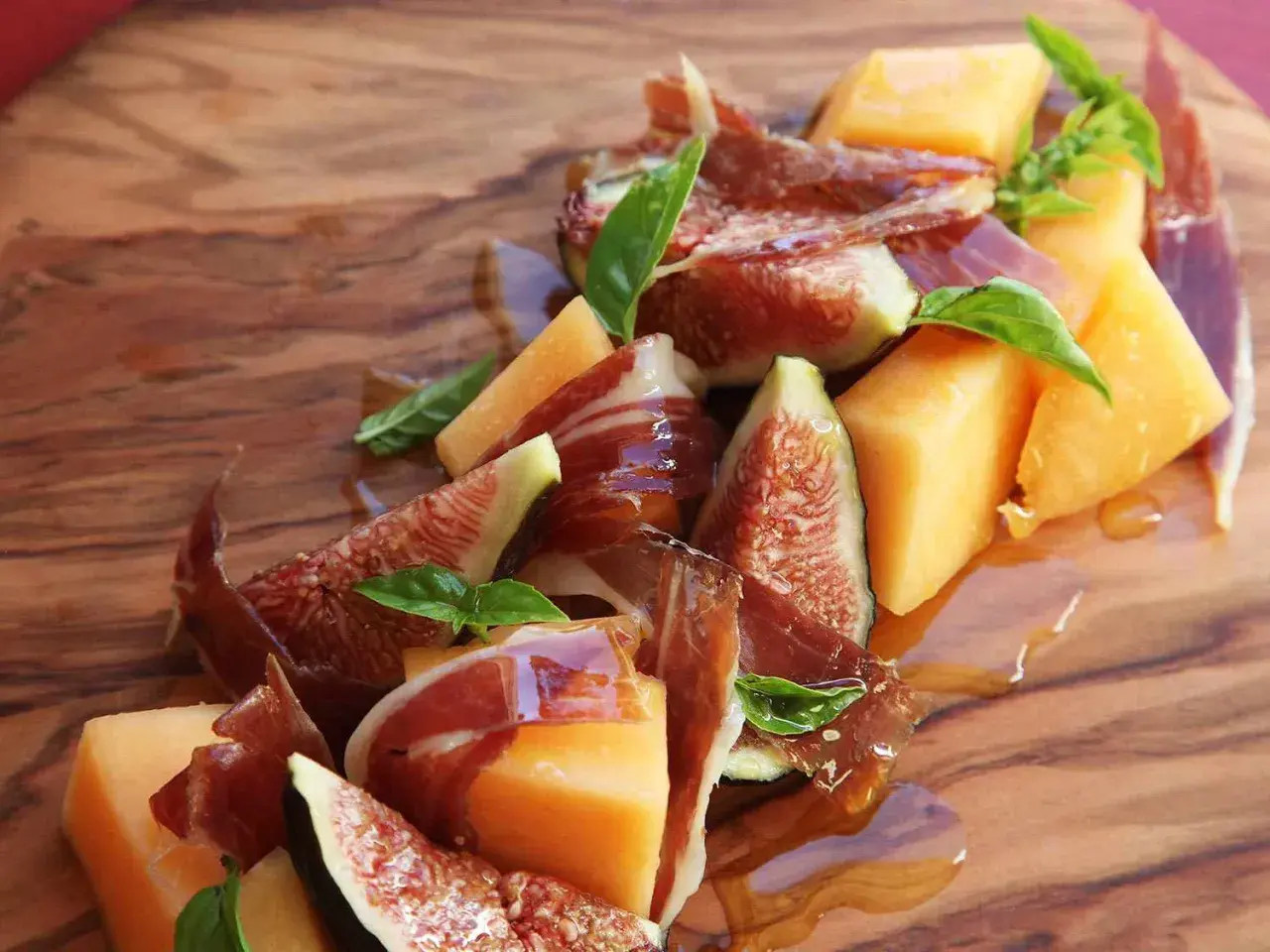
This is a straightforward guide to a classic summer starter: sweet melon, thin cured ham, and the small decisions that make the combination taste clean rather than lazy. I focus on what matters at the table in the UK, how to keep it in the tapas-and-pintxos lane, and how to turn melon con jamon from a nostalgic cliché into something worth serving again.
What makes this starter work so well
- It needs no cooking, so the result depends almost entirely on ingredient quality.
- Ripe melon and paper-thin cured ham are the two non-negotiables.
- Keep it chilled, not icy, so the melon stays fragrant and the ham does not feel stiff.
- It works as both a tapa and a pintxo if you serve it in small, easy bites.
- Assembly should be last-minute; 15 to 20 minutes is the sweet spot.
- Simple pairings are best: olives, crisp bread, dry sparkling wine, or a light beer.
Why this pairing earns its place on a tapas table
What looks almost too simple is exactly why it works. The melon brings perfume, coolness, and natural sweetness; the ham adds salt, fat, and a slightly savoury edge that keeps each bite from tasting flat. I think that contrast is the real trick here, not the nostalgia around the dish.
On a tapas table, this kind of starter plays a useful role. It resets the palate between richer bites, it can be eaten standing up without fuss, and it makes the rest of the spread feel lighter. In Basque-style eating, that matters: a good table often moves between briny, salty, creamy, and fresh flavours rather than leaning on one note for too long.
It also fits modern entertaining in the UK for the same reason. When the weather is warm, nobody wants a heavy starter that ties the host to the kitchen. This is quick, elegant, and honest about what it is. The only catch is that it gives away all of its weaknesses immediately, so the ingredients have to be good. That leads straight to the part most people get wrong.
Choose the melon and ham with more care than you think
There are only two core ingredients, which means each one has to carry its weight. I would always start with the ham, because the wrong one can make the whole plate feel dull, too salty, or oddly chewy.
| Ham | Flavour profile | Best use |
|---|---|---|
| Serrano | Clean salt, dry texture, easy to pair | The best everyday choice for a home tapas board |
| Jamón Ibérico | Deeper, nuttier, more aromatic | Special occasions when you want the dish to feel more luxurious |
| Prosciutto crudo | Softer and a little sweeter | A practical fallback if Spanish ham is unavailable |
For melon, I usually look at three options. Cantaloupe is the classic because it has enough aroma to stand up to cured ham. Galia is slightly fresher and often a little easier to balance. Honeydew can work, but only if it is genuinely ripe; otherwise it turns the whole bite into a polite but forgettable snack.
| Melon | What it brings | My view |
|---|---|---|
| Cantaloupe | Sweet, fragrant, familiar | The safest and most convincing choice |
| Galia | Balanced sweetness and freshness | Excellent when you want something a little lighter |
| Honeydew | Mild, crisp, subtle | Only use it when it is fully ripe and aromatic |
My rule is simple: if the melon does not smell like much when you cut into it, the dish will not sing. The ham cannot rescue bland fruit, and a fancy ham cannot disguise an underripe melon. Once the ingredients are right, the assembly becomes easy.
How I assemble it so the flavours stay clean
The best version is built fast, chilled lightly, and served promptly. I do not want the melon weeping all over the plate, and I do not want the ham drying out before the first bite.
- Chill the melon for about 30 minutes before serving, not longer if it is already cold from the shop fridge.
- Cut it into neat wedges or chunky slices about 1 to 1.5 cm thick, depending on the style you want.
- Pat the cut surface dry if there is a lot of juice.
- Slice the ham thinly so it folds easily rather than hanging in stiff ribbons.
- Wrap, drape, or lay the ham over the melon just before serving.
- Add only a tiny finishing touch if needed: a few drops of olive oil, a pinch of flaky salt, or a leaf of mint.
The time window matters. I would aim to assemble the plate no more than 15 to 20 minutes before it hits the table. Any earlier and the melon starts to leak, the ham loses its neat shape, and the clean sweet-salty contrast becomes muddier. If you are hosting, this is one of those dishes that rewards calm preparation more than clever improvisation.
Turn it into pintxos instead of just a plate

A tapa is the broad, relaxed idea of a small dish. A pintxo is usually smaller, more deliberate, and often served as a bite you can lift with a skewer or toothpick. That makes this combination easy to adapt for a Basque-style spread.
On skewers
This is the simplest move. I cut melon into cubes, fold a ribbon of ham once or twice, and pin everything together with a toothpick. It is tidy, portable, and perfect for a drinks table. If you want a little extra lift, a small basil leaf between the melon and ham adds freshness without changing the character of the dish.
On bread
For a more pintxo-like presentation, place the melon and ham on a thin slice of toasted bread. Keep the bread crisp and dry, because soft bread turns the juices into a soggy mess within minutes. This version feels slightly more substantial and works well when the dish is part of a larger run of bites.
Read Also: Perfect Cod Croquettes - Master Basque-Style Frying
On a shared platter
When I want a more relaxed serving style, I arrange the melon in rows, fold the ham into loose waves, and let guests build their own bites. This is less formal, but it works well when the rest of the table is busy with olives, cheese, anchovies, or a tortilla wedge. It also suits mixed groups, because people can take a little or a lot without needing utensils.
That flexibility is why the dish belongs in a pintxos conversation at all. It may be more traditionally associated with Spanish summer eating than with a single strict Basque recipe, but it sits comfortably beside the kind of small, high-contrast bites that define the region’s bar culture.
The mistakes that flatten the flavour
Most failures with this dish are not dramatic. They are small, ordinary errors that make the plate less crisp, less balanced, or less memorable than it should be.
- Using bland melon - if the fruit is weak, the whole bite feels empty.
- Choosing ham that is too thick - you want silk, not a chewy slab.
- Serving it too cold - refrigeration should preserve freshness, not mute aroma.
- Adding too many extras - balsamic glaze, honey, and heavy herbs all push the dish away from its natural balance.
- Making it too far ahead - once melon juices and ham salt start mingling for long enough, the texture loses its snap.
- Over-salting the plate - cured ham already does most of the seasoning work.
If I am being strict, I would also avoid smoked ham. It changes the flavour profile in a way that feels less Spanish and less clean, which is exactly what this starter does not need. The dish works because each ingredient stays recognisable. The moment you bury that, you are no longer serving a classic; you are making a different snack.
How I’d serve it at home in the UK without losing the Spanish feel
In a British home setting, I treat this as a summer starter, an aperitif bite, or one element in a larger sharing board. It does not need a theme night, but it does benefit from being surrounded by other foods that are equally simple and equally confident.
For drinks, I would reach first for something dry and cold: txakoli if you have it, cava if you want a classic Spanish route, or an English sparkling wine if you are keeping the shopping local. A very dry cider or a light lager also works well. What I would avoid is anything sweet, because sweetness on sweetness makes the melon feel less refreshing.
For the rest of the board, I like to keep the supporting cast small. A few olives, some marcona almonds, a wedge of tortilla española, and one sharp cheese are enough. If you want a more Basque-leaning line-up, add a Gilda-style skewer or two and let this melon-and-ham bite act as the cooling counterpoint.
That is the version I keep coming back to: ripe fruit, proper cured ham, minimal garnish, and just enough restraint to let the ingredients feel deliberate. If you start there, the dish stops being a tired summer cliché and becomes a reliable little piece of tapas culture you can serve with confidence.
