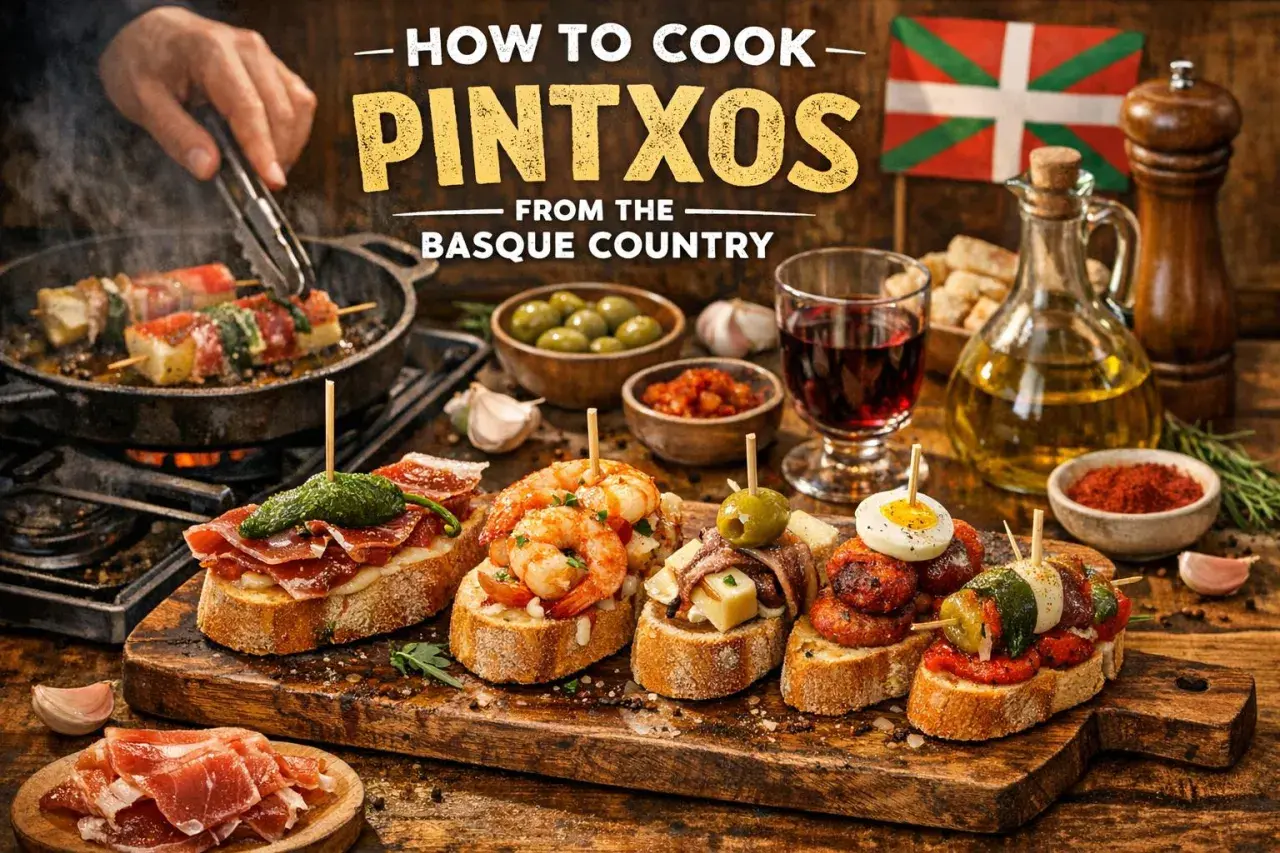
Morcilla pintxos are the kind of snack I order when I want something small but unmistakably Basque: rich blood sausage, a bit of sweetness, a touch of acid, and just enough bread to hold the whole thing together. This article breaks down what makes that combination work, how to build it at home in a UK kitchen, which pairings are worth keeping, and where most home versions go wrong.
What matters most before you start assembling the bites
- Balance matters more than size: morcilla is rich, so the best pintxos add sweetness, acidity, or a fresh finish.
- Piquillo peppers and quail eggs are the classic pairing because they soften the sausage’s intensity without hiding it.
- Texture is non-negotiable: toast, seared sausage, and a soft topping give the bite structure.
- UK substitutions can work, but firm black pudding is a stand-in, not a perfect match.
- Make them small: one or two bites per person is plenty before a wider pintxos spread.
What a morcilla pintxo actually is
At its core, this is a Basque-style bar bite built around blood sausage, usually served on bread or in a very compact composed plate. The toothpick matters, but the real point is proportion: morcilla brings depth, fat, spice, and a slightly earthy finish, while the other ingredients keep the bite lively.
I think of it as a flavour triangle. If the sausage is the heavy note, you need one ingredient that lifts it, one that sharpens it, and one that gives it something to sit on. Without that balance, the bite becomes dense and one-dimensional; with it, the dish feels surprisingly elegant.
That is why these snacks work so well in pintxos culture. They are not meant to be showy for the sake of it. They are meant to be direct, sociable, and easy to eat with a drink in hand. Once that idea makes sense, the next step is choosing the pairings that make the sausage taste better rather than simply louder.

The pairings that make the flavour work
The best versions keep the ingredient list short. I usually want one soft element, one sweet or acidic element, and one crisp base. That is enough to turn a rich sausage into a proper bite instead of a heavy mouthful.
| Pairing | Why it works | Best use |
|---|---|---|
| Piquillo peppers | They bring sweetness, a gentle roast flavour, and just enough acidity to cut the richness. | The most reliable classic; excellent under or beside sliced morcilla. |
| Quail egg | The yolk adds silkiness and a mild dairy-like richness without making the bite heavy. | Best on top of a warm sausage slice or a small toast point. |
| Caramelised onion | It deepens the savoury notes and adds sweetness without fighting the sausage. | Good when you want a softer, more rustic pintxo. |
| Toasted bread | It gives structure and keeps the bite from collapsing under the sausage’s fat. | Use a firm slice, lightly rubbed with garlic if you want extra lift. |
| Apple or quince | A small amount of fruit brightness stops the flavour from feeling too dark or linear. | Useful in autumn menus or when the morcilla is especially rich. |
I would be careful with heavy cheese here. A little can work, but too much masks the point of the dish. The safest rule is simple: keep one sweet note, one soft note, and one crisp note. Once you have that balance, the home version becomes much easier to get right.
A reliable home version for a UK kitchen
If I were putting these together at home in the UK, I would keep the recipe short and treat the sausage gently. For 8 pintxos, I would use 1 morcilla sausage, 1 small jar of piquillo peppers, 8 thin slices of baguette or country bread, 4 quail eggs, 1 garlic clove, olive oil, and a pinch of salt. If you want a brighter finish, add a few drops of sherry vinegar or a little of the pepper oil from the jar.
Read Also: Perfect Padrón Peppers - Fry Them Right Every Time
How I build it
- Warm the piquillo peppers slowly in a little olive oil with sliced garlic for 5 to 7 minutes, just until glossy and tender.
- Slice the morcilla into thick rounds and sear them briefly in a hot pan, about 2 to 3 minutes per side, so the outside firms up without drying out.
- Toast the bread lightly so it can carry the topping without turning soggy.
- Fry or soft-poach the quail eggs, keeping the yolks runny if you want a more traditional, luxurious finish.
- Assemble with peppers first, sausage on top, then the egg. Finish with a tiny pinch of salt and, if needed, a touch of acidity.
If you cannot find Spanish morcilla, a firm black pudding can work, especially a style that slices cleanly and holds its shape in the pan. I would still season more cautiously, because many UK black puddings are saltier and more assertive than Spanish versions. If you are serving a mixed crowd, that substitution is acceptable; if you want the flavour profile to stay as close as possible to the Basque original, use the real thing.
That practical approach matters because a pintxo does not forgive sloppy handling. You are not hiding behind a sauce here. The sausage, bread, and topping each have to earn their place.
How to serve it like a proper pintxos spread
Pintxos are social food, so I would serve these as part of a wider board rather than as a lone starter. A few olives, a simple tortilla, some roasted peppers, and maybe a cold salad are enough to round out the table. The point is movement and variety, not a giant plated course.
For drinks, the most natural matches are dry cider, a bright white, or a light red with good acidity. In a UK setting, I also think a crisp lager works better than people expect, especially when the morcilla is rich and the peppers are sweet. If you want a non-alcoholic option, go for sparkling water with lemon or a tart, lightly chilled grape drink rather than anything sugary.
| Drink | What it brings | When I would choose it |
|---|---|---|
| Dry cider | Freshness and acidity | When the sausage feels especially rich |
| Light red wine | Fruit and structure | When the pintxo includes peppers or onion |
| Crisp lager | Clean finish | For casual grazing and larger groups |
| Txakoli-style white | High acidity and lift | When you want the most traditional feel |
Serve them warm, not piping hot, and do not let them sit around for too long. The bread stays better, the sausage tastes cleaner, and the egg keeps its texture. Once the service rhythm is right, the main challenge becomes avoiding the common mistakes that flatten the flavour.
The mistakes that usually flatten the flavour
I see the same problems over and over when people make blood sausage bites at home. None of them are hard to fix, but they change the dish a lot.
- Cooking the sausage too hard makes it split, dry, or grainy.
- Using soft bread lets the topping sink into the crumb instead of sitting neatly on top.
- Skipping acidity leaves the bite feeling heavy and one-note.
- Adding too much cheese or aioli hides the sausage instead of supporting it.
- Making everything too far in advance turns a crisp, lively pintxo into something limp and dull.
The most important fix is simple: treat the morcilla as the centre of the bite, not the whole story. When I want a pintxo to feel balanced, I always ask myself whether the plate has enough contrast. If the answer is no, I add brightness before I add richness.
Variations that still feel Basque
Once the classic version works, there is room to move. I would not overload it with creative extras, but a few careful variations make sense and still feel true to the style.
| Variation | What changes | Why I would use it |
|---|---|---|
| Morcilla with piquillo and egg | The classic, with sweet peppers and a runny egg on top | The most complete, restaurant-style version |
| Morcilla with caramelised onion | Soft sweetness replaces the pepper | Good for a more rustic, winter-leaning spread |
| Morcilla with apple or quince | Fruit adds a brighter edge | Best when you want contrast without extra spice |
| Morcilla with mushrooms | Earthy flavour is layered on top of the sausage | Works well if you want a deeper, more bar-snack feel |
These versions are useful because they solve different problems. The pepper-and-egg version is the safest crowd-pleaser; the onion and mushroom versions lean more savoury; the fruit version keeps the whole bite from becoming too dense. I like having one of each style on a mixed table so guests can choose their own balance of richness and freshness.
The details that make the bite feel finished
If I had to narrow the whole topic down to a few practical rules, I would keep it very simple. Start with good morcilla, cook it gently, and pair it with something that adds lift rather than more weight. Keep the portions small, because the point is flavour concentration, not volume. And if you are preparing them for guests, do the peppers ahead of time, then sear the sausage and eggs just before serving.
That is the difference between a snack that feels improvised and one that feels rooted in Basque bar culture. You do not need a long ingredient list or a complicated sauce. You need contrast, restraint, and timing. Get those three right, and the rest of the pintxos spread falls into place naturally.
