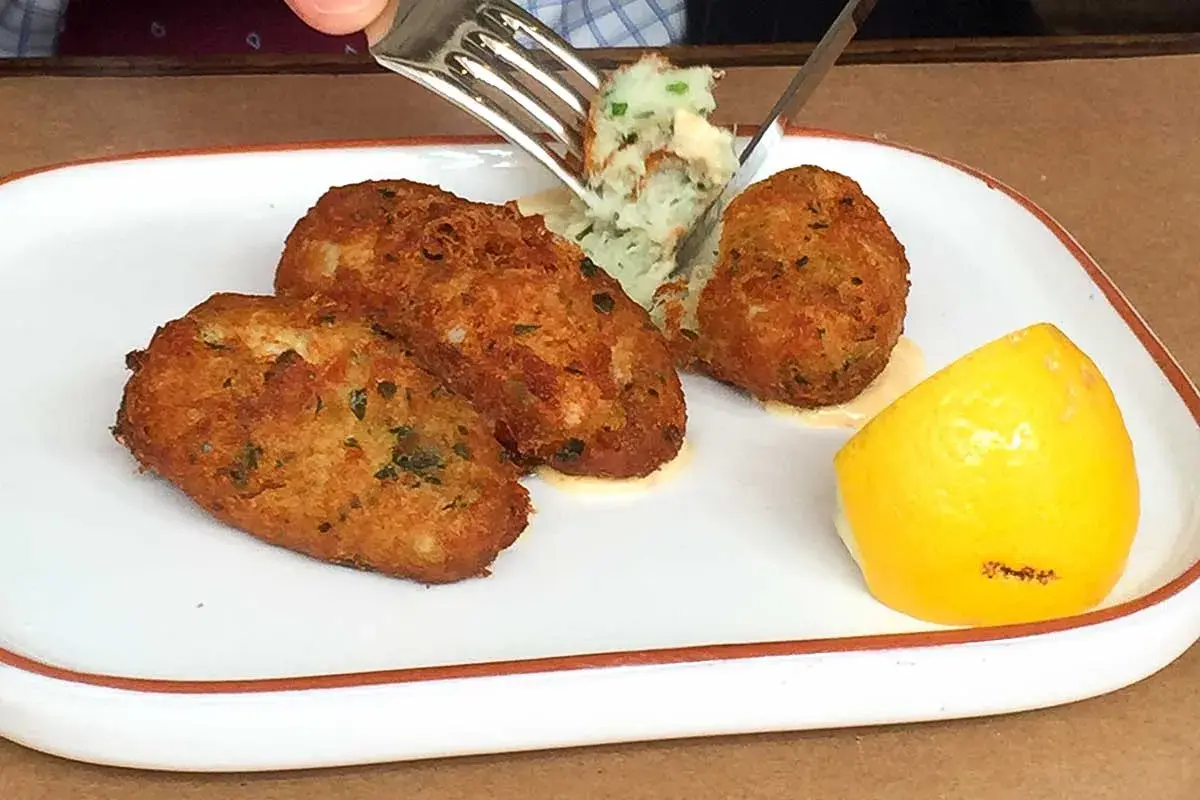
Small fried fish cakes can be forgettable, or they can be the plate everyone reaches for first. The good ones are crisp outside, soft inside, and seasoned just enough to taste of the sea without feeling heavy. This guide explains what these bites are, how they belong in tapas and pintxos culture, and how to cook and serve them well at home in the UK.
Key points to keep in mind before you cook or order them
- In a Basque-style spread, these fritters work best as a hot, one- or two-bite plate.
- Salt cod gives a deeper, cleaner flavour than fresh cod alone, but it must be soaked properly first.
- A light batter, hot oil, and small spoonfuls are the difference between crisp fritters and greasy ones.
- Alioli, lemon, and a dry white wine or txakoli are the safest pairings.
- They are at their best straight from the pan, so timing matters more than elaborate garnish.
What makes these fritters work on a tapas table
In a good tapas bar, scale matters. Pintxos are usually built as one or two bites, and that is exactly why this kind of fish fritter fits so well: it is substantial enough to feel satisfying, but small enough to stay social and easy to share. I think that balance is the whole appeal.
When I describe this dish to readers, I usually draw a line between a fritter and a fishcake. A fishcake often aims for structure and heft; a proper salt-cod fritter should feel lighter, with a crisp shell and a soft, almost airy centre. That makes it a better match for aperitif culture, where the plate is there to sharpen appetite rather than replace dinner.
In Basque cooking, cod shows up in plenty of forms, from sauced dishes to tiny bar snacks. These little fritters belong in that same family of briny, direct, unfussy food. They do not need much decoration because the point is clarity: fish, salt, garlic, herbs, heat, and a clean finish.

How they sit beside other Basque small plates
If you are planning a pintxos board, it helps to know where these fritters sit among the other usual suspects. They are warm and fried, so they do a different job from cold, briny bites like olives or anchovies. They also carry more texture than sauced cod dishes, which is why they often become the plate that disappears first.
| Plate | Texture | Why it works on the board |
|---|---|---|
| Salt-cod fritters | Crisp outside, soft centre | They bring heat, crunch, and immediate comfort in a small format. |
| Cod croquetas | Creamy inside, breadcrumb shell | Richer and more mellow, they feel more indulgent than a fritter. |
| Gilda | Cold, briny, sharp | A perfect first bite with a drink, especially before something fried. |
| Tortilla de patatas | Soft, dense, room temperature | It anchors the spread and gives you something more filling. |
My practical rule is simple: on a mixed board, include one hot item, one cold salty item, and one egg or potato base. That gives you contrast without overcomplicating the spread, and it makes the fritters feel like part of a rhythm rather than a standalone snack.
The flavour balance that keeps them light
The difference between a memorable fritter and a dull one is rarely the fish alone. It is usually the way the batter, seasoning, and frying process work together. Salt cod brings a deep savoury note, but it also needs support, otherwise the result tastes flat or aggressively salty.
I look for four things every time:
- Proper desalting so the fish tastes seasoned, not harsh.
- Enough binding to hold the mixture together without turning dense.
- Herbs and aromatics such as parsley, garlic, or a little onion to lift the flavour.
- Fast frying at the right temperature so the surface sets before the inside turns heavy.
Temperature is the technical part people often underestimate. If the oil is too cool, the fritters drink it up and feel greasy. If it is too hot, they darken before the centre cooks. For most home kitchens, I aim for roughly 175 to 180°C and use a thermometer if I have one. That small bit of control usually matters more than an extra ingredient.
A reliable way to make them at home
For a home batch, I prefer a straightforward method that keeps the texture light. This version makes about 16 small fritters, enough for 4 people as a tapas plate or 6 people as part of a larger spread.
Ingredients
- 300 g salt cod, desalted
- 2 eggs
- 80 g plain flour
- 1 tsp baking powder
- 1 small onion, finely grated or very finely chopped
- 2 garlic cloves, minced
- 2 tbsp chopped flat-leaf parsley
- Black pepper
- Sunflower oil or another neutral oil for frying
Method
- Soak the cod for 24 to 36 hours in the fridge, changing the water 3 or 4 times.
- Drain it well, pat it dry, and flake it finely, removing any bones or skin.
- Whisk the eggs in a bowl, then fold in the flour and baking powder.
- Add the onion, garlic, parsley, and cod, then mix just until combined.
- The batter should be thick enough to hold its shape on a spoon, not run like a pancake mix. If it looks too loose, add a little more flour.
- Heat the oil to 175 to 180°C and drop in small spoonfuls of the mixture.
- Fry for 2 to 3 minutes, turning once, until evenly golden.
- Drain on a rack or paper towel and serve immediately.
If you are cooking in a British kitchen and only have access to large pans or shallow fryers, resist the urge to make them bigger. Smaller fritters are easier to cook through, and they keep the crust crisp. That is especially useful if you are serving them as part of a broader tapas meal rather than as a main course.
What to serve with them
The safest pairings are the ones that cut through richness without fighting the fish. Alioli is the classic move because its garlic and creaminess echo the fritter’s own savoury depth. Lemon works just as well when you want the plate to feel a little lighter.
For a more complete Basque-style spread, I like to build around contrast rather than repetition. A briny pickle, a sharp drink, and one more cold bite usually do more good than another heavy sauce.
| Accompaniment | Why it works | Best use |
|---|---|---|
| Alioli | Adds creaminess and garlic without hiding the fish | When the fritters are very crisp and you want a richer plate |
| Lemon wedges | Brightens the salt and lifts the finish | When you want the simplest possible serving |
| Pickled peppers or guindillas | Brings acidity and a little heat | For a more bar-like pintxos feel |
| Txakoli | Fresh acidity and a lightly spritzy edge | The most natural Basque pairing |
| Dry cider or a dry white wine | Cleans the palate after frying | A practical UK-friendly alternative |
If I were setting the table at home, I would keep the accompaniments very spare: one dip, one sharp garnish, and one drink with enough acidity to reset the palate. That is enough to make the dish feel intentional without turning it into a restaurant-style production.
The mistakes that turn crisp into greasy
Most problems with fritters are not mysterious. They come from a handful of predictable errors, and once you know them, the dish becomes much easier to control.
- Under-soaking the cod leaves the fritters too salty and one-dimensional.
- Adding too much flour makes them heavy and bready instead of light.
- Frying in oil that is too cool gives you a greasy crust.
- Overcrowding the pan drops the oil temperature and softens the exterior.
- Holding them too long before serving takes away the contrast between shell and centre.
- Drowning them in sauce hides the texture that makes them worth eating in the first place.
The easiest fix is usually the simplest: make them smaller, fry in batches, and drain them properly. If I had to choose one detail that changes the result most often, it would be oil temperature. That is the point where home cooking either stays crisp and tidy or slips into soggy territory.
How I would finish a pintxos spread around them
When I build a Basque-inspired spread, I want the fritters to feel like the warm centre of the plate, not a side note. That means serving them as soon as they come out of the pan, with the rest of the table already in place. I would keep cold dishes ready first, then fry the fish at the last minute so the contrast still feels alive.
For make-ahead planning, the cod can be desalted in advance, and the batter can be mixed shortly before cooking. What I would not do is fry them early and leave them sitting around. Even a low oven only buys you a short window, usually 10 to 15 minutes before the crust starts to soften. If you need to reheat them, a hot oven for a few minutes is better than the microwave, but fresh is still the right answer.That is why these little bites work so well in tapas and pintxos culture: they are simple, direct, and dependent on timing rather than fuss. Served well, they give you everything a good bar snack should deliver, and they make the rest of the meal feel more coherent rather than more crowded.
