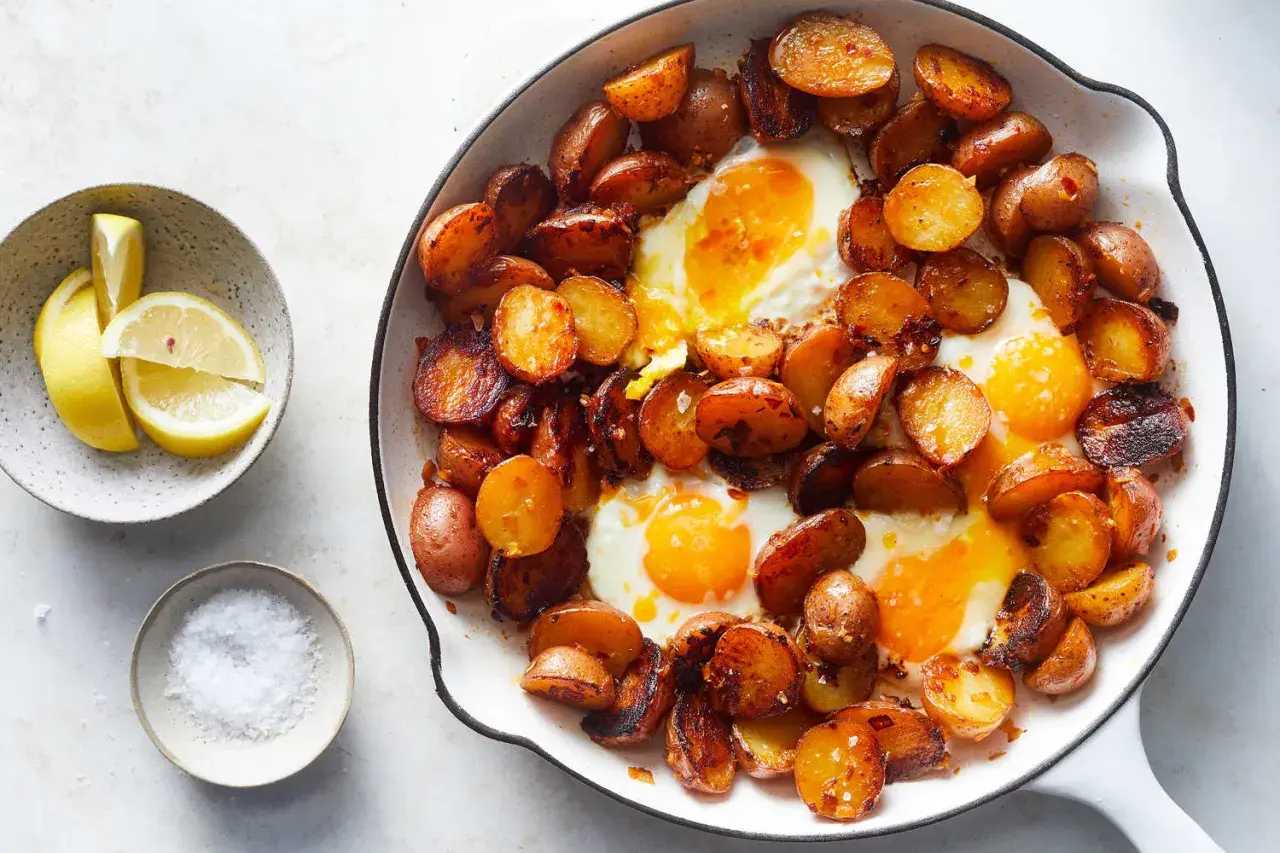
Broken eggs over crisp potatoes and cured ham make a dish that looks simple until the yolk hits the plate and ties everything together. This article explains what the dish is, how it sits inside tapas culture, where pintxos differ, and what really matters if you want a version that feels generous rather than heavy. I also include practical guidance for UK kitchens, because the success of this plate depends more on timing and texture than on complexity.
A good plate depends on crisp potatoes, a runny yolk and ham added at the last second
- It is a Spanish bar dish built around fried eggs, potatoes and cured ham.
- The best versions balance crisp edges, soft centres and salty richness without feeling greasy.
- In the Basque Country, pintxos are usually smaller and more snack-like, so this dish fits better as a tapa or a shareable ración.
- For UK cooks, Maris Piper or King Edward potatoes are a reliable choice.
- It should be served immediately, with bread nearby for the yolk.
Why huevos rotos works so well on a tapas table
What makes this plate memorable is not the ingredient list, but the contrast. You get crisp potato, soft egg, salty ham and a rich yolk that turns the whole dish into a sauce as soon as it is broken. I like dishes like this because they feel indulgent without being fussy, which is exactly why they have a strong place in bar food culture.
The structure matters more than the recipe details. If the potatoes are still lively, the eggs are cooked only until the whites set, and the ham is warm rather than fried into leather, the whole plate tastes alive. If any one of those elements is pushed too far, the dish starts to feel dull or oily instead of comforting.
That balance is also why this kind of plate travels so well across Spain’s casual dining scene, from busy city bars to long shared lunches. Once that is clear, the next question is where it belongs on a tapas or pintxos menu.

How it fits between tapas and pintxos
People often lump tapas and pintxos together, but the serving style changes how this dish is understood. A tapa is usually a small plate or shared bite served with drinks, while a pintxo is typically smaller, often built on bread and usually designed to be eaten in one or two bites. This plate is not a classic one-bite pintxo; it behaves more like a warm tapa or a ración that anchors a table.
| Format | Typical serving style | Where this dish fits | Best use |
|---|---|---|---|
| Tapa | Small plate, often shared with drinks | Strong fit | Casual bar snack or starter |
| Pintxo | Usually bite-sized, often on bread or skewered | Only in mini or modern form | High-turnover bar counters |
| Ración | Larger shareable plate | Probably the most natural fit | Table service and leisurely eating |
In practice, I would treat it as a warm centrepiece rather than a nibble. On a pintxos crawl, it is the kind of plate you order when you want to slow the pace down for a moment; on a tapas table, it works as the dish everyone reaches for first. Once that context is right, the real difference comes from the ingredients and the heat.
The ingredients that decide whether it feels rich or greasy
With a dish this spare, ingredient quality is not a marketing line. It is the whole point. You do not need luxury products, but you do need ingredients that can handle heat and carry flavour without collapsing.
| Component | What to look for | Why it matters |
|---|---|---|
| Potatoes | Floury potatoes that fry well, such as Maris Piper or King Edward in the UK | They give a crisp outside and a fluffy centre, which keeps the plate from feeling flat |
| Eggs | Fresh eggs with yolks that stay intact in the pan | The yolk is the sauce, so a dry or overcooked egg weakens the dish immediately |
| Ham | Good dry-cured ham, sliced thin | It should add salt and aroma, not turn the plate heavy |
| Oil | Clean olive oil or a neutral frying oil that can handle heat | Old or overheated oil makes the potatoes taste tired and greasy |
| Salt and bread | Flaky salt and sturdy bread | Seasoning sharpens the yolk, and bread makes the whole experience complete |
I would also avoid trying to “improve” the plate too much. Truffle oil, melted cheese or a heavy sauce usually blur the point of the dish rather than elevate it. Once these basics are sorted, the next step is getting the timing right in a home kitchen.
How I would build it in a UK kitchen
For two people, I usually think in the range of 350 to 400 g potatoes, 2 to 4 eggs and about 75 to 100 g of cured ham. That is enough for a generous starter or a light shared plate, without turning it into a slab of food that sits in the stomach too long.
- Cut the potatoes into even batons or thick chips and dry them well before cooking.
- Fry them until tender and golden, then let them rest briefly so the surface moisture disappears.
- Return them to the pan briefly if you want extra crispness at the edges.
- Fry the eggs separately or carefully in the same pan, keeping the whites just set and the yolks loose.
- Place the ham over the potatoes, add the eggs on top and season immediately.
- Serve at once, with bread on the side for the yolk.
The key moment is the last one. This is not a dish to hold for five minutes while you clear space on the table. The yolk needs to break while the potatoes still have some structure, and the ham should still smell fresh when the plate lands. Once that timing slips, the whole thing starts to lose its charm, which leads directly to the mistakes people make most often.
The mistakes that flatten the dish
The most common failure is overcooking. If the potatoes are soft all the way through and the yolks are firm, the plate becomes merely filling. What should feel bright and salty ends up tasting blunt.
- Using soggy potatoes - They absorb oil and never recover. Dry them well and fry in batches if needed.
- Cooking the eggs too hard - The yolk should run enough to coat the potatoes. Hard yolks remove the main appeal.
- Frying the ham aggressively - Cured ham should be warmed or lightly dressed over the top, not treated like bacon.
- Letting the plate sit too long - The contrast between crisp and soft fades quickly once everything steams together.
- Over-seasoning too early - The ham already brings salt, so season at the end and taste first.
Another mistake is trying to make it “lighter” by stripping away the fat completely. That usually backfires, because the dish needs enough richness to carry the yolk and the ham. Once the common errors are out of the way, the plate starts asking for the right companions.
What to serve with it on a tapas or pintxos night
I like to keep the rest of the table sharper and fresher than the main plate. That keeps the meal from becoming a wall of fried food and gives each bite a reason to stand out. If this dish is the richest item on the table, everything beside it should bring acidity, salt or freshness.
| Pairing | Why it works | What it balances |
|---|---|---|
| Gilda or anchovy skewers | Briny and sharp, with a clean bite | Rich egg and potato |
| Padrón peppers | Quick, green and lightly blistered | Oiliness and heaviness |
| Tomato bread or rustic bread | Simple and absorbent | The runny yolk |
| Dry cider or txakoli | Bright, cleansing and low in weight | The salt and fat in the dish |
| Crisp lager | Easy, cold and familiar | A hot plate that needs refreshment |
If I were building a full spread in the UK, I would keep the rest of the menu deliberately modest: one cold pintxo, one vegetable dish and one salty plate like this. That way the eggs remain the centre of gravity instead of becoming just another fried item on a crowded table. The last question is where I would actually place it on a Basque-inspired menu.
The version I would put on a Basque-inspired menu
For a menu inspired by Basque bar culture, I would serve this as the warm anchor between cold pintxos and grilled dishes. It is substantial enough to matter, but not so heavy that it crowds out the rest of the meal. That makes it useful in a restaurant setting and equally useful at home when you want one plate to define the table.
If I were writing the description for a UK audience, I would keep it plain and direct: fried eggs, potatoes, cured ham, served hot with bread. There is no need to oversell it. The appeal is immediate, and the dish only works properly when the kitchen respects its simplicity.
That is why I rate it so highly in a tapas context: it is humble, fast, and forgiving in theory, but only genuinely good when every small detail is right. When the potatoes stay crisp, the yolk stays loose and the ham is added at the last moment, the plate earns its place without asking for anything extra.
