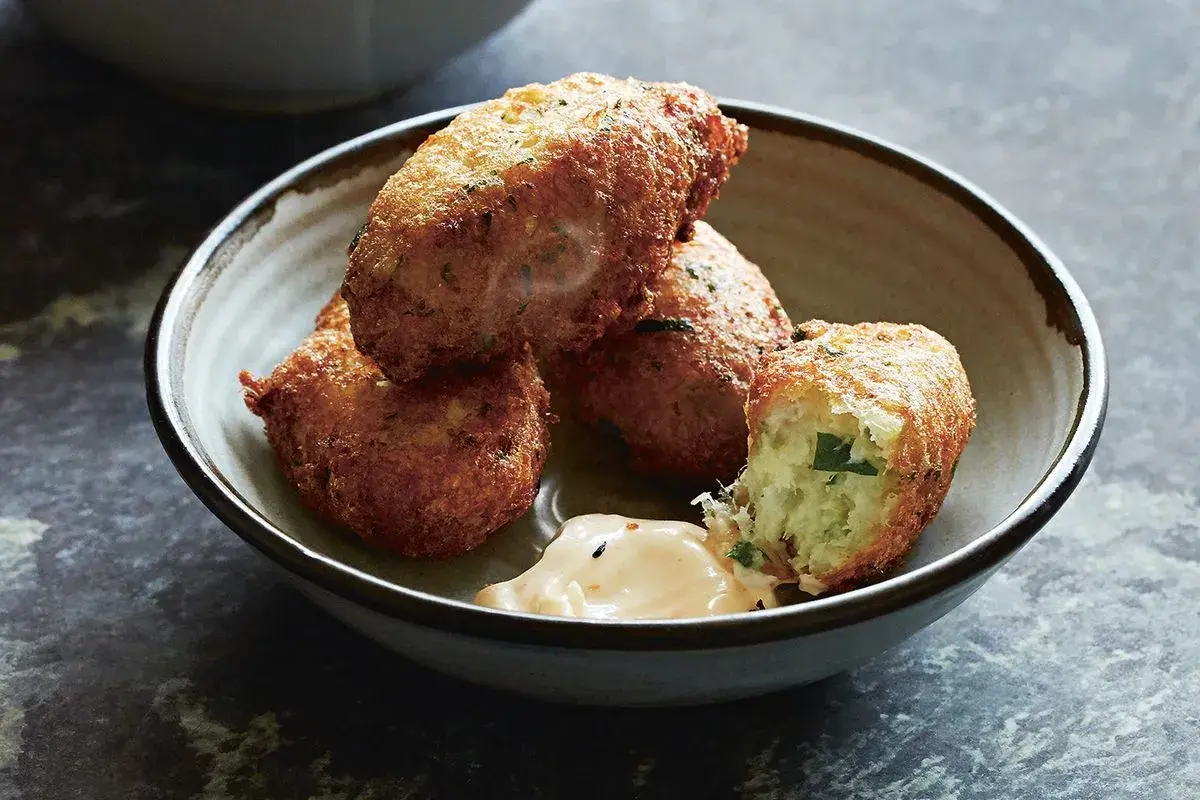
Salt cod croquettes are one of those tapas that look simple until you make them badly. The Spanish classic croquetas de bacalao depends on a thick béchamel, properly desalted fish, and careful frying, which is exactly why it shows up so often in Basque pintxos bars and home kitchens alike. In this guide, I focus on what the dish really is, how to get the texture right, and how to serve it so the crust stays crisp and the centre stays soft.
The essentials at a glance
- Texture matters more than decoration. A good croquette should be crisp outside and creamy inside without turning runny.
- Salt cod must be handled properly. If it is still too salty, the filling will taste harsh and one-note.
- Thick béchamel is the base. This is not a mashed-potato fritter; the sauce gives the croquette its structure.
- Cooling is part of the recipe. Chilling the mixture makes shaping cleaner and frying safer.
- Tapas and pintxos service rewards small portions. Bite-size croquettes stay hot, feel lighter, and are easier to pair with drinks.
- Dry, fresh drinks work best. Think txakoli, dry sherry, cider, a crisp white, or a clean lager.
Why these croquettes belong in tapas and pintxos culture
What makes salt cod croquettes so enduring is not just flavour, but format. They are compact, satisfying, and easy to share, which is exactly what good tapas and pintxos are supposed to do: give you one precise bite, then make you want another. In Basque-style eating, that matters. You are not trying to build a heavy plate; you are trying to create a rhythm of small dishes that move well with drinks and conversation.
I also like that this dish sits between comfort and craft. A croquette is humble enough to appear on a casual bar counter, but it still asks for technique. The filling has to hold together, the seasoning has to be clean, and the coating has to fry fast enough that the centre stays creamy. That balance is the reason a good croquette can feel more polished than something much more elaborate.
For pintxos service, the size matters. Smaller croquettes are better because they are easier to eat in one or two bites, and they keep their heat more reliably. That is the first practical clue that leads into the filling itself: if the structure is weak, the whole dish slips from bar snack into oily mess.
What gives the filling its character
The heart of the dish is a thick béchamel enriched with salt cod. I prefer to think of the béchamel as a binding matrix rather than a sauce, because that is what it does here: it holds the fish, carries the seasoning, and becomes firm enough to shape once chilled. If the mixture behaves like something you could pour, it is too loose for croquettes.
For a home batch, I usually aim for something in the range of 400 to 500 g desalted cod, 60 g butter, 60 g flour, and about 650 to 800 ml milk, depending on how much evaporation I get in the pan. Onion, white pepper, and a little nutmeg are useful, but they should support the cod rather than compete with it. I am conservative with garlic here, because too much garlic pushes the croquette away from the clean, coastal flavour that makes it work in the first place.
The cod itself needs to be in balance. You want flakes, not a dry shred, and you want seasoning that tastes deliberate rather than aggressive. Salt cod that has not been soaked enough can dominate the whole bite, while over-rinsed fish can taste flat. The sweet spot is a filling that tastes savoury and round before it ever meets the breadcrumb coating.
Once that balance is set, the rest of the method becomes much easier. The next section is where I would spend my attention if I wanted reliable results every time.
How I make them with the right texture every time
For a traditional result, I start by desalted salt cod, then build the filling like a very thick white sauce. A standard home batch should make roughly 18 to 24 croquettes, depending on size. If you want them bar-style, aim for walnut-sized portions; if you want them as a proper tapa, make them slightly larger but still easy to eat in a couple of bites.
| Stage | Target | Why it matters |
|---|---|---|
| Desalting the cod | 12 to 24 hours, with several water changes | Prevents the filling from tasting harsh or overly salty |
| Béchamel base | Thick enough to leave a clear trail in the pan | Gives the croquette its structure |
| Chilling | At least 4 hours, ideally overnight | Makes shaping cleaner and safer |
| Frying | 175 to 180°C for about 2 to 3 minutes | Sets the crust quickly without leaking the filling |
- Cook the cod gently if needed, then flake it carefully and check for bones.
- Make a roux with butter and flour, then whisk in warm milk until the mixture becomes very thick.
- Fold in the cod and season with pepper, a little nutmeg, and only as much salt as the fish truly needs.
- Spread the mixture in a shallow tray, cover it, and chill it until firm.
- Shape the mixture, then coat it in flour, beaten egg, and fine breadcrumbs.
- Fry in small batches so the oil stays hot and the crust seals quickly.
The one detail I would not skip is the final rest before frying. Even 15 minutes after shaping helps the coating set. That small pause reduces cracking and gives you a more even crust, which matters even more once you start serving them with other tapas.
How to serve them in a Basque-style spread
In a Basque-style spread, I would serve croquettes as one piece of a wider rhythm: something rich, something briny, something fresh, and something crisp. That is how the plate avoids feeling heavy. Croquettes pair especially well with olives, gildas, roasted peppers, tomato salad, or a very simple green salad with sharp dressing.
For drinks, I lean toward something dry and lively. Txakoli is the obvious Basque choice if you can get it, but in the UK a crisp white, dry cider, or a clean lager does the job well. I would avoid anything too sweet, because sweetness flattens the savoury edge of the cod and makes the breadcrumb shell feel heavier than it is.
There is also a serving discipline that good bars follow without talking about it. Croquettes should be served hot, not held until they go soft, and they should not be drowned in sauce. A little aioli can work, but I usually prefer them nearly bare so the filling stays readable. The croquette should taste like cod and milk, not like whatever was poured over it last.
That leads straight to the mistakes that undo an otherwise good batch, because most failures happen before the plate ever leaves the kitchen.
The mistakes that ruin a batch
The most common problem is a filling that is too loose. If the béchamel has not been cooked down enough, the croquettes may look fine at the shaping stage and then collapse in the fryer. In that case, the fix is not more breadcrumbs. It is more reduction and more chilling.
- Over-salted fish makes the whole batch taste blunt and shrill at the same time.
- Weak béchamel leads to leaks, splits, and oily crumbs in the pan.
- Skipping the chill makes shaping messy and frying unpredictable.
- Oil that is too cool soaks into the crust instead of sealing it.
- Overcrowding the pan drops the oil temperature and leaves the croquettes pale.
- Using too much sauce on the plate hides the dish instead of improving it.
I also see cooks panic when the first croquette comes out imperfect. That is not always a sign the whole batch is wrong. Often the first one is simply the test piece, and the oil has not stabilised yet. What you are looking for is consistency across the batch: same colour, same shell, same gentle give when you cut through it.
Once those mistakes are under control, you can start deciding how traditional or how adapted you want the recipe to be.
Practical variations for UK kitchens
The version I would call most faithful uses salt cod, a milk-based béchamel, and a fine breadcrumb shell. That said, kitchens in the UK do not always have the same ingredients or the same shopping habits as bars in northern Spain, so a few adjustments can make the dish easier to cook at home without losing its identity.
| Variation | What changes | Best for | Trade-off |
|---|---|---|---|
| Traditional salt cod | Brinier, more structured flavour | Authentic tapas and pintxos menus | Needs advance soaking and planning |
| Fresh cod | Milder taste, slightly wetter filling | Quick home cooking | Less traditional and easier to over-soften |
| Fine breadcrumbs | Tighter, more bar-style crust | Classic texture | Less dramatic crunch than panko |
| Panko coating | Lighter, louder crunch | Informal entertaining | Feels less traditional |
| Air fryer finish | Lower oil use | Lighter cooking at home | Less even colour and a drier shell |
My honest view is that the best compromise for most UK kitchens is still salt cod with a fine crumb. It asks for a little more planning, but the flavour payoff is real. If you want a dish that reads as Basque in both taste and texture, that is the version to prioritise. If you are improvising, use fresh cod only when you are ready to adjust the filling and accept a softer result.
What I look for in a proper croquette
When I judge a croquette, I do not start with presentation. I start with the bite. The shell should crack lightly, not shatter into dry crumbs, and the inside should feel creamy rather than stodgy. The cod should taste clear and savoury, with enough salt to wake the palate but not so much that you need a drink after every bite.
The best croquettes never feel greasy. If oil is pooling on the plate, the frying stage went wrong. If the filling is powdery, the béchamel was too dry or the cod was overworked. If the croquette is solid all the way through, it has lost the contrast that makes the dish worth serving in the first place.
That is really the standard to keep in mind, whether you are making them at home or ordering them in a bar: crisp outside, soft centre, clean cod flavour, and enough restraint to let the ingredients speak for themselves. If you hold to that, the dish fits naturally into tapas and pintxos culture, and it will still feel right on a modern table in 2026.
